

How to Vet a Stainless Steel Valve Supplier: A 12-Point Checklist for Buyers
A 2026 procurement guide for distributors and engineering contractors: how to confirm a Chinese valve supplier is a real manufacturer with traceable materials, in-house pressure testing per API 598, a verifiable ISO 9001:2015 quality system, and export documentation you can hand to an end user. Includes a Dubai worked example comparing two quotations for 200 pieces of CF8M flanged ball valves, and the exact document pack to request before you pay a deposit.
* Standard lead time depends on order size and destination. 5–10 days to Southeast Asia, 15–20 days to the Middle East.

Quick Answer
Vet a stainless steel valve supplier on 12 evidence points, not on the quotation alone: (1) confirm it is a real manufacturer, not a trading company — business license, factory address and a live video factory tour; (2) manufacturing and export history; (3) a verifiable ISO 9001:2015 certificate; (4) material traceability with EN 10204 3.1 MTC tied to the heat number cast on the body, plus PMI on request; (5) in-house pressure testing per API 598 (shell at 1.5×PN, seat at 1.1×PN); (6) products built to named standards (API 6D, API 608, ASME B16.34, EN 1092, JIS B 2002); (7) engineering capability with stamped drawings and OEM/ODM; (8) a single-source product range; (9) transparent MOQ, stock and lead time; (10) export documents and Incoterms; (11) willingness to accept third-party inspection (SGS, Bureau Veritas, Intertek); (12) written warranty and reference customers in your region. The single fastest filter is point 4: ask for a sample EN 10204 3.1 MTC with a matching heat number before you order. A supplier that cannot produce one before the order is a supplier that cannot prove the material after the order.
Key Takeaways
- Manufacturer vs trader changes price structure, traceability and who answers a quality claim — verify on a live factory tour, not on a website
- EN 10204 3.1 MTC + heat number + PMI is the fastest proof that CF8M (316) is really CF8M
- API 598 test evidence: shell 1.5×PN, seat 1.1×PN, with a batch report — on PN16 that is 24 bar and 17.6 bar
- ISO 9001:2015 must be checked on the certification body register, not accepted as a scanned PDF
- Third-party inspection (SGS / Bureau Veritas / Intertek) before shipment is a normal request — a supplier that refuses is a red flag
- Request the full document pack up front: MTC, test report, drawing, packing list, commercial invoice, bill of lading
On This Page
Why Vetting a Valve Supplier Matters
A stainless steel valve is a pressure-bearing component. If the body is the wrong alloy, the casting is porous, or the seat was never pressure tested, the failure does not look like a minor product defect — it shows up as a leak on a process line, a rejected handover, or a safety incident that an end user will trace back through the MTC to whoever supplied it. In a procurement claim there is only one question: can you prove what this valve is made of, and that it was tested? A well-run manufacturer answers with documents. A weak supplier answers with silence.
Vetting is not distrust. It is collecting evidence before a deposit is paid, while the supplier still has every incentive to cooperate. The 12 points below are the evidence set that distributors and EPC contractors in Southeast Asia and the Middle East consistently ask for — and that a competent manufacturer produces without hesitation.
The 12-Point Vetting Checklist
1. Real Manufacturer, Not a Trading Company
Ask for the business license, confirm the registered scope includes valve manufacturing, and compare the registered address with the factory address. Then request a live video factory tour — not a promotional film — and ask the camera to walk the casting store, machining line, assembly benches and pressure-test bay in one continuous call. A trader can show a website; only a manufacturer can show a test bench running. Check that the name on the factory gate matches the company you are contracting with.
2. Manufacturing and Export History
How long has the company made valves, and how long has it shipped to your region? History matters because export documentation, marking practice and claim handling are learned through repeated shipments. A maker established in 2009 with recurring orders into Indonesia, Saudi Arabia and the UAE has already met the problems a first-year exporter will discover when your container arrives.
3. A Verifiable ISO 9001:2015 Quality System
Ask for the certificate and the certification body name with the certificate number, then verify that number on the body’s online register. A scanned PDF can be edited; a register entry cannot. Confirm the certificate covers the site you toured and is inside its validity date. Remember what it is: a quality management system. It does not by itself prove a single valve is good — which is why points 4 and 5 exist.
4. Material Traceability: EN 10204 3.1 MTC, Heat Number, PMI
This is the most informative check on the list. Every stainless steel valve should carry an EN 10204 3.1 mill certificate whose heat number matches the number cast or stamped on the body, stating chemical composition and mechanical properties for CF8 (304), CF8M (316) or CF3M (316L). Ask for a sample MTC before ordering. On corrosive or critical service, request PMI (positive material identification) on a sample of bodies. A supplier that cannot tie a document to a heat number cannot prove the alloy.
5. In-House Pressure Testing per API 598
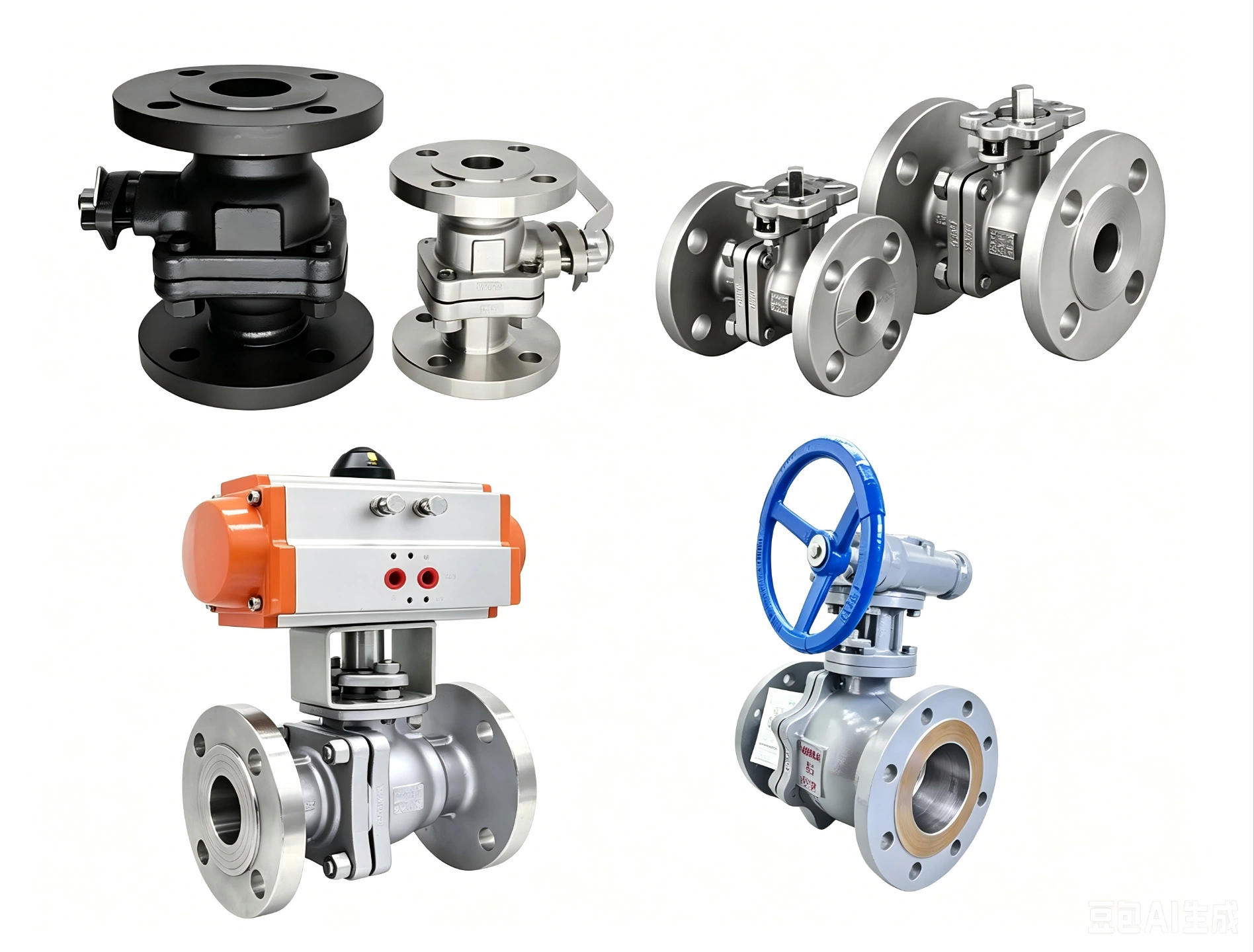
Ask where pressure testing happens, then watch it on the video tour. Per API 598 the shell test runs at 1.5× the pressure rating and the seat test at 1.1×, each held for the required duration with no visible leakage. On a PN16 valve that is 24 bar shell and 17.6 bar seat. Require a batch test report and ask a direct question: is every valve tested, or only a sample? For an industrial valve the only acceptable answer is every valve, before painting and packing.
6. Products Built to Named, Current Standards
The quotation and the nameplate should name the design and dimensional standards, not just a pressure number. Expect API 6D for pipeline valves, API 608 for metal ball valves and ASME B16.34 for pressure ratings, with flange dimensions to EN 1092-1, ASME B16.5 or JIS B 2002 depending on your market. A supplier that answers “standard size” without naming the standard will not be able to defend the valve at inspection.
7. Engineering Capability: Drawings, OEM/ODM, Custom Builds
For project work you need a stamped general arrangement drawing, face-to-face dimensions, pressure-temperature ratings and a bill of materials before manufacture. Test the engineering desk with a real request: a different trim, a special alloy, an ISO 5211 mounting pad, NPT versus BSP threads. A manufacturer with in-house engineers returns a marked drawing in days; a trader forwards the question and waits.
8. Single-Source Product Range
Distributors and EPC buyers purchase valves and fittings together — ball valves, butterfly valves, gate and check valves, Y-strainers and pipe fittings. A supplier covering the range under one quality system cuts your freight, documentation and vendor-approval workload. Confirm the range is actually made or consistently controlled, not merely listed.
9. Transparent MOQ, Stock and Lead Time
Get MOQ, stock policy and lead time in writing, split between standard and custom configurations. Stock CF8M PN16 items moving in 7–15 days is a different operation from a 35-day custom pour. Vague lead times that slip after the deposit are a recurring cause of project delay; a dependable supplier states the schedule and names the consequences.
10. Export Documents and Incoterms
Confirm the Incoterm — FOB Ningbo or Shanghai is common — and the document set: bill of lading, packing list, commercial invoice, certificate of origin, MTC and test report. Ask how the supplier handles container loading and export plywood packing. Smooth customs clearance depends on documents that match the markings on every valve.
11. Third-Party Inspection Before Shipment
State up front that SGS, Bureau Veritas or Intertek may witness pressure testing and verify dimensions and marking before shipment, and that this is a condition of the balance payment. This is a routine request in B2B valve trade. A competent manufacturer welcomes it because it closes the claim; a supplier that refuses independent inspection has effectively failed the vetting.
12. Warranty, After-Sales and Regional References
Get the warranty in writing — 12 months after shipment for material and manufacturing defects is a typical term — plus the claim process and the evidence required. Then ask for reference customers in your region or a nearby market, and speak to one. A supplier with repeat buyers in your country has already passed this same checklist somewhere else.
Manufacturer vs Trading Company: Head-to-Head
| Dimension | Direct Manufacturer | Trading Company |
|---|---|---|
| Price structure | One margin, built on the real production cost | Factory price plus a trader margin layered on top |
| Material traceability | Issues EN 10204 3.1 MTC from its own heat records | Forwards the factory MTC, sometimes with heat numbers that do not match |
| Pressure testing | Tests every valve in-house per API 598 and issues the report | Relies on whatever the factory provides; cannot witness a re-test |
| Customization / OEM | In-house engineers change trim, marking, alloy and mounting | Requests changes through the factory, with added delay |
| Lead time control | Owns the production schedule and can expedite | Depends on factory priorities it does not control |
| Quality claim | Single accountable party holding the casting records | Liability sits between trader and factory; resolution is slower |
| Third-party inspection | Inspector enters the actual factory and test bay | Access depends on the factory admitting the trader’s client |
| Document consistency | MTC, test report, marking and invoice from one legal entity | Documents may carry different company names than the contract |
The Document Pack to Request Before a Deposit
Send this list in one message and keep the replies on file. A competent manufacturer returns all of it without surprise.
- Business license and factory address, matched on a live video tour
- ISO 9001:2015 certificate with body name and number, verified on the register
- Sample EN 10204 3.1 MTC showing the heat-number field and CF8 / CF8M chemistry
- API 598 pressure-test procedure and a sample batch report (24 bar / 17.6 bar on PN16)
- Stamped general arrangement drawing with face-to-face and flange dimensions
- Written MOQ, lead time and Incoterm, with the export document list
- Written agreement to third-party inspection, and the warranty terms
Worked Example: Two Quotes for 200 Ball Valves in Dubai
Step 1 — The requirement
A Dubai distributor was sourcing 200 pieces of CF8M flanged ball valves, DN50 (2 inch), PN16, with an ISO 5211 mounting pad for a chilled-water retrofit. Two suppliers sent quotations. The unit prices looked close; the evidence did not.
Step 2 — What each supplier actually provided
| Vetting Point | Supplier A | Supplier B |
|---|---|---|
| Factory tour | Declined a live call; offered a 3-minute promotional video | Continuous 25-minute video: machining, assembly, running test bench |
| EN 10204 3.1 MTC | Promised a “certificate after shipment”; no sample | Sample MTC before the order, heat-number field shown |
| API 598 test | “Sample tested”; no per-valve report | Every valve: 24 bar shell, 17.6 bar seat, batch report |
| ISO 9001:2015 | Scanned PDF only; no register entry found | Certificate number verified on the body register |
| Third-party inspection | Refused an Intertek witness | Accepted Intertek before shipment as a payment condition |
| Lead time | Stated 20 days, revised to 32 after the deposit | 20 days confirmed in writing, shipped on day 19 |
| Result at inspection | 18% of sampled bodies failed the 24 bar shell test | 0 failures across all 200; handover accepted first pass |
Step 3 — The arithmetic that settles the argument
For PN16, shell = 16 × 1.5 = 24 bar and seat = 16 × 1.1 = 17.6 bar. Supplier A could not produce a report showing either number. The cheaper quote became the expensive one after inspection, rework and a delayed handover; the order moved to Supplier B.
Step 4 — The lesson
Every deciding document was requested before any deposit. That is when vetting actually works: after the deposit, a supplier has no reason to answer point 4 at all.
How Chuanglan Builds the Evidence Pack
EN 10204 3.1 MTC on every order, with the heat number tied to the body casting you receive
Every valve shell- and seat-tested per API 598, batch report attached to the shipping documents
ISO 9001:2015 certificate number you can check on the issuing body’s register, not a scanned PDF alone
PMI (XRF) on request, and SGS / Bureau Veritas / Intertek witness before shipment
MOQ 1 piece for stock items, 7–15 day standard delivery, OEM / ODM from large volume
Not Sure Whether Your Valve Quotation Is Sound?
Send us the specification and the document list your supplier offered. Our engineers will check the standards, the MTC and the test evidence, and tell you in writing what is missing — reply within 24 hours, no obligation.
Get Free Sizing Report → WhatsApp usSoutheast Asia & Middle East Market Notes
For clients in Southeast Asia, valve sourcing runs through distributors and mechanical contractors that work across PN10 and PN16 flanged and wafer valves. Local acceptance is usually tied to EN / DIN dimensions and an EN 10204 3.1 paperwork pack for project handover, because those projects are frequently handed over to multinational end users who audit the material file. Indonesia, Malaysia, Thailand and Vietnam buyers therefore tend to inspect the MTC and the API 598 test report closely — and to ask for a live factory tour rather than a brochure. The most common weakness we see in incoming quotations is a heat number on the MTC that does not match the marking on the body.
For clients in the Middle East (Saudi Arabia, UAE, Qatar, Kuwait, Oman, Bahrain), procurement runs through formal vendor approval lists and third-party inspection. SGS, Bureau Veritas and Intertek witnessing pressure testing is routine, and the documents must carry consistent company names from contract through bill of lading — an inconsistency here is the fastest way to hold a container at customs. Utility and oil & gas adjacent projects add stricter material, marking and sour-service requirements, so confirm the owner’s specification instead of assuming a generic export build.
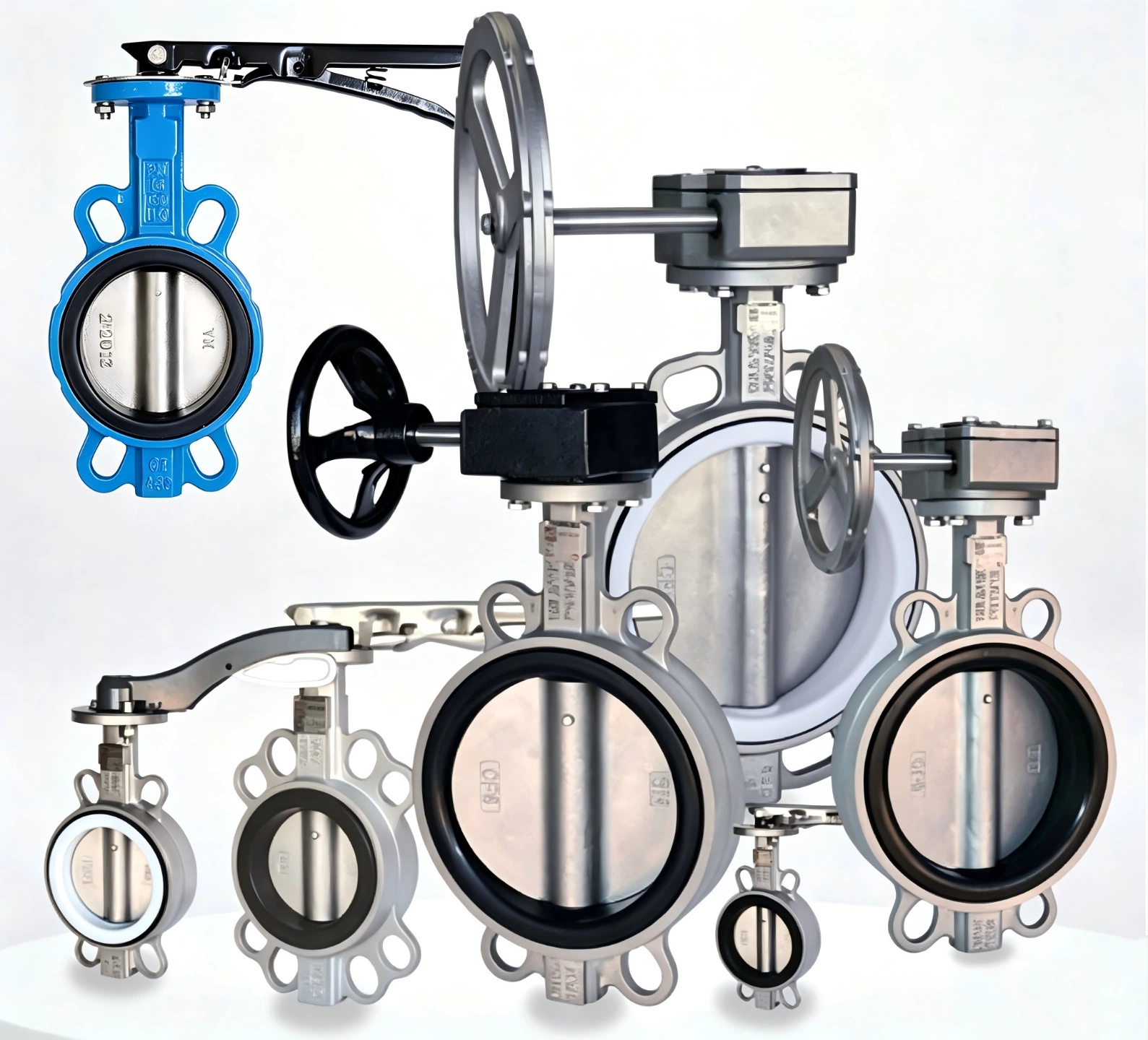
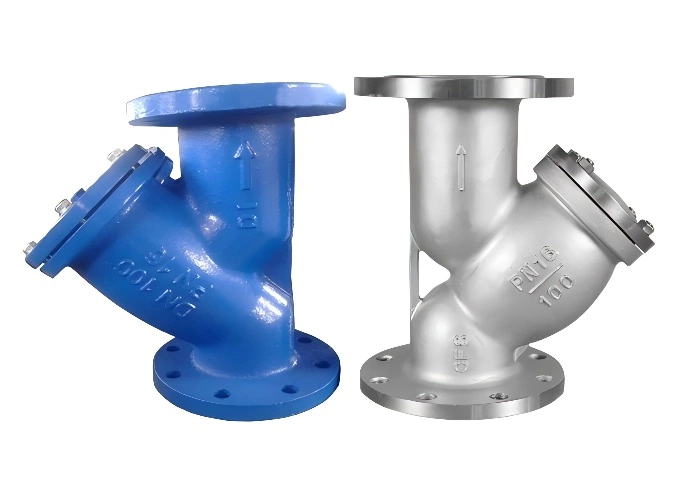
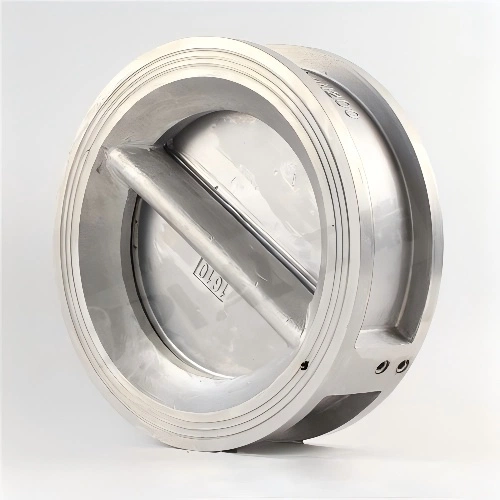
Chuanglan Valve ships flanged ball valves, wafer butterfly valves, check valves and Y-strainers in CF8 / CF8M / CF3M / 2205 duplex, full EN 10204 3.1 MTC, every valve pressure tested per API 598, and optional third-party inspection. Serving EPC Contractors Across Southeast Asia & Middle East · ISO 9001:2015 · Established in 2009 · MOQ 1 piece, 7–15 day standard delivery.
Common Mistakes to Avoid
- Comparing unit price only. Two quotes that differ by a few percent per piece can differ by far more in rework, reinspection and delay. Compare the evidence set, not the number.
- Accepting “sample tested” as proof. A sample result says nothing about the valve in your container. Ask whether every valve is shell and seat tested, and ask for the batch report that proves it.
- Treating a scanned ISO certificate as verified. Take the certificate number and check it on the certification body’s register, and confirm the audited site is the factory you toured.
- Leaving MOQ and lead time verbal. An unwritten delivery date slips without consequence for the supplier. Put the schedule and the export document list into the contract.
- Paying the balance without third-party inspection. Once the balance is released, the leverage is gone. Tie the payment to a witnessed test or a pre-shipment inspection.
- Contracting one company and receiving documents from another. If the invoice, MTC and bill of lading carry three different names, ask why before the goods leave — customs and your end user will ask the same question.
FAQ
How do I confirm a Chinese valve supplier is a real manufacturer?
Request the business license and check the registered scope includes valve manufacturing, then take a live video factory tour that walks the casting store, machining, assembly and pressure-test bench in one continuous call. A trader cannot show a running test bench. Confirm the name on the factory gate matches the company you contract with.
What is the fastest way to check a valve supplier before ordering?
Ask for a sample EN 10204 3.1 MTC with a heat-number field and a sample API 598 pressure-test report before any deposit. A supplier that cannot produce these before the order cannot prove material or testing after it. This one request separates competent manufacturers from weak traders faster than anything else.
What pressure test should a stainless steel PN16 valve pass?
Per API 598 the shell test is 1.5 times the rating (16 × 1.5 = 24 bar) and the seat test is 1.1 times (16 × 1.1 = 17.6 bar), each held for the required duration with no visible leakage. Every industrial valve should be tested, not only a sample, and the batch report should ship with the goods.
How can I verify an ISO 9001:2015 certificate is genuine?
Take the certification body name and certificate number from the certificate and verify the number on the body’s online register. Check that the certificate covers the audited site address and is still within its validity date. A scanned PDF alone can be edited; a register entry cannot.
Is it normal to request SGS or Intertek inspection on a valve order?
Yes. Third-party witnessing of pressure testing, dimensions and marking before shipment is a standard B2B condition, often tied to the balance payment. A manufacturer that accepts it is showing confidence; a supplier that refuses independent inspection should be treated as a red flag.
What is the difference between EN 10204 3.1 and 3.2 certificates?
A 3.1 certificate is issued by the manufacturer’s own independent quality department from its test results. A 3.2 certificate adds a third-party or customer-designated inspector who witnesses and endorses those tests. 3.1 is the normal requirement for most industrial valve orders; 3.2 is specified on critical or regulated projects.
What documents should arrive with an exported stainless steel valve?
The pack should include the EN 10204 3.1 MTC, the API 598 batch test report, a packing list, commercial invoice, bill of lading and certificate of origin, plus the stamped drawing where required. The heat number on every MTC must match the marking on the valve body, and the company names must be consistent across all documents.
References & Standards
- EN 10204 — Types of inspection documents for metallic products
- API 598 — Valve inspection and pressure testing
- API 608 — Metal ball valves; API 6D — Pipeline valves
- ASME B16.34 — Valves with pressure ratings; ASME B16.5 / EN 1092-1 / JIS B 2002 flanges
- ASTM A351 — CF8 / CF8M / CF3M castings; ISO 9001:2015 quality systems
Related Products
Continue Reading
Request a Quotation — Reply Within 24 Hours
Send your line size, pressure rating, medium and quantity. Our engineers come back with price, drawing and lead time — no obligation.