


Ball Valve Sizing Guide 2026: Floating vs Trunnion Types Explained
How to choose the right ball valve for your piping system: floating vs trunnion, sizing calculation, pressure ratings, materials, and common mistakes engineers make.
* Standard lead time depends on order quantity and destination country. 5–10 days to Southeast Asia, 15–20 days to the Middle East.
⚡ Quick Answer
Choose a floating ball valve for sizes up to DN200 (8″) and pressures up to Class 300 (PN40). Choose a trunnion ball valve for sizes above DN200, pressures above Class 300, or when you need lower operating torque and smaller actuators.
For a typical 4-inch (DN100) water line at 100 m³/h, a 316L floating ball valve with PTFE seat and PN16 rating is the standard pick. Verify velocity stays below 3.0 m/s and pressure drop stays below 0.8 bar before final selection.
🔑 Key Takeaways
- Floating vs trunnion rule: Floating ball valve for ≤ DN200 (8″) and ≤ Class 300 (PN40) · trunnion for > DN200, > Class 300, or when you need lower torque / smaller actuator.
- Sizing check: For DN100 at 100 m³/h, calculated velocity is 3.54 m/s — slightly above the 1.5–3.0 m/s water range; consider upsizing to DN125 if noise/erosion matters.
- Cv / ΔP: A DN100 floating ball valve has Cv ≈ 300, giving ΔP ≈ 0.11 bar at 100 m³/h — well under the 0.8 bar allowable limit.
- Seat by temperature: PTFE for water/general service up to 200°C · PEEK or metal seats for steam above 200°C.
On This Page
What Is a Ball Valve?
A ball valve is a quarter-turn valve that uses a hollow, perforated, rotating ball to control flow through a pipe. When the ball’s hole is aligned with the pipe, flow passes; when rotated 90 degrees, the ball blocks flow completely.
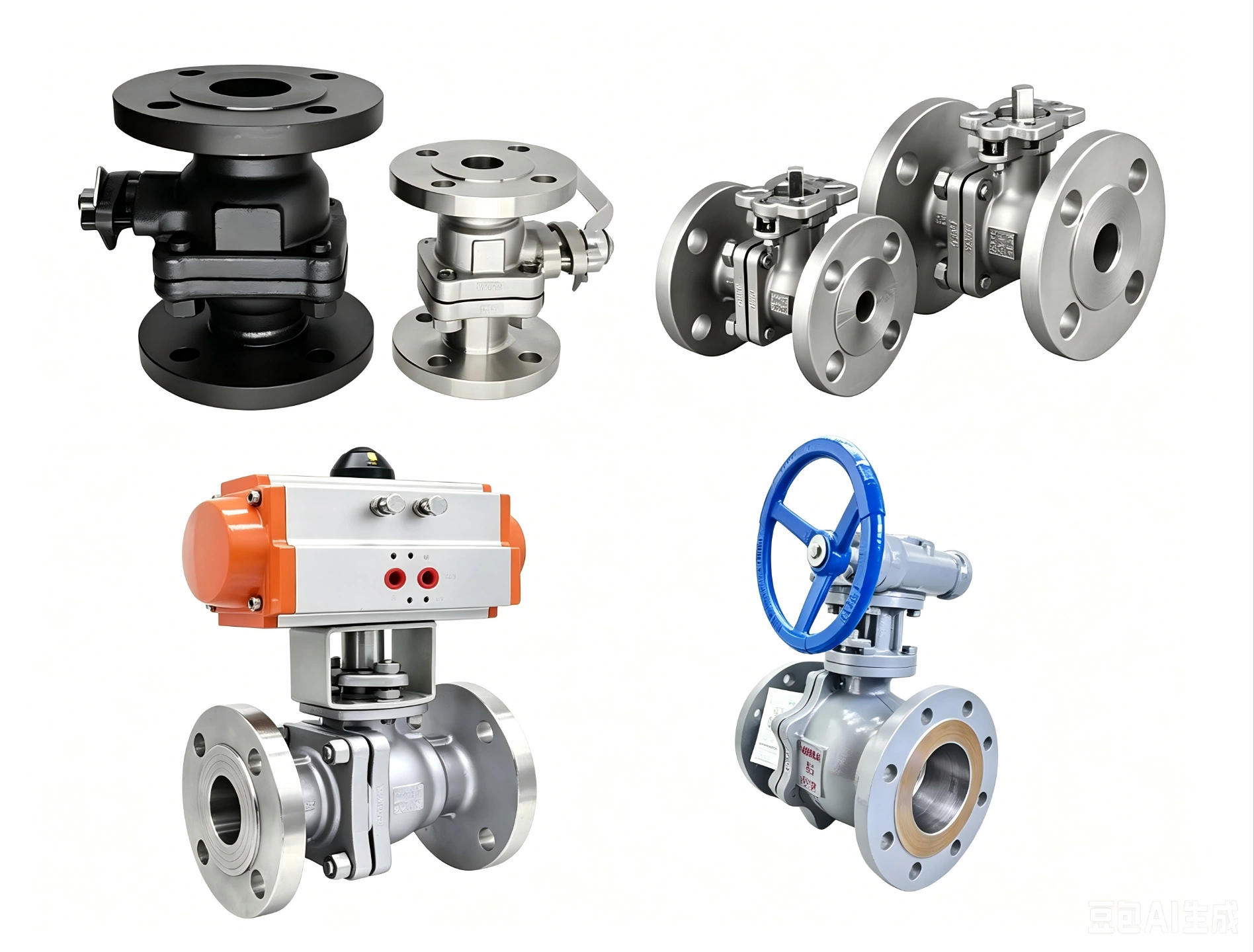
We manufacture stainless steel flanged ball valves in sizes DN15–DN300 (1/2″–12″), pressure ratings PN16–PN40, with 304/316L body materials. For high-pressure applications, we also supply trunnion mounted ball valves up to Class 600.
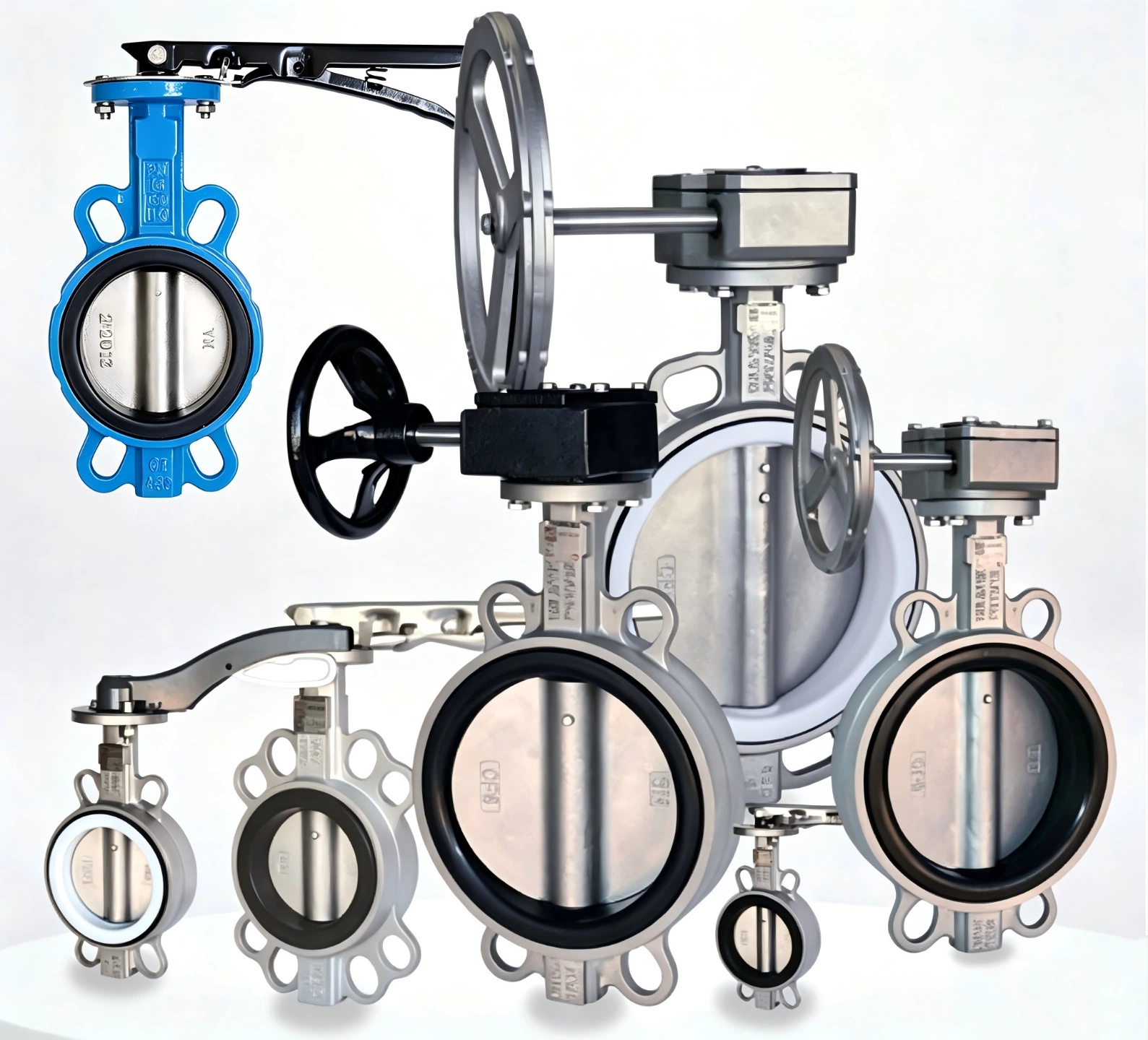
Ball valves are one of the most common valve types in industrial piping, used alongside butterfly valves, check valves, and Y-strainers in water treatment, oil & gas, chemical, and food processing systems.
Floating vs Trunnion Ball Valve: Which One Do You Need?
The biggest decision when selecting a ball valve is whether to use a floating or trunnion design. Both do the same job — shut off flow — but they work differently and suit different applications.
Floating ball valve: The ball is not anchored; it “floats” and is pushed against the downstream seat by line pressure. Simple design, lower upfront cost, but requires more torque to operate at high pressures.
Trunnion ball valve: The ball is anchored top and bottom by a trunnion shaft. Line pressure pushes the ball into the seats, but the trunnion carries the weight. Lower operating torque, ideal for large diameters and high pressures.
| Feature | Floating Ball Valve | Trunnion Ball Valve |
|---|---|---|
| Max size | DN200 (8″) standard | DN600+ (24″) and larger |
| Max pressure | Class 300 (PN40) | Class 600–2500 |
| Operating torque | High (increases with pressure) | Low (constant, regardless of pressure) |
| Actuator size | Larger actuator needed | Smaller actuator, lower operating cost |
| Upfront cost | Lower (30-50% less than trunnion) | Higher (baseline for large/high-pressure) |
| Best for | Small sizes, low pressure, general industrial | Large sizes, high pressure, oil & gas |
Sizing Guide: Worked Example
Proper sizing ensures the ball valve operates smoothly without excessive pressure drop or cavitation. Here’s a real-world example:
Problem: Select a ball valve for a water system with flow rate = 100 m³/h, pipe size = DN100 (4″), allowable pressure drop = 0.8 bar, water temperature = 25°C.
Step 1: Calculate flow velocity
Pipe cross-section area = π × (0.1/2)² = 0.00785 m²
Velocity = 100 m³/h ÷ 3600 s/h ÷ 0.00785 m² = 3.54 m/s
Step 2: Check recommended velocity range
For water systems, recommended velocity = 1.5–3.0 m/s. Our calculated 3.54 m/s is slightly above the range — consider upsizing to DN125 (5″).
Step 3: Verify pressure drop using Cv method
A DN100 floating ball valve typically has Cv ≈ 300.
Pressure drop ΔP = (Q/Cv)² × SG = (100/300)² × 1.0 ≈ 0.11 bar
0.11 bar < 0.8 bar allowable
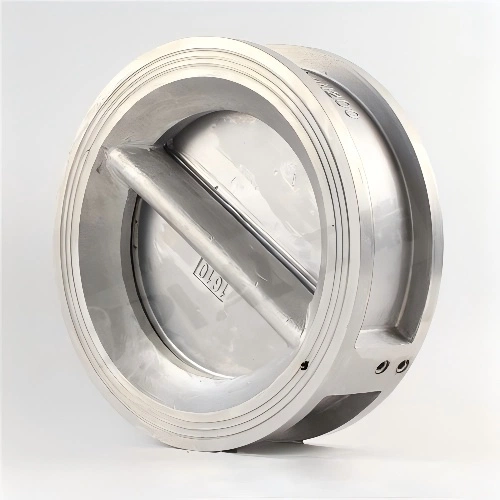
Result: Select DN100 (4″) PN16 floating ball valve, body material 316L, PTFE seat. For similar sizing calculations, also see our wafer check valve sizing guide.
International Standards Reference
| Standard Category | US / ANSI | European / EN | Japanese / JIS |
|---|---|---|---|
| Design | API 6D / API 608 | EN 12266 / EN 13709 | JIS B2002 |
| Face-to-Face | ASME B16.10 | EN 558 / ISO 5752 | JIS B2002 |
| Flange | ASME B16.5 (Class 150/300/600) | EN 1092-1 (PN16/25/40) | JIS B2220 (10K/20K) |
| Pressure Rating | ANSI Class 150–600 | PN16–PN40 | 10K–20K |
| Testing | API 598 / API 6D | EN 12266-1 | JIS B2003 |
| Fire Safe | API 607 / API 6FA | ISO 10497 | — |
| Actuator Mounting | ISO 5211 | ISO 5211 | ISO 5211 |
Note: ANSI Class and PN ratings are not directly interchangeable — always verify pressure-temperature rating tables. Our ball valves are manufactured to meet all three standards above.
💡 Why Engineers Choose Chuanglan
15+ years OEM/ODM for European & Southeast Asian distributors
304/316L body material, ISO 9001:2015 certified factory, 100% factory pressure tested
MOQ: 1 piece — small trial orders welcome
Need Help Sizing Your Ball Valve?
Our engineers will calculate the correct size for your application within 24 hours.
Get Free Sizing Report →Pressure Ratings & Temperature Limits
Ball valve pressure ratings are not static — they decrease as temperature rises. This is one of the most common engineering mistakes.
| Body Material | PN16 at 20°C | PN16 at 100°C | PN16 at 200°C | Seat Material |
|---|---|---|---|---|
| 304SS | 16 bar | 12 bar | 8 bar | PTFE |
| 316LSS | 16 bar | 13 bar | 9 bar | PTFE |
| WCB (cast steel) | 16 bar | 14 bar | 11 bar | NBR |
| Ductile Iron | 16 bar | 10 bar | Not recommended | EPDM |
Material Selection Guide
Choosing the right body and seat material prevents corrosion, seat damage, and premature failure.
| Body Material | Seat Material | Temperature Range | Typical Application |
|---|---|---|---|
| 304SS | PTFE | -50°C to 200°C | Water, HVAC, general industrial |
| 316LSS | PTFE | -50°C to 200°C | Chemical, seawater, food grade |
| 316LSS | PEEK | -50°C to 250°C | High temperature, steam, oil & gas |
| WCB (cast steel) | NBR | -20°C to 100°C | Oil, gas, non-corrosive fluids |
| Ductile Iron (GGG40) | EPDM | -10°C to 120°C | Water treatment, HVAC, budget projects |
Ball Valve Types: Complete Comparison
Not all ball valves are the same. Here’s a complete comparison of common ball valve types:
| Type | Design | Max Size | Best For |
|---|---|---|---|
| 2-piece flanged ball valve | Two body pieces, bolted together | DN300 (12″) | General industrial, water, oil |
| 3-piece flanged ball valve | Three body pieces, easy maintenance | DN100 (4″) | Chemical, food grade, high purity |
| Wafer ball valve | Short face-to-face, between flanges | DN150 (6″) | Space-limited installations |
| Threaded ball valve (NPT/BSP) | Screwed ends, small sizes | DN50 (2″) | Instrumentation, small piping |
| Butt-weld ball valve | Welded ends, no flanges | DN200 (8″) | High pressure, buried service |
| Jacketed ball valve | Steam-heated jacket around body | DN100 (4″) | Viscous fluids, asphalt, polymers |
Southeast Asia & Middle East Applications
We export ball valves to Southeast Asia and the Middle East markets, where rapid industrialization drives demand:
- Indonesia & Malaysia: Palm oil mills, mining, and water treatment plants require 316L ball valves with PEEK seats for high-temperature oil service on palm oil refinery projects in Sumatra and Kalimantan.
- Saudi Arabia & UAE: Desalination plants, oil & gas facilities, and district cooling systems require super duplex or 316L ball valves for saline water and high-pressure service, supplied with SGS/BV inspection and 3.1 MTC.
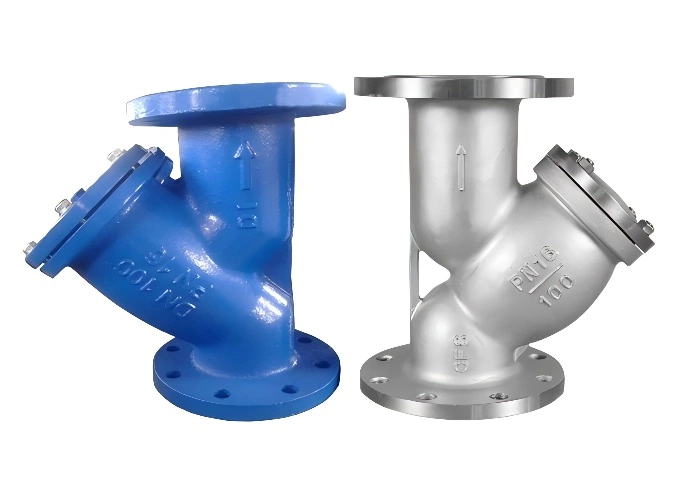
- Thailand & Vietnam: Food processing and pharmaceutical factories prefer 3-piece 316L ball valves with sanitary ends, paired with Y-strainers for pump protection.
- Philippines: Power plants and water distribution systems use ductile iron ball valves for budget-friendly, dependable performance, often paired with wafer butterfly valves for isolation.
Serving EPC Contractors Across Southeast Asia & Middle East · ISO 9001:2015 Certified · 15+ Years Factory Experience
Common Sizing Mistakes to Avoid
Oversizing the valve
A ball valve oversized for the application causes poor throttling and seat wear. Use Cv calculation, not pipe size.
Ignoring flow velocity
Water systems should stay under 3 m/s; gas systems under 20 m/s. Higher velocity causes erosion and noise.
Forgetting actuator torque
A valve that opens manually may need 3x more torque when automated. Always add safety factor for pneumatic/electric actuation.
FAQ
What size ball valve do I need for a 4-inch pipe?
Use a 4-inch (DN100) ball valve with the same flange rating as your pipe flanges (usually PN16 or Class 150). Always verify pressure drop and flow velocity before final selection.
Can ball valves be used for steam?
Yes, but with PEEK or metal seats (not PTFE, which maxes out at 200°C). For steam service above 200°C, specify a trunnion ball valve with PEEK or metal-to-metal seats.
What is the typical lead time for ball valves?
7-15 working days for standard sizes (DN15–DN150) in stock; 15–30 days for custom sizes, special materials, or trunnion designs.
What’s the difference between 2-piece and 3-piece ball valves?
2-piece is cheaper and more common for general service. 3-piece allows inline maintenance (replace seats and ball without removing the valve from the pipeline), ideal for food, pharmaceutical, and chemical applications.
Do you provide MTC (Material Test Certificate)?
Yes, all valves come with EN 10204 3.1 MTC, including chemical composition and mechanical test results for body, trim, and casting.
What is the MOQ (Minimum Order Quantity)?
MOQ is 1 piece for standard sizes. We support sample orders for testing before bulk purchase.
Can ball valves be installed in any orientation?
Floating ball valves should be installed with the stem vertical (ball above the seat). Trunnion ball valves can be installed in any orientation. For installation guidance, see our guide on pipeline component orientation best practices.
References & Standards
- API 6D: Specification for Pipeline and Piping Valves
- API 608: Metal Ball Valves (Flanged, Threaded and Welding Ends)
- ASME B16.34: Valves — Flanged, Threaded, and Welding End
- EN 12266: Industrial valves — Pressure testing of metallic valves
- BS 5351: Specification for steel ball valves for the petroleum, petrochemical and allied industries
Related Products
Continue Reading
Request Your Free Ball Valve Quote within 24 Hours
MOQ: 1 piece · ISO 9001:2015 certified · 3.1 MTC included
Southeast Asia: Indonesia, Malaysia, Thailand, Vietnam, Philippines, Myanmar
Middle East: Saudi Arabia, UAE, Qatar, Kuwait, Oman, Bahrain
Other Regions: Europe, North America, South America, Africa, Australia — 20+ countries total
Delivery: 5–10 days to Southeast Asia · 15–20 days to the Middle East · 25–35 days to Europe / the Americas
Payment: T/T 30% deposit + 70% before shipment · L/C at sight · Warranty: 12 months after shipment for material and manufacturing defects · Packing: export plywood case / fumigation-free pallet · Shipping: FOB Ningbo/Shanghai · Documents: EN 10204 3.1 MTC + packing list + commercial invoice · Third-party inspection welcome: SGS / Bureau Veritas / Intertek
Contact Our Engineers »Need a quote or datasheet? Tell us size, pressure class and material – reply within 24 hours.
Request a Quote