
A correct y strainer orientation is the most important step when installing pipeline filters. A wrong installed Y-strainer can cause high pressure drop, frequent clogging, or even pipeline damage. In this guide, Chuanglan Valve engineers walk you through correct Y-strainer orientation, flow direction, mesh size selection, and maintenance rules that we have applied in water treatment, oil & gas and steam projects over the past 20 years.
What Is a Y-Strainer Used For?
A Y-strainer is a pipeline filtering device designed to capture rust, welding slag, sand and pipe debris before they reach downstream pumps, control valves, flow meters and heat exchangers. It gets its name from its Y-shaped body, which allows easy removal of collected debris without cutting the whole pipeline open.
In most industrial projects, installing a correctly sized Y-strainer costs less than 1% of the pump or valve it protects, but it can extend equipment service life by 3–5 years and reduce unexpected shutdowns caused by debris damage.
Correct Y-Strainer Orientation: Which Way Does the Flow Go?
This is the most common installation mistake. Many engineers mount the strainer upside down, which causes collected debris to fall back into the pipeline during maintenance.
Rule 1 for horizontal pipelines: The Y branch (the pocket where the mesh screen sits) must point downwards. When flow enters the strainer body, debris is carried by fluid into the downward pocket, where it stays trapped on the screen until you remove the screen plug for cleaning.
Rule 2 for steam pipelines: For steam service, the strainer pocket must point horizontally to the side, not downward. If you mount it downward in a steam line, condensed water can pool in the pocket and cause water hammer or thermal shock. Side mounting lets condensate flow out smoothly.
Rule 3 for vertical pipelines: When mounting on a vertical pipe, install the strainer so flow travels upwards, and the screen pocket faces sideways. This prevents debris from settling onto the screen under gravity during low-flow periods.
Common Orientation Mistakes to Avoid
| Mistake | Problem Caused | Correct Fix |
|---|---|---|
| Pocket pointing upward | Debris falls back into line when the screen is removed | Rotate body so pocket faces down on horizontal pipes |
| Pocket pointing down on steam lines | Condensate pooling, water hammer | Mount pocket horizontally to the side |
| Flow direction reversed | Pressure drop doubles, screen clogs in days | Align body arrow with pipeline flow direction |
How to Choose the Right Mesh Size
Mesh size is counted by how many openings you get per linear inch. A smaller mesh number means larger openings; a larger number means finer filtration.
| Application | Recommended Mesh | Particle Size Captured |
|---|---|---|
| General water, HVAC | 20 mesh | ~850 micron |
| Steam, oil & gas | 30 mesh | ~600 micron |
| Chemical process, pump protection | 40 mesh | ~425 micron |
| Sensitive instruments, meters | 60 mesh | ~250 micron |
Don’t choose an overly fine mesh for general water service. A 60 mesh screen in a raw water line will clog within weeks and cause unnecessary pressure loss. Match the mesh to the equipment you are protecting, not to the smallest possible particle size.
Maintenance Tips to Extend Service Life
1. Check the pressure gauge across the strainer once per month. When pressure drop rises above 0.5 bar, it is time to clean the screen.
2. Always close the upstream isolation valve and release pressure before removing the screen plug.
3. Rinse the screen with water from the inside out to push debris off the mesh; don’t use wire brushes that can damage the weave.
4. For seawater or chemical service, use 316 mesh screens instead of standard 304 to avoid corrosion failure.
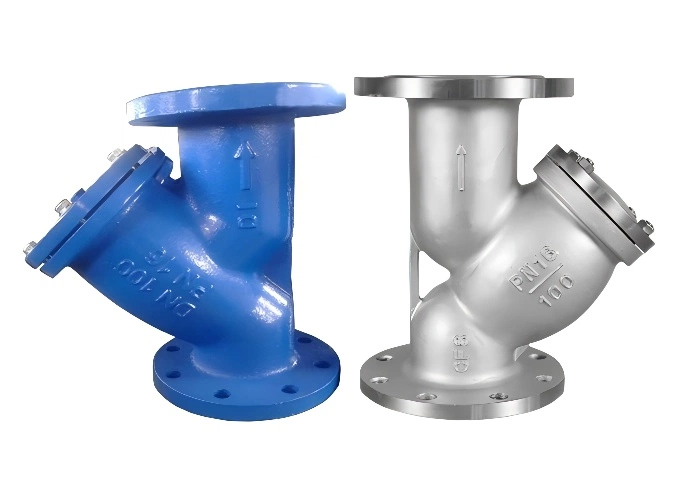
Chuanglan Valve manufactures 304/316L stainless steel Y-strainers from 1/2″ to 12″, with 20/40/60 mesh screens available in stock. We supply strainers with correct face-to-face dimensions for ANSI, DIN and JIS flanged systems, and 100% pressure test every unit before shipment.