
Sanitary Valves: Essential for Food, Beverage & Pharmaceutical Production
The 2026 engineer’s guide to sanitary valves for hygienic processing: why sanitary valves are different from industrial valves, surface finish requirements (Ra ≤0.8μm for CIP/SIP), FDA 21 CFR 177 style seal materials, tri-clamp connections, 3A / DIN 11850 / SMS standards, and the four main sanitary valve types — butterfly, ball, check, and sample. Includes a Jakarta pharma batch-contamination worked example caused by non-polished internal surfaces.
* Standard lead time depends on order size and destination. 5–10 days to Southeast Asia, 15–20 days to the Middle East.

Quick Answer
Sanitary valves are hygienic-process valves built from 304 or 316L stainless steel with electropolished internal surfaces (Ra ≤0.8μm, often Ra ≤0.4μm for pharma), FDA 21 CFR 177 style seals (EPDM / PTFE / silicone), and tri-clamp (ferrule) connections for tool-free disassembly and CIP/SIP cleaning. They meet 3A (US Dairy / Food), DIN 11850 (EU), and SMS (Swedish) standards. Unlike industrial valves (which use flanged or threaded connections with machined, non-polished surfaces), sanitary valves have no dead legs, no crevices, no product traps — every wetted part is cleanable-in-place. The four main sanitary valve types are sanitary butterfly (general flow control), sanitary ball (tight shutoff, multi-way diversion), sanitary check (backflow prevention), and sanitary sample valves. The single most common specification error is buying industrial valves with brushed (Ra 1.6) internal surfaces and calling them “sanitary” — product residue builds up in the roughness, causes batch contamination, and will fail 3A / EHEDG audit.
Key Takeaways
- Surface finish = hygienic performance: Ra ≤0.8μm for food & beverage, Ra ≤0.4μm for pharma; brushed Ra 1.6 is NOT sanitary
- Connection = tri-clamp (ferrule): no flanged, threaded, or welded connections that trap product
- Seal = FDA 21 CFR 177 style only: EPDM (CIP/SIP), PTFE (chemical resistance), silicone (high-temp); never nitrile industrial
- Standard = 3A / DIN 11850 / SMS: never specify industrial ASME B16.5 flanges for hygienic service
On This Page
What Are Sanitary Valves?
Sanitary valves are specially designed for hygienic processing applications where cleanliness, product purity, and compliance with strict industry standards are non-negotiable. They are commonly specified for food and beverage, pharmaceutical, biotechnology, and cosmetic production lines.
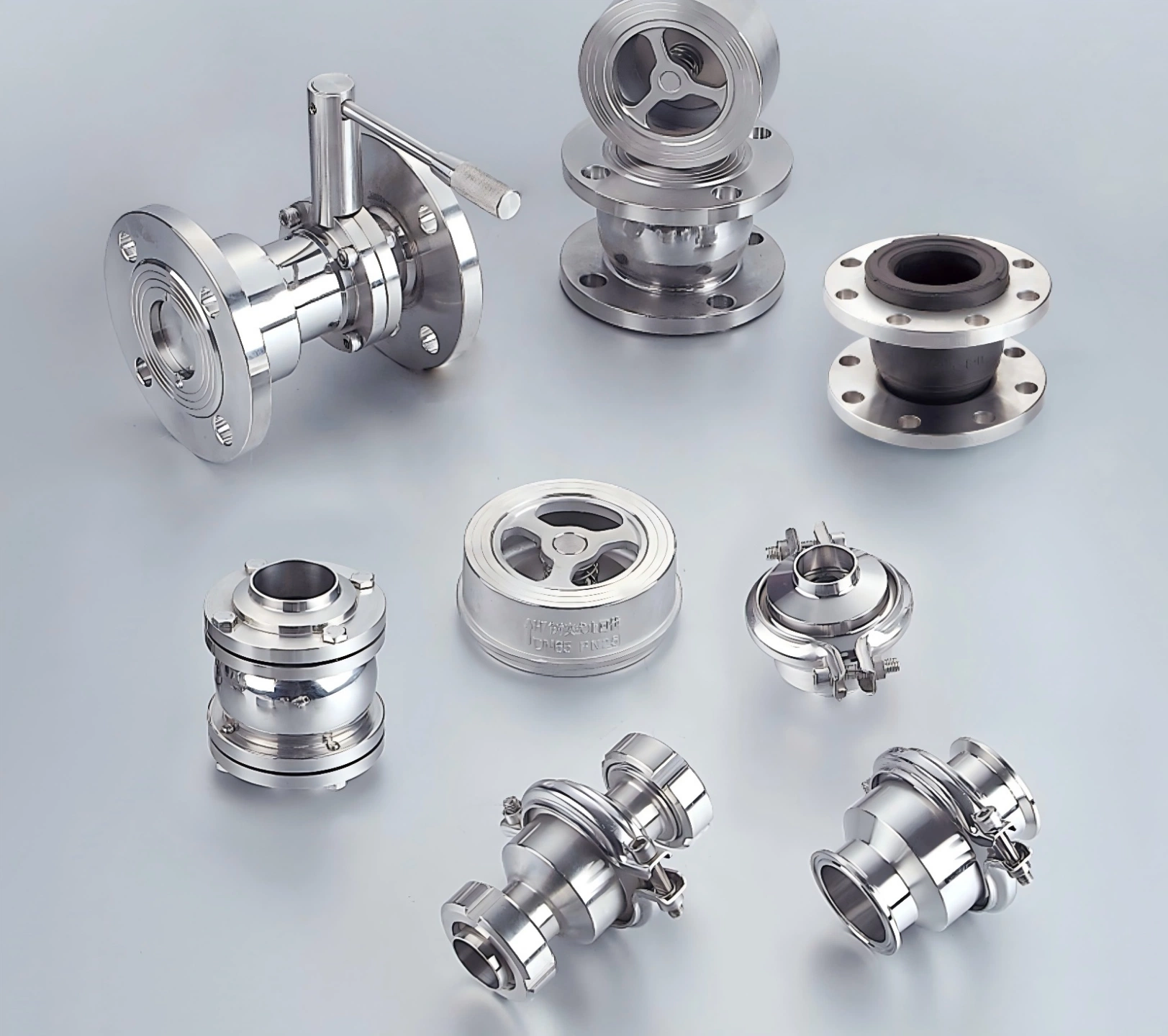
Unlike industrial valves (designed for pressure, temperature, and leak-tightness in general industrial service), sanitary valves are designed around one priority: cleanability. Every wetted surface must be smooth enough to be cleaned in place (CIP — Clean-In-Place) or steamed in place (SIP — Steam-In-Place), with no crevices, dead legs, or product traps where bacteria can grow.
Why Sanitary Valves Are Different from Industrial Valves
| Feature | Industrial Valve | Sanitary Valve |
|---|---|---|
| Body Material | Cast iron, ductile iron, WCB carbon steel | 304 / 316L stainless steel only |
| Internal Surface | As-cast or machined, Ra 1.6-6.3μm | Electropolished, Ra ≤0.8μm (food), Ra ≤0.4μm (pharma) |
| Connections | Flanged (ASME/DIN/JIS), threaded, butt-weld | Tri-clamp (ferrule), DIN 11850, SMS — no flanges |
| Seals | NBR, Viton, graphite — industrial | EPDM FDA, PTFE, silicone — FDA 21 CFR compliant |
| Design Standard | API 6D, EN 593, ASME B16.34 | 3A, DIN 11850, SMS, EHEDG |
| Cleaning | Disassembly cleaning (if any) | CIP / SIP cleanable in place, no disassembly |
Sanitary valves differ from industrial valves in five specific ways:
Main Sanitary Valve Types
The four most common sanitary valve types are:
1. Sanitary Butterfly Valve
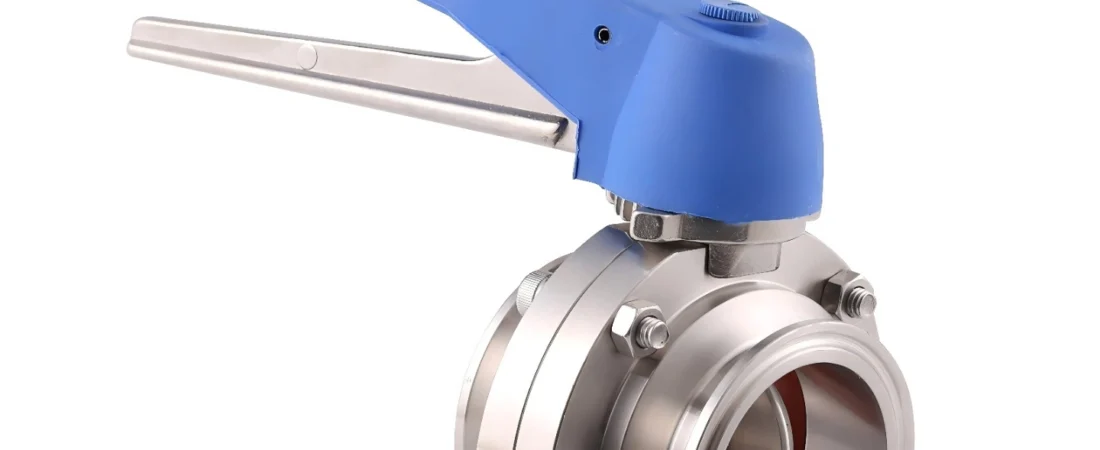
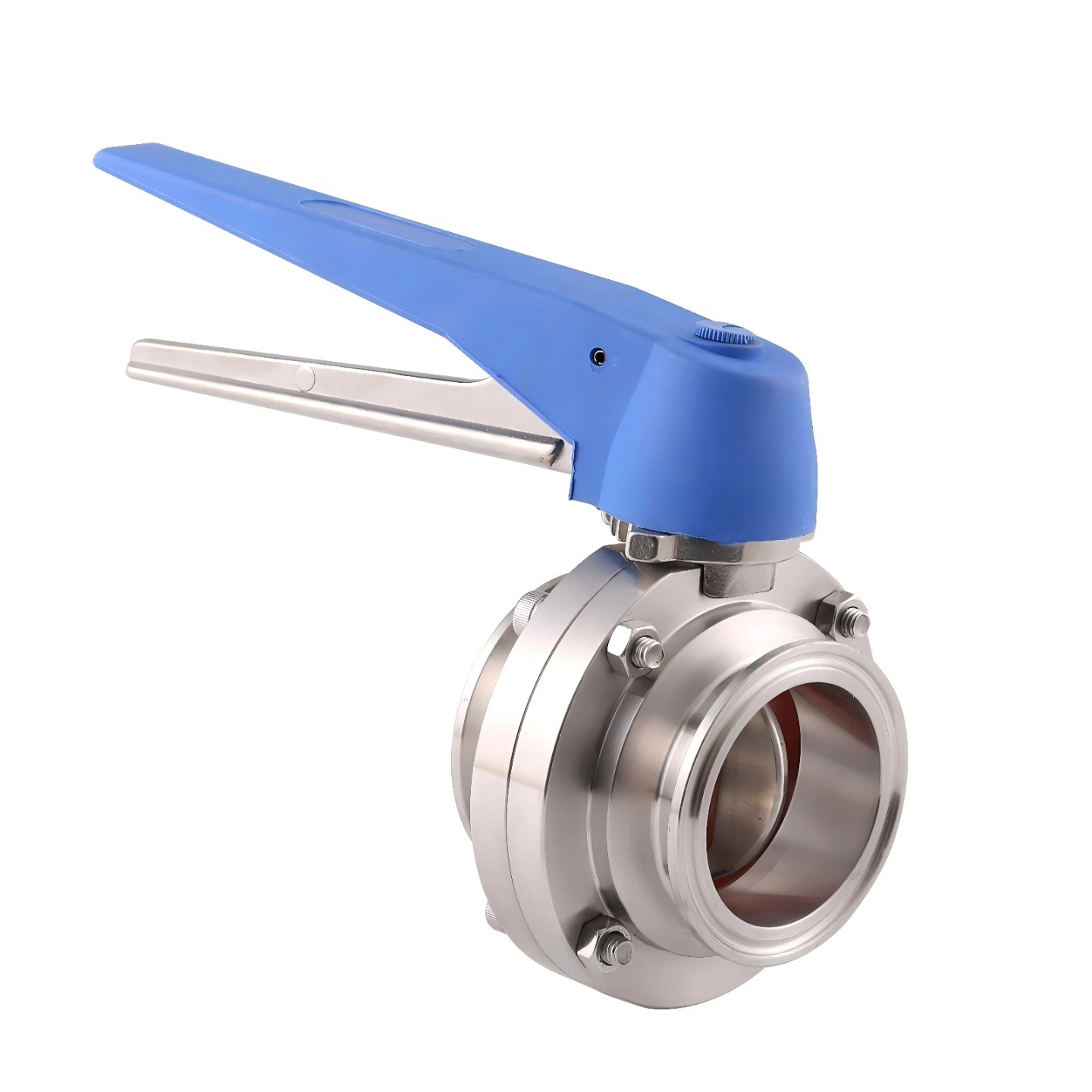
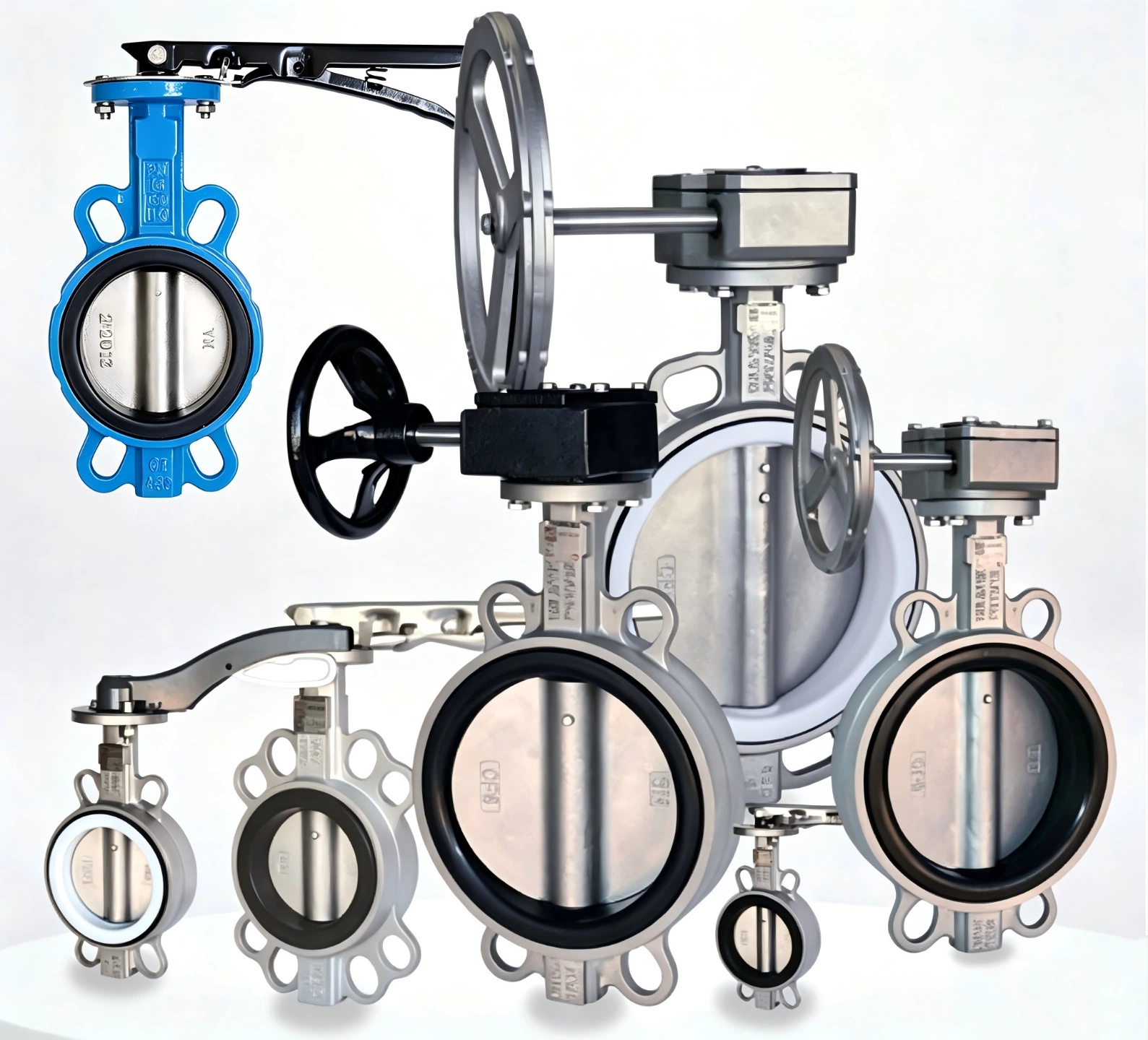
The most common sanitary valve. A thin disc rotates 90° in a short wafer body, with tri-clamp ends on both sides. Used for general flow control, CIP/SIP return lines, and shutoff. Body 316L, EPDM seat, lever or pneumatic actuator.
See our sanitary butterfly valve guide for the full spec.
2. Sanitary Ball Valve
A full-bore ball with tri-clamp ends, used where tight shutoff is required (no leakage past the disc) or where multi-way (3-way / 4-way) flow diversion is needed. Body 316L, PTFE seat, lever or actuator.
See our sanitary ball valve guide for the full spec.
3. Sanitary Check Valve
A wafer or lift-style check valve in 316L, with electropolished internal surfaces and EPDM seals. Prevents backflow in hygienic process lines (e.g., preventing reverse flow from a CIP return line back into the product line).
See our sanitary check valve guide for the full spec.
4. Sanitary Sample Valve / Diaphragm Valve
Diaphragm valves use a PTFE or EPDM diaphragm instead of a disc/ball — the wetted surface is only the diaphragm and body, with no stem penetrating the product. Preferred for sterile pharma service where stem packing would be a contamination risk. Sample valves are small valves mounted on product lines for aseptic sampling.
Surface Finish & Standards
Surface finish is the single most important hygienic parameter. The Ra value (roughness average) determines how easily product residue can be cleaned off:
| Ra Value | Application | Typical Standard |
|---|---|---|
| Ra ≤0.4μm (15-20 Ra in micro-inch) | Pharma, sterile biotech, aseptic filling | 3A, EHEDG, cGMP |
| Ra ≤0.8μm (25-30 Ra) | Food & beverage, dairy, brewing, CIP/SIP | 3A, DIN 11850 |
| Ra ≤1.6μm | General industrial (NOT hygienic) | ASME BPE (industrial) |
| Ra 1.6-6.3μm (as-machined) | Industrial water / oil / gas — never sanitary | API / EN |
The three main hygienic design standards are:
- 3-A Sanitary Standards (US) — dairy, food, beverage, pharma. Most widely recognized in North American food & pharma.
- DIN 11850 (EU) — stainless steel tubes and fittings for hygienic process. Dominant in European pharma and food.
- SMS (Swedish) — older Scandinavian standard, still common in Nordic breweries and dairy plants.
Seal Materials for Hygienic Service
Seals must be FDA 21 CFR compliant (food-contact grade). Three main options:
| Seal Material | Temperature Range | Best For |
|---|---|---|
| EPDM (FDA) | -10°C to 150°C (SIP up to 140°C) | CIP/SIP, water-based products, dairy, brewing — default choice |
| PTFE | -50°C to 200°C | Chemical resistance, aggressive CIP chemicals (acids / caustic) |
| Silicone (FDA) | -60°C to 200°C | High-temperature SIP, cosmetic / pharma, low compression set |
Never use industrial NBR (nitrile) seals on hygienic service — NBR is not FDA 21 CFR 177 style for food contact, and will fail audit.
Worked Example: Jakarta Pharma Batch Contamination
Step 1 — Problem
A Jakarta (Indonesia) pharmaceutical plant producing sterile injectable solutions (5% dextrose in water) had two consecutive batches rejected by QC. The 500-liter batches failed the bioburden test — total microbial count exceeded the USP <60> limit by a factor of 20. The plant’s QA team traced the contamination source via ATP swabbing to the sanitary butterfly valves on the product line — swabs taken from the valve body seat area showed high bioburden even after the standard CIP cycle (NaOH 2% at 80°C, 30 minutes). The batches were discarded, costing roughly 15× the valve purchase price in lost product and QA investigation time.
Step 2 — Root cause analysis
The QA team pulled one valve for tear-down. They discovered the internal surface finish was Ra 1.6μm (brushed), not Ra ≤0.4μm (electropolished) as specified in the plant’s hygienic design standard. The supplier had substituted “industrial-grade 316L” valves with brushed internal surfaces — cheaper — and misrepresented them as sanitary. At Ra 1.6, the surface micro-grooves trapped dextrose residue during CIP; the NaOH wash couldn’t penetrate the grooves, and the residue fed bacterial growth between production batches. The valve also used NBR (industrial, non-FDA) seals, which had swollen after repeated caustic CIP cycles and created a crevice between the seal and body.
Step 3 — Correct retrofit
Chuanglan Valve supplied 8× DN50 sanitary butterfly valves in 316L, with electropolished internal surface Ra ≤0.4μm (mill-issued Ra reading on each valve body), EPDM FDA 21 CFR seals, and tri-clamp ends. Each valve came with an Ra inspection report (surface roughness measurement per valve), FDA material certificate for the seals, and 3A declaration of conformity. The plant’s maintenance team swapped all 8 valves in one 8-hour production shutdown — tri-clamp connections mean no tools, no flanges, no bolt torquing.
Step 4 — Outcome
• The next 6 batches all passed bioburden at the first QC test, with ATP swabs showing zero residual bioburden on valve bodies.
• The plant’s QA team added a permanent incoming-inspection rule: every sanitary valve delivery must come with (a) mill-issued Ra reading, (b) FDA seal material certificate, (c) 3A declaration — no exceptions.
• Lesson: when buying “sanitary” valves, the price tells the story. If a sanitary valve quote is 40% below the market, it’s not sanitary — it’s an industrial valve with brushed internal surfaces and non-FDA seals. Always require Ra certificate + FDA seal certificate + 3A declaration on every sanitary valve order.
How Chuanglan Specs Every Sanitary Valve Quote
316L body, electropolished Ra ≤0.8μm (food) or Ra ≤0.4μm (pharma) — mill-issued Ra reading per valve
EPDM / PTFE / silicone FDA 21 CFR seals — FDA material certificate included
Tri-clamp (DIN 11850 / SMS / 3A ferrule) ends — no flanges, no threaded connections
3A declaration of conformity, MTC EN 10204 3.1 heat-number-tied, optional EHEDG documentation
Sanitary butterfly, ball, check, sample, diaphragm — all in stock from DN25 to DN150
MOQ 1 piece for stock items, 7–15 day standard delivery, OEM / ODM from large volume
For tank access on the same hygienic lines, a pressure-rated stainless sanitary manhole gives gasketed, drainable entry for inspection and cleaning.
Need a Sanitary Valve Quote with Ra Certificate?
Send us your line size, product type (food / pharma / biotech), CIP/SIP temperature, and required Ra finish — our engineers will spec the right sanitary valve with full documentation.
Get Free Sizing Report → WhatsApp usSoutheast Asia & Middle East Market Notes
For clients in Southeast Asia, sanitary valve demand is dominated by Jakarta, Surabaya, Bangkok, Ho Chi Minh, and Manila food & pharma plants. Indonesian pharma (Bio Farma, Kalbe, Kimia Farma) and Malaysian food & beverage (F&N, Dutch Lady, Nestlé Malaysia) plants follow EU GMP and cGMP standards — they require Ra ≤0.4μm electropolished surfaces, EPDM FDA seals, and 3A or EHEDG documentation. The most common failure we see on incoming shipments is brushed (Ra 1.6) surfaces mislabeled as “sanitary” — the Jakarta worked example is exactly this. We now require Ra certificate on every sanitary valve delivery, no exceptions.
For clients in the Middle East, sanitary valve demand is dominated by Saudi dairy (Almarai, Al-Safi), UAE food & beverage (Nestlé Middle East, Unilever Arab Foods), and pharma (Saudi Pharmaceutical Industries, Julphar, Gulf Pharmaceutical Industries). Saudi SFDA (Saudi Food & Drug Authority) and UAE ESMA require 3A or equivalent sanitary certification, and the halal-certification process requires full traceability of wetted materials (316L + FDA seals). Seawater in the Middle East is highly corrosive — even on hygienic service, external surfaces must be passivated 316L (not painted carbon steel), because the coastal humidity will rust unpainted valve bodies.
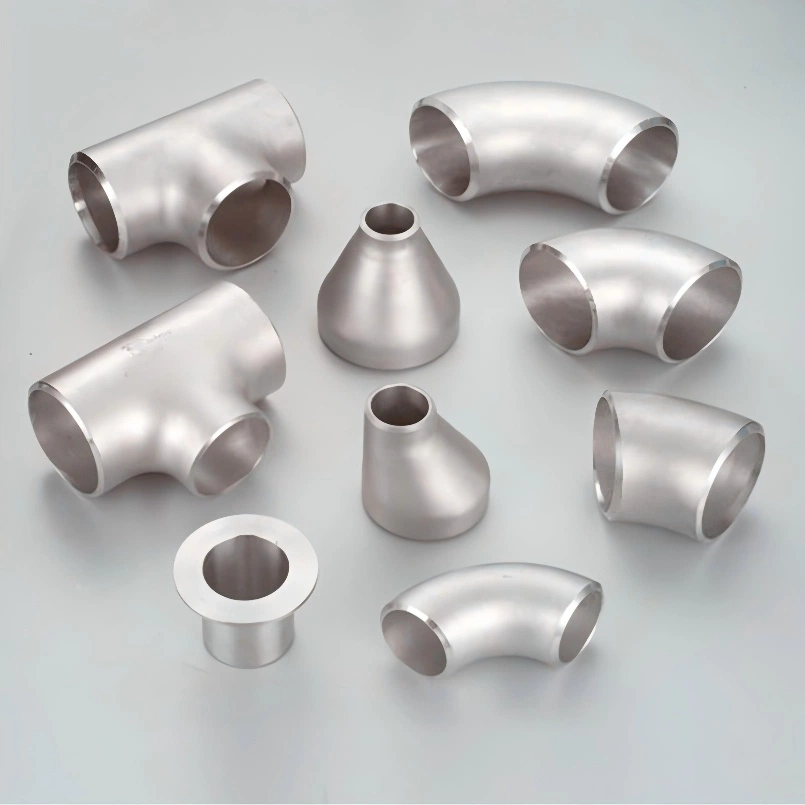
Chuanglan Valve ships sanitary butterfly valves, sanitary ball valves, sanitary check valves, and sanitary pipe fittings in 304 / 316L, full Ra certificate + FDA seal certificate + 3A declaration, and optional third-party inspection. Serving EPC Contractors Across Southeast Asia & Middle East · ISO 9001:2015 · Established in 2009 · MOQ 1 piece, 7–15 day standard delivery.
Common Mistakes to Avoid
- Specifying 304 stainless for coastal or chloride service. If your project is in Southeast Asia (coastal, cooling tower, deicing salts) or the Middle East (desalination, SWRO, humid Gulf climate), 304 will pit within 1–3 years. Specify CF8M (316) or duplex 2205.
- Ignoring pressure-temperature derating. PN16 / Class 150 ratings apply at room temperature only. At 200°C the allowable pressure drops by roughly 40–50%. Always check the manufacturer’s P-T chart before specifying for steam, hot oil, or thermal fluid.
- Buying on price without MTC verification. “Stainless steel” is not enough — ask for EN 10204 3.1 MTC tied to the heat number, and arrange PMI (XRF) witness at the factory if the price is 20% below market. 304 passed off as 316L is the single most common failure in this industry.
- Forgetting face-to-face and flange drilling. A “PN16” wafer valve from one manufacturer may not match the existing flange drilling or face-to-face of another. Always confirm dimensions against EN 558 / API 609 / ASME B16.10 before replacing an installed valve.
FAQ
What is the difference between a sanitary valve and an industrial valve?
Sanitary valves use 304/316L stainless steel with electropolished internal surfaces (Ra ≤0.8μm), FDA 21 CFR 177 style seals, and tri-clamp connections for CIP/SIP cleaning. Industrial valves use cast iron / carbon steel with as-machined surfaces, industrial NBR / Viton seals, and flanged / threaded connections. They are not interchangeable — using an industrial valve on hygienic service will cause product contamination and fail audit.
What does Ra ≤0.8μm mean for a sanitary valve?
Ra (roughness average) is the surface roughness measurement. Ra ≤0.8μm means the internal wetted surface is electropolished smooth enough that product residue can be fully removed by CIP (clean-in-place) chemicals. Brushed surfaces at Ra 1.6μm have micro-grooves that trap product and feed bacterial growth — they are not hygienic.
Which sanitary valve type should I choose?
Butterfly for general flow control and CIP/SIP return lines (most common). Ball for tight shutoff or 3-way / 4-way diversion. Check for backflow prevention on hygienic process lines. Diaphragm for sterile pharma service where stem packing is a contamination risk.
What is a tri-clamp connection?
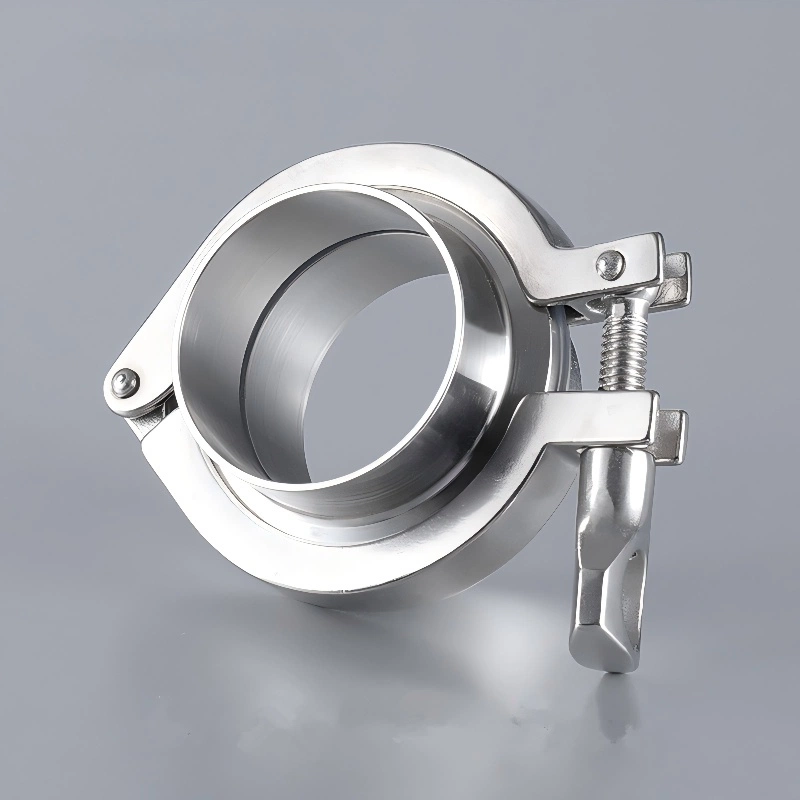
A tri-clamp (ferrule) connection uses a beveled flange on the valve and pipe, an EPDM gasket between them, and a single stainless-steel clamp ring tightened by hand or with a tool. It allows tool-free (or near tool-free) disassembly for cleaning — unlike flanged connections which require bolts, nuts, and torque wrenches.
Can I use a 316L industrial valve on food service?
No. Even if the body material is 316L, an industrial valve has as-machined (Ra 1.6+) internal surfaces, industrial NBR seals, and flanged / threaded connections that trap product. It will fail hygiene audit and cause contamination. You need a true sanitary valve with electropolished surfaces, FDA seals, and tri-clamp ends.
What certifications should I require on every sanitary valve order?
Three minimum: (1) mill-issued Ra surface roughness reading per valve body, (2) FDA 21 CFR material certificate for wetted seals, (3) 3A declaration of conformity. For pharma, add MTC EN 10204 3.1 and (if required by your QA) EHEDG documentation.
What is the lead time for sanitary valves from Chuanglan?
Standard stock items (DN25–DN100 sanitary butterfly, 316L, Ra ≤0.8, EPDM FDA, tri-clamp) ship in 5–10 days to Southeast Asia and 15–20 days to the Middle East. Custom Ra ≤0.4 pharma-grade, diaphragm valves, or large DN150+ take 15–30 days. MOQ 1 piece for stock items.
References & Standards
- 3-A Sanitary Standards — US hygienic equipment design
- DIN 11850 — Stainless steel tubes / fittings for hygienic process (EU)
- EHEDG — European Hygienic Engineering & Design Group
- FDA 21 CFR Part 177 — Food-contact polymer materials (seal compliance)
- USP <60> — Microbiological examination of non-sterile products
Related Products

Continue Reading
Request a Quotation — Reply Within 24 Hours
Send your line size, pressure rating, medium and quantity. Our engineers come back with price, drawing and lead time — no obligation.