

Quick Answer
304 (18/8 austenitic) is the default general-purpose stainless for inland clean water, HVAC, mild food service and indoor general industry — about 30-50% cheaper than 316L. 316L (16/10 with 2.0-2.5% molybdenum, low carbon ≤0.03%) is required for seawater, coastal / salt-air exposure, brackish cooling water, acidic or chlorinated process, food & beverage hygienic lines, pharma / ultra-pure water, and any welded piping where post-weld carbide precipitation matters. The single most expensive material mistake in B2B procurement is substituting 304 for 316L to save money on a coastal or seawater project — pitting and crevice corrosion typically punch through in 12-24 months, and the replacement cost is 10-30× the original material premium. Always require an EN 10204 3.1 MTC showing actual Mo and C percentages on every batch — some Chinese and Turkish suppliers pass 304 off as “316” (no L) or even fake 316L.
Key Takeaways
- 304: 18% Cr / 8% Ni, no Mo — for inland clean water, HVAC, neutral-pH general industry.
- 316L: 16% Cr / 10% Ni / 2.0-2.5% Mo, low carbon ≤0.03% — for seawater, coastal, acidic, chlorinated, hygienic.
- Price premium: 316L typically costs 30-50% more than 304 per unit — but pitting failure cost is 10-30× that premium.
- EN 10204 3.1 MTC: Always require EN 10204 3.1 mill certificate showing actual % Mo and % C per heat — this is the only way to detect 304-passed-off-as-316L fraud.
On This Page
304 vs 316L is one of the most common questions we get from buyers. Both look the same to the naked eye, but they perform differently in real-world applications — and the price difference can be 30-50%. As a valve and pipe-fitting manufacturer, we break down exactly when to use 304 and when you must specify 316L.
1. What’s the Difference in Composition?
The main difference between 304 and 316L is the addition of molybdenum (Mo) in 316L — that’s what gives it superior corrosion resistance. Here’s the chemical-composition comparison:
| Element | 304 Stainless | 316L Stainless |
|---|---|---|
| Carbon (C) | ≤ 0.08% | ≤ 0.03% (Low Carbon — “L”) |
| Chromium (Cr) | 18.0 – 20.0% | 16.0 – 18.5% |
| Nickel (Ni) | 8.0 – 10.5% | 10.0 – 14.0% |
| Molybdenum (Mo) | — | 2.0 – 2.5% |
The “L” in 316L stands for Low Carbon (≤0.03%) — this makes it easier to weld and reduces post-weld intergranular carbide precipitation (sensitization), which is critical for industrial piping systems that are site-welded. For welded process piping and sanitary lines, always specify the “L” grade; non-L 316 (0.03-0.08% C) is usually a marketing downgrade on export orders.
2. Corrosion Resistance Comparison
This is the biggest practical difference. 304 works fine in most mild environments, but 316L is necessary when you have chemicals, saltwater, or high humidity.
| Environment / Medium | 304 Suitable? | 316L Suitable? |
|---|---|---|
| Clean water, indoor air | Yes | Yes (overkill) |
| Food & beverage (non-acidic) | Yes | Yes |
| Seawater / coastal salt air | No — pitting in 1-2 years | Yes |
| Acidic chemicals (pH < 6) | No | Yes (mild acids) |
| Chlorine / bleach / brackish | No | Limited — pitting still possible; need 2205 duplex or higher |
| Pharmaceutical / ultra-pure water | No | Yes (polished hygienic finish) |
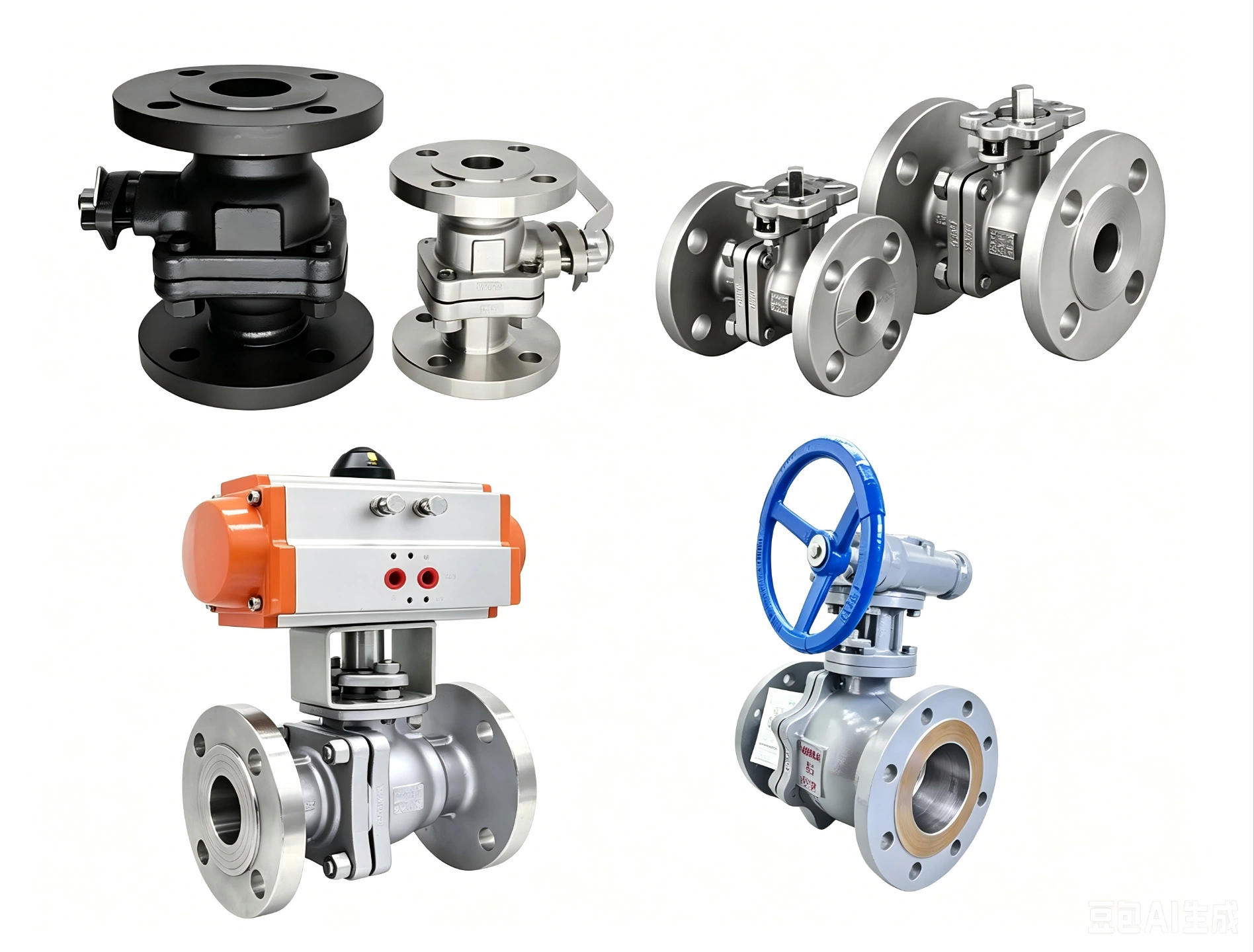
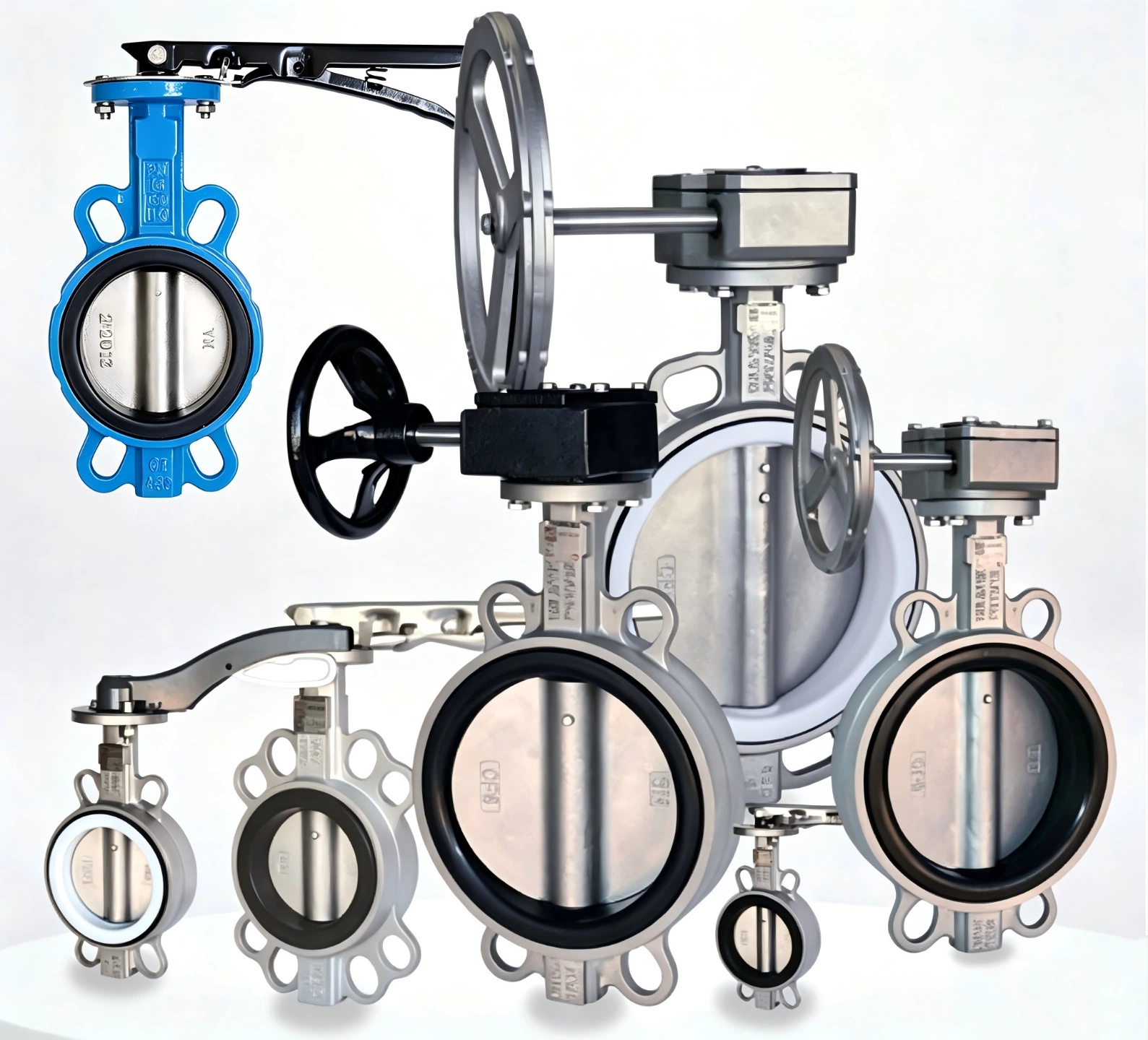
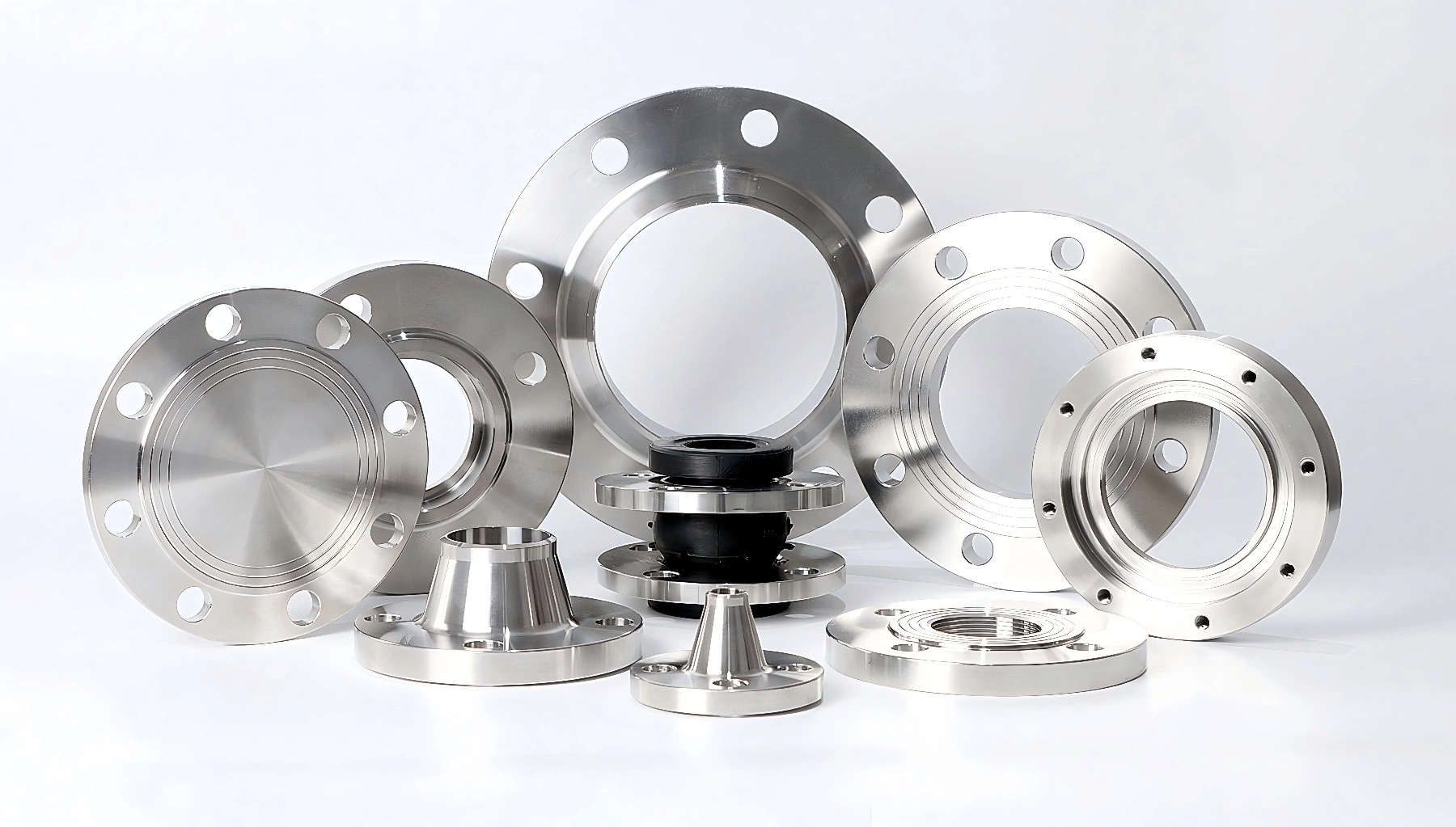
For seawater, coastal and desalination service, see our flanged ball valves, flanged gate valves, wafer butterfly valves, flanged butterfly valves and stainless steel flanges — available in CF8 (304), CF8M (316), CF3M (316L), and 2205 duplex / 2507 super-duplex body castings on request.
3. Price Difference: How Much More Does 316L Cost?
316L is more expensive because it contains more nickel and molybdenum, which are the most expensive raw-material elements in stainless steel. Rather than quote exact dollars (which fluctuate with LME nickel and molybdenum spot prices), here’s the typical relative premium you should expect to see on any supplier’s quotation:
| Product Type | 304 Reference (index = 1.0) | 316L Reference (index = 1.0) | Relative Premium vs 304 |
|---|---|---|---|
| DN50 (2″) flanged ball valve | 1.0× baseline | 1.30× | +30% |
| DN100 (4″) wafer butterfly valve | 1.0× baseline | 1.33× | +33% |
| DN100 PN16 flange | 1.0× baseline | 1.40× | +40% |
| DN80 (3″) sanitary fitting | 1.0× baseline | 1.35× | +35% |
As a rule of thumb, expect to pay 30-50% more for 316L compared to 304, depending on product size, order quantity, and the current LME nickel and molybdenum spot prices. If a supplier quotes you 316L at only 10-15% above 304, that’s a red flag — either they’re selling non-L 316, or they’re secretly substituting 304 with a sticker. Always require the EN 10204 3.1 MTC.
4. Which One Should You Choose?
Choose 304 if:
• Your application is clean water, HVAC, or general inland industry
• You’re more than 10 km from the coast
• The medium is neutral pH (6-8)
• Budget is tight and the valve won’t see harsh chemicals
Choose 316L if:
• You’re within ~10 km of the ocean, or using seawater / brackish water
• The medium is acidic, salty, or chlorinated
• Food, beverage, dairy, brewery or pharma hygienic production
• The valve sits outdoors in high-humidity the Middle East or Southeast Asia conditions
• You want 10+ year service life without corrosion issues
For hygienic food & beverage lines, see our sanitary ball valves, sanitary butterfly valves and sanitary pipe fittings — all cast CF3M (316L) with EPDM / PTFE seals and polished internal finishes.
Worked Example: Sharjah Cooling Tower Pitting Failure
Step 1 — Problem
A large retail / office complex in Sharjah, UAE, built a new chilled-water plant. The mechanical package called for 48 × DN200 (8″) wafer butterfly valves on the cooling-tower side (open-loop, brackish Gulf-water cooling, 32°C return, chlorinated to 1.0 ppm free chlorine). The EPC’s design basis specified “SS316 body” — but the procurement team, trying to save money on a tight budget, substituted the valves with “SS304” (CF8 body) because “they both look the same and it’s just cooling water.” The valves went into service in May.
Step 2 — Root cause
By October of the same year (5 months later), maintenance crews started seeing brown rust streaks around the valve stems. By month 18, three of the DN200 valves had pitted through the body on the seawater side, and two had weeping at the body-to-shaft seal. Root cause: 304 (CF8) has no molybdenum. In Gulf seawater (≈ 40,000 ppm chloride, 35°C, plus 1 ppm free chlorine), 304 pitting-potential is exceeded immediately. Pitting initiates at sulphide inclusions, propagates under the gasket line and behind the stem seal, and eventually perforates. The “just cooling water” assumption ignored both chloride concentration and chlorination.
Step 3 — Correct retrofit
The owner had two options: (a) replace all 48 valves with 316L (CF3M) bodies, accepting 18 months of deferred cost; or (b) replace the worst-affected units with 2205 duplex (UNS S31803) valves, which tolerate seawater + chlorination without pitting at all. They chose option (b) for the seawater side (12 valves on the brackish cooling loop), and option (a) 316L for the closed chilled-water side (36 valves). Chuanglan supplied both packages: CF3M 316L wafer butterfly valves for the closed loop, and 2205 duplex body castings with 316L trim for the open seawater loop — each with EN 10204 3.1 MTC showing actual % Mo (2.4% on 316L, 3.2% on 2205 duplex).
Step 4 — Outcome
• The 316L / 2205 duplex valves have now been in service for over 4 years with zero pitting.
• The total retrofit cost — including air freight, crane rental, line isolation, and two days of downtime per valve — was roughly 20-30× the original material-premium savings the procurement team had captured by choosing 304 over 316L.
• The owner added a permanent line to every future RFQ: “Body material: CF3M (316L) for brackish / chlorinated service, 2205 duplex for direct seawater. MTC EN 10204 3.1 required, PMI witness at factory before shipment.”
How Chuanglan Documents Every Stainless Valve Shipment
Every batch ships with EN 10204 3.1 MTC — heat number tied to the cast body, with actual chemical analysis (C, Cr, Ni, Mo) and mechanical properties
Body castings available in CF8 (304), CF8M (316), CF3M (316L), WCB (carbon steel), and 2205 / 2507 duplex on request
Third-party PMI (Positive Material Identification) witness (SGS / BV / Intertek / Lloyd’s) before shipment — handheld XRF gun confirms Mo ≥ 2.0% on every 316L body
Seawater service package: 316L body + 2205 / 2507 duplex option, HASTELLOY C-276 ball / stem for chlorinated service
Not Sure If You Need 304 or 316L for Your Project?
Send us your medium (water type, pH, chloride ppm, temperature, chlorine level, distance from coast) — our engineers will recommend the most cost-effective material (304 / 316L / 2205 duplex) and reply within 24 hours with a quotation plus the EN 10204 3.1 MTC format we ship with.
Get Free Sizing Report → WhatsApp usCommon Mistakes to Avoid
Mistake 1: Paying for 316L when you don’t need it. Many buyers over-specify “just to be safe,” but 316L costs 30-50% more. If you’re just running clean water in an inland factory, 304 is perfectly fine and will save you thousands. Don’t waste money — but don’t cheap out either.
Mistake 2: Using 304 in coastal areas. We’ve seen 304 valves rust through in 1-2 years on coastal projects. The salt in the air will eat through 304 quickly. Always use 316L if you’re within ~10 km of the ocean, on an island, or in a the Middle East Gulf state with high ambient salinity.
Mistake 3: Not checking the material certificate. Some suppliers sell 304 as 316L. Always ask for an MTC EN 10204 3.1 that shows the actual chemical composition (specifically % Mo and % C). Reputable manufacturers provide this without hesitation — and will let you arrange a third-party PMI (XRF gun) witness at the factory before shipment.
Southeast Asia & Middle East Market Notes
For clients in Southeast Asia, the material choice follows a clean rule: any project within 20-30 km of the coast (which is most of Indonesia, Malaysia, Thailand, Vietnam, Philippines) needs 316L for outdoor cooling-water, fire-protection and sanitary lines — tropical salt air plus 80-95% relative humidity is a near-perfect pitting environment for 304. Palm-oil mills in Sumatra and Malaysia are a special case: the process water contains free fatty acids plus chlorinated CIP, so 316L or 2205 duplex is required on the process side; carbon-steel WCB is acceptable only for dry steam and non-wetted utility service. Singapore’s offshore and marine sector (Keppel, Sembcorp) additionally requires 316L for seawater lift and fire-water service, with 2205 / 2507 duplex preferred for direct seawater injection. Vietnamese water treatment and industrial HVAC projects default to 304 for indoor clean-water loops, but coastal desalination and shipyard service always move to 316L or duplex.
For clients in the Middle East, the rule is even more strict: 304 is almost never acceptable for outdoor service. Gulf seawater (≈ 40,000 ppm chloride, 35°C, often chlorinated) immediately pitts 304. Saudi Aramco SAES standards require 316L or 2205 duplex for any brackish or seawater-cooled valve, and ADNOC ICV procurement additionally requires PMI witness at the factory before shipment. UAE and Qatar district-cooling networks (Tabreed, QCool) run on Gulf seawater for the open loop — those valves must be 2205 duplex or 2507 super-duplex, not just 316L, because chlorination levels (up to 2 ppm free chlorine) push even 316L into slow pitting. Internal HVAC and closed chilled-water loops (non-corrosive, treated water) can run 304 — but outdoor-exposed valve bodies in Abu Dhabi and Riyadh still prefer 316L because of 50°C surface temperatures plus dust-borne chlorides.
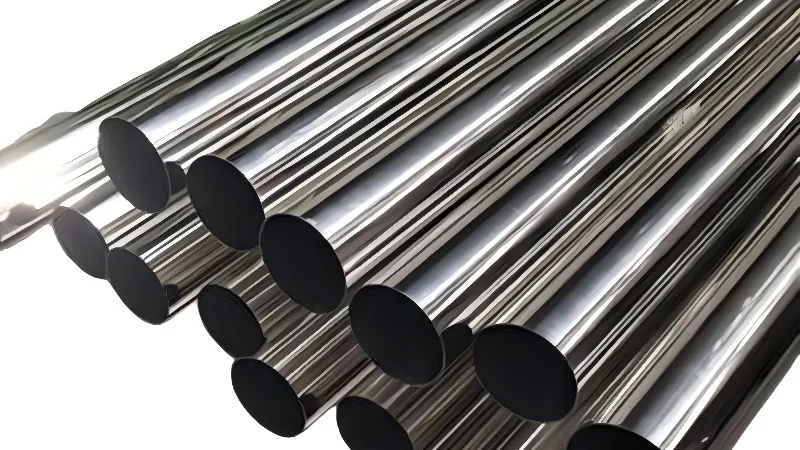
Chuanglan Valve supplies all grades — stainless seamless pipe, stainless steel flanges, butt-weld pipe fittings, flanged ball valves, gate valves, globe valves, wafer butterfly valves, swing check valves, and wafer dual-plate check valves — in CF8 (304), CF8M (316), CF3M (316L), WCB (carbon steel), 2205 duplex and 2507 super-duplex, with EN 10204 3.1 MTC per heat and optional SGS / BV / Intertek / Lloyd’s PMI witness. Serving EPC Contractors Across Southeast Asia & Middle East · ISO 9001:2015 Certified · Factory Experience · MOQ 1 piece; 7–15 days for in-stock items, 15–30 days for custom builds after technical review.
FAQ
Can I visually tell 304 and 316L apart?
No. Both grades look identical — same silver finish, same weight, same magnetism ( slightly magnetic after cold work on both). The only dependable ways to tell them apart are: (1) the EN 10204 3.1 MTC chemical-composition report showing actual % Mo; (2) a portable XRF PMI gun that reads elemental composition in 10 seconds; or (3) the shop-floor “nitric acid cupratest” (less dependable, leave it to a materials lab). Always require the MTC.
What is the difference between 316 and 316L?
316 has carbon up to 0.08%; 316L has carbon ≤ 0.03%. The “L” stands for “low carbon.” Low-carbon 316L resists post-weld carbide precipitation (sensitization), which is critical for any welded piping system. For export valve bodies, “CF3M” is the cast-grade equivalent of 316L; “CF8M” is the cast equivalent of 316 (higher carbon). For welded site piping, always specify CF3M / 316L — non-L grades on export orders are often a quiet downgrade.
Is 316L really 30-50% more expensive than 304?
Yes, and the gap moves with LME nickel and molybdenum spot prices. As a rough reference index, for the same product size and pressure class, 316L body castings typically cost 30-50% more than 304 body castings, because molybdenum (2-2.5%) and extra nickel (10-14% vs 8-10.5%) are the most expensive elements in stainless. If a supplier quotes 316L at only 10-15% above 304, treat that as a red flag — either they’re quoting non-L 316, or they’re secretly substituting 304.
Do I need 316L for an indoor HVAC chilled-water loop?
Usually no. Closed chilled-water loops are treated, de-aerated, neutral-pH, and indoor — 304 is fine and saves money. You do need 316L if the loop is open to the atmosphere (cooling tower), runs brackish / seawater, or is outdoor-exposed in a coastal or Gulf environment.
What should I specify for direct seawater service?
316L is not enough for direct seawater with chlorination. Specify 2205 duplex (UNS S31803 / S32205) or 2507 super-duplex (UNS S32750) for the valve body, and HASTELLOY C-276 or 254 SMO for ball and stem trim if chlorination exceeds 1 ppm. This is the Sharjah retrofit standard now adopted across UAE / Qatar district cooling.
How do I detect 304 passed off as 316L?
Three signals: (1) ask for the MTC — if it shows Mo = 0% or Mo < 1.5%, it’s 304; (2) arrange a third-party PMI (XRF gun) at the factory before shipment — takes 10 seconds per valve, costs a few hundred dollars total; (3) compare the price — 316L at 30-50% above 304 is normal; 316L at 10-15% above 304 is almost certainly mislabeled.
Can Chuanglan supply both 304 and 316L with EN 10204 3.1 MTC?
Yes. We manufacture valves and pipe fittings in CF8 (304), CF8M (316), CF3M (316L), WCB (carbon steel), 2205 duplex and 2507 super-duplex. Every batch ships with EN 10204 3.1 MTC tied to the heat number on the cast body, and we can arrange SGS / BV / Intertek / Lloyd’s PMI witness before shipment. MOQ 1 piece; 7–15 days for in-stock items, 15–30 days for custom builds after technical review.
References & Standards
- ASTM A240 / A240M — Standard Specification for Chromium and Chromium-Nickel Stainless Steel Plate
- ASTM A351 CF8 / CF8M / CF3M — Castings, Austenitic, for Pressure-Containing Parts
- EN 10204 — Metallic products — Types of inspection documents (3.1 / 3.2)
- ASTM A790 S31803 / S32205 — Duplex stainless steel pipe (seawater service)
- SAES-L-110 / SAES-L-350 — Saudi Aramco piping material specifications
Related Products
Continue Reading

Request a Quotation — Reply Within 24 Hours
Send your line size, pressure rating, medium and quantity. Our engineers come back with price, drawing and lead time — no obligation.
Get a Material Recommendation on Your Next Valve RFQ
MOQ: 1 piece · ISO 9001:2015 certified · EN 10204 3.1 MTC included · shell and seat pressure tested
Southeast Asia: Indonesia, Malaysia, Thailand, Vietnam, Myanmar, Singapore, Philippines
Middle East: Saudi Arabia, UAE, Qatar, Kuwait, Oman, Bahrain
Other Regions: Europe, North America, South America, Africa, Australia
Delivery: 7–15 days for in-stock items · 15–30 days for custom builds · ocean freight transit varies by destination
Payment: T/T 30% deposit + 70% before shipment · L/C at sight · Warranty: 12 months after shipment for material and manufacturing defects · Packing: export plywood case / fumigation-free pallet · Shipping: FOB Ningbo/Shanghai · Documents: EN 10204 3.1 MTC + packing list + commercial invoice · Third-party inspection welcome: SGS / Bureau Veritas / Intertek
Get Free Quote »