


Butterfly Valve vs Ball Valve 2026: Which Is Better for Your Project?
The complete 2026 comparison — shutoff tightness, pressure drop, price, throttling, size range, and the decision tree for Southeast Asia and the Middle East EPC projects.
* Standard lead time depends on order quantity and destination country. 5–10 days to Southeast Asia, 15–20 days to the Middle East.
⚡ Quick Answer
Choose a ball valve when you need bubble-tight shutoff, high pressure rating (Class 300+), small-to-medium sizes (up to DN150), or corrosive chemical service. Choose a butterfly valve when the line is large (DN150+), pressure is medium (PN10/16, Class 150), cost and weight matter, or you need mid-flow throttling. In most HVAC and water treatment projects above DN150, switching from ball to wafer butterfly cuts valve cost and weight by 60-75% while meeting leakage tolerance.
🔑 Key Takeaways
- Shutoff: ball valve = bubble-tight; butterfly = good but not bubble-tight.
- Size vs cost: at DN50 the two are close in price; by DN300 the ball valve costs ~4× the wafer butterfly.
- Throttling: butterfly throttles well in the 30-70% open range; ball valves must stay fully open or fully closed.
- Pressure rating: ball handles Class 300+; standard butterfly is typically Class 150 / PN16 max.
On This Page
1. How They Work
Butterfly valves and ball valves are the two most common quarter-turn valves used in industrial piping. Both open and close with a 90° turn, but they work differently, have different costs, and are best for different applications. As a valve manufacturer with 15+ years of export experience, we’ll break down the differences so you can choose the right valve for your project.
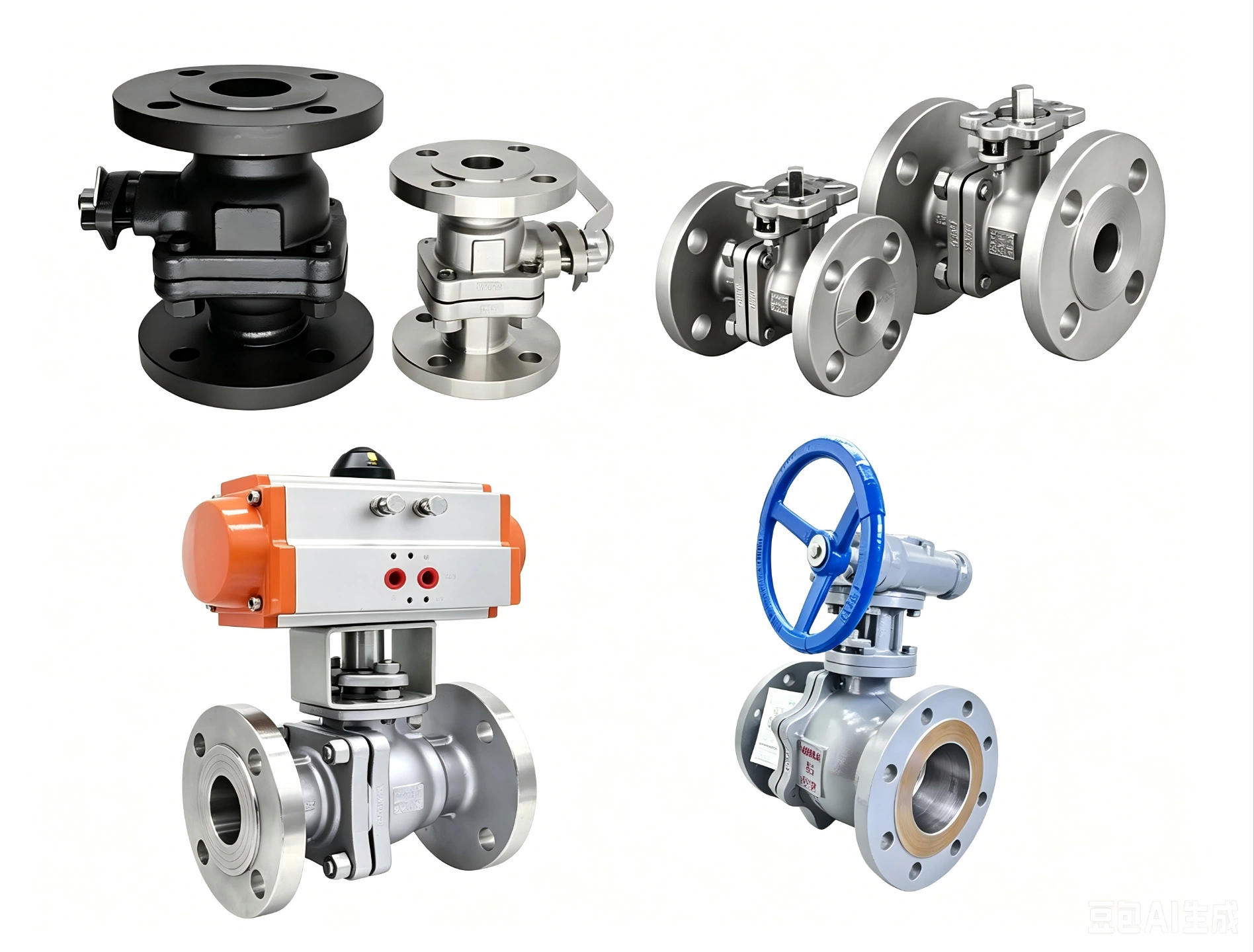
Ball valve: Uses a hollow ball (perforated sphere) to control flow. Turn the handle 90° and the hole lines up with the pipe to open, or rotates 90° to block flow. When fully open, the ball hole is the same size as the pipe — no restriction. Chuanglan’s flanged ball valves provide bubble-tight shutoff.
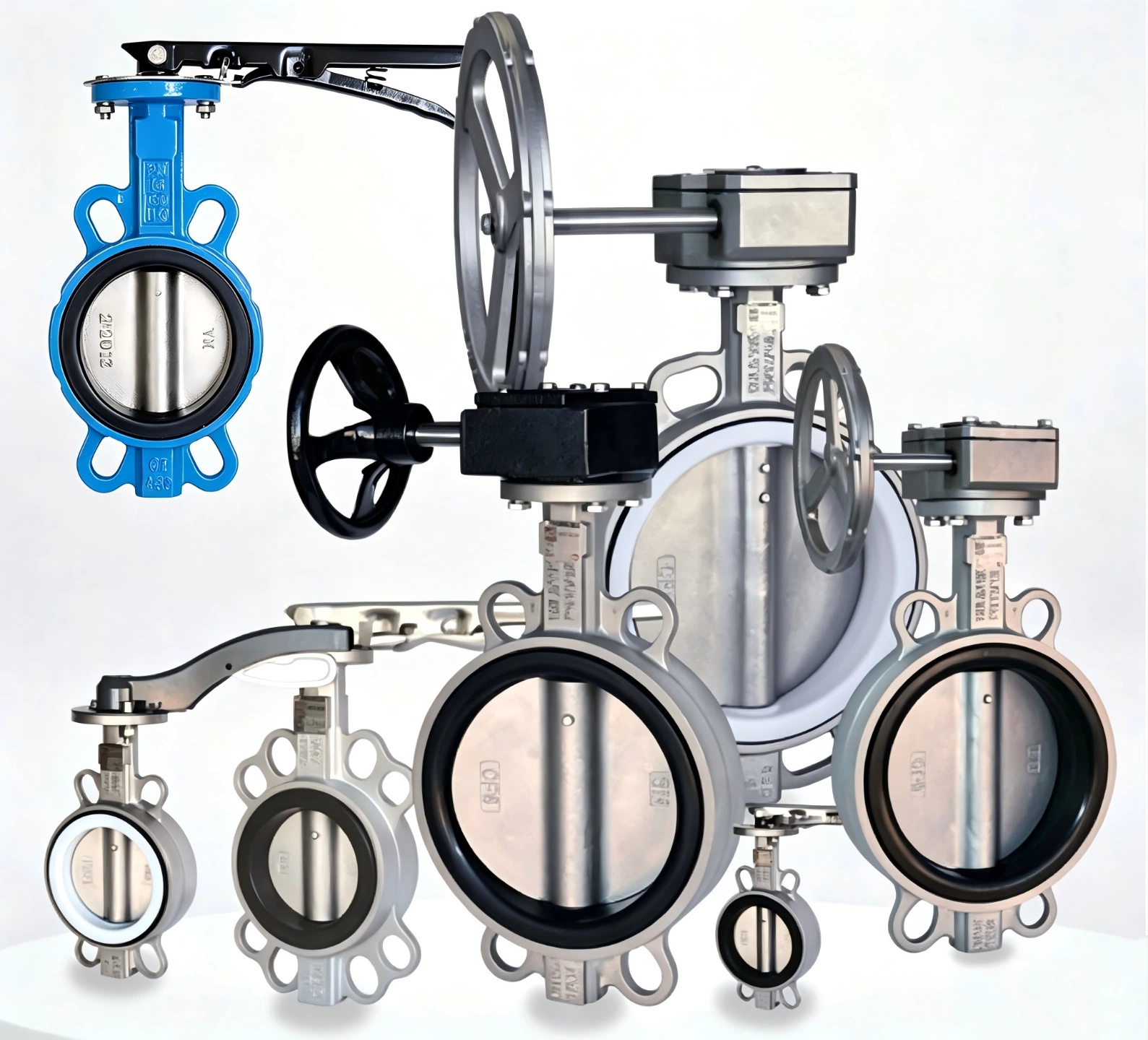
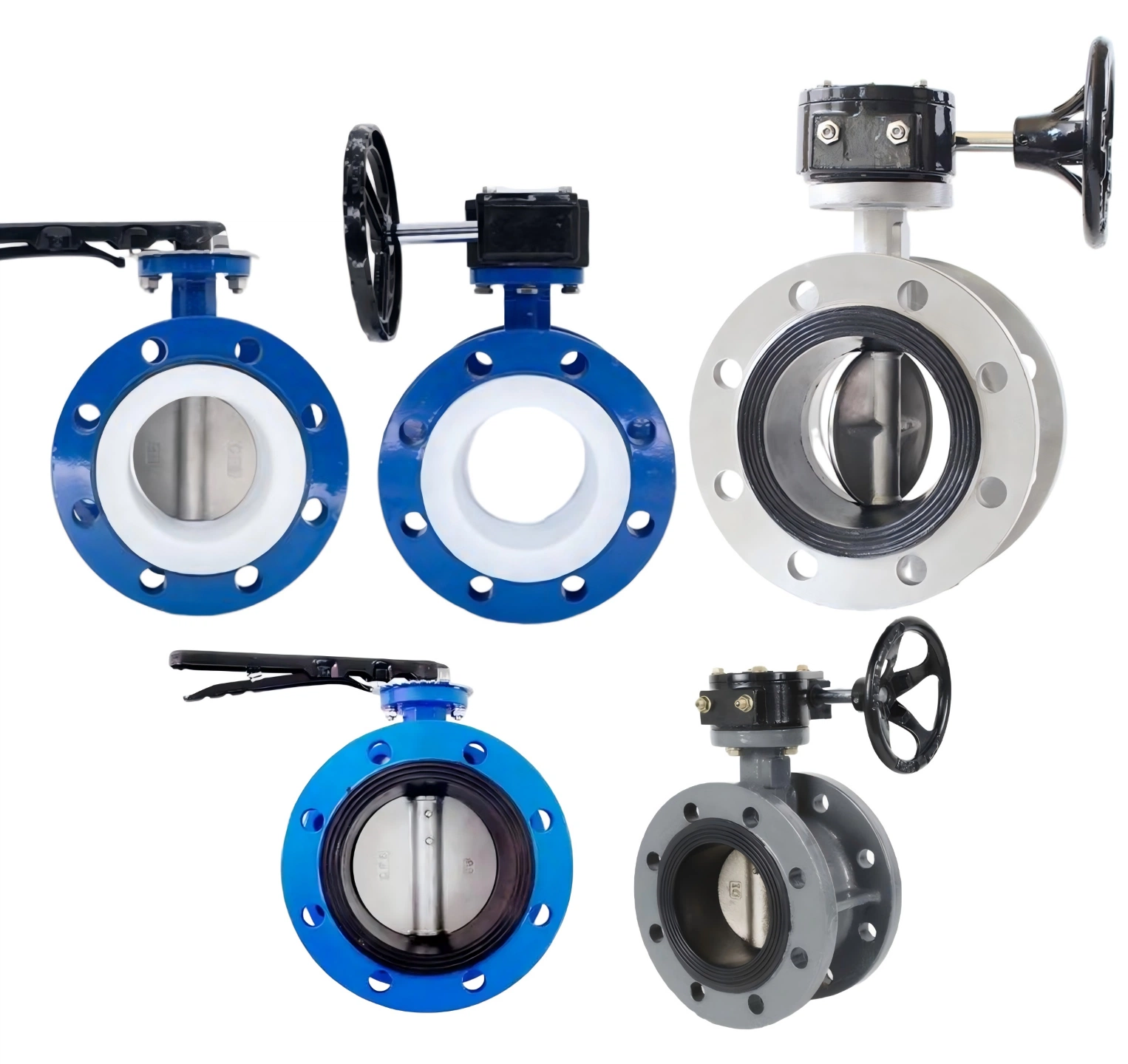
Butterfly valve: Uses a circular disc (the “butterfly”) mounted on a rotating shaft. The disc rotates 90° to open or close. When fully open, the disc is still in the flow path (parallel to flow), so it creates some restriction. Chuanglan’s wafer butterfly valves and flanged butterfly valves are the standard choice for large water and HVAC lines.
2. Side-by-Side Comparison
| Feature | Ball Valve | Butterfly Valve |
|---|---|---|
| Shutoff tightness | Excellent (bubble-tight) | Good (minor leakage possible, not bubble-tight) |
| Pressure drop (fully open) | low (full port = no restriction) | Higher (disc is in the flow path) |
| Unit price (large size) | Expensive (DN150+ gets expensive) | Much cheaper (~30-50% of ball at DN150) |
| Weight & size | Heavier, longer face-to-face | Lightweight, compact (wafer design) |
| Throttling / flow control | Poor (seat damaged if partially open long) | Good (excellent for mid-flow throttling) |
| Typical max size | Up to DN600 (larger gets expensive) | Up to DN2400 and larger (large sizes) |
| Pressure rating | High (up to Class 2500) | Medium (usually up to Class 300) |
| Maintenance | Medium (seats wear out, replaceable) | Low (liner is cheap and easy to replace) |
| Operation speed | Fast (90° turn) | Fast (90° turn) |
3. When to Choose a Ball Valve
Choose a ball valve if:
- You need Bubble-tight shutoff
- You have small-to-medium sizes (up to DN150)
- You need high pressure rating (Class 300+)
- The valve is either fully open or fully closed (not throttling)
- You have corrosive media (stainless ball and PTFE seat)
- You need to automate it (pneumatic/electric actuator)
Typical applications: oil & gas pipeline shutoff, chemical processing, high-pressure systems, anywhere you need bubble-tight, automated process systems. For on/off valve selection also see our Ball Valve vs Gate Valve guide.
4. When to Choose a Butterfly Valve
Choose a butterfly valve if:
- You have large sizes (DN150 and up — much cheaper than ball)
- You need to throttle flow (not just open/close)
- Space is limited (wafer design is compact)
- You have medium pressure (PN10 / PN16, Class 150)
- Cost is a priority (butterfly is 30-50% cheaper at DN150)
- You have water, HVAC, or general industry applications
Typical applications: water treatment plants, HVAC systems (chilled water, hot water), large-diameter piping (DN250 and up), general industry shutoff (medium pressure), throttling flow applications. For automation, see our pneumatic wafer butterfly valves.
5. Worked Example: HVAC Retrofit (Ho Chi Minh City, Vietnam)
Step 1 — Problem
A 50,000 m² office building in Ho Chi Minh City, Vietnam had its chilled water system originally specified with 12 × DN200 flanged ball valves on the condenser water return. The mechanical contractor priced them at the top of the range for 316 stainless, PN16 — a high valve cost for a non-critical HVAC loop.
Step 2 — Engineering review
The design engineer reviewed the application: chilled water (12 °C), PN10, on/off service (not throttling), and leakage tolerance of 0.1% is acceptable (not a hazardous media). Ball valves were over-specified — butterfly valves meet all requirements at a fraction of the cost.
Step 3 — Alternative
• Replaced 12 × DN200 flanged ball valves with 12 × DN200 wafer butterfly valves (316 body, EPDM liner, PN16)
• Wafer style also saved weight and installation labor (fewer bolts, lighter lifting)
• Unit price dropped to roughly one-third of the flanged ball valve
• Added hand levers with gear operators for DN200
Step 4 — Result after 2 years
• Total valve cost cut by roughly 65-70% vs the original ball valve spec
• Weight per valve dropped from ~28 kg (ball) to ~6.5 kg (butterfly) — easier installation, less structural load
• Pressure drop at design flow: 0.08 bar (acceptable for chilled water loops)
• After 2 years: no leaks, no issues, EPDM liner still in good condition
💡 Why EPC Contractors Specify Ball & Butterfly Valves with Chuanglan
Wafer / flanged butterfly valves in 304 / 316L, DN50–DN1200, PN10–PN16, EPDM / Viton / PTFE liner
Floating / trunnion ball valves in 304 / 316L, DN15–DN300, PN16–PN40 / Class 150–300
ISO 9001:2015 certified, 100% factory pressure tested, EN 10204 3.1 MTC, SGS / BV / Intertek inspection available
Need Help Choosing Ball vs Butterfly Valves?
Send us your pipe size, pressure, temperature, and media — our engineers will recommend the right valve type within 24 hours.
Get Free Sizing Report →6. Cost Comparison
| Size | Wafer Butterfly (PN16) | Flanged Ball (PN16) | Relative Cost |
|---|---|---|---|
| DN50 (2″) | Low | Low | Ball ~50% more |
| DN100 (4″) | Low | Medium | Ball ~2× more |
| DN150 (6″) | Medium | Medium-high | Ball ~2.5× more |
| DN200 (8″) | Medium | High | Ball ~3× more |
| DN300 (12″) | Medium-high | high | Ball ~4× more |
Key takeaway: For small sizes (DN50 and under), the price difference is small. But for large sizes (DN150 and up), wafer butterfly valves are dramatically cheaper — that’s why they’re the standard for large water and HVAC systems.
7. Common Mistakes
Mistake 1: Using a ball valve for throttling. Ball valves are designed for open/closed service. If you leave a ball valve partially open for long periods, the PTFE seat gets damaged by high-velocity flow, and it will start to leak. Use a butterfly valve or globe valve for throttling.
Mistake 2: Using a butterfly valve where you need bubble-tight. Butterfly valves are not bubble-tight. If you need bubble-tight (e.g., toxic or expensive media), use a ball valve. Butterfly valves will always have a tiny bit of leakage across the seat.
Mistake 3: Buying a ball valve for a large line “to save money.” People think “ball valve is better” so they buy one for a DN300 line. It will cost ~4× more than a butterfly valve, weigh more, and take more space. For large water lines, butterfly valve is the right choice.
Mistake 4: Forgetting about pressure rating. Standard butterfly valves are usually rated for Class 150 / PN16 max. If you have Class 300 or higher pressure, you need a ball valve (or a high-performance butterfly valve). Always check the pressure rating.
8. Southeast Asia & Middle East Market Notes
For clients in Southeast Asia (Vietnam, Thailand, Indonesia, Malaysia, Philippines) working on HVAC, water treatment, and building services, wafer butterfly valves are the default choice for chilled water, condenser water, and general water piping. Vietnamese office buildings and Thai industrial estates commonly specify DN50–DN300 wafer butterfly valves with EPDM liners for HVAC — ball valves are only used on small lines (DN50 and under) or where bubble-tight is required. Indonesian water treatment plants also prefer flanged butterfly valves for large-diameter transmission mains.
For clients in the Middle East (Saudi Arabia, UAE, Qatar, Kuwait, Oman) working on district cooling, desalination, and oil & gas, butterfly valves dominate for large water and seawater lines (DN300–DN1200). However, on oil & gas, chemical, and any Class 300+ service, flanged ball valves (often fire-safe tested) are still specified. Saudi district cooling operators and MARAFIQ commonly use butterfly valves for chilled water distribution and ball valves for any hydrocarbon or hazardous service.
Chuanglan Valve supplies both flanged ball valves (304/316L, PN16–PN40, Class 150–Class 300) and wafer / flanged butterfly valves (304/316L, PN10–PN16, EPDM / Viton / PTFE liner). Serving EPC Contractors Across Southeast Asia & Middle East · ISO 9001:2015 Certified · 15+ Years Factory Experience · MOQ starts at 1 piece.
FAQ
Can I use a butterfly valve to throttle flow?
Yes, butterfly valves are actually good for mid-flow throttling (30-70% open). Avoid throttling below 20% open because the disc will experience high velocity and cavitation. For precise control, pair a butterfly valve with a pneumatic positioner.
Which valve is better for drinking water?
Butterfly valves with EPDM or NSF-lined liners are the standard choice for potable water due to lower cost at large sizes. Ball valves with NSF/ANSI 61 certified seats are used for smaller lines where bubble-tight is required.
Can butterfly valves replace ball valves?
In most water and HVAC applications, yes — butterfly valves are 30-50% cheaper and lighter at DN150+. But if you need bubble-tight shutoff, high pressure (Class 300+), or corrosive chemical service, stick with ball valves.
What is the pressure drop across a butterfly valve?
A wafer butterfly valve at 100% open has a pressure drop of about 0.05-0.2 bar depending on size and velocity. A full-port ball valve at 100% open has almost zero pressure drop. For long transmission pipelines, use a ball valve or a venturi-style butterfly valve.
Are butterfly valves suitable for steam service?
Standard EPDM-lined butterfly valves are only rated to about 120 °C — not suitable for saturated steam above 2 bar. For steam, use a metal-seated high-performance butterfly valve (up to 425 °C) or a ball valve with PEEK seats.
Can I automate either valve type?
Yes, both ball and butterfly valves are easily automated with pneumatic or electric actuators. Pneumatic actuators are more common for butterfly valves (fast, fail-safe), while electric actuators are often paired with ball valves for precise on/off control.
What is the lead time from Chuanglan?
Standard 304/316L wafer butterfly valves (DN50–DN300, PN16, EPDM) and flanged ball valves (DN15–DN100, PN16) are in stock and ship in 7–15 days. Larger sizes and special liners (Viton / PTFE) take 15–30 days.
References & Standards
- ASME B16.34: Valves — Flanged, Threaded, and Welding End
- API 6D: Pipeline Valves
- AWWA C504: Rubber-Seated Butterfly Valves
- EN 558: Industrial valves — face-to-face and end-to-end dimensions
- EN 12266-1: Industrial valves — pressure testing
Related Products
Continue Reading
Get a Quote for Your Valve Project
MOQ: 1 piece · ISO 9001:2015 certified · 3.1 MTC included · 100% factory pressure tested
Southeast Asia: Indonesia, Malaysia, Thailand, Vietnam, Singapore, Philippines
Middle East: Saudi Arabia, UAE, Qatar, Kuwait, Oman, Bahrain
Other Regions: Europe, North America, South America, Africa, Australia
Delivery: 5–10 days to Southeast Asia · 15–20 days to the Middle East · 25–35 days to Europe / the Americas
Payment: T/T 30% deposit + 70% before shipment · L/C at sight · Warranty: 12 months after shipment for material and manufacturing defects · Packing: export plywood case / fumigation-free pallet · Shipping: FOB Ningbo/Shanghai · Documents: EN 10204 3.1 MTC + packing list + commercial invoice · Third-party inspection welcome: SGS / Bureau Veritas / Intertek
Get Free Quote »Need a quote or datasheet? Tell us size, pressure class and material – reply within 24 hours.
Request a Quote