


How to Select Valves for Data Center CDU Liquid Cooling: A Practical Guide
Ball valves, butterfly valves, check valves or Y-strainers — which one goes where in a CDU loop? Step-by-step selection with worked Cv calculations for AI data center projects.
* Standard lead time depends on order quantity and destination country. 5–10 days to Southeast Asia, 15–20 days to the Middle East.
⚡ Quick Answer
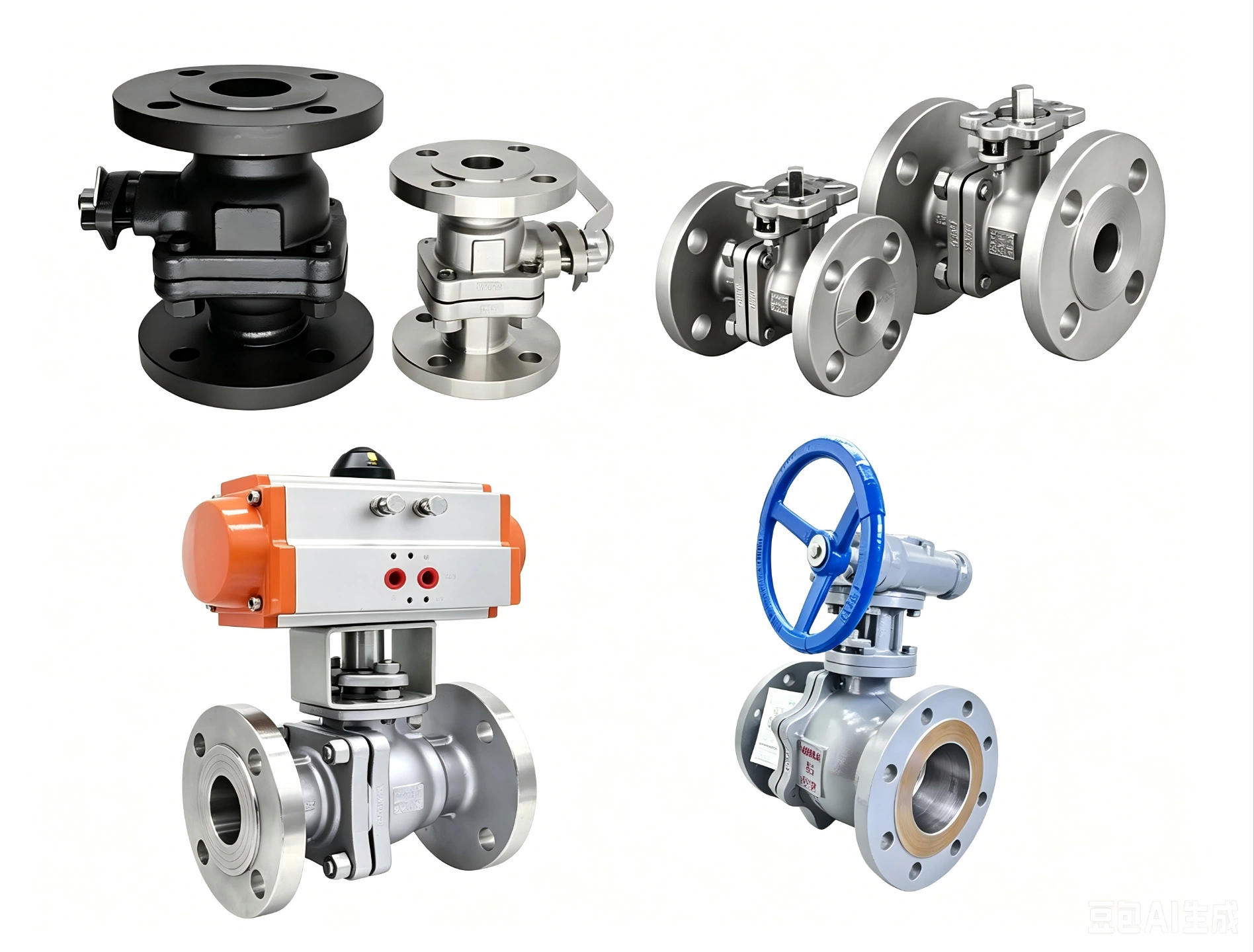
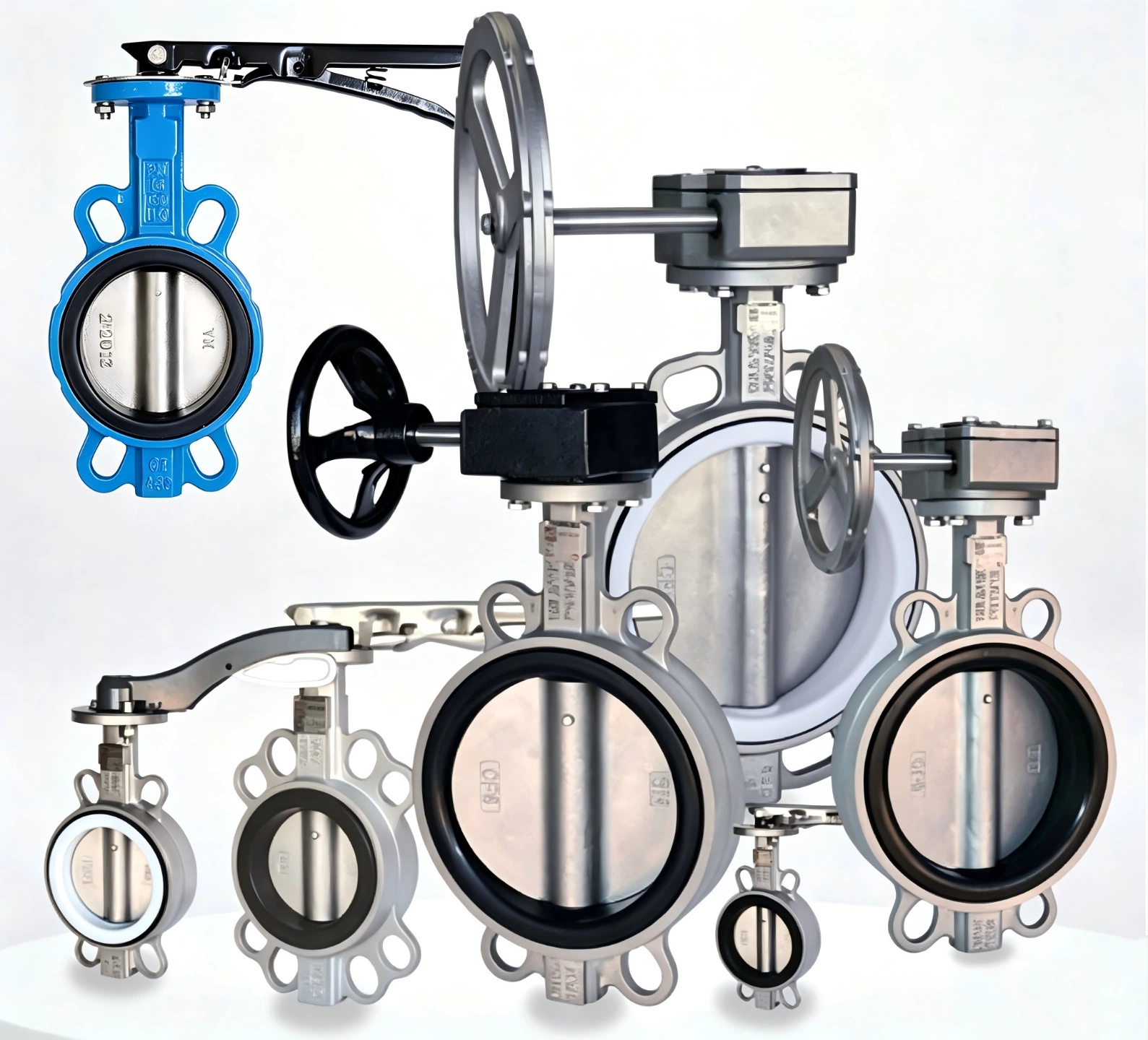
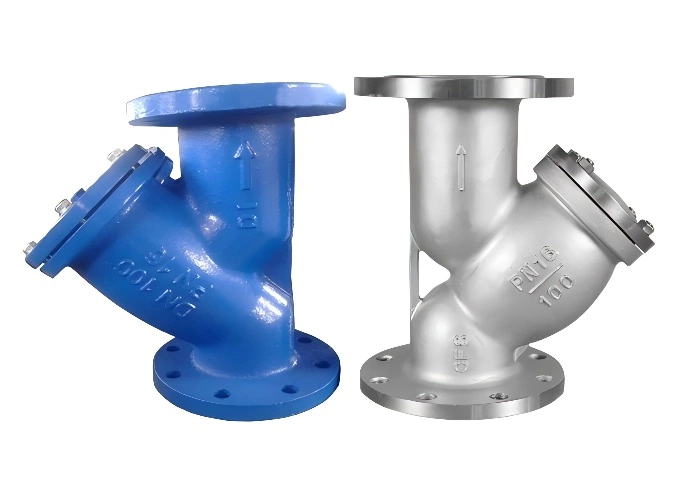
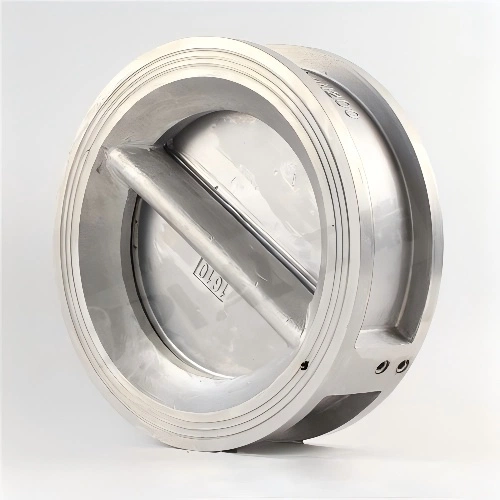
A typical data center CDU loop needs four valve types: full-port 316L ball valves for main header isolation, wafer/lug butterfly valves for manifold balancing, swing or dual-plate check valves on pump discharge, and Y-strainers on pump suction.
For a 720 kW CDU running 30% ethylene glycol at ΔT = 10 K, expect a DN100 (4″) main header at ~72 m³/h flow. PN16 / Class 150 rated 316L bodies with EPDM seals are the default specification for AI liquid cooling projects in Southeast Asia and the Middle East.
🔑 Key Takeaways
- Flow math: 720 kW heat load × ΔT=10 K × 30% EG → 72 m³/h (317 GPM) → DN100 main header at 2.5 m/s.
- Valve duties per CDU: full-port 316L ball valve on main isolation · Y-strainer before pump suction · swing/dual-plate check after pump discharge · butterfly valve on manifold balancing.
- Default spec: 316L body, EPDM seat, PN16 / Class 150, ISO 5211 actuator interface for future automation.
- Watch glycol viscosity: 30% EG at 20°C is ~4-5 cP — size for the coldest start-up, add 10-20% ΔP margin on critical branches.
On This Page
Why Valve Selection Matters in a CDU Loop
A Coolant Distribution Unit (CDU) is the heart of a data center liquid cooling system. It circulates chilled coolant — typically water or a water-glycol mixture — from the central plant to server racks. Inside every CDU, valves control flow, isolate components, and protect pumps. A wrong valve choice does not just mean higher cost; it can mean leaks, pressure drops, and downtime in an entire GPU cluster.
For high-density AI computing projects in Southeast Asia and the Middle East, where ambient temperatures are high and cooling loads are extreme, correct valve sizing is a reliability issue, not just a procurement formality.
At Chuanglan Valve, we manufacture stainless steel valves specifically for CDU liquid cooling loops — ball valves, butterfly valves, check valves and Y-strainers in 304/316L stainless steel.
6 Key Selection Criteria
- Fluid type & compatibility: Pure water, 20-40% ethylene glycol mixture, or dielectric fluid. For glycol loops, 316L stainless steel bodies with EPDM or PTFE seals are recommended. FKM suits higher-temperature service.
- Pressure rating: Most CDU systems operate at 6–10 bar. PN16 / 150LB rated valves provide ample margin and are the industry standard for AI data center cooling loops.
- Temperature range: Coolant supply temperatures run 12–20°C; return lines 25–40°C. Standard EPDM seals handle -20°C to 120°C, so temperature is rarely a constraint — but verify for high-heat edge locations.
- Line size: Main distribution lines typically DN50–DN200 (2″-8″); branch connections to server racks DN15–DN50 (1/2″-2″). Always match full-port valves on mains to avoid unnecessary pressure drop.
- End connection: Flanged (EN1092/ANSI 150) for main lines; threaded or union for small branch connections; wafer for compact butterfly installations between flanges.
- Actuation: Manual for isolation; pneumatic or electric actuation for automated CDU control and remote monitoring. Plan actuator interface (ISO 5211) at the design stage.
Not sure which combination fits your project? Send your specs to our engineers — size, pressure, media and quantity — and we will recommend the right valve package for your CDU.
Worked Example: Sizing Valves for a 720 kW CDU
Let us size the valve package for a typical AI data center CDU serving 48 racks at 15 kW per rack (total 720 kW heat load).
Step 1 — Calculate coolant flow rate
Coolant: 30% ethylene glycol in water. Density ρ ≈ 1030 kg/m³, specific heat c ≈ 3500 J/kg·K, design ΔT = 10 K.
Q = P ÷ (ρ × c × ΔT) = 720,000 W ÷ (1030 × 3500 × 10) = 720,000 ÷ 36,050,000 ≈ 0.020 m³/s ≈ 72 m³/h (317 GPM)
Step 2 — Select main line size
Choose DN100 (4″) main header. Flow velocity v = Q ÷ A = 0.020 ÷ (π × 0.1² ÷ 4) ≈ 2.5 m/s — within the recommended 2-3 m/s range for closed cooling loops.
Step 3 — Check valve Cv requirement
Allowable pressure drop across valve ΔP = 0.2 bar ≈ 2.9 psi. Required Cv = Q(GPM) ÷ √ΔP(psi) = 317 ÷ √2.9 ≈ 186.
A full-port DN100 stainless steel ball valve has Cv ≈ 350+ at full opening — comfortably above requirement, confirming DN100 full-bore ball valves are correct for the main isolation duty.
Step 4 — Assign valve duties
• Main header isolation: 2× DN100 full-port ball valves (pump suction & discharge)
• Pump protection: 1× DN100 Y-strainer before pump suction
• Backflow prevention: 1× DN100 swing check valve after pump discharge
• Rack branch isolation: 48× DN25 ball valves (one per rack loop)
• Balancing: DN50 butterfly valves on branch manifolds for flow regulation
International Standards Reference
| Standard Category | US / ANSI | European / EN | Japanese / JIS |
|---|---|---|---|
| Design | ASME B16.34 / API 6D | EN 12266 | JIS B2002 |
| Face-to-Face | ASME B16.10 | EN 558 / ISO 5752 | JIS B2002 |
| Flange | ASME B16.5 (Class 150/300) | EN 1092-1 (PN10/16/40) | JIS B2220 (10K/20K) |
| Pressure Rating | ANSI Class 150–300 | PN10–PN40 | 10K–20K |
| Testing | API 598 / API 6D | EN 12266-1 / ISO 5208 | JIS B2003 |
| Actuator Mounting | ISO 5211 (adopted) | ISO 5211 | — |
| Data Center Thermal | ASHRAE TC 9.9 | — | — |
Note: ASHRAE TC 9.9 sets the thermal envelope for data processing environments; valve material selection follows it indirectly through coolant temperature limits.
Ball vs Butterfly vs Check vs Strainer: Full Comparison
| Parameter | Ball Valve | Butterfly Valve | Check Valve | Y-Strainer |
|---|---|---|---|---|
| Primary function | On/off isolation | Flow regulation / throttling | Backflow prevention | Debris filtration |
| Typical CDU location | Main header, pump isolation, rack branches | Branch manifolds, flow balancing | After pump discharge | Before pump suction |
| Flow capacity | Cv highest, near-zero pressure drop | Moderate; disc creates partial obstruction | Swing: low drop; spring: higher drop | Mesh adds minor pressure loss |
| Leakage class | Tight shutoff, bubble-tight | Good, but lower than ball in high-pressure service | N/A (sealing function) | N/A (filtration function) |
| Size range | DN15–DN300 | DN50–DN300 | DN15–DN300 | DN15–DN200 |
| Actuation options | Manual / Electric / Pneumatic | Manual / Electric / Pneumatic | Automatic (no actuator) | N/A (static) |
| Relative upfront cost | Highest (full-bore stainless, tight shutoff) | Moderate | Moderate | Lowest (static component) |
| Recommended for CDU | Main isolation + rack branches | Manifold balancing | Pump discharge (mandatory) | Pump suction (mandatory) |
💡 Why Data Center EPCs Choose Chuanglan
Factory-direct supply with EN 10204 3.1 MTC for every valve
316L bodies, EPDM/PTFE seals, ISO 9001:2015 certified, 100% factory pressure tested
MOQ: 1 piece — sample rack-side valves before bulk EPC order
Need a Valve Sizing Report for Your CDU Project?
Send us your cooling capacity, pipe layout and pressure requirements — we will prepare a free valve sizing report with Cv calculations and a bill of materials.
Get Free Sizing Report →Advanced: Glycol Viscosity & Temperature Corrections
Most CDU systems use a 20-40% ethylene glycol mixture to prevent freezing and reduce biological growth. Glycol raises coolant viscosity — at 40°C a 30% mixture is roughly 1.5-2 cP versus about 0.65 cP for pure water. Higher viscosity increases friction and pressure drop, which matters when sizing pumps and valves.
Rule of thumb for valve pressure drop: as a conservative engineering estimate, if the coolant viscosity exceeds roughly 2 cP at operating temperature, add 10-20% margin to the calculated pressure drop across valves and strainers, or select one size larger on the next critical branch. For precise figures, use the pump manufacturer’s viscosity-corrected curves and Darcy-Weisbach calculations with the actual glycol concentration.
Temperature correction: Coolant viscosity falls as temperature rises. A 30% glycol loop at 20°C is about 4-5 cP; at 50°C it drops to roughly 1.5 cP. Size the system for the coldest realistic start-up temperature, not the steady-state operating temperature — this prevents under-sized strainer mesh and valve pressure drop surprises during winter start-up.
Seal material guidance: EPDM and PTFE are preferred for ethylene glycol loops (EPDM to -40°C, PTFE to -200°C). FKM is recommended where coolant temperatures exceed 120°C. Always confirm seal compatibility with your coolant vendor’s datasheet.
Southeast Asia & Middle East Market
AI data center construction is accelerating rapidly across Southeast Asia — Indonesia, Malaysia, Singapore and Thailand — and the Gulf states of Saudi Arabia and the UAE. Two factors make valve selection in these regions particularly critical:
- High ambient temperatures: Tropical and desert climates increase cooling loads and push glycol loops to run at higher return temperatures. Ensure seals and bodies are rated for continuous 40°C+ return service.
- Fast-track project schedules: EPC contractors need factory-direct supply with short lead times. Delays in valve delivery directly delay CDU commissioning.
Chuanglan Valve directly serves EPC contractors and CDU system integrators in Southeast Asia and the Middle East, helping data center builders skip intermediate distributors and get factory-direct stainless steel valves with EN10204 3.1 material certificates for new AI computing projects.
Serving EPC Contractors Across Southeast Asia & Middle East · ISO 9001:2015 Certified · 15+ Years Factory Experience
Common Mistakes to Avoid
- Specifying 304 stainless for coastal or chloride service. If your project is in Southeast Asia (coastal, cooling tower, deicing salts) or the Middle East (desalination, SWRO, humid Gulf climate), 304 will pit within 1–3 years. Specify CF8M (316) or duplex 2205.
- Ignoring pressure-temperature derating. PN16 / Class 150 ratings apply at room temperature only. At 200°C the allowable pressure drops by roughly 40–50%. Always check the manufacturer’s P-T chart before specifying for steam, hot oil, or thermal fluid.
- Buying on price without MTC verification. “Stainless steel” is not enough — ask for EN 10204 3.1 MTC tied to the heat number, and arrange PMI (XRF) witness at the factory if the price is 20% below market. 304 passed off as 316L is the single most common failure in this industry.
- Forgetting face-to-face and flange drilling. A “PN16” wafer valve from one manufacturer may not match the existing flange drilling or face-to-face of another. Always confirm dimensions against EN 558 / API 609 / ASME B16.10 before replacing an installed valve.
FAQ
What type of valve is best for CDU main isolation lines?
Full-port stainless steel ball valves. They offer near-zero pressure drop when fully open and tight shutoff when closed — ideal for DN50–DN200 main headers.
Ball valve or butterfly valve for liquid cooling?
Use ball valves for isolation (on/off) duty and butterfly valves where you need throttling or flow balancing on manifolds. Both are used in a typical CDU.
What seal material is recommended for CDU coolant (glycol mixture)?
EPDM or PTFE for ethylene glycol cooling loops; FKM for higher temperature service above 120°C.
What pressure rating is standard for data center CDU liquid cooling?
Most CDU systems operate at 6–10 bar. PN16 / 150LB rated valves are the industry standard for AI data center liquid cooling loops.
Do you supply material certificates 3.1 for liquid cooling valves?
Yes, EN10204 3.1 material test certificates are available upon request for all liquid cooling valve orders.
What size range do you manufacture for CDU applications?
DN15 (1/2″) to DN300 (12″) in flanged, threaded, wafer and butt-weld end connections.
Can liquid cooling valves be supplied with electric or pneumatic actuators?
Yes. We supply manual, electric and pneumatic actuated ball and butterfly valves with ISO 5211 mounting for automated CDU control.
What is your MOQ and typical lead time?
MOQ is 1 piece for standard valves. Lead time for standard sizes is typically 15–30 days; bulk EPC orders are scheduled to your project timeline.
References & Standards
- ASHRAE TC 9.9: Thermal Guidelines for Data Processing Environments
- ASME B16.34: Valves — Flanged, Threaded, and Welding End
- EN 12266: Industrial valves — Pressure testing of metallic valves
- ISO 5211: Industrial valves — Mounting details for actuator attachments
- API 6D: Specification for Pipeline and Piping Valves
Related Products
Continue Reading
Get a Quote for Your Liquid Cooling Valve Package
MOQ: 1 piece · ISO 9001:2015 certified · 3.1 MTC included
Southeast Asia: Indonesia, Malaysia, Thailand, Vietnam, Singapore, Philippines, Myanmar
Middle East: Saudi Arabia, UAE, Qatar, Kuwait, Oman, Bahrain
Other Regions: Europe, North America, South America, Africa, Australia
Delivery: 5–10 days to Southeast Asia · 15–20 days to the Middle East · 25–35 days to Europe / the Americas
Payment: T/T 30% deposit + 70% before shipment · L/C at sight · Warranty: 12 months after shipment for material and manufacturing defects · Packing: export plywood case / fumigation-free pallet · Shipping: FOB Ningbo/Shanghai · Documents: EN 10204 3.1 MTC + packing list + commercial invoice · Third-party inspection welcome: SGS / Bureau Veritas / Intertek
Contact Our Engineers »Need a quote or datasheet? Tell us size, pressure class and material – reply within 24 hours.
Request a Quote