
Gate Valve vs Globe Valve: Which Should You Choose? (2026 Guide)
The complete 2026 engineering guide to choosing between gate valves and globe valves — how each valve works, pressure drop, throttling capability, maintenance frequency, cost comparison, typical applications (oil & gas, water transmission, steam, process control), when to use each, common mistakes (using a gate valve for throttling), and a worked example from a Dammam petrochemical steam heating line.
* Standard lead time depends on order size and destination. 5–10 days to Southeast Asia, 15–20 days to the Middle East.

Quick Answer
A gate valve is for on-off isolation — fully open or fully closed, with almost straight-through flow and low pressure drop. A globe valve is for throttling — it can hold any position between 10% and 100% opening to regulate flow precisely, but at the cost of higher pressure drop. The most common engineering mistake is using a gate valve for throttling: high-velocity flow past a partially open wedge erodes the seat within 6-12 months (“wire-drawing”), and the valve then won’t seal when closed. Use a gate valve for isolation, a globe valve for modulation — they are two different jobs, not two options for the same job.
Key Takeaways
- Gate valve = on-off (0.05-0.2 bar drop open; never throttle; bubble-tight closed)
- Globe valve = throttling (0.5-2.5 bar drop open; stable 10–100% modulation; replaceable seat ring)
- Steam heating line: gate upstream for isolation + globe downstream for temperature control — always in series
- Cost: same size & material, globe valve typically runs 20–40% higher than gate due to the more complex body casting
On This Page
How Does Each Valve Work?
Gate valves and globe valves are both commonly used for shutoff and throttling, but they work differently and are designed for different applications. Choosing the wrong one leads to poor performance and early failure.
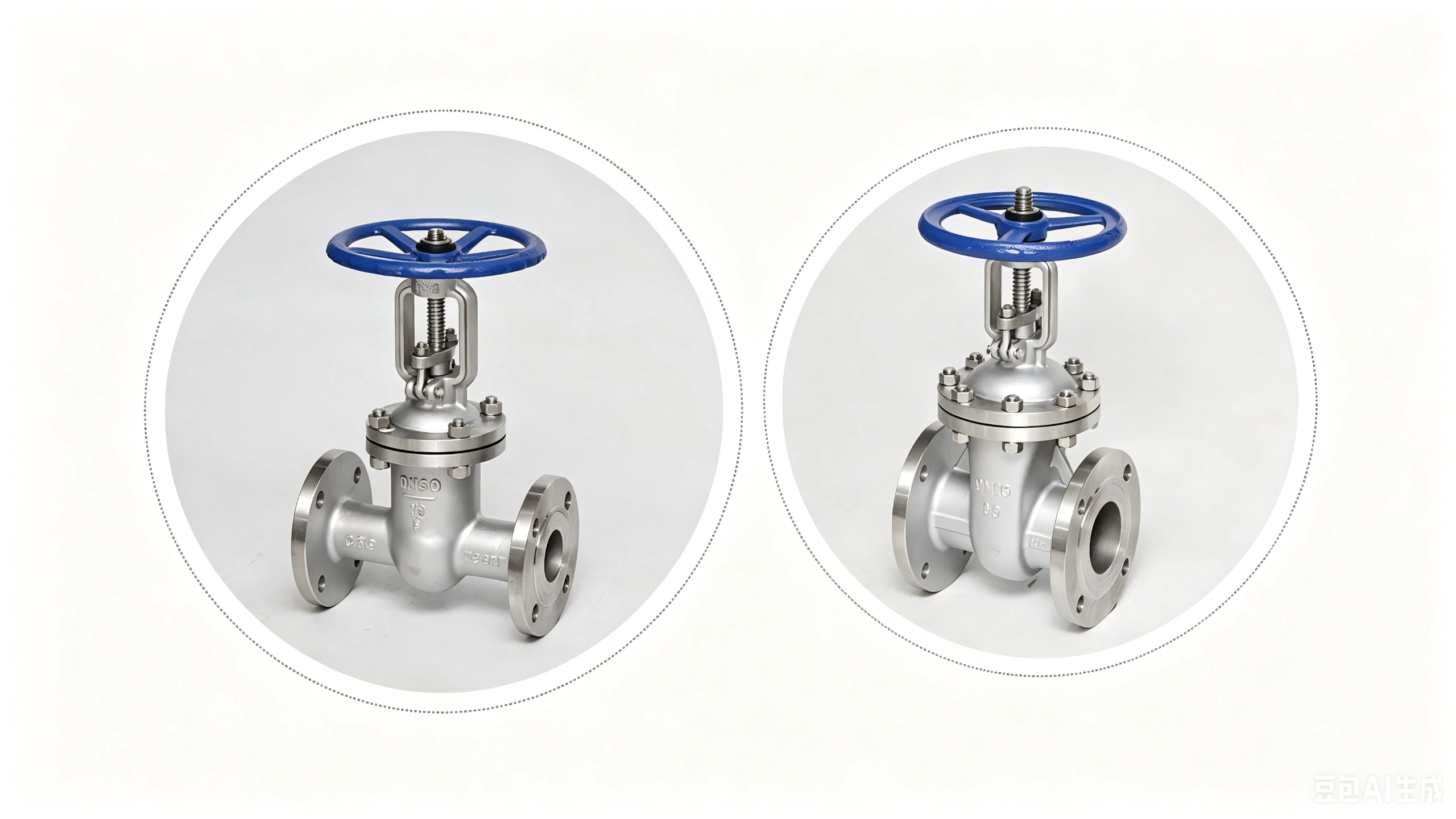
A gate valve uses a flat or wedge-shaped “gate” (wedge disc) that lifts perpendicular to the flow path. When fully open, the gate is completely out of the flow stream, giving almost unobstructed flow and low pressure drop. When closed, the wedge presses against two seats to form a tight seal. The stem rises as the valve opens (rising stem) so you can see the position at a glance.
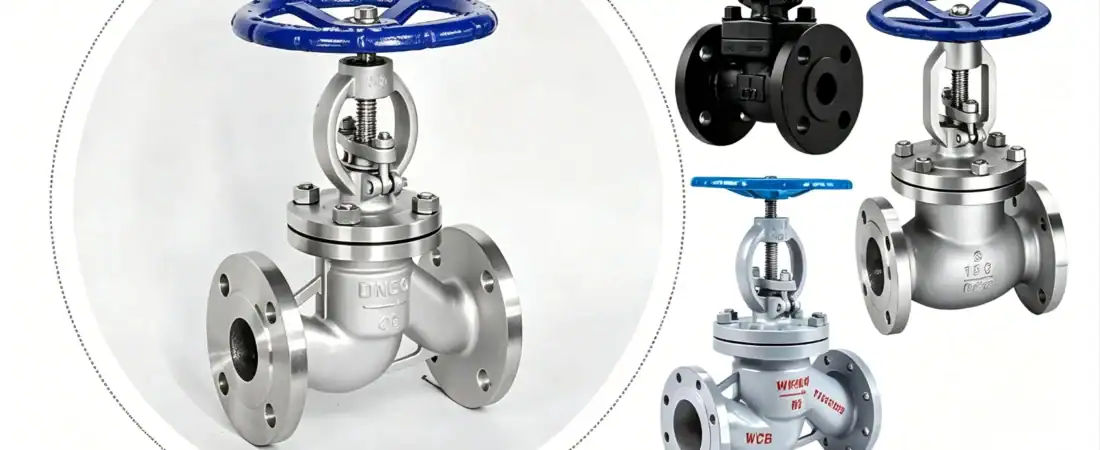
A globe valve uses a plug (disc) that moves perpendicular to a horizontal baffle in the center of the valve body. Flow through a globe valve makes a 90° turn — enters, hits the baffle, turns up through the seat, turns again, and exits. This tortuous flow path gives higher pressure drop but also precise flow control. The plug can be positioned at any point between fully open and fully closed to throttle flow accurately.
Key Differences at a Glance
| Feature | Gate Valve | Globe Valve |
|---|---|---|
| Best For | Fully open / fully closed shutoff (on-off service) | Flow regulation and throttling (modulating service) |
| Pressure Drop (fully open) | low (0.05-0.2 bar) — straight-through flow | Higher (0.5-2.5 bar) due to 90° flow turns |
| Throttling Capability | Poor — rated 100% open or 100% closed; partial opening causes disc vibration, seat erosion, wire-drawing | Excellent — stable at any position 10–100% opening; predictable Cv curve |
| Operation Speed | Slow — 10-25 turns to fully open/close (DN100 ≈ 15 turns) | Fewer turns per size; pneumatic/electric actuation common |
| Leakage (closed) | tight (bubble-tight per API 598 when new) | Good — slight seat leakage possible in low-pressure service |
| Relative Cost (same size/material) | Lower baseline (1.0× index) | ~1.3-1.8× the equivalent gate (more complex body + trim) |
| Maintenance | Stem packing + seat replacement harder (body must be drained) | Easier — seat ring replaceable in-line; plug trim accessible |
| Typical Use | Oil & gas pipelines, water transmission, tank isolation, fire water | Steam heating, boiler feedwater, chemical dosing, process control |
When to Use a Gate Valve
Choose a gate valve when you need:
- On-off isolation with minimal flow resistance — long-distance water transmission pipelines, tank farm isolation, fire water mains.
- Large size, low pressure differential — DN200+ where pressure drop across the valve would be costly (pipeline pumps sized for straight-through flow).
- Infrequent operation — gate valves are designed to sit fully open or fully closed for months/years; they are not meant for daily modulation.
- Tight shutoff against low-pressure media — tank outlet isolation, drain valves, bypass lines.
Never use a gate valve for throttling. When a gate valve is held partially open, high-velocity flow jets past the wedge at 50-100 m/s, eroding the seating surfaces within months. See ball valve vs gate valve guide for additional on-off valve choices.
When to Use a Globe Valve
Choose a globe valve when you need:
- Precise flow control — steam heat exchanger temperature control, boiler feedwater regulation, chemical dosing, cooling water bypass.
- Frequent modulation — process valves that adjust flow every hour or every shift.
- High-pressure drop service — let-down stations, pressure reducing valves, steam traps upstream isolation.
- Easier maintenance — process plants where seat trim needs replacement without removing the valve body from the line.
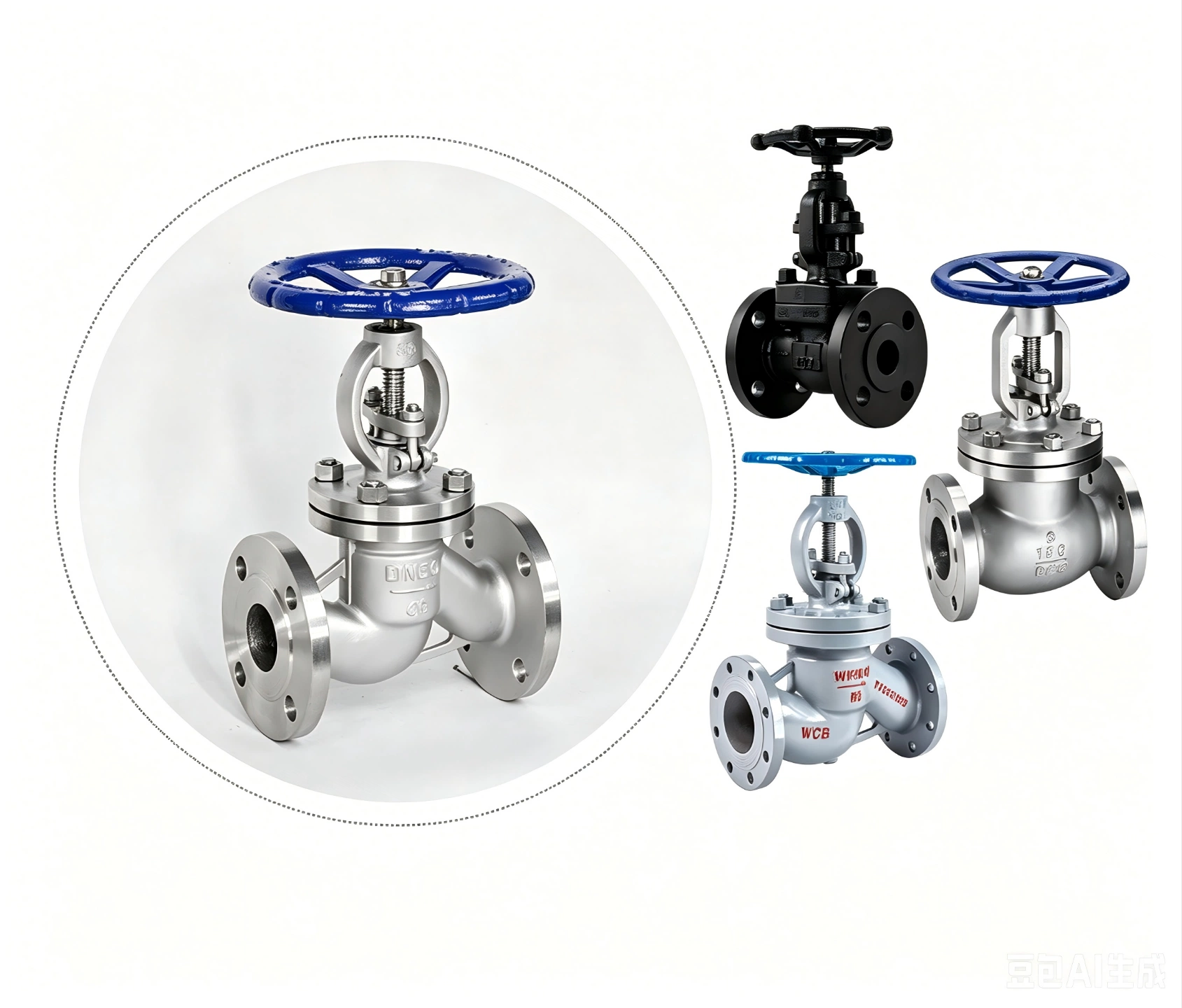
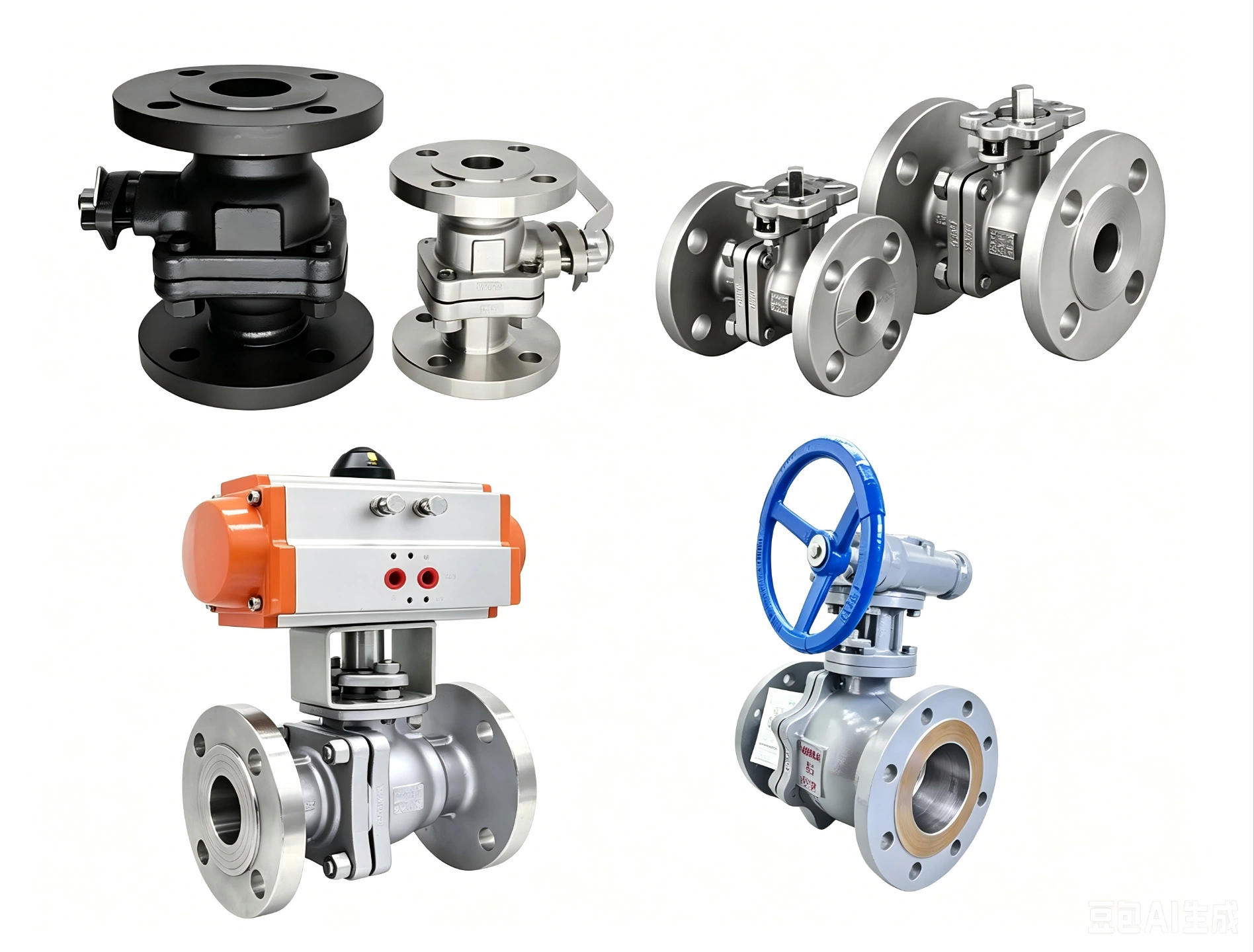
See our flanged globe valve product line for standard configurations. For on-off service that also needs tight shutoff, a ball valve (see flanged ball valves) is often preferred over a globe valve because of lower pressure drop and quarter-turn operation.
Worked Example: Dammam Steam Heating Line
Step 1 — Problem
A petrochemical plant in Dammam, Saudi Arabia (SABIC affiliate) had a DN80 PN40 saturated steam line at 18 bar / 210°C supplying a shell-and-tube heat exchanger that heated process oil from 40°C to 120°C. The EPC contractor installed a DN80 PN40 WCB flanged gate valve on the steam inlet for shutoff isolation. During normal operation, the heat exchanger outlet temperature needed to be modulated between 115–125°C depending on process demand. The plant operator found the gate valve was the only manual valve on the steam inlet, so they began using the gate valve to throttle flow — opening it 30–50% by handwheel to maintain outlet temperature. After 6 months of daily throttling, the gate valve began leaking past the seat, and the heat exchanger outlet temperature became unstable (swinging ±10°C despite constant valve position).
Step 2 — Root cause analysis
When pulled for inspection, the gate wedge showed severe “wire-drawing” — high-velocity steam (at 18 bar saturation, velocity through the partially open gate reached ~80 m/s) had eroded a 2–3 mm groove across the wedge seating surface. Once the seat is grooved, the gate can no longer seal even when fully closed. Worse, the erosion pattern was asymmetric (one side deeper than the other), causing the valve to stick and not fully open. The root cause was fundamental valve selection: a gate valve is rated for 100% open / 100% closed service, not throttling. The EPC omitted a separate control/throttle valve and expected operators to use the isolation valve for modulation — a classic engineering mistake.
Step 3 — Correct retrofit
The plant installed two valves in series on the steam inlet: (1) Upstream: a DN80 PN40 WCB flanged gate valve for positive isolation (used only during heat exchanger maintenance, kept fully open during operation). (2) Downstream (directly before the heat exchanger): a DN80 PN40 WCB flanged globe valve with a 316 stainless plug and Stellite 6 seat trim, rated for throttling at any opening between 10–100%. The globe valve was specified with an open-stem position indicator so operators could see the opening percentage at a glance. The old damaged gate valve was scrapped (the wedge was beyond refurbishment).
Step 4 — Cost & outcome (relative index: 1.0× = one DN80 PN40 WCB flanged gate valve)
• New DN80 PN40 WCB gate valve (isolation): 1.0×
• New DN80 PN40 WCB flanged globe valve, 316 plug + Stellite trim (throttling): ~1.7×
• Installation (heat exchanger bypassed, 8-hour shutdown): ~4.7×
• Total retrofit cost: ~7.4× the price of one gate valve
• Old gate valve scrapped: already failed (not counted)
• 6 months of unstable outlet temperature (±10°C swing) causing off-spec process oil batches: 3 batches × ~74× = ~222×+
• Emergency steam isolation failure during a minor leak (gate wouldn’t close fully, forcing plant-wide shutdown): ~118×
• Total incident cost: ~340×+ the two-valve retrofit the EPC skipped on day one.
• Lesson: A gate valve and a globe valve are not interchangeable. The EPC “saved” the cost of one globe valve (~1.7×) and simplified the piping, but the plant paid many times over in off-spec product and unplanned shutdown. Every throttling application needs a globe valve (or an actuated control valve), and every isolation application needs a gate valve — two separate jobs, not two options for the same job.
How Chuanglan Specs Every Gate & Globe Valve Quote
Body material matched to media: WCB for steam/oil/refinery · CF8/CF8M for corrosive · WC6/WC9 alloy for +550°C refinery trim
Trim: 316 plug standard; Stellite 6 / 410 SS for erosive steam service; ISO 15156 for sour gas
End connections: flanged (EN 1092 / ANSI B16.5 / API 605), butt-weld, threaded
Test: API 598 shell & seat test, full MTC EN 10204 3.1, PMI report optional
Actuation: handwheel standard; gear operator for DN200+; pneumatic / electric actuator for modulating service
MOQ 1 piece for stock, 7–15 day standard delivery, OEM / ODM from large volume
Need Help Selecting Between Gate and Globe Valves?
Tell us your application (on-off isolation? throttling? what medium? what pressure?) and our engineers will recommend the correct valve type, size, trim, and end connection — and reply within 24 hours.
Get Free Sizing Report → WhatsApp usCommon Mistakes & Failure Modes
| Mistake | What Happens | Correct Choice |
|---|---|---|
| Using a gate valve for throttling | Wire-drawing / seat erosion within 6-12 months; valve won’t seal when closed | Use a globe valve (or control valve) for modulation |
| Using a globe valve for fully open shutoff | Unnecessary 1–2 bar pressure drop across the line; wasted pump energy | Use a gate valve or ball valve for straight-through isolation |
| Using a gate valve for frequent operation | Stem packing wears out; wedge galling if cycled daily | Use a ball valve or butterfly valve for frequent on-off |
| Using a globe valve in large sizes (DN300+) | high pressure drop, heavy valve, expensive | Use a gate valve for large isolation; use an actuated control valve for large throttling |
| Gate valve installed stem-down on horizontal line | Debris collects in bonnet, wedge jams | Install stem-up (rising stem visible) or at minimum horizontal; never stem-down |
| Globe valve installed backwards (flow reversed) | Flow goes under the plug instead of over, causing turbulence and poor control | Observe the arrow on the valve body; flow goes under the plug (over the seat) |
Southeast Asia & Middle East Market Notes
For clients in Southeast Asia, the most common gate valve applications are water transmission pipelines (MEA in Bangkok, MWSS in Manila, PDAM in Jakarta, SAWACO in Vietnam), palm oil mill condensate systems, and pulp & paper stock lines. Gate valves in cast iron or WCB dominate for water and non-critical service. Globe valves are heavily used in steam systems — Thai and Vietnamese food plants, Malaysian palm oil sterilizers, and Indonesian textile dyeing boilers all rely on globe valves for steam pressure and temperature control. Southeast Asian EPCs frequently make the same Dammam-style mistake: specifying a gate valve on a steam line to “save money” and then asking operators to throttle it. The result is always the same — seat erosion within 6-12 months. For Southeast Asian steam service, we always recommend a globe valve with Stellite trim (not standard 316 plug) because saturated steam at 10–18 bar is highly erosive at partial opening.
For clients in the Middle East, gate valves dominate oil & gas service — Aramco, ADNOC, KNPC, and QatarEnergy all specify API 600 bolted-bonnet gate valves for pipeline and refinery shutoff. Middle East gate valves are almost always WCB or WC6/WC9 alloy steel for high-temperature refinery service (up to +550°C), with ISO 15156 trim for sour gas. Globe valves in the Middle East are used for boiler feedwater (power plants), steam let-down stations, chemical injection, and cooling water control — SABIC and Aramco both specify API 602 compact globe valves for small-bore process control and API 623 globe valves for large-bore throttling. The Dammam case above is typical of Middle East petrochemical plants — steam heating lines are everywhere, and the gate-vs-globe mistake is one of the most common engineering errors we see. Serving EPC Contractors Across Southeast Asia & Middle East · ISO 9001:2015 · Established in 2009. Chuanglan supplies both gate valves and globe valves with full API 600/602 documentation to contractors across Saudi Arabia, UAE, Qatar, Kuwait, Oman, and Bahrain.
FAQ
Can I use a gate valve to throttle flow occasionally?
No. Even occasional throttling (more than a few times per month) causes seat erosion. Gate valves are rated for fully open or fully closed positions only. If you need to adjust flow even occasionally, use a globe valve. If you absolutely must use a gate valve for partial flow, do not open it less than 80% — and accept that the valve will need seat replacement within 12-24 months.
Which valve has lower pressure drop when fully open?
A gate valve — when fully open, the gate is completely lifted out of the flow path, giving almost straight-through flow with 0.05-0.2 bar pressure drop. A globe valve always has 90° turns in the flow path, giving 0.5-2.5 bar pressure drop even when fully open. If pump energy is a concern (long transmission pipelines, large circulation loops), use a gate valve.
Which valve is better for steam service?
A globe valve for steam throttling/temperature control, and a gate valve for steam isolation. The two valves are used together — gate valve upstream for isolation (fully open during operation), globe valve downstream for modulation. Never use a gate valve to throttle steam. Saturated steam at 10–18 bar erodes gate valve seats within months if held partially open.
Are gate valves or globe valves more expensive?
For the same size, pressure rating, and body material, a globe valve typically runs 30–80% more than a gate valve because the body casting is more complex (flow turns 90°) and the trim (plug, seat ring, stem) is more precision-machined. The price difference is justified when you need throttling; it’s wasted if you only need on-off isolation.
Which valve is easier to maintain?
A globe valve — the seat ring is screwed into the body and can be replaced in-line without removing the valve. The plug and stem can also be replaced without breaking the flange connections. A gate valve’s wedge and seats are internal to the body; replacing them usually requires removing the valve from the line. For plants with frequent trim replacement, globe valves are preferred for maintainability.
Can I use a ball valve instead of a gate valve for isolation?
Yes — a flanged ball valve is often preferred over a gate valve for on-off isolation in sizes DN15–DN300 because: (1) quarter-turn operation (90° vs 15+ turns), (2) bubble-tight shutoff, (3) lower maintenance. Gate valves are still preferred for large sizes (DN350+) and high-pressure high-temperature refinery service (API 600), where ball valve trims are more limited.
What is the lead time for Chuanglan gate and globe valves?
DN25–DN100 PN16/PN40 WCB or CF8M flanged gate and globe valves are in stock and ship in 5–10 days to Southeast Asia. DN150–DN300 standard sizes: 15–30 days. API 600 alloy steel (WC6/WC9), ISO 15156 sour service, and high-pressure Class 600+ valves: 25–35 days. Full EN 10204 3.1 MTC, API 598/600 pressure test, PMI, and third-party inspection (SGS / BV / Intertek) available. MOQ 1 piece.
References & Standards
Related Products
Continue Reading
Request a Quotation — Reply Within 24 Hours
Send your line size, pressure rating, medium and quantity. Our engineers come back with price, drawing and lead time — no obligation.
Request a Gate or Globe Valve Quote
MOQ: 1 piece · ISO 9001:2015 · EN 10204 3.1 MTC included · shell and seat pressure tested
Southeast Asia: Indonesia, Malaysia, Thailand, Vietnam, Myanmar, Singapore, Philippines
Middle East: Saudi Arabia, UAE, Qatar, Kuwait, Oman, Bahrain
Other Regions: Europe, North America, South America, Africa, Australia
Delivery: 5–10 days to Southeast Asia · 15–20 days to the Middle East · 25–35 days to Europe / the Americas
Payment: T/T 30% deposit + 70% before shipment · L/C at sight · Warranty: 12 months after shipment for material and manufacturing defects · Packing: export plywood case / fumigation-free pallet · Shipping: FOB Ningbo/Shanghai · Documents: EN 10204 3.1 MTC + packing list + commercial invoice · Third-party inspection welcome: SGS / Bureau Veritas / Intertek
Get Free Quote »