
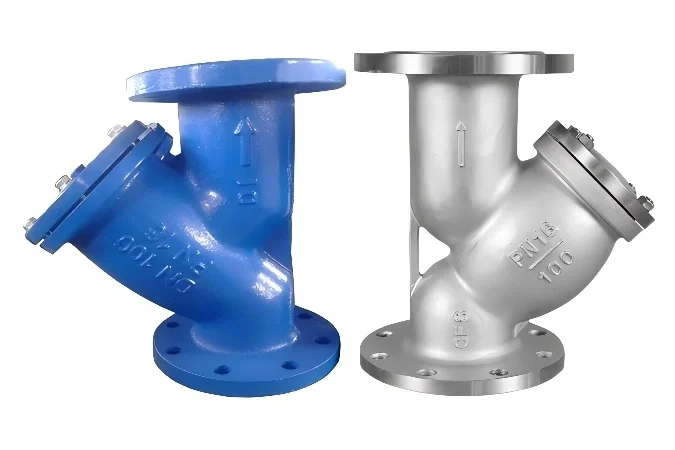
Valve Maintenance Tips: How to Extend Service Life
The complete 2026 preventive maintenance guide for industrial valves — daily / weekly inspection checklist, PM schedule for ball / butterfly / gate / globe valves, troubleshooting table for stem leaks, seat leakage, actuator failures and cavitation, 5 tips that double valve service life (Y-strainer protection, no ball-valve throttling, exercising idle valves, correct lubrication, spare-parts inventory), and when to replace a valve instead of repairing it. Southeast Asia / the Middle East water, oil & gas and desalination plant notes included.
* Standard lead time depends on order quantity and destination country. 5–10 days to Southeast Asia, 15–20 days to the Middle East.

Quick Answer
Valve service life is doubled by five habits: (1) install a Y-strainer upstream of every isolation valve and clean it on a ΔP trigger; (2) never use a standard ball valve for throttling — use a globe or high-performance butterfly valve; (3) exercise idle valves fully once every 6 months (critical for ESD and check valves); (4) use the correct valve-stem lubricant for the service (oxygen-clean, H1 food-grade, or high-temp steam grease); (5) keep a spare seal / packing kit on the shelf for every critical valve. For normal industrial service: weekly stem-packing walkaround, quarterly full-cycle operation test, annual packing-torque check, and a soft-parts (seats / packing) replacement every 5–7 years. If a valve in critical service hits 15 years, replace it proactively during a planned outage rather than waiting for it to fail.
Key Takeaways
- Inspection cadence: weekly stem / flange walkaround · quarterly full-cycle test · annual packing torque.
- Ball valve rule: isolation only — fully open or fully closed; throttling erodes the seat in months.
- Strainer first: debris is the #1 cause of seat failure; a ΔP gauge on the strainer tells you when to clean.
- Replace, don’t repair: pitted stems, cracked bodies, seized actuators, and past-design-life critical valves must go.
On This Page
1. Daily / Weekly Inspection
| What to Check | What to Look For | How Often |
|---|---|---|
| Stem packing / glands | Any leakage? Damp or wet around the stem? | Weekly |
| Flange joints / gaskets | Any seepage? Rust or salt buildup on flange faces? | Monthly |
| Actuators (pneumatic / electric) | Air leaks? Unusual noises? Position indicator works? | Weekly |
| Valve operation | Does it open / close smoothly? Any stiff spots? | Quarterly |
| Corrosion / coating | Rust spots? Coating peeling (carbon steel valves)? | Quarterly |
Most valve problems start small and get worse over time. A 5-minute weekly walkaround can catch issues before they become failures:
2. Preventive Maintenance Schedule
Don’t wait for something to break. Here’s a PM schedule that works for most industrial valves:
| Maintenance Task | Ball Valve | Butterfly Valve | Gate / Globe Valve |
|---|---|---|---|
| Lubricate stem | Every 6 months | Every 12 months | Every 6 months |
| Check packing torque | Every 12 months | Every 12 months | Every 6 months |
| Full operation cycle test | Every 6 months | Every 6 months | Every 3 months |
| Disassemble & inspect seats / seals | Every 3–5 years | Every 5 years | Every 3–5 years |
| Replace soft parts (seats / packing) | Every 5–7 years | Every 5–10 years | Every 5–7 years |
Note: These intervals are for normal industrial service. For critical, high-cycle, or corrosive service, halve the intervals. For pneumatic or electric actuated valves, add a quarterly check of solenoid valves, air filter-regulator-lubricator (FRL), and limit-switch calibration.
3. Common Valve Problems & How to Fix Them
| Problem | Possible Cause | Quick Fix |
|---|---|---|
| Stem packing leaks | Packing loosened, worn, or dry | Tighten gland nut ¼ turn. If still leaks, repack. |
| Valve won’t open / close fully | Build-up on seat, worn stem nut, actuator out of adjustment | Flush line, lubricate stem, adjust actuator limits. |
| Valve leaks when closed | Worn seat, debris trapped between ball and seat | Cycle valve 2–3 times to flush debris. If still leaks, replace seat. |
| Actuator doesn’t move valve | Air-supply issue, diaphragm damaged, valve seized | Check air pressure, replace diaphragm, lubricate stem. |
| Noisy valve / vibration | Cavitation, valve sized wrong, ball valve throttled | Use a proper throttling valve (globe / butterfly), not ball. |
4. Worked Example: Barka SWRO Seawater Valve Failure
Step 1 — Problem
A 250,000 m³/day SWRO desalination plant at Barka, Oman (50 km northwest of Muscat), operated 8 × DN150 PN16 flanged ball valves on the seawater intake and brine discharge lines. The plant had no Y-strainers upstream of these valves — the EPC relied only on the coarse bar screens at the intake. After 18 months of operation, two of the eight ball valves would not seal fully in the closed position; upstream pressure leaked through to the brine discharge line, causing high back-pressure on the RO membrane rack and shortening the CIP cycle from once every 6 months to once every 2 months. An 8-hour unplanned shutdown was triggered when one valve failed to close during a membrane CIP, flooding the chemical dosing hall.
Step 2 — Root cause analysis
When the two failed valves were pulled apart, the internals showed three problems: (1) seashell fragments, seaweed, and barnacle debris had been passing through the bar screens and lodging between the ball and the PTFE seat for 18 months — the seat was scratched and grooved so it could no longer seal; (2) the valve body was CF8M (316) but the stem packing had been leaking seawater for months before being noticed, because the PM program only did annual inspections; (3) the EPC had specified flanged ball valves for isolation duty, but operators were also using them to throttle the brine discharge flow (20–60% open for 4 hours per day during CIP), which eroded the seat on the low-pressure side. Three failures compounded: no strainer + infrequent PM + wrong valve type for throttling.
Step 3 — Correct retrofit
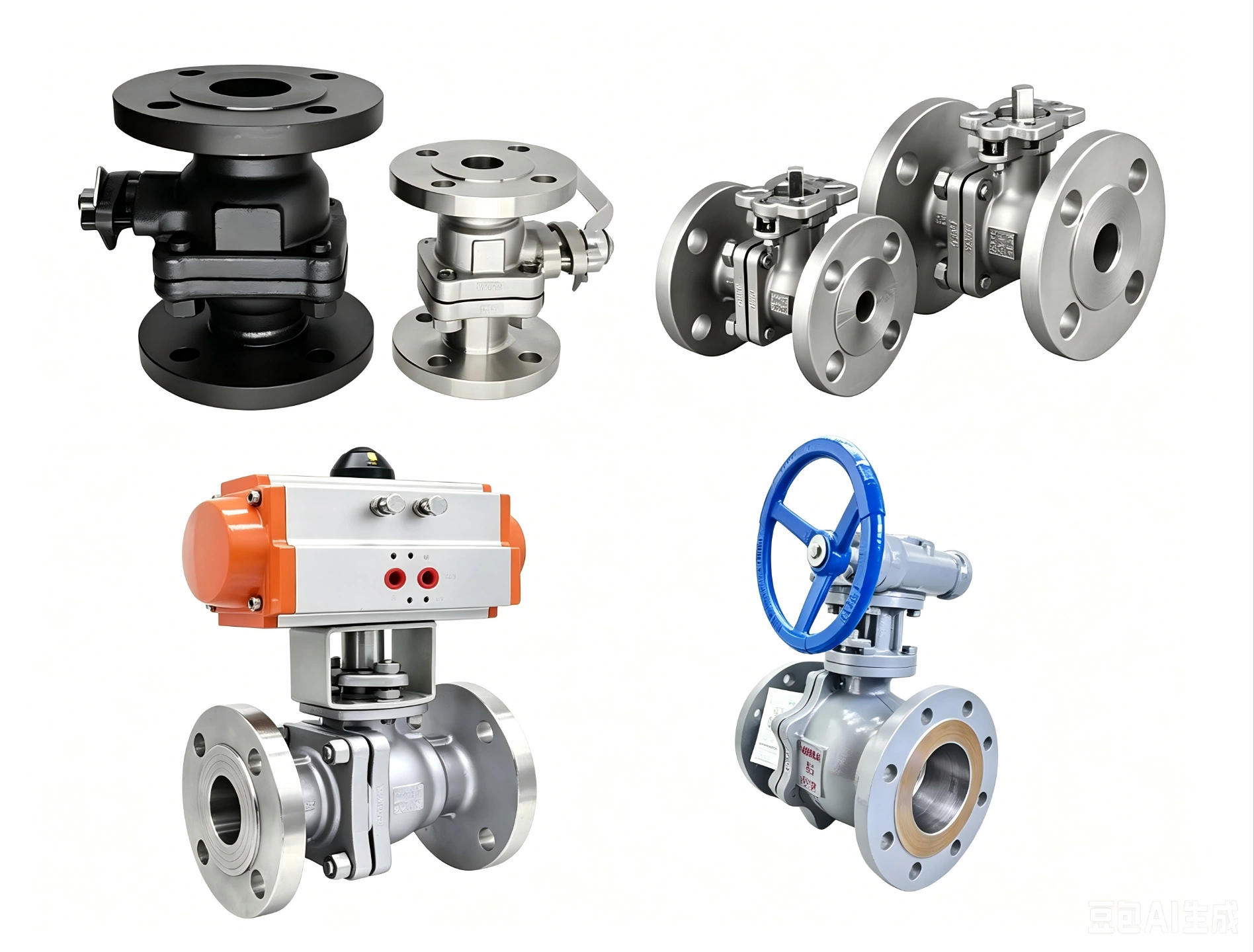
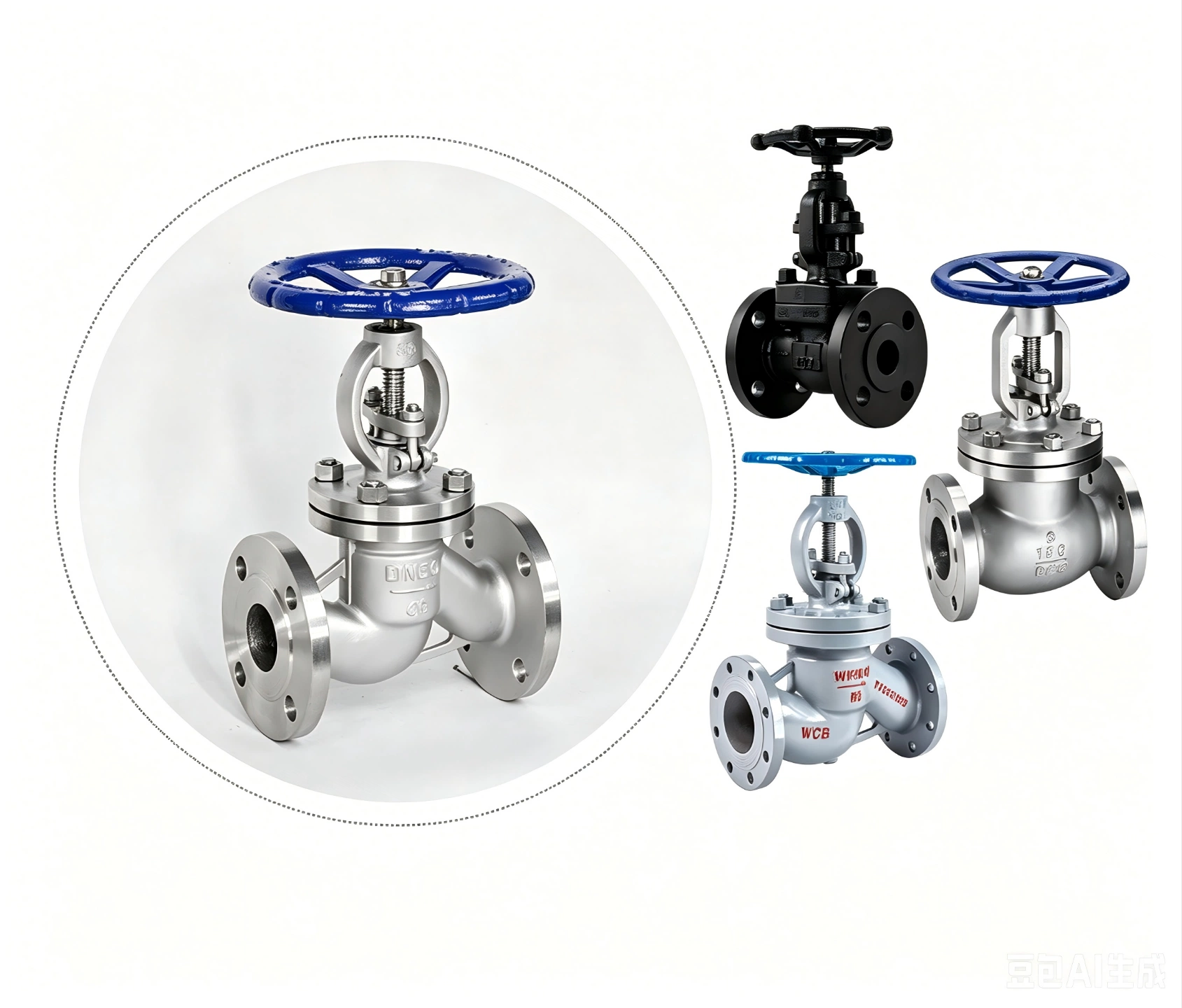
(1) Installed 8 × DN150 PN16 flanged Y-strainers (316 body, 20 mesh) immediately upstream of each ball valve — cleaned quarterly by operations. (2) Replaced the two failed ball valves with new CF8M 316 full-bore flanged ball valves with RPTFE seats. (3) Replaced the two throttling valves (used for brine discharge control) with flanged globe valves (316 body, 316 trim, RPTFE packing) — designed for continuous throttling without seat erosion. (4) Upgraded PM from annual to quarterly inspection with stem-packing checks, flange-gasket walkaround, and full operation cycle test.
Step 4 — Outcome
• CIP cycle on the RO rack returned to the design interval of once every 6 months within two months of the retrofit
• Stem-packing leaks were caught at the weekly walkaround instead of after months of seawater weeping on the floor
• Seat erosion on the brine control line stopped immediately once the ball valves were replaced with throttling-grade globe valves
• Lesson: strainers protect seats, PM catches stem leaks early, and ball valves must never be used for continuous throttling. The retrofit was a small capital item compared with one single incident: extra CIP chemicals from shortened cleaning cycles, an 8-hour unplanned dewatering shutdown, and accelerated membrane ageing from high back-pressure.
Why EPC Contractors Specify Chuanglan for Spare Valves & Parts
20+ valve products lines in 304 / 316 / CF8M / WCB — flanged ball, gate, globe, wafer / lug butterfly, swing / lift / wafer check, Y-strainers, sanitary valves
Soft-parts kits (seats, gaskets, packing, O-rings, actuator diaphragms) matched to Emerson / Flowserve / Velan / Kitz / Tomoe standard-spec equivalents
Full EN 10204 3.1 MTC, shell and seat pressure test, API 598 shell & seat test report — MOQ 1 piece, 7–15 day delivery
Need Spare Parts or Replacement Valves?
Send us your valve nameplate details (size, pressure rating, body material, seat material, end connection) — we will match the correct replacement valve or soft-parts kit within 24 hours, with full EN 10204 3.1 MTC documentation and 7–15 day delivery.
Get Free Sizing Report → WhatsApp us5. Tips to Double Valve Service Life
These are the things our best customers do that doubles the life of their valves:
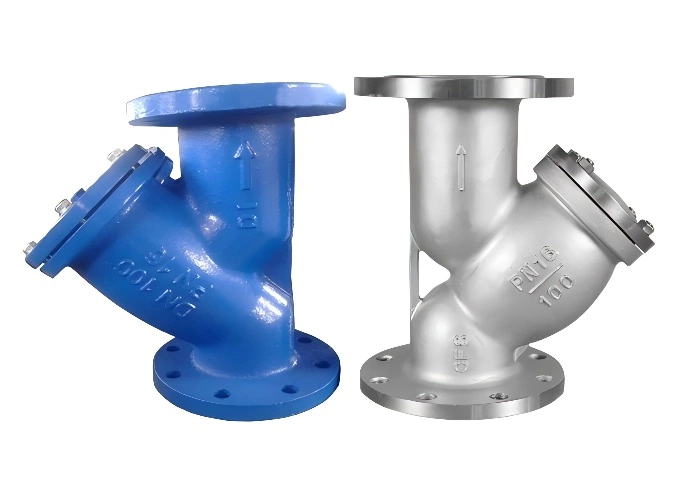
Tip 1: Always install a Y-strainer before the valve. Debris in the pipeline is the #1 cause of premature valve failure. A modestly priced Y-strainer prevents valve-seat damage worth many times its own cost. Clean the strainer every 6 months (quarterly for seawater or slurry service). See our Y-strainer orientation guide for correct installation.
Tip 2: Don’t use ball valves for throttling. Ball valves are isolation valves — fully open or fully closed. If you need to regulate flow, use a globe valve or butterfly valve. Throttling a ball valve erodes the seat in months (exactly what happened at Barka).
Tip 3: Exercise valves that stay open for years. Valves that sit fully open for years can seize. Cycle them (open / close fully) once every 6 months to keep the seats and stem lubricated. This is especially important for emergency shutdown (ESD) valves, check valves, and wafer dual-plate check valves that rarely operate.
Tip 4: Use the right lubricant. Don’t use general-purpose grease on valve stems. Use a valve-specific lubricant compatible with the process media — for oxygen service, use oxygen-clean lubricant only; for food / pharma, use H1 food-grade lubricant only (see our sanitary ball valves guide for food-grade options); for steam service, use high-temperature valve grease rated above the steam temperature.
Tip 5: Keep spare parts on hand. Always have a spare seal kit, packing set, and gasket for critical valves. The cost of downtime waiting for parts dwarfs the cost of keeping spares on the shelf. For 316L seawater service, also keep a spare actuator diaphragm and solenoid valve — these are the most common pneumatic failure points.
6. When Should You Replace a Valve?
Some things can be fixed with maintenance, but when you see these signs, it’s time to replace:
- External corrosion that has thinned the body wall (measure with an ultrasonic thickness gauge)
- Internal seat leakage that can’t be fixed by repacking or cycling the valve
- Stem damage (bent, pitted, or rusted through)
- Valve body cracks or stripped flange bolt holes
- Actuator can’t overcome the valve torque (valve is seized — don’t force it)
- The valve is past its design life (15–20 years for most industrial valves)
7. Southeast Asia & Middle East Market Notes
For clients in Southeast Asia (Thailand, Vietnam, Indonesia, Malaysia, Philippines, Myanmar), the tropical climate (30°C+, 80%+ RH, monsoon season) accelerates external corrosion on carbon steel valves even indoors. Water-treatment plants (Provincial Waterworks Authority Thailand, Saigon Water Corporation HCMC, Aetra / Jakarta, Syabas Malaysia) typically extend PM intervals to quarterly walkarounds because corrosion visible one quarter is structural the next. Palm-oil refineries in Medan, Surabaya, and Johor use ball valves for product isolation but must never use them for throttling — palm oil at 90–110°C with suspended solids erodes PTFE seats in 6–12 months if throttled; use globe valves or high-performance butterfly valves with metal seats for palm-oil flow control. Vietnamese and Thai textile-dyeing plants need PM on chemical dosing valves monthly — acid and caustic CIP eats packing in 3–6 months. Indonesian and Malaysian shipyards (Batam, Labuan, Port Klang) service wafer dual-plate check valves on cooling-water lines every drydock — don’t wait for the next drydock cycle to replace worn plates.
For clients in the Middle East (Saudi Arabia, UAE, Qatar, Kuwait, Oman, Bahrain), the 50°C summer, dust storms, and coastal salinity mean that even indoor valves need monthly walkarounds. SWRO desalination plants (Jubail, Yanbu, Ras Al Khair, Taweelah, Barka, Sohar) are the most maintenance-intensive — seawater with 4.0–4.5% chloride at 35–40°C requires 2205 duplex or 316L valves, quarterly strainer cleaning, and annual seat replacement. The Barka case above is typical of Gulf desalination — most failures come from missing strainers rather than valve design. Oil & gas facilities (Aramco, ADNOC, SABIC, SEC, DEWA) have strict API 598 / API 6D maintenance requirements: ESD valves must be fully cycle-tested every 6 months, emergency depressurization valves every 12 months, and ISO 15156 sour-service valves must have their packing replaced every 3 years regardless of visible condition. Power plants (SEC, DEWA, ADWEA, Muscat) use WCB gate valves on steam lines — these need stem lubrication every 6 months with high-temperature valve grease (up to 400°C); don’t use general-purpose grease on steam service.
Chuanglan Valve supplies replacement valves and soft-parts kits for our full valve range — flanged ball valves, gate valves, globe valves, wafer butterfly valves, swing check valves, wafer dual-plate check valves, Y-strainers, and pneumatic / electric actuated valves — with full EN 10204 3.1 MTC, spare seal / packing kits in stock, and direct delivery. Serving EPC Contractors Across Southeast Asia & Middle East · ISO 9001:2015 · Established in 2009 · MOQ 1 piece, 7–15 day delivery.
Common Mistakes to Avoid
- Specifying 304 stainless for coastal or chloride service. If your project is in Southeast Asia (coastal, cooling tower, deicing salts) or the Middle East (desalination, SWRO, humid Gulf climate), 304 will pit within 1–3 years. Specify CF8M (316) or duplex 2205.
- Ignoring pressure-temperature derating. PN16 / Class 150 ratings apply at room temperature only. At 200°C the allowable pressure drops by roughly 40–50%. Always check the manufacturer’s P-T chart before specifying for steam, hot oil, or thermal fluid.
- Buying on price without MTC verification. “Stainless steel” is not enough — ask for EN 10204 3.1 MTC tied to the heat number, and arrange PMI (XRF) witness at the factory if the price is 20% below market. 304 passed off as 316L is the single most common failure in this industry.
- Forgetting face-to-face and flange drilling. A “PN16” wafer valve from one manufacturer may not match the existing flange drilling or face-to-face of another. Always confirm dimensions against EN 558 / API 609 / ASME B16.10 before replacing an installed valve.
FAQ
How often should I inspect industrial valves?
For normal industrial service: weekly walkaround (stem packing, flange joints, actuators) and quarterly full-operation cycle test. For critical, high-cycle, or corrosive service (chemical dosing, seawater, high-temperature steam), double the frequency: monthly walkaround and quarterly seat inspection. See the PM schedule table above for ball, butterfly, gate and globe valve intervals.
How do I stop a leaking valve stem packing?
First, tighten the gland nut by ¼ turn at a time (do not over-tighten — you’ll bind the stem and damage the packing). If it still leaks after ½ turn, the packing is worn and needs replacement. For live-leaking valves under pressure, use an injectable packing sealant — but this is a temporary fix; repack the valve during the next planned shutdown. Never weld or braze a leaking stem gland under pressure.
Can I use a ball valve for flow regulation / throttling?
No. Ball valves are isolation valves — fully open or fully closed. Throttling a ball valve (leaving it 20–60% open) exposes the seat to high-velocity flow and erodes it in months. Use a globe valve, high-performance butterfly valve, or segmented ball valve specifically designed for throttling. If you’re throttling a standard ball valve today, plan to replace it with a throttling valve during the next outage.
How often should I clean a Y-strainer?
For clean water and oil service, clean every 6 months. For seawater, wastewater, pulp & paper, or slurry service, clean every 1–3 months. Install a differential-pressure gauge across the strainer — when ΔP exceeds 0.5 bar, it’s time to clean. See our how to clean Y-strainer guide for step-by-step instructions.
My valve is 15 years old — should I replace it proactively?
15–20 years is the design life for most industrial valves. If the valve is in critical service (safety shutdown, feedwater, brine discharge, CIP), proactively replace it during a planned shutdown rather than waiting for it to fail unexpectedly. If it’s a non-critical isolation valve that has been cycled rarely, you can extend to 20–25 years with annual seat inspection. Always keep a replacement valve on the shelf for critical service — lead time on large / special-material valves is 4–12 weeks.
What spare parts should I keep for pneumatic-actuated valves?
For each critical pneumatic valve, keep in stock: (1) actuator diaphragm or piston O-ring kit, (2) solenoid valve (same voltage), (3) limit-switch box, (4) FRL filter element, (5) stem packing kit. Spare parts are a small fraction of the valve price but prevent far larger downtime losses. For 316L seawater service, also keep a spare seat and ball — the wet internals fail first.
Can Chuanglan supply replacement parts for valves I bought from another manufacturer?
Mostly yes — our seat, packing, gasket, and trim kits are interchangeable with leading brands (Emerson, Flowserve, Velan, Kitz, Tomoe) for standard-spec valves. Send us the valve nameplate photo, size, pressure rating, body material, seat material, and end connection — we’ll match or quote a full replacement valve within 24 hours. For proprietary trim designs or cryogenic / sour service, we’ll specify a complete replacement valve rather than a parts kit.
References & Standards
- API 598 — Valve Inspection and Testing
- API 6D — Pipeline Valves (oil & gas)
- ISO 15156 — Sour-service valve materials
- ASME B16.34 — Valves, flanged, threaded, and welding ends
- MSS SP-25 — Standard marking system for valves and fittings
- ASME PTC 25 / FCI 70-2 — Control-valve leakage classes
Related Products
Continue Reading
Request a Quotation — Reply Within 24 Hours
Send your line size, pressure rating, medium and quantity. Our engineers come back with price, drawing and lead time — no obligation.