


Globe Valve vs Gate Valve: Which One Do You Need?
The complete 2026 guide comparing globe valves vs gate valves — how each works, pressure drop, throttling capability, shutoff tightness, water hammer risk, size range, cost, weight, typical applications (steam, water, oil & gas), the four most common selection mistakes, a quick decision flowchart, and a buying checklist for Southeast Asia and the Middle East industrial projects.
* Standard lead time depends on order quantity and destination country. 5–10 days to Southeast Asia, 15–20 days to the Middle East.
⚡ Quick Answer
Use a GATE valve for fully-open / fully-closed isolation on large lines (DN150+ water, oil, gas transmission mains) — it gives near-zero pressure drop at the lowest cost and weight. Use a GLOBE valve anywhere you must THROTTLE flow (boiler feedwater, steam, condensate, chemical dosing) or need a tighter, more frequent shutoff — it handles partial opening without eroding, but costs more and adds 5–10× the pressure drop of a gate. Never hold a gate valve partially open: high-velocity flow will gouge the wedge and seat inside 1–2 years. For bubble-tight shutoff, choose a ball valve instead; for large throttling lines above DN300, a wafer or lug butterfly is usually the value option.
🔑 Key Takeaways
- Throttling? → Globe valve (or control valve with actuator). Gate = open or closed only.
- Large main line? → Gate valve (or butterfly) for minimum pressure drop and cost.
- Steam / condensate? → Globe valve — seals tight, closes gradually, resists water hammer.
- Bubble-tight? → Ball valve. Globe is tight; gate can weep after cycling.
On This Page
1. How They Work (The Key Difference)
Gate valve: A wedge-shaped gate slides up and down to open or close the flow path. When fully open, the gate is completely out of the flow, so there’s almost no pressure drop. When closed, the gate wedges against two seats to shut off flow. Gate valves are designed to be either fully open or fully closed — they’re not meant for throttling.
Globe valve: A plug (disc) moves perpendicular to the flow, sitting on a horizontal seat in the center of the valve. Fluid has to change direction as it passes through the valve, which creates more pressure drop. Globe valves can be used for both shutoff AND throttling (flow regulation) — they work well when partially open.
2. Side-by-Side Comparison
| Feature | Gate Valve | Globe Valve |
|---|---|---|
| Pressure Drop | low (gate out of flow) | Higher (fluid changes direction) |
| Throttling / Flow Control | No (gate vibrates and erodes if partially open) | Yes (excellent for regulating flow) |
| Shutoff Tightness | Good (can leak after cycling) | Excellent (tighter than gate) |
| Operation Speed | Slow (many turns) | Slower (vertical stem, many turns) |
| Water Hammer Risk | Higher (slow closing = more surge) | Lower (can close gradually) |
| Size Range | Up to DN1200+ | Up to DN600 (heavier at large sizes) |
| Relative Cost (same size) | Lower for large sizes | Slightly higher (complex internals) |
| Weight | Lighter (shorter face-to-face) | Heavier (taller body) |
3. When to Use a Gate Valve
Use a gate valve if:
- You need full flow with minimal pressure drop
- The valve is either fully open or fully closed most of the time
- You have large-diameter piping (DN150 and up)
- Cost is a priority (gate valves are lower cost for large sizes)
- It’s a pipeline that stays open for long periods
- It’s for water, oil, or gas transmission lines
Typical gate valve applications:
- Municipal water distribution pipelines
- Oil and gas transmission pipelines
- Fire protection systems
- Cooling-water headers in power plants
- Any line where you need open / closed shutoff with no flow restriction
4. When to Use a Globe Valve
Use a globe valve if:
- You need to regulate flow (throttle) — not just open / close
- You need bubble-tight shutoff (better than gate valves)
- The valve operates frequently
- Space is limited (shorter overall length than gate for the same function)
- You have high-pressure steam systems
- You need to prevent water hammer (can close gradually)
Typical globe valve applications:
- Steam systems (boilers, heating, process steam)
- Condensate lines
- Cooling-water branches where you need to regulate flow
- Chemical dosing and metering
- Boiler feedwater
- Any system where flow needs to be adjusted, not just shut off
5. Worked Example: Surabaya Power Plant Feedwater Failure
Step 1 — Problem
A 150 t/h coal-fired captive power plant in Surabaya, East Java, Indonesia, supplied a nearby textile mill. On the boiler feedwater control line (DN80, PN40, 160°C feedwater at 22 bar), operators used a standard WCB flanged gate valve as the drum-level control valve. During normal operation, the gate valve was kept roughly 30% open to modulate feedwater into the steam drum. After 8 months of operation, operators noticed: (1) drum level became unstable, swinging ±150 mm; (2) feedwater flow readings fluctuated wildly; (3) on a routine outage, inspection revealed severe erosion on the gate disc and seat — the gate had a 6 mm gouge along one edge. On the next upset (coal feed jam), drum level tripped and the boiler had to be shut down for 14 hours.
Step 2 — Root cause analysis
The design engineer mistakenly specified a gate valve for throttling service. Gate valves are designed to be fully open or fully closed. When a gate valve is held partially open, high-velocity feedwater (22 bar, 160°C) impinges directly on the exposed edge of the gate disc, causing:
• Cavitation and erosion on the gate edge (the 6 mm gouge)
• Gate vibration (the disc oscillates in the guide slots)
• Seat wear (the gate no longer seats fully when closed)
• Unstable flow (the flow coefficient jumps as the gate moves a few mm)
A globe valve disc, by contrast, moves perpendicular to flow and is designed to have a stable, predictable flow characteristic across the whole travel — it’s the correct valve for feedwater control.
Step 3 — Correct retrofit
Replaced the DN80 gate valve with a DN80 PN40 flanged globe valve: WCB body, 316 stainless trim, graphite packing for 400°C service, flanged ends drilled to match existing PN40 flanges. Same face-to-face dimension per EN 13709, so no pipe modification was needed — just unbolt the old gate and bolt on the new globe in the same outage window.
Step 4 — Outcome
• The globe swap was a bolt-in replacement on the existing flanges — no piping work, same outage window
• Drum level stabilized within a week of commissioning; the ±150 mm swing disappeared
• Feedwater flow became stable and repeatable, matching the control-valve curve
• The retrofit was a small fraction of the cost of a single 14-hour boiler trip and the lost textile-mill steam supply
• The plant has not had a repeat drum-level trip since; the eroded gate and seat are now reference samples for training operators on valve selection
• Lesson: never throttle with a gate valve. If you need flow control, use a globe valve (or a control valve with pneumatic / electric actuator for continuous modulation). For large open / closed mains, gate valves are correct and cost-effective — but only fully open or fully closed.
💡 Why EPC Contractors Specify Gate & Globe Valves with Chuanglan
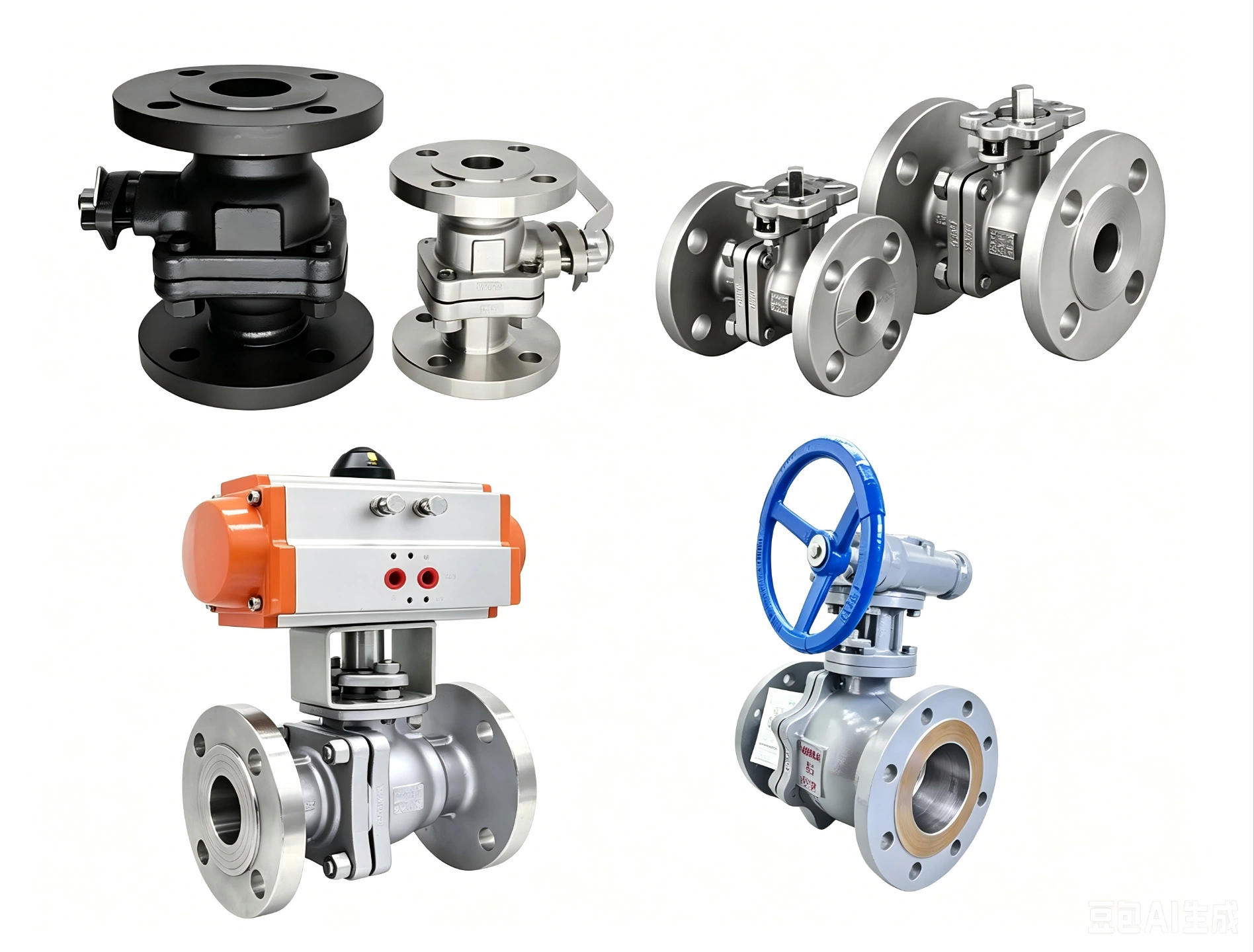
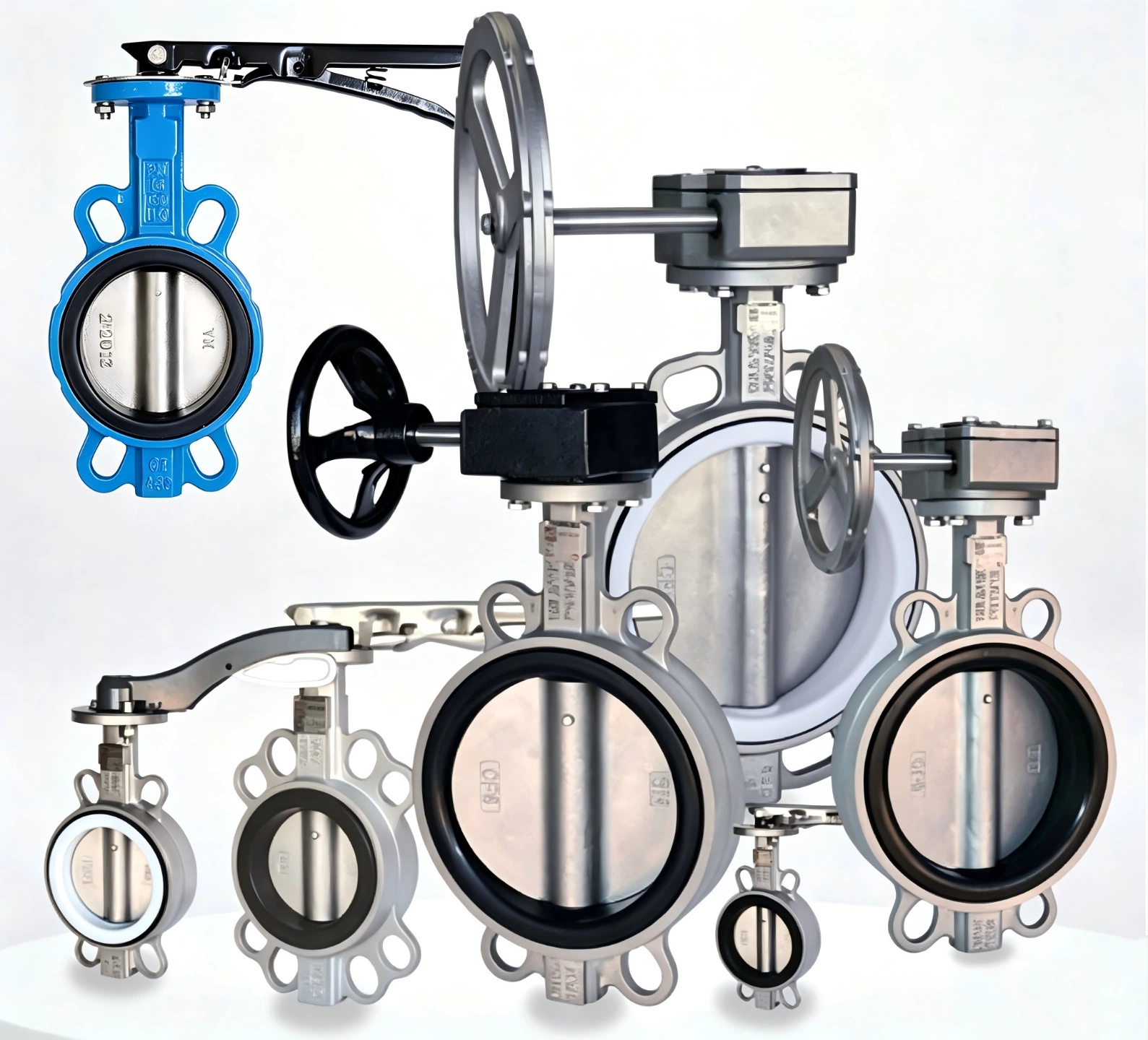
Rising-stem gate valves (cast iron / ductile iron / WCB / CF8 / 2205 duplex) · rising-stem globe valves · flanged ball valves · wafer butterfly valves
DN15–DN1200 · PN6–PN100 · Class 125–Class 600 · handwheel, gear, electric or pneumatic actuator
API 600 · API 602 · API 623 · EN 12288 · EN 13709 · full EN 10204 3.1 MTC · ISO 15156 sour-service trim on request
Not Sure Whether You Need a Gate or Globe Valve?
Tell us your pipe size, pressure, medium (water / steam / oil / chemical), temperature, and whether the valve needs to throttle or just open / close — our engineers will recommend the right valve type within 24 hours.
Get Free Sizing Report →6. Common Mistakes People Make
Mistake 1: Using a gate valve for throttling. Gate valves are designed to be fully open or fully closed. If you leave a gate valve partially open, high-velocity flow will erode the gate and seats, and the gate will vibrate. It will fail in 1–2 years. Use a globe valve for throttling, or a butterfly / ball valve if you need automation.
Mistake 2: Using a globe valve on a large main line. Globe valves create significant pressure drop. If you put a large-size globe valve on a transmission main, you’ll lose pump efficiency. Use a gate valve (or butterfly valve) for large main lines, and reserve globe valves for smaller branch lines where flow control is needed.
Mistake 3: Expecting gate valves to be bubble-tight. Gate valves are good but not perfect shutoff valves. They can weep a little after repeated operation. If you need bubble-tight, use a ball valve (which is bubble-tight). Globe valves are tighter than gate valves but still not as good as ball valves.
Mistake 4: Forgetting orientation. Most globe valves are installed with flow coming in under the disc (handwheel on top). This makes it easier to open and provides tighter shutoff. Gate valves can be installed in any orientation (stem up is preferred). Always check the flow-direction arrow on the valve body.
7. Other Valve Types: Ball & Butterfly
If you’re choosing between gate / globe and other types, here’s a quick comparison:
| Valve Type | Shutoff | Throttling | Relative Cost (large size) | Best For |
|---|---|---|---|---|
| Gate Valve | Good | No | Lower | Large main lines, open / closed only |
| Globe Valve | good | Excellent | Medium | Steam, throttling, frequent operation |
| Ball Valve | Excellent (bubble-tight) | Poor (seat damaged if throttled) | Medium | Tight shutoff, automation, general use |
| Butterfly Valve | Good (not perfect) | Good (mid-flow) | Lowest (large sizes) | Large sizes, HVAC, water treatment |
8. Quick Decision Flowchart
Ask yourself these questions in order:
1. Do you need to regulate flow (throttle)?
→ Yes: Globe valve
→ No: continue
2. Do you need bubble-tight?
→ Yes: Ball valve
→ No: continue
3. Is the size DN150 or larger?
→ Yes: Gate valve or butterfly valve (lower cost, lighter)
→ No: continue
4. Is it for steam?
→ Yes: Globe valve
→ No: Gate valve (for open / closed) or ball valve (for tight shutoff)
9. Buying Checklist
When you send an RFQ for gate or globe valves, include:
- Size (DN / inch)
- Pressure rating (PN / Class)
- Medium (water, oil, steam, chemical)
- Temperature
- Valve type (gate / globe)
- Body material (WCB / CF8 / CF8M / cast iron / ductile iron / 2205 duplex)
- End connection (flanged / threaded / welded)
- Operator (handwheel / gear / electric actuator)
- Standard (API 600 / API 602 / API 623 / EN 12288 / EN 13709)
10. Southeast Asia & Middle East Market Notes
For clients in Southeast Asia (Thailand, Vietnam, Indonesia, Malaysia, Philippines), gate valves are the workhorse of municipal water distribution (MWA Bangkok, PWA Thailand, Saigon Water, PDAM Jakarta, Syarikat Air Johor) — ductile-iron flanged gate valves DN100–DN600 are the standard for network isolation. The most common field failure we see in Indonesian coal power plants (like the Surabaya case above) is using gate valves for feedwater or spray-water control, causing erosion within 1–2 years. Specify WCB globe valves for any throttling service. Thai and Malaysian palm-oil mills use WCB gate valves on oil lines (open / closed only) and globe valves on steam tracer and condensate lines. Vietnamese water-treatment plants increasingly specify wafer butterfly valves for large isolation (lower cost and lighter than gate valves above DN300).
For clients in the Middle East (Saudi Arabia, UAE, Qatar, Kuwait, Oman, Bahrain), gate and globe valves are specified for power and water projects: Saudi Aramco, SABIC, SEC (Saudi Electricity Company), DEWA, ADNOC, QP. Middle East power plants (Jubail, Yanbu, Ghazlan, Shoaiba) specify WCB gate valves per API 600 for steam-header isolation, and WCB globe valves per API 623 for feedwater, attemperator spray, and drain service. ISO 15156 sour-service trim is mandatory for any oil / gas gathering application. SWRO desalination plants (Jubail, Yanbu, Ras Al Khair, Taweelah) use duplex-stainless gate and globe valves on brine lines (316L is not enough for 4.5% chloride at 40°C — specify 2205 duplex or super-duplex). The extreme heat (50°C ambient in summer) requires high-temperature graphite packing and PTFE-backed gaskets.
Chuanglan Valve supplies rising-stem gate valves, rising-stem globe valves, flanged ball valves, and wafer butterfly valves — in cast iron, ductile iron, WCB carbon steel, CF8 / CF8M 304 / 316 stainless, and 2205 duplex, with full EN 10204 3.1 MTC certificates. Serving EPC Contractors Across Southeast Asia & Middle East · ISO 9001:2015 Certified · 15+ Years Factory Experience · MOQ starts at 1 piece.
FAQ
Can a gate valve be used for throttling?
No. Gate valves are designed to be fully open or fully closed. Holding a gate valve partially open causes high-velocity flow to erode the gate edge, seat, and stem, and the gate will vibrate. This typically causes failure within 1–2 years. For throttling, use a globe valve, a butterfly valve (mid-flow), or a control valve with pneumatic / electric actuator for precise modulation.
Why is a globe valve more expensive than a gate valve?
Globe valves have more complex internals: a plug-type disc, a separate seat ring screwed or welded into the body, and a longer bonnet with more packing area. They also have a taller body to accommodate disc travel. Gate valves have a simple wedge gate and two integral seats, making them lower cost and lighter, especially in large sizes (DN300+).
Which valve causes more pressure drop?
Globe valves cause significantly more pressure drop (typically 5–10× that of a gate valve at the same size) because the fluid has to change direction inside the body. Gate valves, when fully open, present an unobstructed straight-through bore. For long transmission mains or large cooling-water lines, always choose gate or butterfly valves to minimize pumping-energy cost.
Which is better for steam — gate or globe?
Globe valves are preferred for most steam service (boilers, process steam, condensate, drains) because they throttle well, seal tightly, and can close gradually to prevent water hammer. Gate valves are used on steam mains where you need full-open isolation with minimum pressure drop — but never throttle them. For high-temperature steam (400°C+), specify WCB / WC6 body with graphite packing and metal or stainless trim.
How do I know which direction to install a globe valve?
Globe valves are unidirectional — flow must enter under the disc (toward the seat from below). There is an arrow cast on the valve body showing flow direction. Installing a globe valve backwards makes it harder to open, reduces shutoff tightness, and can cause seat damage. Gate valves are bidirectional but stem-up installation is preferred.
What is the typical lead time for gate and globe valves from Chuanglan?
Standard sizes (DN50–DN200, PN16 / 40, WCB or cast iron, flanged, handwheel) are in stock and ship in 7–15 days. Large sizes (DN250–DN600), 316 / CF8M stainless, 2205 duplex, Class 300 / 600, ISO 15156 sour service, and gear or actuator operators take 15–30 days. Full EN 10204 3.1 MTC material certificates and dimensional drawings are included with every shipment.
Do Chuanglan gate and globe valves come with API 6D or API 600 certification?
Yes. Our flanged gate valves are manufactured to API 600 (steel gate valves, flanged or butt-welding ends) and EN 12288 (cast-iron gate valves). Our flanged globe valves are manufactured to API 623 and EN 13709. Full material test reports (EN 10204 3.1 MTC per EN 10204) and third-party inspection (SGS, BV, Intertek) are available on request.
References & Standards
- API 600: Steel Gate Valves — Flanged and Butt-Welding Ends
- API 602: Compact Steel Gate / Globe / Check Valves (NPS ≤ 4)
- API 623: Steel Globe Valves — Flanged and Butt-Welding Ends
- EN 12288: Industrial valves — cast iron gate valves
- EN 13709: Industrial valves — steel globe valves and globe-type check valves
- ISO 15156: Sour-service materials for oil & gas production
Related Products
Continue Reading
Get a Quote for Your Gate or Globe Valve Project
MOQ: 1 piece · ISO 9001:2015 certified · 3.1 MTC included · 100% factory pressure tested
Southeast Asia: Indonesia, Malaysia, Thailand, Vietnam, Singapore, Philippines
Middle East: Saudi Arabia, UAE, Qatar, Kuwait, Oman, Bahrain
Other Regions: Europe, North America, South America, Africa, Australia
Delivery: 5–10 days to Southeast Asia · 15–20 days to the Middle East · 25–35 days to Europe / the Americas
Payment: T/T 30% deposit + 70% before shipment · L/C at sight · Warranty: 12 months after shipment for material and manufacturing defects · Packing: export plywood case / fumigation-free pallet · Shipping: FOB Ningbo/Shanghai · Documents: EN 10204 3.1 MTC + packing list + commercial invoice · Third-party inspection welcome: SGS / Bureau Veritas / Intertek
Get Free Quote »Need a quote or datasheet? Tell us size, pressure class and material – reply within 24 hours.
Request a Quote