
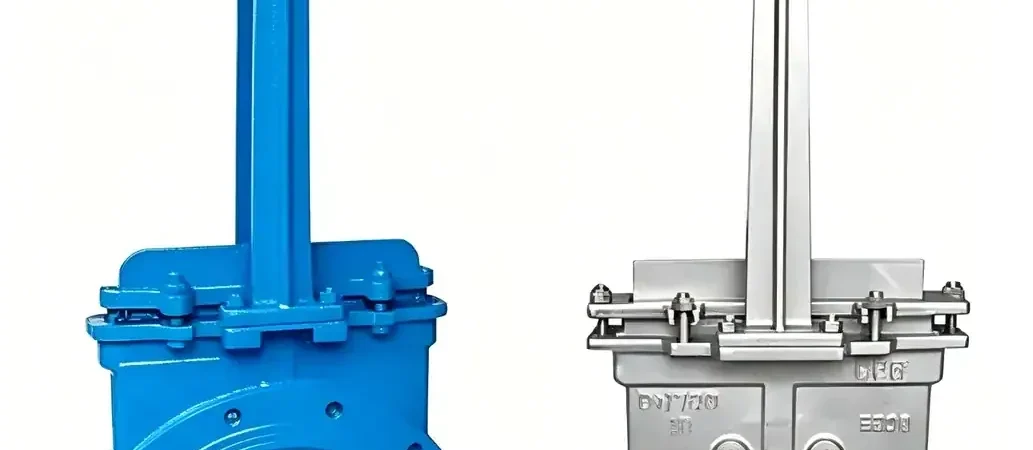
Knife Gate Valves: Ideal for Slurry, Sludge & Viscous Media
The complete 2026 guide to knife gate valves — why standard gate and butterfly valves fail on slurry, sludge, pulp, cement powder, and fibrous media; how a sharp-edged wafer knife gate cuts through thick abrasive or semi-solid material; typical applications in mining, pulp & paper, wastewater, chemical, cement, and food processing; material selection (cast iron / SS304 / SS316 gate, EPDM / NBR / HNBR sleeve); and a worked example from a Cikarang wastewater plant.
* Standard lead time depends on order size and destination. 5–10 days to Southeast Asia, 15–20 days to the Middle East.

Quick Answer
Knife gate valves are quarter-turn / rising-stem isolation valves that use a sharp, thin gate to cut through thick, abrasive, or fibrous media — slurry, sludge, pulp, cement powder, POME, food puree — where standard gate, globe, ball, or butterfly valves fail within months. The key design difference is a full-round elastomer sleeve (EPDM / NBR / HNBR / Viton) that squeezes the gate from all sides, with no seat pockets that can clog. For clean water, use a standard gate valve or wafer butterfly valve; for slurry, sludge, pulp, fiber, powder, or any semi-solid media, use a wafer knife gate valve. The single most common spec error is putting a standard rising-stem gate valve on fibrous sludge service — rags, lint, and palm husk fiber wrap around the exposed stem threads, seize the valve in 4-8 months, and cause unscheduled shutdown.
Key Takeaways
- Knife gate = sharp gate + full-round sleeve: no seat pockets, no exposed stem, cuts through fiber and semi-solids
- Sleeve is the wearing part: EPDM for water/sludge · HNBR for abrasive slurry · NBR for oil/cement · Viton/PTFE for chemicals
- Not for throttling: isolation only (fully open or fully closed); throttling erodes the sleeve in weeks
- 3× upfront, 5-10× life on slurry: total cost of ownership, not purchase price, is the correct comparison
On This Page
Why Standard Valves Fail on Slurry & Sludge
Standard gate valves and butterfly valves often fail quickly when handling thick, abrasive, or viscous media like slurry, pulp, cement powder, or wastewater sludge. The failure modes are predictable and expensive:
- Particulate erosion: Abrasive particles (sand, ash, mineral ore, cement dust) get trapped between the disc and liner of a butterfly valve, or between the wedge and seats of a standard gate valve, causing rapid seat erosion and leakage in 3-6 months.
- Fiber wrapping: Pulp, palm oil husk fiber, rags in wastewater, food processing fibers, and textile debris wrap around the rising stem of a standard gate valve, pulling the packing out and seizing the valve in 4-8 months.
- Seat pocket clogging: Ball valves have seat pockets around the ball that fill with semi-solid sludge, cement paste, or food product — the valve can no longer close because the ball is locked in place by caked material.
- High torque seizure: As sludge dries and hardens inside the valve, torque to open/close increases 10-20×. Manual operators force the valve, bending the stem or breaking the gearbox.
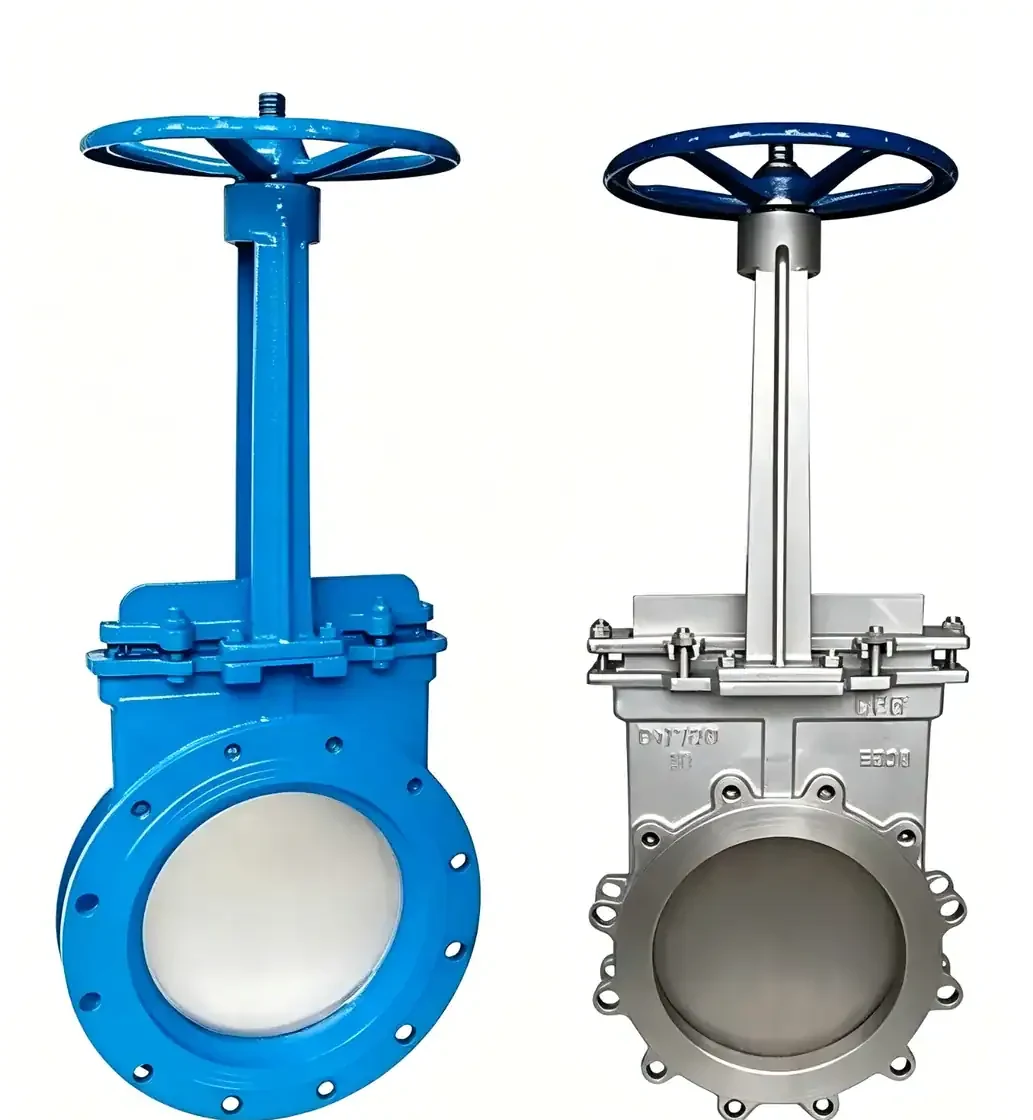
Knife gate valves are specifically designed for these challenging applications — see our wafer knife gate valves and pneumatic knife gate valves for the product line.
What Makes a Knife Gate Valve Different
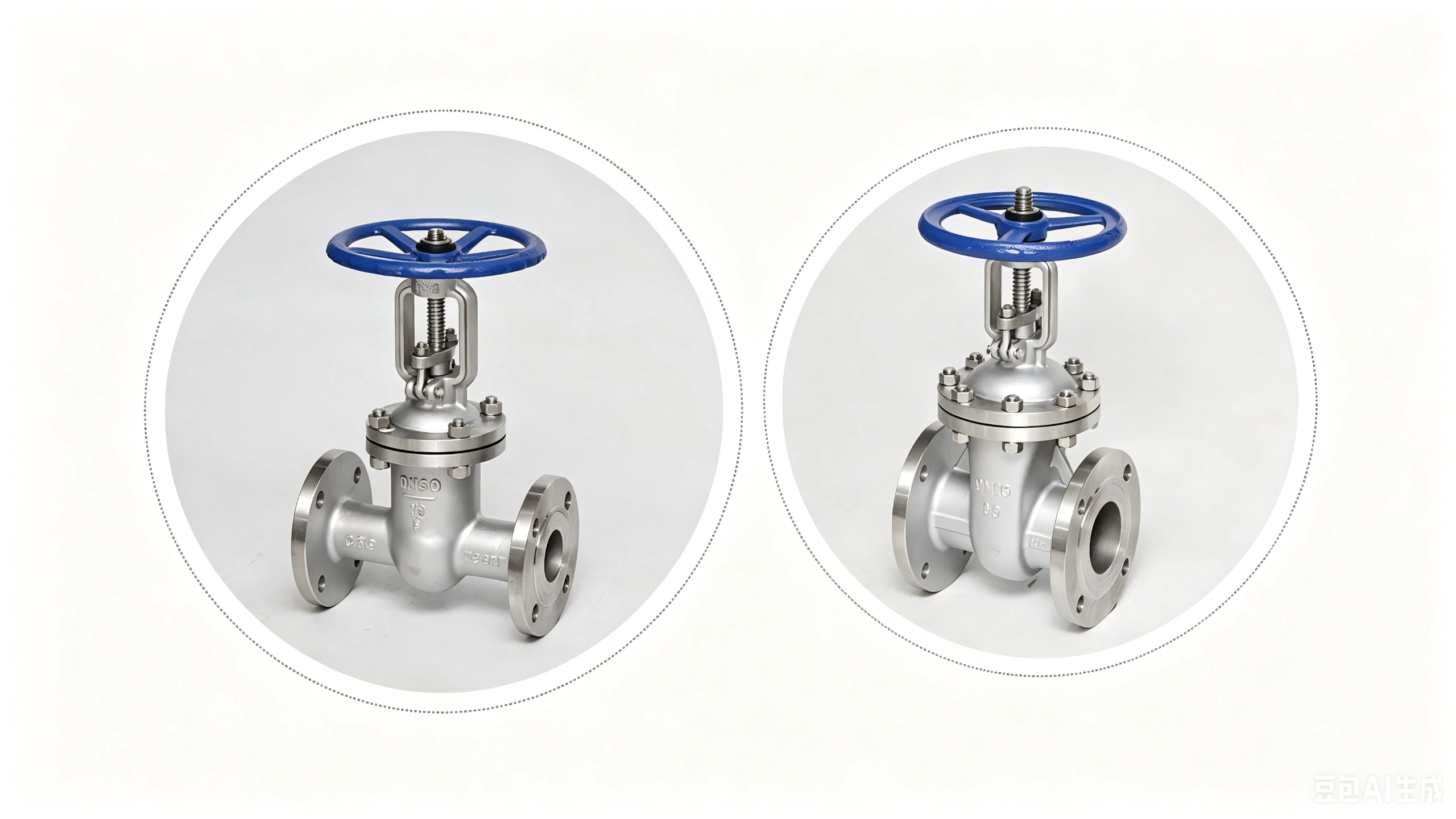
| Feature | Standard Gate Valve | Wafer Knife Gate Valve |
|---|---|---|
| Closure element | Wedged gate with two seats | Sharp-edged thin gate that cuts through media |
| Body style | Flanged, long face-to-face | Wafer (short), fits between pipe flanges |
| Seat design | Metal-to-metal or soft seats with pockets | Full-round sleeve (EPDM/NBR/HNBR) that squeezes the gate |
| Stem exposed? | Yes — rising stem contacts media | No — gate is non-rising, stem stays outside media |
| Weight (DN200) | ~45 kg (flanged gate) | ~14 kg (wafer knife gate) |
| Expected life on slurry | 3-6 months | 5-10 years (sleeve replaceable) |
Knife gate valves use a sharp, thin gate (knife) that cuts through thick, fibrous, or semi-solid media to achieve full shutoff. They have a compact wafer body, are easy to maintain, and are far more cost-effective than using standard valves for heavy-duty applications.
Typical Applications
| Industry | Typical Media | Valve Material Recommendation |
|---|---|---|
| Mineral processing / mining | Copper/gold/iron ore slurry (20–60% solids) | Cast iron body, SS316 gate, HNBR sleeve |
| Pulp & paper | Wood pulp, black liquor, fiber slurry | Cast iron body, SS316 gate, EPDM sleeve |
| Wastewater treatment | Sludge (5–25% solids), scum, screenings | Cast iron body, SS304 gate, EPDM sleeve |
| Cement / power | Cement powder, fly ash, bottom ash slurry | Cast iron body, SS304 gate, NBR sleeve |
| Chemical processing | Acid slurry, polymer solution, pigment paste | SS316 body, SS316 gate, PTFE or Viton sleeve |
| Food processing | Chocolate, fruit puree, dough, vegetable pulp | SS316 body, SS316 gate, FDA EPDM sleeve |
| Palm oil / biomass | POME sludge, husk fiber, biogas digestate | Cast iron body, SS316 gate, EPDM sleeve |
Knife gate valves are commonly specified for mining, pulp and paper manufacturing, wastewater treatment, chemical processing, cement plants, and food processing lines handling thick products like chocolate or fruit puree.
Material & Sleeve Selection Guide
The sleeve (the elastomer that squeezes around the gate) is the heart of a knife gate valve — it determines both shutoff tightness and chemical resistance.
| Sleeve Material | Best For | Temperature Range |
|---|---|---|
| EPDM | Water, wastewater sludge, pulp, food (FDA grade) | -30°C to +120°C |
| NBR (Buna-N) | Oil, grease, cement powder, air | -20°C to +90°C |
| HNBR | Abrasive slurry, mineral processing, hot water | -20°C to +150°C |
| Viton (FKM) | Chemicals, oil, high temperature | -15°C to +200°C |
| PTFE | Strong acids, solvents, aggressive chemicals | -50°C to +200°C |
Rule of thumb: For water/sludge/wastewater use EPDM; for mineral slurry with sand/ash use HNBR (lasts 3× longer than EPDM on abrasive service); for oil or cement use NBR; for chemicals use Viton or PTFE. Never use EPDM with oil or hydrocarbons — it will swell and fail in weeks.
Total Cost of Ownership (TCO), Not Purchase Price
Knife gate valves cost 2-3× more upfront than standard wafer butterfly valves, but on abrasive or fibrous service they last 5-10× longer. Below is a relative cost index (standard wafer butterfly valve at DN200 / PN10 / EPDM = 1.0× baseline):
| Size (DN) | Wafer Butterfly Valve (EPDM) | Wafer Knife Gate (SS304 gate, EPDM) | Expected Life on Slurry |
|---|---|---|---|
| DN80 / 3″ | 0.4× | 1.0× (baseline per size) | Butterfly 6 months / Knife gate 5+ years |
| DN150 / 6″ | 0.45× | 1.0× | Butterfly 4 months / Knife gate 5-8 years |
| DN200 / 8″ | 0.47× | 1.0× | Butterfly 3 months / Knife gate 8-10 years |
| DN300 / 12″ | 0.52× | 1.0× | Butterfly 2 months / Knife gate 10+ years |
Across a 5-year operating window, the knife gate valve’s total cost (purchase + replacement labor + downtime) is roughly 1/5 of the butterfly valve’s TCO on abrasive slurry service.
Worked Example: Cikarang Sludge Dewatering Line
Step 1 — Problem
A 150,000 m³/day municipal wastewater treatment plant in Cikarang, Indonesia (serving industrial and residential areas east of Jakarta), operates a sludge dewatering line with 4 centrifuges handling 20% dewatered sludge (water + biosolids + palm oil mill fiber rags + textile lint from upstream industrial discharge). The original design specified 16 × DN150 PN10 flanged rising-stem gate valves for sludge feed and discharge isolation on each centrifuge. After 4 months of operation, operators reported that 8 of the 16 valves could not be opened or closed — the rising stems were wrapped with fibrous rags and textile lint (like yarn wrapped around a spindle), pulling the packing out and seizing the stem. Two valves leaked sludge through the packing area, spraying dewatered sludge on the centrifuge deck. The plant had to stop the dewatering line for 2 days to manually cut fiber off the stems, replace packing, and free the seized valves.
Step 2 — Root cause analysis
Two compounding design errors: (1) Standard rising-stem gate valves expose the stem directly to sludge media — as sludge moves past the valve, fibrous material (rags, lint, palm husk fiber) wraps around the rotating stem threads. Rising stems are designed for clean water or gas, not fibrous sludge. (2) The gate valve wedge seats had pockets that filled with semi-solid sludge — once the sludge dried for a few hours during shutdown, the wedge was locked in place. The root cause was valve type mismatch: standard gate valves are not designed for 20% solids fibrous sludge service.
Step 3 — Correct retrofit
All 16 × DN150 PN10 gate valves were replaced with wafer knife gate valves: cast iron body, SS304 gate, EPDM sleeve, handwheel operated. The knife gate has a non-rising stem (the gate slides through the sleeve; the stem never contacts sludge media), a sharp-edged gate that cuts through rags and fiber instead of letting them wrap, and a full-round EPDM sleeve that squeezes the gate without pocketing sludge. The wafer body also weighed 14 kg vs. the original 45 kg flanged gate — easier to install in the cramped centrifuge building.
Step 4 — Cost & outcome
On a relative cost index (16 × DN150 flanged rising-stem gate valves as 1.0× baseline):
• Original 16 flanged gate valves (sunk): 1.0×
• Replacement 16 wafer knife gate valves (SS304 gate, EPDM): 1.35×
• Installation, flange gaskets, bolting: 0.4×
• 2-day unscheduled dewatering line shutdown (labor + disposal delay + industrial customer surcharge): ~11×
• Emergency fiber-cutting labor, packing replacement: 0.8×
• Environmental-agency warning for sludge overflow risk: ~2×
• Total incident cost: ~16× what it would have cost to specify knife gate valves from day one.
• After retrofit: 16 knife gate valves have run 3 years with zero fiber wrapping, zero stem seizure, zero sleeve replacement (EPDM sleeve inspection every 2 years).
• Lesson: For fibrous, high-solids sludge (biosolids, pulp, POME, textile waste), standard rising-stem gate valves fail in months. Wafer knife gate valves cost ~35% more upfront but eliminate fiber wrapping, stem seizure, and packing leaks — total cost of ownership over 5 years is 1/5 the cost of repeatedly replacing standard gate valves.
How Chuanglan Specs Every Knife Gate Quote
Wafer, lugged, and flanged knife gate valves in DN50–DN600, PN6/10/16
Cast iron, ductile iron, or SS316 body · SS304 / SS316 gate
EPDM / NBR / HNBR / Viton / PTFE sleeve — we match the sleeve to your medium, not default to EPDM
Manual handwheel, gear, pneumatic cylinder, or electric actuator; fail-safe spring return on request
MTC EN 10204 3.1 heat-number-tied certificate; optional SGS / BV / Intertek / Lloyd’s third-party inspection
MOQ 1 piece for stock items, 7–15 day standard delivery, OEM / ODM from large volume
Handling Slurry, Sludge or Viscous Media?
Tell us your medium (slurry %, temperature, abrasive particles, fiber content), pipe size, pressure, and whether you need manual, gear, pneumatic, or electric actuation. Our engineers will recommend the correct knife gate valve with the right gate material and sleeve — and reply within 24 hours.
Get Free Sizing Report → WhatsApp usManual, Gear, Pneumatic or Electric?
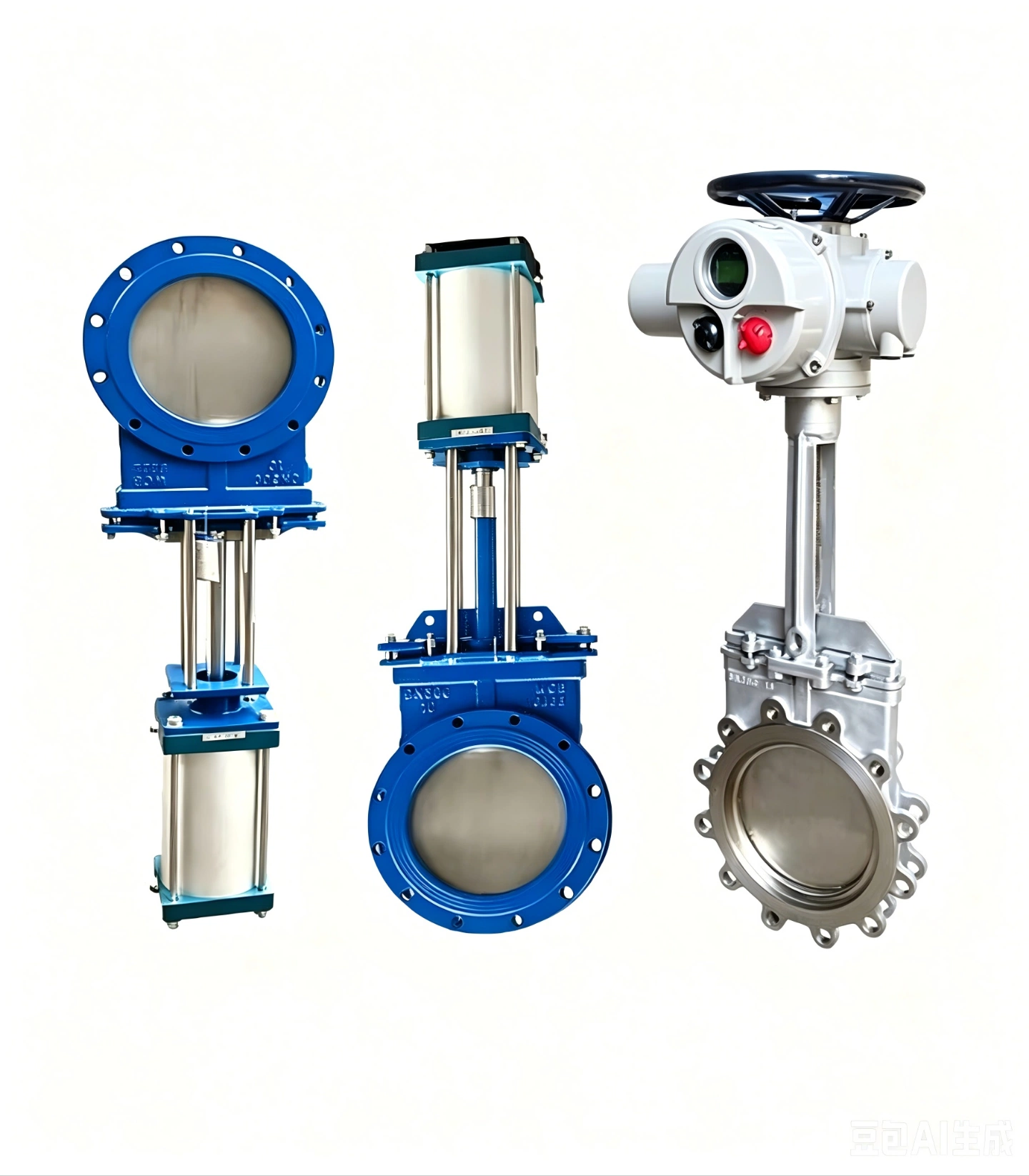
Knife gate valves are available with several actuation options depending on size and automation requirements:
| Actuation | Best For | Cost Premium vs Manual |
|---|---|---|
| Handwheel (manual) | DN50–DN150, infrequent operation, remote stations | Base price |
| Gear operator | DN200+, high torque, large sizes | +30–50% |
| Pneumatic cylinder | Automated sludge lines, frequent cycling, fail-safe | +100–200% (see pneumatic knife gate valves) |
| Electric actuator | Remote sites without compressed air, modulating control | +200–300% |
For wastewater sludge dewatering lines that run 24/7, pneumatic cylinder actuation is standard — it provides fast open/close (5-10 seconds), fail-safe spring return on air loss, and easy integration with SCADA. Manual handwheels are acceptable for isolation valves that are operated once or twice per week.
Southeast Asia & Middle East Market Notes
For clients in Southeast Asia, knife gate valves are in high demand because the region has massive pulp & paper, palm oil, mining, and wastewater infrastructure. Indonesia is the world’s largest palm oil producer — every palm oil mill in Sumatra and Kalimantan generates POME (Palm Oil Mill Effluent) sludge with high fiber content, requiring knife gate valves on the decanter centrifuge and sludge discharge lines. Malaysian palm oil mills (Peninsular Malaysia, Sabah, Sarawak) have the same requirement. Thailand’s pulp & paper industry (SCG Paper, Double A) uses knife gate valves on stock preparation and bleach plant lines. Vietnam’s growing wastewater treatment infrastructure (Thu Duc, Bai Saigon) is specifying wafer knife gate valves for sludge lines because standard gate valves failed during commissioning. Mining operations in Southeast Asia — copper/gold in Batu Hijau (Sumbawa), Grasberg (Papua), Phu Bia (Laos), Chatree (Thailand) — all use knife gate valves on slurry transport lines because slurry with 30–50% solids erodes standard butterfly and ball valves in months.
For clients in the Middle East, knife gate valve demand is driven by: (1) desalination plants (SWRO brine discharge with salt crystals that erodes standard valves — use HNBR sleeve, not EPDM); (2) cement plants (Yamama, Southern Province Cement in Saudi, UAE Cement, Oman Cement) handling cement powder and raw meal slurry; (3) power plants (SEC, DEWA, ADWEA, Qatar Electricity) handling bottom ash and fly ash slurry — ash at 40°C+ in Gulf conditions erodes EPDM in months, use HNBR or Viton sleeve; (4) oil & gas production (Aramco, ADNOC, KOC) handling produced water with sand and paraffin wax — knife gate valves on produced water disposal lines; (5) bulk cargo terminals in Jeddah, Dammam, Abu Dhabi, Hamad (Qatar) handling grain, cement, and powder discharge. The Middle East’s hot climate (45–50°C summer) accelerates elastomer aging — always specify HNBR or Viton sleeves for the Middle East service; EPDM sleeves at 50°C in direct sun fail in 12-18 months vs HNBR lasting 5+ years. Serving EPC Contractors Across Southeast Asia & Middle East · ISO 9001:2015 · Established in 2009.
Common Mistakes to Avoid
- Specifying 304 stainless for coastal or chloride service. If your project is in Southeast Asia (coastal, cooling tower, deicing salts) or the Middle East (desalination, SWRO, humid Gulf climate), 304 will pit within 1–3 years. Specify CF8M (316) or duplex 2205.
- Ignoring pressure-temperature derating. PN16 / Class 150 ratings apply at room temperature only. At 200°C the allowable pressure drops by roughly 40–50%. Always check the manufacturer’s P-T chart before specifying for steam, hot oil, or thermal fluid.
- Buying on price without MTC verification. “Stainless steel” is not enough — ask for EN 10204 3.1 MTC tied to the heat number, and arrange PMI (XRF) witness at the factory if the price is 20% below market. 304 passed off as 316L is the single most common failure in this industry.
- Forgetting face-to-face and flange drilling. A “PN16” wafer valve from one manufacturer may not match the existing flange drilling or face-to-face of another. Always confirm dimensions against EN 558 / API 609 / ASME B16.10 before replacing an installed valve.
FAQ
Can a knife gate valve be used for throttling / flow control?
No — knife gate valves are isolation valves (fully open or fully closed). Throttling a knife gate valve at 20–80% open erodes the sleeve and gate edge rapidly because high-velocity slurry cuts directly across the sharp gate. For throttling on slurry service, use a V-port ball valve or a control pinch valve — not a standard knife gate.
What is the difference between wafer, lugged, and flanged knife gate?
Wafer knife gate valves are short (face-to-face ~50–80mm) and fit between two pipe flanges — cheapest, lightest, most common for DN50–DN300. Lugged knife gate valves have threaded lugs in the body so the valve can be bolted to one side of the pipeline (for single-sided maintenance) — used in large sizes DN300+ or where one-sided maintenance is required. Flanged knife gate valves have standard ANSI/EN flanges — used for high pressure (PN25+) or where the piping design already calls for flanged valves.
How often do I need to replace the sleeve on a knife gate valve?
Depends on service. Clean water isolation (rarely cycled): 8-10 years. Wastewater sludge with fiber: 3-5 years. Abrasive mineral slurry (sand, ash, ore): 1-2 years. Aggressive chemicals (acid, solvent): 6-12 months. The sleeve is the wearing part — it’s designed to be replaced without removing the valve from the line (usually 30 minutes for DN150).
Can knife gate valves handle vacuum or negative pressure?
Standard knife gate valves are rated PN10 (10 bar positive pressure) — they are NOT designed for vacuum. Under vacuum, the EPDM sleeve gets sucked inward and won’t seal. For vacuum service (e.g., food processing holding tanks), use a positive-body knife gate with reinforced sleeve or a dedicated vacuum valve.
What size actuator do I need for a DN300 pneumatic knife gate?
A DN300 EPDM-sleeve knife gate valve requires ~12,000-18,000 N cylinder force to open against 10 bar line pressure. Typical cylinder sizing: 100mm bore double-acting cylinder at 6–8 bar shop air. For fail-safe (spring return on air loss), use a double-acting cylinder with a solenoid valve and air reservoir — single-acting spring cylinders are usually too large for DN300+.
Are knife gate valves suitable for food processing (chocolate, fruit puree)?
Yes — but specify SS316 body and gate with FDA 21 CFR 177 style EPDM sleeve, and polish the internal surfaces to Ra ≤0.8 μm for product contact. Standard cast-iron knife gates with standard EPDM are NOT food-grade. For food service, our sanitary ball valves or sanitary knife gate variants (with tri-clamp ends) are preferred over standard wafer knife gates.
What is the lead time for Chuanglan knife gate valves?
DN50–DN200 wafer knife gate valves with cast iron body, SS304 gate, EPDM sleeve, handwheel — in stock, ship in 5–10 days to Southeast Asia. DN250–DN400 standard sizes: 15–20 days. SS316 body, HNBR/Viton/PTFE sleeves, pneumatic or electric actuation, and DN500+: 25–35 days. Full EN 10204 3.1 MTC, PN16 pressure test report, and third-party inspection (SGS / BV / Intertek) available on request. MOQ 1 piece.
References & Standards
- EN 558 / ISO 5752 — Face-to-face dimensions for industrial valves
- AWWA C503 — Fabricated metal gate valves for water service
- ASTM A351 — CF8 / CF8M castings
- FDA 21 CFR Part 177 — Food-contact elastomer (sleeve) compliance
- API 609 — Butterfly valve design (for comparison only; knife gate is covered by AWWA / MSS standards)
Related Products
Continue Reading
Request a Quotation — Reply Within 24 Hours
Send your line size, pressure rating, medium and quantity. Our engineers come back with price, drawing and lead time — no obligation.
Get a Knife Gate Valve Quote for Slurry / Sludge Service
MOQ: 1 piece · ISO 9001:2015 · EN 10204 3.1 MTC included · shell and seat pressure tested
Southeast Asia: Indonesia, Malaysia, Thailand, Vietnam, Myanmar, Singapore, Philippines
Middle East: Saudi Arabia, UAE, Qatar, Kuwait, Oman, Bahrain
Other Regions: Europe, North America, South America, Africa, Australia
Delivery: 5–10 days to Southeast Asia · 15–20 days to the Middle East · 25–35 days to Europe / the Americas
Payment: T/T 30% deposit + 70% before shipment · L/C at sight · Warranty: 12 months after shipment for material and manufacturing defects · Packing: export plywood case / fumigation-free pallet · Shipping: FOB Ningbo/Shanghai · Documents: EN 10204 3.1 MTC + packing list + commercial invoice · Third-party inspection welcome: SGS / Bureau Veritas / Intertek
Get Free Quote »