
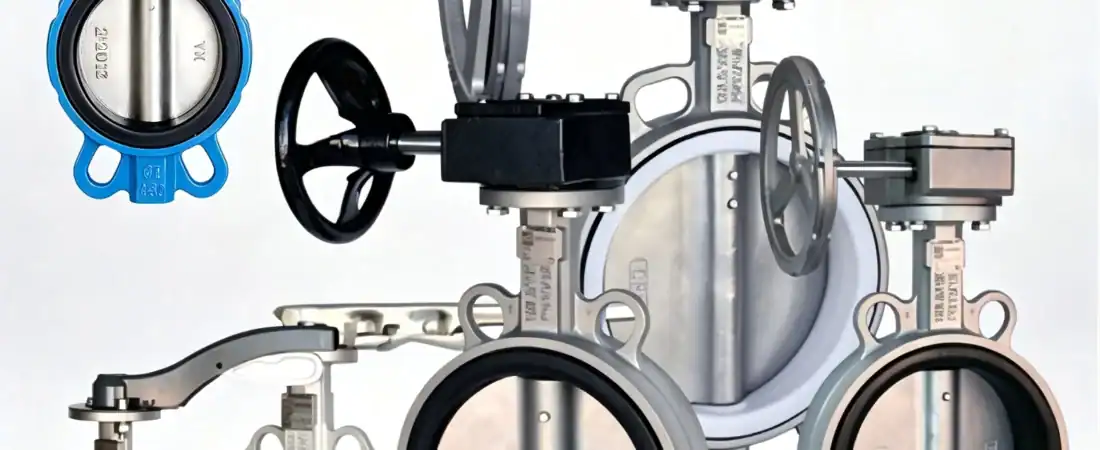
Ball Valve vs Butterfly Valve: Pros & Cons (2026 Guide)
The complete 2026 comparison — how ball valves and butterfly valves differ in construction (spherical ball + PTFE seat vs rotating disc + liner), pressure rating, temperature, Cv flow coefficient, actuator torque, face-to-face length, weight and relative cost. When to choose a ball valve (bubble-tight shutoff, high pressure, cryogenic, critical isolation) vs a wafer butterfly valve (DN150+ sizes, low-pressure water / HVAC, throttling, tight space, light weight). Worked example: Manila Tier-3 data-center chiller plant value engineering.
* Standard lead time depends on order quantity and destination country. 5–10 days to Southeast Asia, 15–20 days to the Middle East.

Quick Answer
Choose a ball valve when you need bubble-tight shutoff, high pressure (above PN40 / Class 300), cryogenic service, full-bore pigging, or safety-critical ESD isolation. Choose a wafer butterfly valve for DN150+ chilled water, HVAC, water treatment, cooling water, fire water and general utility service at PN10–PN16 — it is dramatically lighter (about 1/6 of a same-size flanged ball valve), takes half the face-to-face length, needs roughly 5× less actuator torque, and costs a small fraction at large sizes. For clean closed-loop water that gets drained before maintenance, a wafer butterfly valve is almost always the correct choice; reserve ball valves for toxic, high-pressure, cryogenic, or bubble-tight-critical service.
Key Takeaways
- Ball valve: bubble-tight · full bore · high pressure / cryogenic · but heavy, expensive and poor for throttling.
- Butterfly valve: light · short face-to-face · low torque · good throttling · but not bubble-tight and pressure-limited.
- Cost crossover: above DN150, wafer butterfly valves are dramatically cheaper and lighter; below DN50 the gap shrinks.
- Actuator sizing: same-size butterfly needs roughly 1/5 the torque of a ball valve — smaller actuator, smaller air supply, lower automation cost.
On This Page
1. How They’re Built: The Core Difference
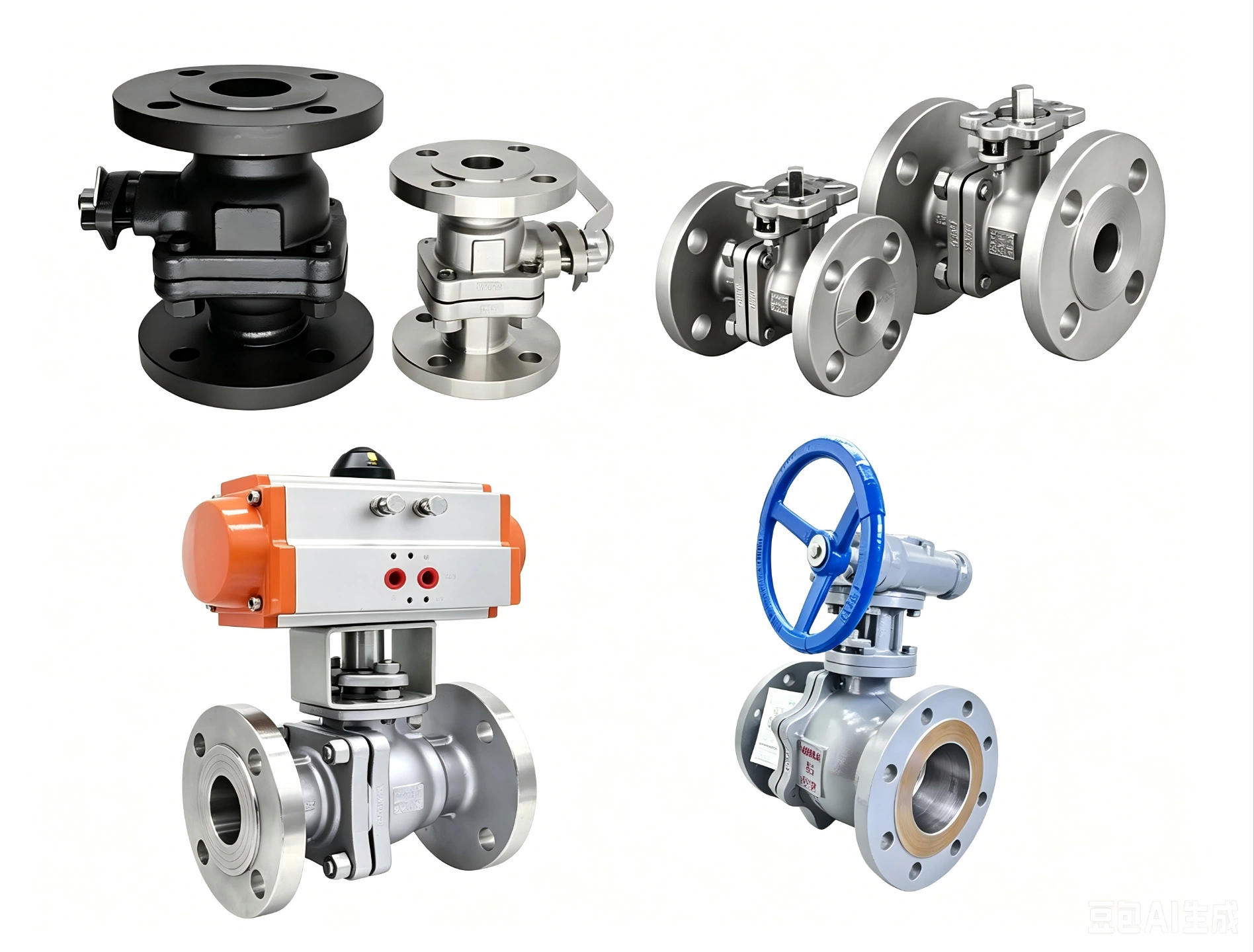
The biggest difference is how they seal:
| Feature | Ball Valve | Butterfly Valve |
|---|---|---|
| Closure Element | Spherical ball with a hole through it | Disc that rotates in the middle |
| Seat Design | Soft seat (PTFE / RPTFE) wraps around the ball | Liner seals against the disc edge |
| Full Bore Available? | Yes (full bore / reduced bore) | No (always reduced flow path) |
| Shutoff Tightness | bubble-tight | Good, but not bubble-tight (some seats weep slightly) |
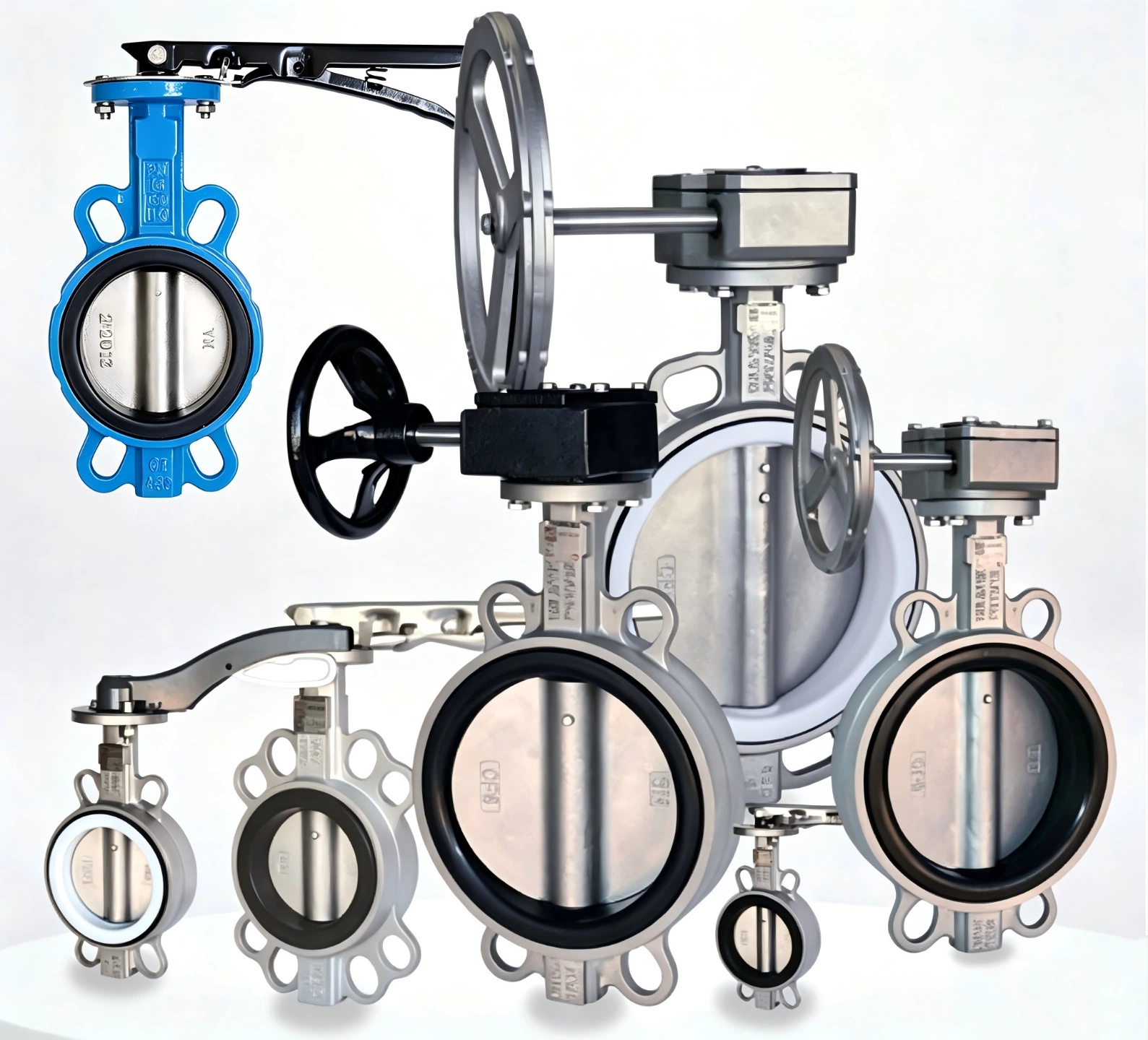
See our flanged ball valves and wafer butterfly valves for the actual product lines.
2. Performance Comparison
| Performance Metric | Ball Valve | Butterfly Valve |
|---|---|---|
| Pressure Rating | Up to Class 2500 / PN420 | Class 150 / PN16 standard (resilient-seated); metal-seated types on request |
| Temperature Range | Cryogenic -196°C up to +200°C (metal seats higher) | -40°C up to +200°C (depends on liner material) |
| Flow Coefficient (Cv) | High (full bore = almost no restriction) | Medium (disc blocks part of the flow path) |
| Actuator Torque Needed | High (ball needs more torque to turn) | Lower (disc is lighter, smaller actuator) |
| Face-to-Face Length | Longer (ANSI B16.10 / EN 558) | compact (wafer style is about half the length) |
| Weight (DN100 / 4″) | Heavier (flanged ball valve) | About 1/4 to 1/3 of the ball valve weight |
3. Relative Cost Comparison
For large sizes, butterfly valves are dramatically cheaper. Here’s a size-based relative comparison for stainless-steel valves:
| Size (DN / Inch) | Stainless Ball Valve | Stainless Butterfly Valve | Relative Saving |
|---|---|---|---|
| DN50 / 2″ | Reference | Lower | ~50% cheaper |
| DN100 / 4″ | Reference | Lower | ~60% cheaper |
| DN150 / 6″ | Reference | Lower | ~66% cheaper |
| DN300 / 12″ | Reference | Lower | ~73% cheaper |
Rule of thumb: Above DN150 (6″), butterfly valves are almost always cheaper — sometimes by 70% or more. For small sizes (under DN50 / 2″), the price difference is smaller, but ball valves are more common.
4. Worked Example: Manila Data Center Chiller Plant
Step 1 — Problem
An 80,000 m² Tier-3 data center campus in Manila, Philippines, was built with 4 × 8,000 kW screw chillers serving a chilled-water loop (6°C supply, 12°C return). The MEP EPC engineer, defaulting to “ball valves are better for isolation,” specified 24 × DN300 PN16 CF8M flanged ball valves for chiller isolation, bypass, and pump-header connections — six valves per chiller circuit. During installation, the mechanical contractor flagged three issues: (1) the DN300 flanged ball valve face-to-face was 400 mm and weighed roughly 80 kg each, making them difficult to lift into the tight chiller-plant rack space; (2) the 1200 Nm pneumatic actuator was large and heavy, taking extra ceiling space; (3) the total valve + actuator cost was running roughly 60% over budget.
Step 2 — Root cause analysis
The engineering team over-specified the application. Chilled water is a closed-loop, clean, non-toxic, low-pressure (PN16) water system at 6–12°C — it does not require bubble-tight shutoff. A slight seat leak on an isolation valve during chiller maintenance is completely acceptable because the loop is drained before any work. The ball valve’s key advantages (bubble-tight shutoff, full bore for pigging, cryogenic service, high pressure) were all irrelevant here. What mattered for a chiller plant in a tight Manila data center was: low cost, light weight, short face-to-face for rack installation, low actuator torque for automation, and throttling capability on the bypass line.
Step 3 — Correct retrofit (value engineering)
All 24 × DN300 flanged ball valves were re-specified as wafer butterfly valves — CF8M (316 SS) body, 316 disc, EPDM liner (food-grade for chilled water), PN16, 6×200 bolt pattern. 18 of the 24 (chiller isolation and pump headers) used manual gear operators; 6 on the bypass and isolation valves used pneumatic wafer butterfly valves with 250 Nm actuators (about 5× smaller torque than the ball valve would have needed). The 24 flanged ball valves already delivered were returned to the manufacturer.
Step 4 — Outcome
• Weight saved: about 80 kg × 24 ≈ 1,920 kg of ball-valve weight, replaced by roughly 12 kg × 24 ≈ 288 kg of wafer-butterfly weight — a reduction of about 1,600 kg, easing structural rack loading and crane rigging in the chiller plant
• Actuator size dropped from 1200 Nm to 250 Nm on the automated bypass valves — smaller actuator, less compressed-air consumption, easier ceiling installation
• Face-to-face length halved, which let the mechanical contractor fit the valves into the existing rack footprint without re-piping
• The re-specified valve package came in well under the original ball-valve budget, even after accounting for the restocking loss on the returned ball valves
• Lesson: for clean water, low-pressure (PN16) HVAC / chilled-water systems, wafer butterfly valves are the correct choice — dramatically lighter, shorter, lower torque, and far more cost-effective. Reserve ball valves for toxic media, high pressure, cryogenic, or safety-critical isolation where bubble-tight shutoff is mandatory.
Why EPC Contractors Specify Chuanglan Ball & Butterfly Valves
Flanged ball valves in WCB / CF8 / CF8M / 2205 duplex — API 6D / API 608, floating & trunnion, soft & metal seats
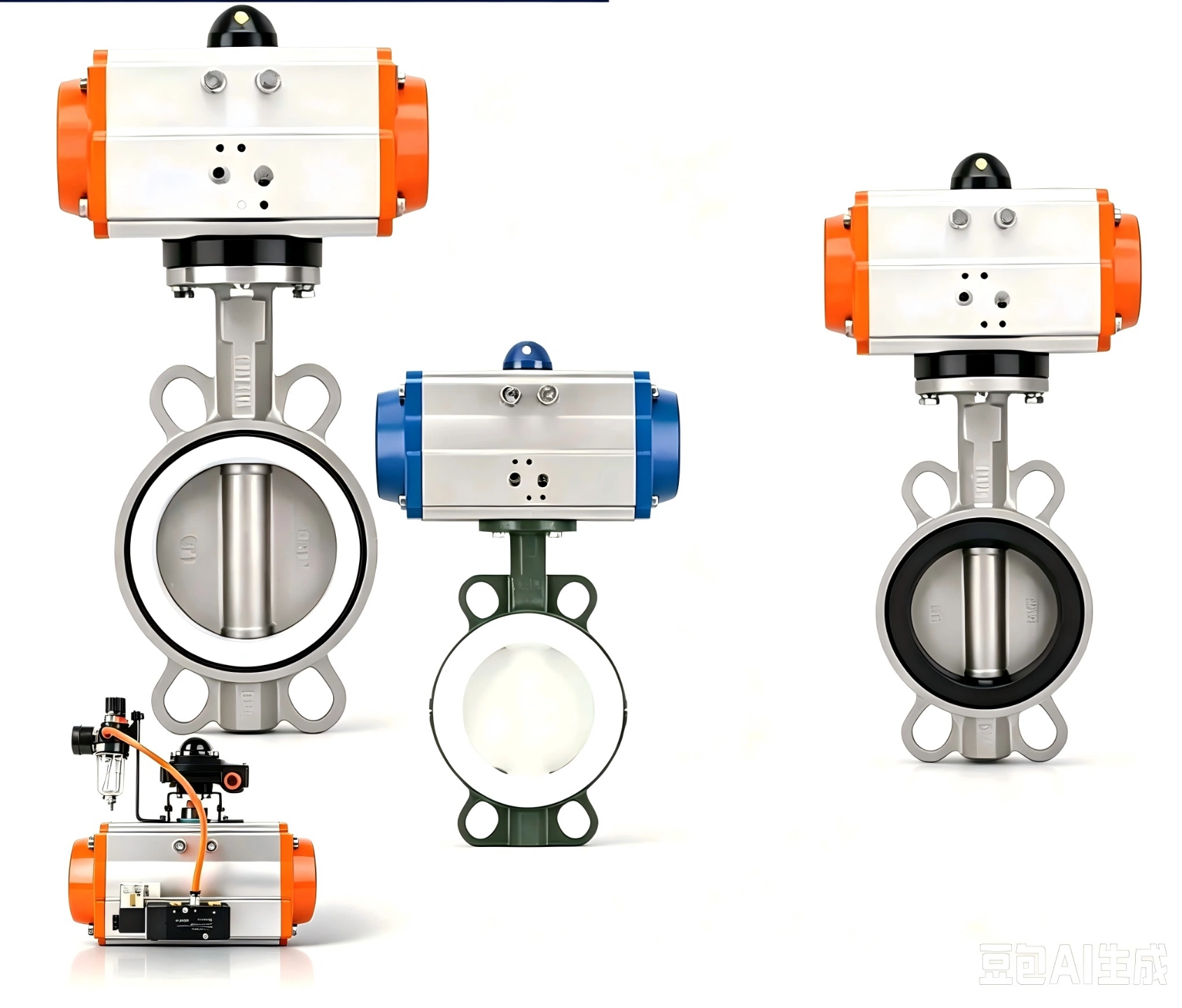
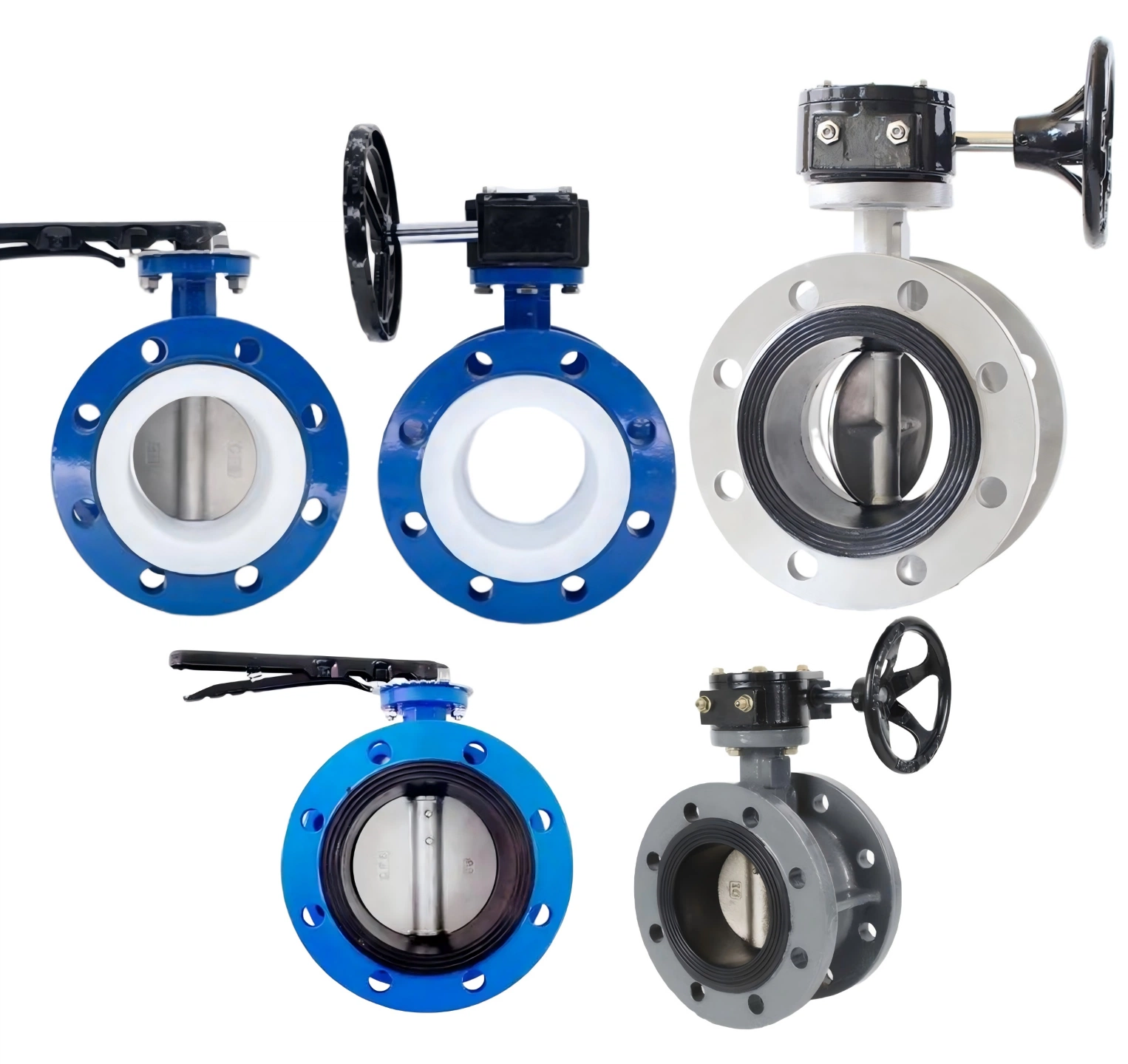
Wafer butterfly valves in ductile iron / CF8M / 2205 duplex — EPDM / NBR / PTFE / HNBR liner, manual gear or pneumatic actuation
Full EN 10204 3.1 MTC, API 598 shell & seat test report, third-party inspection (SGS / BV / Intertek) on request — MOQ 1 piece, 7–15 day delivery
Not Sure Whether You Need a Ball or Butterfly Valve?
Tell us your medium (water / oil / gas / chemical), pressure, temperature, size, and whether you need bubble-tight shutoff, throttling, or full bore — our engineers will recommend the most cost-effective valve with full EN 10204 3.1 MTC within 24 hours.
Get Free Sizing Report → WhatsApp us5. Pros & Cons: At a Glance
Ball Valve Pros:
Bubble-tight shutoff
Full bore available (minimal pressure drop)
Better for high pressure (Class 1500+)
Better for cryogenic service
Better for critical isolation (process, safety)
Long service life (soft seat lasts 10–15 years)
Ball Valve Cons:
More expensive (especially large sizes)
Heavier (needs more support)
Longer face-to-face (takes more space)
Not good for throttling (ball seat gets damaged if left partially open)
Larger actuator needed (higher torque)
Butterfly Valve Pros:
Much cheaper (especially large sizes)
Lighter (wafer style is about 1/3 the weight of a same-size ball valve)
Short face-to-face (fits in tight spaces)
Easy to automate (lower torque = smaller actuator)
Good for throttling flow (better control than a ball valve)
Large sizes available (up to DN1200 and bigger)
Butterfly Valve Cons:
Not bubble-tight (minor leakage possible)
No full bore (disc blocks part of the flow)
Lower pressure rating (usually max PN40 / Class 300)
Not ideal for high-cycle operation
Liner material limits temperature and chemical resistance
6. Which One Should You Choose?
Choose a Ball Valve if:
- You need bubble-tight shutoff (critical isolation)
- You have high pressure (above PN40 / Class 300)
- You have cryogenic service (below -40°C)
- You need full bore (pigging, minimal pressure drop)
- The size is under DN150 (price difference is small)
- The application is safety-critical (emergency shutdown)
Choose a Butterfly Valve if:
- Size is DN150 or larger (big cost savings)
- Pressure is low (PN10 / PN16, water treatment, HVAC)
- Space is tight (short face-to-face needed)
- You need throttling / flow control
- Weight matters (offshore, skid-mounted systems)
- Budget is tight and leakage isn’t critical
For throttling duty specifically, also compare against flanged globe valves — they have the best control characteristic but are even more expensive and heavier than ball valves. For check-valve applications on pump discharge, see our wafer dual-plate check valves.
7. Common Mistakes to Avoid
Mistake 1: Using a ball valve for throttling. Ball valves are designed to be fully open or fully closed. If you leave them partially open for flow control, high-velocity flow will erode the soft seat in weeks. Use a butterfly valve or globe valve for throttling.
Mistake 2: Using a butterfly valve for critical isolation. Butterfly valves don’t give 100% bubble-tight shutoff. If you need bubble-tight (safety shutdown, toxic media, LNG), use a ball valve or gate valve.
Mistake 3: Ignoring the liner material. Butterfly valves are only as good as their liner. EPDM for water, PTFE for chemicals, FKM (Viton) for oil / high temperature. Don’t just ask for “stainless butterfly valve” — specify the liner material too. See our wafer butterfly valve guide for liner selection.
8. Southeast Asia & Middle East Market Notes
For clients in Southeast Asia (Thailand, Vietnam, Indonesia, Malaysia, Philippines, Myanmar), the ball vs butterfly decision is most common in HVAC / chilled water, water treatment, and palm-oil projects. Data-center construction is booming in Manila, Bangkok, Jakarta, and Kuala Lumpur — the Manila case above is now a standard value-engineering exercise for Tier-3 / Tier-4 chiller plants. Water-treatment plants (Provincial Waterworks Thailand, Saigon Water, Aetra Jakarta, Maynilad Manila, Indah Water Malaysia) almost exclusively use wafer butterfly valves for DN150+ distribution mains because they are dramatically more cost-effective than flanged ball valves at large sizes. Palm-oil refineries in Medan, Surabaya, Johor, and Penang use flanged ball valves for product isolation (bubble-tight required on export loading) but wafer butterfly valves for cooling water and steam tracing. Vietnamese and Thai food & beverage plants use sanitary butterfly valves for CIP and product lines because they are compact and easy to clean; sanitary ball valves are reserved for tank outlets where positive shutoff matters. See our article on ball vs gate valve selection for more isolation-valve guidance.
For clients in the Middle East (Saudi Arabia, UAE, Qatar, Kuwait, Oman, Bahrain), the decision is driven by the region’s massive seawater SWRO, power, and oil & gas projects. Chiller plants for shopping malls (Dubai Mall, Riyadh Park, Mall of Qatar) and office towers almost universally use wafer butterfly valves for chilled-water isolation — EPDM liner, 316 body, gear operator — because ball valves at DN200+ would add a large premium to a single chiller plant for no functional benefit. SWRO desalination plants (Jubail, Yanbu, Ras Al Khair, Taweelah, Barka, Sohar) use wafer butterfly valves on cooling water and brine discharge (with 2205 duplex body, not 316, because Gulf seawater at 40°C pits 316). Oil & gas facilities (Aramco, ADNOC, SABIC, QatarEnergy) use flanged ball valves (API 6D, ISO 15156 sour service) for process isolation where bubble-tight shutoff is mandatory, and wafer butterfly valves for cooling water, fire water, and non-critical utility service. Large district-cooling systems (Tabreed UAE, QCool Qatar, Saudi Tabreed) are the biggest single buyers of wafer butterfly valves in the region — some projects use 500+ valves in DN300–DN1200.
Chuanglan Valve supplies both product lines — flanged ball valves (WCB, CF8, CF8M, 2205 duplex), wafer butterfly valves (ductile iron, CF8, CF8M, 2205 duplex), flanged butterfly valves, pneumatic wafer butterfly valves, and pneumatic / electric actuated ball valves — with full EN 10204 3.1 MTC, MOQ 1 piece, 7–15 day delivery. Serving EPC Contractors Across Southeast Asia & Middle East · ISO 9001:2015 · Established in 2009.
FAQ
Can a butterfly valve replace a ball valve?
For clean water, low-pressure (PN16 / Class 150) non-critical isolation, yes — and it is dramatically cheaper at large sizes. For high pressure, cryogenic, toxic media, safety-critical ESD, or pigging / full-bore service, no — keep the ball valve. When in doubt, send us your medium, pressure, temperature and size and we’ll recommend.
Which valve is better for throttling — ball or butterfly?
A wafer butterfly valve is better for throttling than a standard ball valve. Ball valves erode their seat if left partially open for long. But for precise control (linear flow characteristic, 1–100% modulation), a globe valve or high-performance butterfly valve with a dedicated control trim is the correct choice — not a generic isolation ball valve.
Why is a butterfly valve cheaper than a ball valve at large sizes?
Material cost: a DN300 flanged ball valve has a heavy spherical ball, two PTFE seats, long face-to-face casting, and heavy flanges — typically around 80 kg of cast metal. A DN300 wafer butterfly valve is a short disc inside a thin body — about 12 kg. Less casting, less machining, less bolting, less shipping. At small sizes (DN50), the gap shrinks because the manufacturing setup cost is similar; above DN150, material cost dominates and butterfly valves win.
Are wafer butterfly valves suitable for seawater?
Standard 316 (CF8M) wafer butterfly valves with EPDM liner are acceptable for intermittent seawater (cooling water, once-through) for a few years. For continuous Gulf seawater at 35–40°C (Jubail, Yanbu, Taweelah, Barka), use 2205 duplex body with HNBR or perfluoroelastomer liner — 316 pits in Gulf seawater within 2–3 years. Never use cast iron or ductile iron body for seawater — it corrodes through in under a year.
Can I automate a butterfly valve cheaper than a ball valve?
Yes — typically several times cheaper. A DN300 ball valve needs roughly a 1200 Nm pneumatic actuator; the same-size wafer butterfly needs only about 250 Nm. The actuator is smaller, uses less compressed air, and has a lower replacement cost. This is why large HVAC and water-treatment plants almost always choose pneumatic wafer butterfly valves over ball valves.
What about fire protection systems — ball or butterfly?
Fire protection (NFPA 20) typically mandates flanged or grooved-end butterfly valves (UL / FM listed) for isolation on fire-pump discharge and sprinkler mains — not ball valves. Butterfly valves are standard because they are cheaper at large sizes and the listing is available. For fuel-oil isolation feeding the fire-pump engine, use a flanged ball valve (bubble-tight).
What is the lead time for Chuanglan ball vs butterfly valves?
DN15–DN100 flanged ball valves (WCB, CF8, CF8M) and wafer butterfly valves (ductile iron, CF8M) in PN16 / Class 150 are in stock and ship in 7–15 days. DN150–DN300 standard sizes take 7–15 days. 2205 duplex, super duplex, ISO 15156 sour service, cryogenic trim, and large sizes (DN400+) take 25–35 days. Full EN 10204 3.1 MTC, API 6D / API 608 / API 609 certificates, and third-party inspection (SGS / BV / Intertek) included on request.
References & Standards
- API 6D — Pipeline Valves (ball valves for oil & gas)
- API 608 — Metal Ball Valves
- API 609 — Butterfly Valves: Double Flanged, Lug, Wafer
- ASME B16.10 — Face-to-face and end-to-end dimensions
- EN 558 — Building valves — face-to-face dimensions
- NFPA 20 — Installation of Stationary Pumps for Fire Protection
Related Products
Continue Reading
Request a Quotation — Reply Within 24 Hours
Send your line size, pressure rating, medium and quantity. Our engineers come back with price, drawing and lead time — no obligation.
Get a Ball or Butterfly Valve Quote
MOQ: 1 piece · ISO 9001:2015 · 3.1 MTC included · shell and seat pressure tested
Southeast Asia: Indonesia, Malaysia, Thailand, Vietnam, Myanmar, Singapore, Philippines
Middle East: Saudi Arabia, UAE, Qatar, Kuwait, Oman, Bahrain
Other Regions: Europe, North America, South America, Africa, Australia
Delivery: 5–10 days to Southeast Asia · 15–20 days to the Middle East · 25–35 days to Europe / the Americas
Payment: T/T 30% deposit + 70% before shipment · L/C at sight · Warranty: 12 months after shipment for material and manufacturing defects · Packing: export plywood case / fumigation-free pallet · Shipping: FOB Ningbo/Shanghai · Documents: EN 10204 3.1 MTC + packing list + commercial invoice · Third-party inspection welcome: SGS / Bureau Veritas / Intertek
Get Free Quote »