


Bubble-Tight Shutoff for Data Center Cooling Valves (2026 Guide)
Coolant leaks are the #1 risk in CDU liquid cooling systems. Learn bubble-tight valve types, seal materials, pressure ratings and ISO 5208 testing standards.
* Standard lead time depends on order quantity and destination country. 5–10 days to Southeast Asia, 15–20 days to the Middle East.
⚡ Quick Answer
For data center CDU coolant circuits, specify 316L soft-seated ball valves with PTFE/RTFE seats certified to ISO 5208 Rate D (bubble-tight shutoff), PN16 / Class 150 rating, and EPDM seals for water-glycol service.
Field pressure-hold test every installed loop at 1.2× working pressure for 30 minutes before connecting to live servers. Never use NBR seals in a coolant circuit — they harden under thermal cycling and become the first leak point.
🔑 Key Takeaways
- Leakage class: ISO 5208 Rate D (bubble-tight) is the mandatory standard for CDU coolant isolation valves — anything less risks server damage.
- Best isolation valve: 316L flanged ball valve with PTFE/RTFE seat maintains bubble-tight shutoff over thousands of cycles; ISO 5208 Rate C butterfly valves are acceptable only for manifold throttling.
- Seal by coolant: EPDM for water-glycol (-40°C to 150°C) · PTFE for ball seats · FKM only for oil/chemical additives · never NBR in data center cooling water.
- Field test rule: Pressure-hold at 1.2× working pressure for 30 minutes — for an 8 bar CDU header, that is 9.6 bar; acceptance is ΔP < 0.05 bar with no visible seepage before server cutover.
On This Page
- Why bubble-tight shutoff Is Non-Negotiable
- Where Leaks Happen Most Often
- Valve Types That Meet Zero-Leakage Requirements
- Seal Materials for Coolant Compatibility
- Pressure Ratings and Testing Standards
- Worked Example: Pressure Hold Test
- Valve Leakage Class Comparison
- Installation Practices That Prevent Leaks
- Southeast Asia & Middle East Market
- FAQ
Why bubble-tight shutoff Is Non-Negotiable in Data Centers
Data center cooling valve leakage is the #1 enemy in liquid cooling systems — it can destroy an entire server rack faster than any outage. A single drip from a valve connection can short-circuit servers worth hundreds of thousands of dollars. That’s why bubble-tight is the non-negotiable requirement for every valve in a CDU (Coolant Distribution Unit) circuit.
In a typical industrial plant, a small valve leak is an annoyance — maintenance can mop it up and schedule a repair during the next shutdown. In a data center, the same leak hits servers running live AI training jobs, cryptocurrency nodes, or financial trading platforms. The cost of downtime isn’t just the water damage; it’s the lost compute hours, the SLA penalties, and the reputation hit.
According to Uptime Institute data, coolant leaks are one of the top three causes of unplanned data center outages, and most of them trace back to valve seal failure or improper joint selection. This is why hyperscalers and colocation operators now specify bubble-tight valves as a mandatory procurement requirement — not a nice-to-have. For our liquid cooling valve range, every unit is 100% factory pressure tested before shipment.
Where Leaks Happen Most Often in CDU Systems
Understanding the common leak points helps you choose the right valve for each location:
- Valve stem seals — the packing or O-ring around the valve stem is the #1 leak point. Over time, thermal cycling hardens the seal material.
- Flange gaskets — improper torque or wrong gasket material for the coolant mixture.
- Threaded connections — NPT/BSPP joints that weren’t properly sealed with thread sealant.
- Check valve disc seats — if a check valve doesn’t fully close, coolant backflows and seeps past the seat.
- Strainer basket seals — every time you clean the strainer, the gasket gets disturbed.
Valve Types That Meet Zero-Leakage Requirements
Not every valve type is suitable for coolant circuits. Here’s what works and what doesn’t:
1. Ball Valves (Best for Isolation)
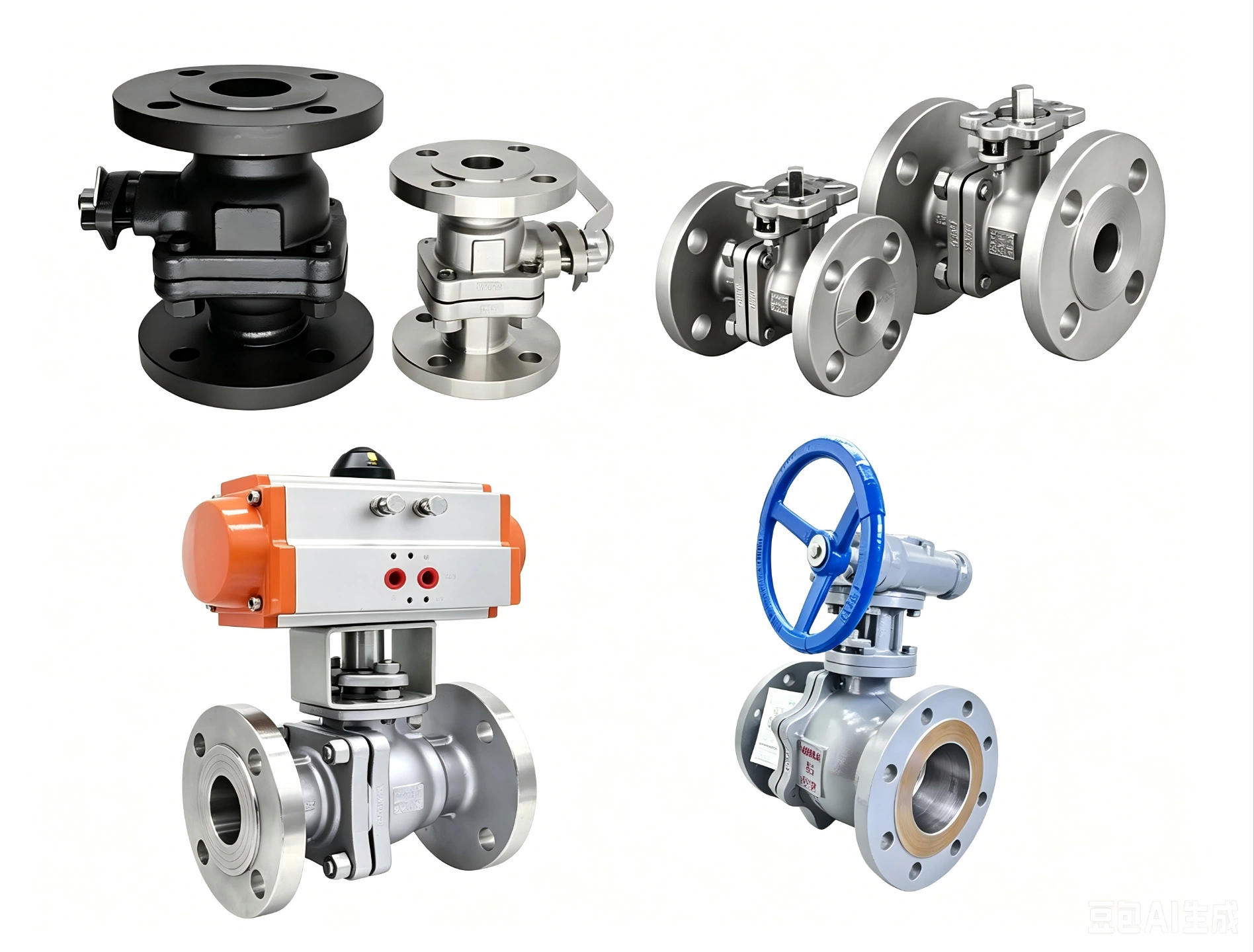
A metal-seated or soft-seated flanged ball valve with PTFE or RTFE seats provides a bubble-tight shutoff. For data center coolant circuits, we recommend 316L stainless steel flanged ball valves with anti-static design and ISO 5208 Rate C or D leakage certification. The floating ball design compensates for seat wear, maintaining bubble-tight over thousands of cycles.
2. Wafer Dual Plate Check Valves (Anti-Backflow)
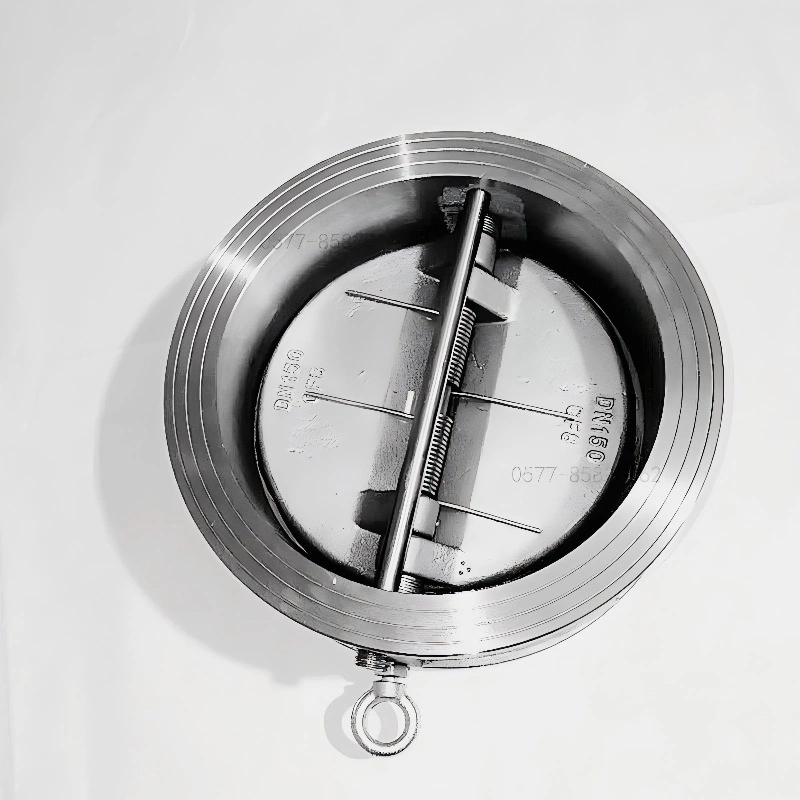
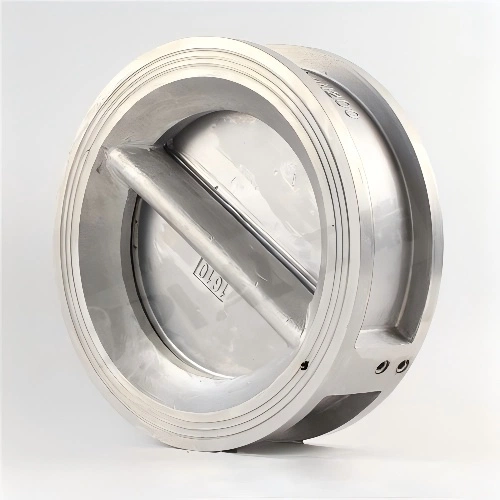
When CDU pumps shut down, you need to prevent coolant backflow. A wafer dual plate check valve with soft-seated EPDM or Viton discs closes in milliseconds and provides zero backflow leakage. The wafer design saves space in cramped CDU skids.
3. Y-Strainers with Gasketed Covers
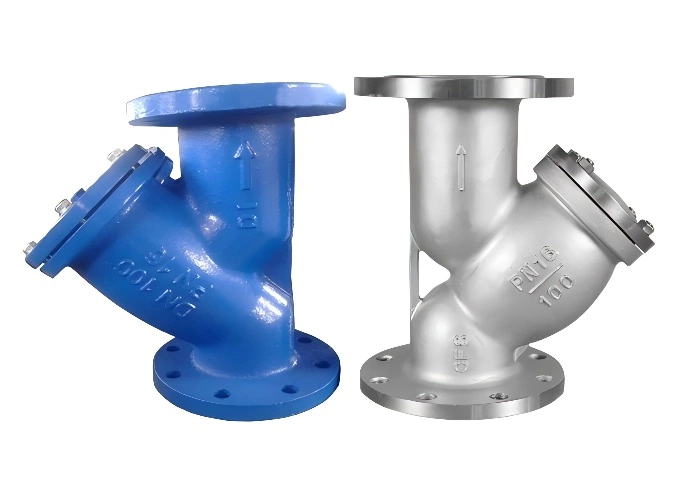
Every CDU needs a strainer to protect pumps and server cooling manifolds from particulate contamination. A flanged Y-strainer with a bolted cover and full-face gasket ensures that the cleaning access point doesn’t become a leak point after every maintenance cycle.
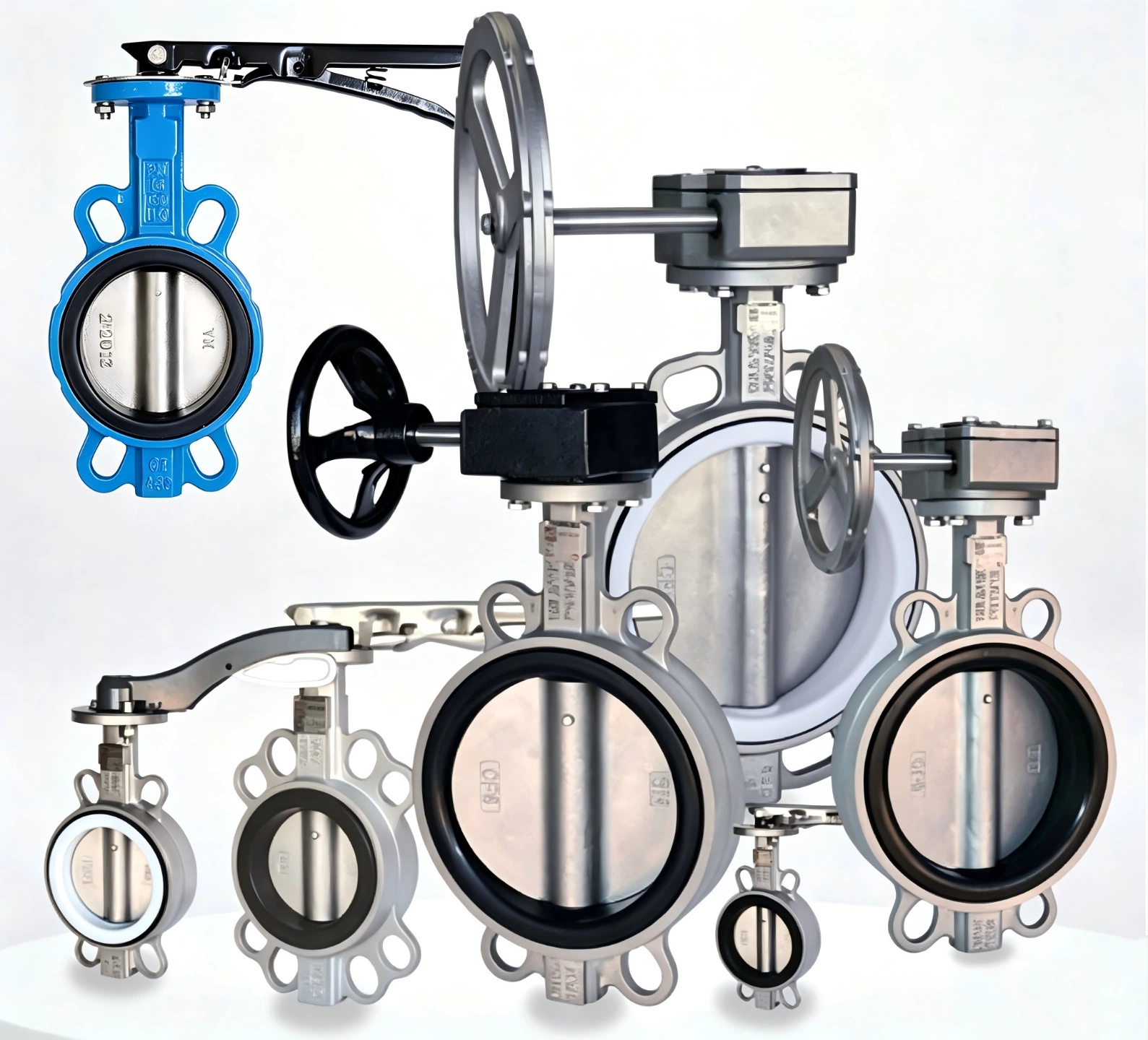
4. Butterfly Valves (Manifold Balancing)
For branch manifold balancing, flanged butterfly valves with EPDM-lined discs provide good shutoff. They are not bubble-tight tight like ball valves, but acceptable for throttling duties where minor seepage is tolerable.
Seal Materials: Choose for Coolant Compatibility
The valve body material is only half the equation — the seal material determines whether you get bubble-tight for 5 years or 5 weeks.
- EPDM — best for water-glycol mixtures (the most common data center coolant). Excellent heat resistance (up to 150°C) and low compression set.
- Viton (FKM) — use if the coolant includes oils or chemical additives. More expensive but handles aggressive fluids.
- PTFE / RTFE — universal compatibility, works with nearly any coolant. Best for ball valve seats.
- Graphite / Flexible Grafoil — for high-temperature applications or steam tracing lines.
Never use Nitrile (NBR) seals in data center cooling water — it degrades quickly under thermal cycling and becomes the first leak point.
Pressure Ratings and Testing Standards
CDU cooling circuits typically run at 3–10 bar (45–150 psi), but you should always specify valves rated for 1.5× the maximum working pressure as a safety margin. For most data center applications, that means Class 150 (PN16) rated valves with:
- Hydrostatic shell test at 1.5× rated pressure
- Seat test at 1.1× rated pressure, zero visible leakage (ISO 5208 Rate D)
- API 598 or EN 12266 certification
- Fire-safe certification (API 607) if the room has flame spread concerns
International Standards Reference
| Standard Category | US / ANSI | European / EN | Japanese / JIS |
|---|---|---|---|
| Design | ASME B16.34 / API 6D | EN 12266 | JIS B2002 |
| Face-to-Face | ASME B16.10 | EN 558 / ISO 5752 | JIS B2002 |
| Flange | ASME B16.5 (Class 150/300) | EN 1092-1 (PN10/16/40) | JIS B2220 (10K/20K) |
| Pressure Rating | ANSI Class 150–300 | PN10–PN40 | 10K–20K |
| Leakage / Testing | API 598 / ISO 5208 Rate D | EN 12266-1 / ISO 5208 | JIS B2003 |
| Fire Safe | API 607 / API 6FA | ISO 10497 | — |
| Data Center Thermal | ASHRAE TC 9.9 | — | — |
Note: ISO 5208 Rate D specifies no visible seat leakage at rated pressure — this is the minimum class for CDU coolant isolation valves.
Worked Example: Pressure Hold Test for a CDU Loop
Let’s calculate the correct pressure hold test for a 720 kW CDU main header operating at 8 bar.
Step 1 — Determine working pressure
CDU main header design pressure: 8 bar (116 psi). This is the maximum pressure the loop will see during normal operation.
Step 2 — Calculate test pressures
Field pressure hold test = 1.2 × working pressure = 1.2 × 8 = 9.6 bar (139 psi).
Factory shell test = 1.5 × rated pressure = 1.5 × 16 = 24 bar (348 psi).
Factory seat test = 1.1 × rated pressure = 1.1 × 16 = 17.6 bar (255 psi).
Step 3 — Hold time and acceptance criteria
Field pressure hold: 9.6 bar for 30 minutes. Acceptance: pressure drop < 0.05 bar, no visible seepage at any joint, flange, stem or gland.
Factory seat test: 17.6 bar for 60 seconds per valve. Acceptance: ISO 5208 Rate D — no visible leakage through the seat.
Step 4 — Document everything
Every valve that passes the seat test comes with an EN 10204 3.1 material certificate and a pressure test report. Keep these on file for the data center commissioning package and future audits.
💡 Why Data Center EPCs Choose Chuanglan
100% factory pressure tested, every unit with EN 10204 3.1 MTC and test report
316L bodies, EPDM/PTFE seals, ISO 9001:2015 certified, ISO 5208 Rate D leakage certified
MOQ: 1 piece — sample rack-side valves before bulk EPC order
Need Zero-Leakage Valves for Your Data Center CDU Project?
Send us your coolant specs, pipe sizes and pressure requirements — we will prepare a free valve selection report with Cv calculations and a bill of materials.
Get Free Sizing Report →Valve Leakage Class Comparison
| Valve Type | Leakage Class (ISO 5208) | Seat Material | bubble-tight shutoff Suitable? | Best CDU Application |
|---|---|---|---|---|
| Ball Valve (soft seat) | Rate D (bubble-tight) | PTFE / RTFE | Yes — best isolation | Main header, pump isolation, rack branches |
| Ball Valve (metal seat) | Rate C (low leakage) | Stellite / 316SS | For high-temp only | Steam tracing, hot glycol loops |
| Butterfly Valve (EPDM lined) | Rate C (good shutoff) | EPDM / Viton | Acceptable for throttling | Manifold balancing, flow regulation |
| Wafer Dual Plate Check | Bubble-tight when closed | EPDM / Viton disc seal | Yes — backflow prevention | Pump discharge (mandatory) |
| Swing Check Valve | Bubble-tight when closed | PTFE / soft seat | Yes — large lines | Large main header backflow |
| Y-Strainer | N/A (filtration) | Bolted cover gasket | Yes — with full-face gasket | Pump suction (mandatory) |
| Gate Valve (wedge) | Rate C-D (varies) | Bronze / PTFE wedge | Not recommended for coolant | Avoid in CDU circuits |
| Globe Valve | Rate C (throttling) | PTFE / metal | For control only | Precise flow control stations |
Installation Practices That Prevent Leaks
Even the best valve will leak if installed wrong. Follow these rules:
- Use proper flange torque sequences — never tighten bolts in a circle; use a diagonal star pattern in 3 passes (30%, 60%, 100%).
- Install the valve in the correct flow direction (check valves and strainers are directional).
- Use the right gasket: EPDM full-face gaskets for cooling water, with no liquid sealant on the gasket face.
- Leave enough space around stem packing so maintenance can tighten or repack without disconnecting piping.
- After installation, perform a pressure hold test at 1.2× working pressure for 30 minutes before connecting to live servers.
Southeast Asia & Middle East Market
Data center construction is accelerating across Southeast Asia — Indonesia, Malaysia, Thailand, Vietnam and Singapore — and the Gulf states of Saudi Arabia and the UAE. Zero-leakage valve requirements are even more critical in these regions for two reasons:
- High ambient temperatures: Tropical and desert climates push coolant return temperatures to 40°C+. This accelerates seal aging — specify EPDM seals rated for continuous 120°C service, not just 80°C.
- Remote location of hyperscale campuses: Many new data centers are built in desert or industrial zones far from service centers. A leak that requires emergency valve replacement can mean days of downtime — factory-direct supply with 7-day express shipping is essential.
Chuanglan Valve directly serves EPC contractors and data center operators in Southeast Asia and the Middle East, shipping 316L stainless steel bubble-tight valves with EN 10204 3.1 certificates to Jakarta, Kuala Lumpur, Bangkok, Hanoi, Singapore, Riyadh and Dubai.
Serving EPC Contractors Across Southeast Asia & Middle East · ISO 9001:2015 Certified · 15+ Years Factory Experience
Common Mistakes to Avoid
- Specifying 304 stainless for coastal or chloride service. If your project is in Southeast Asia (coastal, cooling tower, deicing salts) or the Middle East (desalination, SWRO, humid Gulf climate), 304 will pit within 1–3 years. Specify CF8M (316) or duplex 2205.
- Ignoring pressure-temperature derating. PN16 / Class 150 ratings apply at room temperature only. At 200°C the allowable pressure drops by roughly 40–50%. Always check the manufacturer’s P-T chart before specifying for steam, hot oil, or thermal fluid.
- Buying on price without MTC verification. “Stainless steel” is not enough — ask for EN 10204 3.1 MTC tied to the heat number, and arrange PMI (XRF) witness at the factory if the price is 20% below market. 304 passed off as 316L is the single most common failure in this industry.
- Forgetting face-to-face and flange drilling. A “PN16” wafer valve from one manufacturer may not match the existing flange drilling or face-to-face of another. Always confirm dimensions against EN 558 / API 609 / ASME B16.10 before replacing an installed valve.
FAQ
What does “bubble-tight” mean for data center cooling valves?
bubble-tight shutoff means ISO 5208 Rate D (bubble-tight) shutoff — no visible seepage through the valve seat when closed at rated pressure. This is the mandatory standard for CDU coolant circuits.
Which valve type provides the best bubble-tight shutoff?
Soft-seated ball valves with PTFE or RTFE seats. They provide bubble-tight shutoff and maintain it over thousands of cycles, making them the preferred choice for main header isolation in data center CDU systems.
What seal material is best for water-glycol coolant in data centers?
EPDM is the best choice for water-glycol mixtures. It handles temperatures from -40°C to 150°C, has low compression set, and resists glycol degradation. PTFE is preferred for ball valve seats.
What pressure rating should I specify for CDU cooling valves?
Class 150 / PN16 rated valves. CDU systems typically run at 3–10 bar, so PN16 provides a 1.5× safety margin over the maximum working pressure.
How often should valves in a CDU circuit be inspected for leaks?
Visual inspection every quarter. Pressure hold testing should be performed annually or after any major maintenance. Stem packing should be checked every 6 months for signs of weeping.
Do you supply 3.1 material certificates with data center valves?
Yes. Every valve we supply for data center projects comes with EN 10204 3.1 material certificates and pressure test reports, ready for your commissioning package.
What is the typical lead time for bubble-tight CDU valves?
Standard sizes (DN15–DN100) ship in 7–15 days. Larger sizes (DN150–DN300) take 15–30 days. We offer express shipping to Southeast Asia and the Middle East for urgent projects.
References & Standards
- ISO 5208: Industrial valves — Pressure testing of metallic valves
- API 598: Valve Inspection and Testing
- EN 12266: Industrial valves — Pressure testing of metallic valves
- API 607: Fire test for soft-seated quarter-turn valves
- ASHRAE TC 9.9: Thermal Guidelines for Data Processing Environments
Related Products
Continue Reading
Get a Quote for Your Zero-Leakage Data Center Valves
MOQ: 1 piece · ISO 9001:2015 certified · 3.1 MTC included · ISO 5208 Rate D certified
Southeast Asia: Indonesia, Malaysia, Thailand, Vietnam, Singapore, Philippines, Myanmar
Middle East: Saudi Arabia, UAE, Qatar, Kuwait, Oman, Bahrain
Other Regions: Europe, North America, South America, Africa, Australia
Delivery: 5–10 days to Southeast Asia · 15–20 days to the Middle East · 25–35 days to Europe / the Americas
Payment: T/T 30% deposit + 70% before shipment · L/C at sight · Warranty: 12 months after shipment for material and manufacturing defects · Packing: export plywood case / fumigation-free pallet · Shipping: FOB Ningbo/Shanghai · Documents: EN 10204 3.1 MTC + packing list + commercial invoice · Third-party inspection welcome: SGS / Bureau Veritas / Intertek
Contact Our Engineers »Need a quote or datasheet? Tell us size, pressure class and material - reply within 24 hours.
Request a Quote