
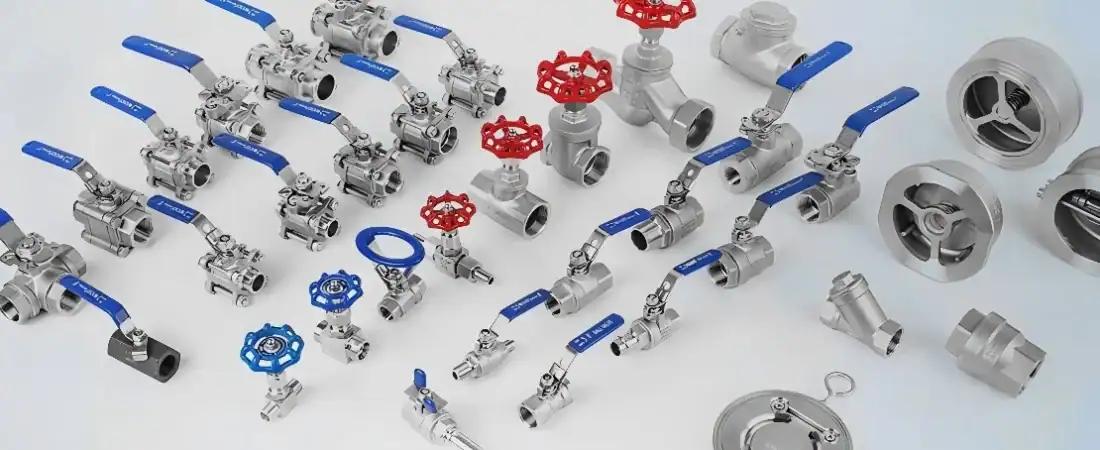
Threaded Ball Valve: NPT vs BSPP, Pressure & Temperature Guide
The complete 2026 guide to screwed ball valves — NPT vs BSPP vs BSPT thread standards, brass vs stainless vs carbon steel body materials, WOG / PN / Class pressure ratings, 1-piece vs 2-piece vs 3-piece design, and buying checklist for Southeast Asia and the Middle East EPC projects.
* Standard lead time depends on order quantity and destination country. 5–10 days to Southeast Asia, 15–20 days to the Middle East.

Quick Answer
A threaded ball valve is a small-bore (DN6–DN50) shutoff valve with screwed ends instead of flanges — no welding, no gaskets. For 70% of HVAC, water and utility projects outside North America, the default is a 2-piece 304 stainless BSPP (G) ball valve with a PTFE seat rated PN64 / WOG 1000. The #1 ordering mistake is shipping NPT (60° taper) to a BSPP (55° parallel) market — they look identical but don’t seal and leak badly under pressure test. Always mark the thread standard on the PO: “BSPP G (ISO 228)” for UK / EU / the Middle East / most of Asia, or “NPT (ASME B1.20.1)” for USA / Canada.
Key Takeaways
- Thread: NPT = North America · BSPP (G) = UK / EU / the Middle East / Asia · BSPT (R) = tapered older industrial / gas.
- Body: brass = water / residential · 304SS = general industry · 316SS = saltwater / coastal · WCB = oil / gas / high pressure.
- Pressure: brass WOG600 / PN20 · stainless WOG1000 / PN64 · carbon steel Class 800 / PN100.
- Design: 1-piece = disposable · 2-piece = default · 3-piece = repairable / hygienic / corrosive service.
On This Page
1. What Is a Threaded Ball Valve?
Threaded ball valves (also called screwed ball valves) are the most common small-size shutoff valve — compact, easy to install, and suitable for almost any small-bore piping system. But there’s one mistake people make all the time: ordering the wrong thread type (NPT vs BSPP). It looks almost the same, but they don’t fit together and you’ll get leaks. As a threaded ball valve manufacturer with export experience since 2009, we’ll break down everything you need to know.
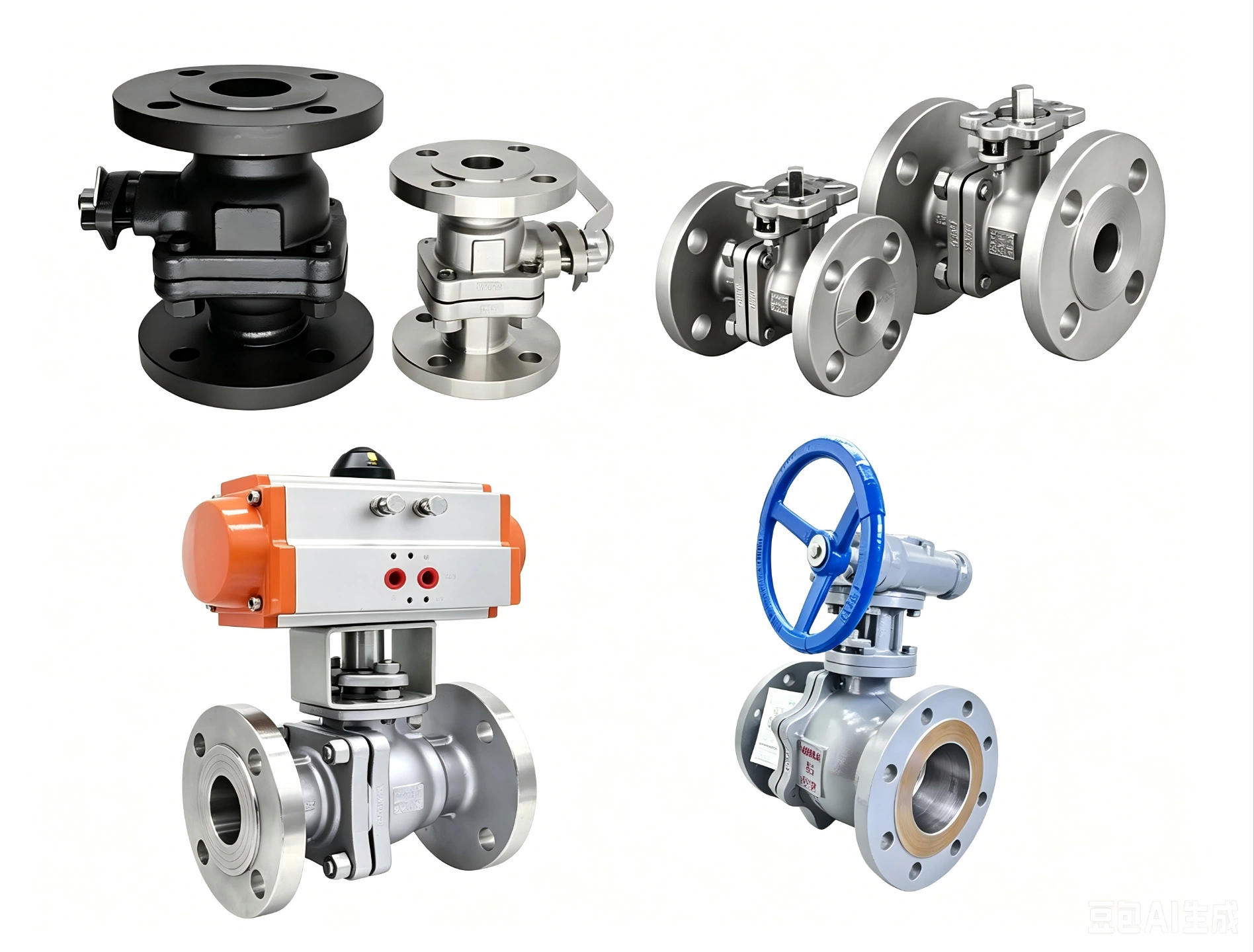
A threaded ball valve is a small ball valve with threaded ends (instead of flanged or welded ends). You simply screw it onto threaded pipe — no welding, no flanges, no gaskets. They’re used for sizes up to DN50 (2″), where threaded connections are standard.
Threaded ball valves are the most popular valve type for residential, commercial, and light industrial applications: water supply, oil, gas, compressed air, HVAC, and general utility piping. For larger sizes (DN80 and above), see our flanged ball valves.
2. NPT vs BSPP: The #1 Mistake People Make
This is the most common mistake when ordering threaded valves — they look the same but don’t fit. NPT and BSPP are two different thread standards used in different countries. If you order the wrong one, it won’t screw onto your pipe, or it will leak.
| Thread Type | Standard | Used In | Thread Angle |
|---|---|---|---|
| NPT (National Pipe Taper) | ANSI / ASME B1.20.1 | USA, Canada, Mexico, North America | 60° taper |
| BSPP (G / Parallel) | ISO 228 / BS 2779 | UK, Europe, Australia, Middle East, Asia | 55° parallel |
| BSPT (R / Taper) | ISO 7 / BS 21 | UK, Europe, Australia, Asia | 55° taper |
Rule of thumb: If your customer is in the USA / Canada → NPT. If they’re in Europe / UK / the Middle East / Asia → BSPP (parallel, most common). Always specify the thread type when ordering — it’s not optional.
Can NPT and BSPP be interchanged? No. They look almost the same (both DN15, DN20, DN25 …) but the thread angle and pitch are different. They won’t seal properly and will leak. Don’t try to mix them.
3. Body & Ball Materials
| Material | Relative Cost | Best For |
|---|---|---|
| Brass | Lowest | Water, residential, commercial, low pressure |
| Stainless Steel 304 | Medium | General industry, corrosive media, food, chemical |
| Stainless Steel 316 | Higher | Saltwater, coastal, strong chemicals, pharma |
| Carbon Steel (WCB) | Medium | Oil, gas, high pressure, industrial |
Most common choice: Brass for water and residential (about 70% of threaded ball valves sold). Stainless 304 for general industrial and corrosive. Carbon steel for oil and high pressure.
4. Worked Example: Riyadh Chilled Water Thread Mix-Up
Step 1 — Problem
A new 50,000 m² office tower in Riyadh, Saudi Arabia was finishing its HVAC chilled water system. The mechanical contractor bought 200 × DN25 (1″) brass threaded ball valves (WOG 600, PTFE seat) from a US supplier. When they tried to install them on BSPP female threaded pipes, the valves would only screw on 2-3 turns and leaked badly under pressure testing.
Step 2 — Root cause
The US supplier shipped NPT (60° taper) valves. The Saudi plumbing code requires BSPP (55° parallel) threads. They look almost identical at DN25, but the angle and pitch are different — NPT and BSPP are not interchangeable. Pressure test at 6 bar showed leaks at essentially 100% of the valves. The project was 2 weeks from handover.
Step 3 — Emergency fix
• Rejected the NPT valves — they were a complete write-off and couldn’t be returned to the US supplier
• Chuanglan supplied 200 × DN25 stainless 304 BSPP threaded ball valves in 7 days (faster than the local supplier)
• Upgraded from brass to stainless 304 for better corrosion resistance in Riyadh’s hot, dusty environment
• Added 20 × DN25 BSPP Y-strainers on the pump discharge to protect the valves from construction debris
Step 4 — Lesson learned
• Always specify thread type on the PO: “BSPP (ISO 228) female × female, DN25 G”
• For Middle East projects, BSPP is the universal standard — never order NPT without explicit customer confirmation
• For Southeast Asia, both NPT and BSPP appear on the same site — always ask the EPC contractor which standard the job uses
• Stainless 304 threaded ball valves cost roughly 70% more than brass but last 5-10× longer in coastal / dusty environments
Why EPC Contractors Specify Threaded Ball Valves with Chuanglan
Brass / 304SS / 316SS / WCB carbon steel threaded ball valves · DN6–DN50 (1/8″–2″) · NPT / BSPP / BSPT ends
1-piece / 2-piece / 3-piece design · full port or reduced port · PTFE / RPTFE / NBR seats available
ISO 9001:2015 · shell and seat pressure tested · EN 10204 3.1 MTC · MOQ 1 piece
Not Sure If You Need NPT or BSPP?
Send us a photo of your pipe thread or tell us your country and project standard — our engineers will confirm the thread type, body material, and pressure rating you need within 24 hours.
Get Free Sizing Report → WhatsApp us5. Pressure & Temperature Ratings
| Valve Type | Max Pressure (room temp) | Max Temperature | Best For |
|---|---|---|---|
| Brass threaded ball valve | PN20 / WOG 600 | −20 °C to +150 °C (PTFE) | Water, oil, gas, general utility |
| Stainless steel threaded ball valve | PN64 / WOG 1000 | −200 °C to +200 °C (PTFE) | High pressure, corrosive, chemical |
| Carbon steel threaded ball valve | PN100 / Class 800 | −20 °C to +250 °C (RPTFE) | Oil, gas, high pressure, industrial |
Important note: The “WOG” rating (Water Oil Gas) is the maximum pressure at room temperature. At higher temperatures, the pressure rating drops — always check the temperature derating curve for your specific valve.
6. Body Design: 1-Piece vs 2-Piece vs 3-Piece
| Design | Relative Cost | Repairable? | Best For |
|---|---|---|---|
| 1-Piece | Lowest | No (disposable) | Low budget, residential, water |
| 2-Piece | Medium | Partially | Most common, general industrial |
| 3-Piece | Higher | Yes (center comes out without removing pipe) | High maintenance, hygienic, corrosive |
For automated applications, also see our pneumatic and electric actuated ball valves. For high-pressure oil and gas service, flanged ball valves in Class 800 / 1500 are the standard.
7. Common Applications
- Residential plumbing — water shutoff under sinks, toilets, water heaters
- Commercial buildings — HVAC, chilled water, hot water, compressed air
- Oil & gas — small process lines, instrument air, sampling lines
- Chemical processing — small batch lines, chemical dosing
- Food & beverage — sanitary threaded valves for small process lines
- Water treatment — sampling lines, chemical dosing
- Agriculture & irrigation — farm irrigation, fertilizer lines
8. Pros & Cons
Pros:
- Low cost at small sizes
- Easy to install (screw on, no welding)
- Compact and lightweight
- 100% bubble-tight shutoff
- Available in brass, stainless, carbon steel
- Wide range of sizes (DN6–DN50)
- Works for almost any fluid (with the right seat)
Cons:
- Only for small sizes (above DN50 use flanged)
- Thread type must match exactly (NPT vs BSPP — can’t mix)
- Not reusable many times (threads wear out)
- Not for high pressure (flanged is better for Class 600+)
- Not ideal for slurries or dirty media (can get stuck)
9. Southeast Asia & Middle East Market Notes
For clients in Southeast Asia (Thailand, Vietnam, Indonesia, Malaysia, Philippines), both NPT and BSPP are commonly used — Thai and Vietnamese HVAC / hydraulic projects tend to use BSPP (inherited from European / British standards), while Indonesian and Filipino oil & gas projects often specify NPT (US-influenced). Always confirm on the PO. For coastal projects (Indonesia, Vietnam, Philippines), upgrade from brass to stainless 304 or 316 — brass typically fails in 2-3 years in salt air.
For clients in the Middle East (Saudi Arabia, UAE, Qatar, Kuwait, Oman, Bahrain), BSPP (G thread) is the universal standard — never ship NPT unless the PO explicitly says so. Saudi Aramco, SEC, and DEWA specifications all require BSPP. For HVAC chilled water and hot water systems (Riyadh, Dubai, Abu Dhabi), brass or stainless 304 BSPP threaded ball valves are the default. For oil & gas process lines, carbon steel Class 800 threaded ball valves with NPT (per API 6D) are used in upstream / downstream facilities.
Chuanglan Valve supplies threaded ball valves in brass, 304SS, 316SS, and WCB carbon steel, sizes DN6–DN50, both NPT and BSPP / BSPT ends, with full EN 10204 3.1 MTC and ISO 9001:2015 certification. Serving EPC Contractors Across Southeast Asia & Middle East · ISO 9001:2015 · Established in 2009 · MOQ 1 piece.
FAQ
Can I convert NPT to BSPP with an adapter?
Yes, NPT-to-BSPP adapter bushings exist, but they’re a compromise — the seal is mechanical (not a proper thread seal), and they add a potential leak point. For permanent installations, always order the correct thread type directly. Use adapters only for temporary connections or testing.
What is the difference between BSPP and BSPT?
BSPP (G) is parallel straight thread — it seals with a washer or O-ring at the face. BSPT (R) is tapered thread — it seals with the thread itself (like NPT). BSPP is more common in commercial and HVAC. BSPT is more common in older industrial and gas applications. They don’t interchange directly either.
How many turns should I tighten a threaded ball valve?
For NPT tapered threads, use 3-5 full turns of PTFE tape and tighten 2-3 turns beyond hand-tight. For BSPP parallel threads, use a fiber washer or O-ring and tighten just enough to compress the washer (don’t over-tighten — you’ll crack the body). If it leaks, don’t keep tightening — replace the washer or add more PTFE.
Can threaded ball valves be used for steam?
Only with PTFE or RPTFE seats and carbon steel or stainless steel bodies. Brass threaded ball valves are not suitable for steam above 150 °C. For steam service, specify a 3-piece stainless 316 ball valve with RPTFE or Grafoil seat — never a 1-piece brass valve.
What is full port vs reduced port?
Full port means the ball bore is the same diameter as the pipe (low pressure drop). Reduced port means the ball bore is one size smaller (cheaper, higher pressure drop). For shutoff service, reduced port is fine. For throttling or where pressure drop matters, use full port.
How long do threaded ball valves last?
Brass threaded ball valves in water service: 5-10 years. Stainless 304 / 316 in corrosive service: 15-25 years. The most common failure is the seat degrading (not the body) — 3-piece valves let you replace the seat without removing the valve from the pipe.
What is the minimum order quantity from Chuanglan?
MOQ is 1 piece — we supply both small sample orders and full project quantities. Standard DN25 and DN50 BSPP / NPT stainless 304 ball valves are in stock and ship in 7–15 days. Custom sizes, materials, and actuation take 15–30 days. Full EN 10204 3.1 MTC included.
References & Standards
- ASME B1.20.1: Pipe Threads, General Purpose (Inch) — NPT
- ISO 228-1 / BS 2779: Pipe threads where pressure-tight joints are made on the threads — BSPP (G)
- ISO 7-1 / BS 21: BSPT (R) taper pipe threads
- API 6D: Pipeline and Piping Valves (oil & gas threaded ball valves)
- MSS SP-110: Ball Valves for general industrial service
Related Products
Continue Reading
Request a Quotation — Reply Within 24 Hours
Send your line size, pressure rating, medium and quantity. Our engineers come back with price, drawing and lead time — no obligation.