


Why Palm Oil Mills Need Specialized Valves
Why 316L stainless steel wafer butterfly valves, dual plate check valves and ball valves dominate 60 t/h palm oil lines in Malaysia, Indonesia and Thailand — and how to avoid 12-month carbon steel corrosion.
* Standard lead time depends on order quantity and destination country. 5–10 days to Southeast Asia, 15–20 days to the Middle East.
⚡ Quick Answer
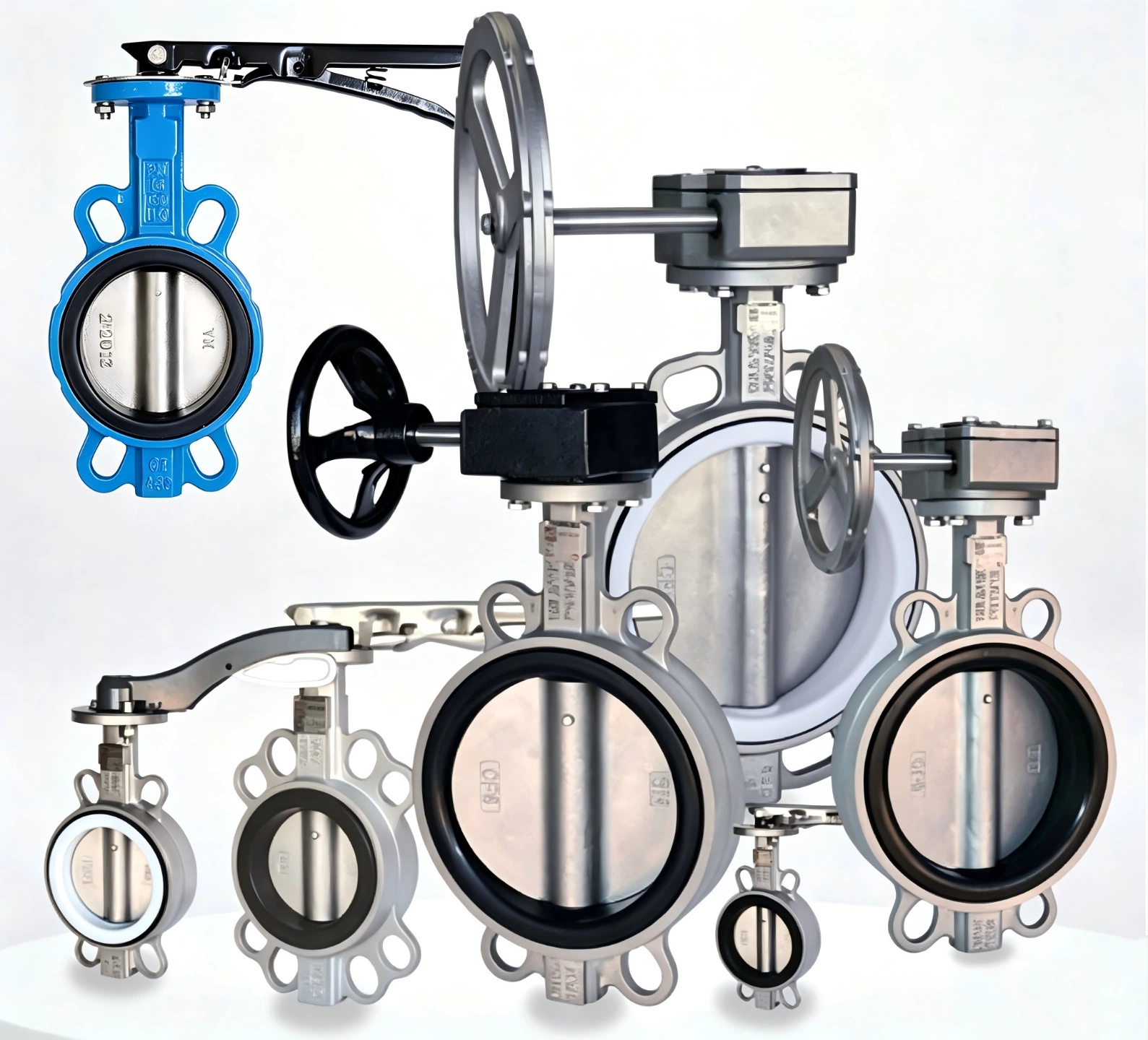
Palm oil mill process valves must be 316L (CF8M) stainless steel throughout — carbon steel corrodes in 6–12 months against POME (acidic effluent) and coastal humidity. On process lines, use wafer butterfly valves with Viton (FKM) seats rated to 200°C; on pump discharge use wafer dual-plate check valves; use flanged ball valves only for small-bore sampling and steam tracing.
For a 60 t/h mill on a DN150 hot CPO line (180 m³/h, 90°C, 50 cSt), DN150 wafer butterfly (Cv ≈ 400, ΔP ≈ 0.016 bar) + DN150 dual-plate check (closure ~0.08 s) is the proven combination.
🔑 Key Takeaways
- Material rule: CF8M (316) body and trim for any valve touching POME, hot oil or coastal outdoor air. CF8 (304) pits in acidic effluent within 18–24 months; carbon steel fails in 6–12 months.
- Valve type mix: Wafer butterfly on process lines (compact, full-bore, quick-acting) · dual-plate check on pump discharge · gate/globe on steam · flanged ball for sampling / steam tracing.
- Seat choice for hot CPO: Viton (FKM) rated to 200°C — do NOT use EPDM (oil-swelling) or PTFE (seat creep at 90°C+).
- Sizing check (Johor case): DN150 CPO line at 180 m³/h runs ~2.6 m/s (in the recommended 1.5–3.0 m/s band) — no upsizing needed; ΔP across the butterfly is negligible at ~0.016 bar.
On This Page
1. Why Palm Oil Mills Need Specialized Valves
Palm oil mill valves operate in one of the most demanding environments in the world. Fresh fruit bunches (FFB) go through sterilization at 130°C, pressing under high pressure, clarification, and effluent treatment — all while exposed to organic acids, high humidity and abrasive solids. Carbon steel valves corrode within 6-12 months. That’s why every modern palm oil mill in Malaysia, Indonesia and Thailand specifies stainless steel valves throughout the process line.
2. Valve Applications in a Palm Oil Mill
A typical 60-tonne-per-hour palm oil mill uses more than 300 valves across these sections:
| Process Section | Media | Recommended Valves |
|---|---|---|
| Sterilization (boilers) | Steam 130°C | Gate valve, globe valve |
| Threshing & pressing | Crude palm oil, fibres | Wafer butterfly valve, ball valve |
| Clarification & decanting | Hot oil, water, sludge | Wafer dual plate check valve, butterfly valve |
| Effluent treatment (POME) | Acidic wastewater | 316L butterfly valve, ball valve |
| Cooling water & boilers | Cooling water, condensate | Check valve, gate valve |
3. Material Selection: 304 vs 316L
This is the single most important decision when sourcing valves for a palm oil mill.
CF8 / 304 stainless steel works fine in dry areas, steam lines and clean water loops. But in POME (palm oil mill effluent) — which contains organic acids, phenols and chloride — 304 will pit within 18-24 months.
CF8M / 316L stainless steel adds 2-3% molybdenum, which dramatically improves chloride and acid resistance. For any valve touching POME, hot oil or coastal air, specify 316L body and trim. The 20-30% price premium is recovered in avoided downtime within the first year.
4. Why Wafer Butterfly Valves Dominate Palm Oil Lines
Walk into any palm oil mill in Johor or Sumatra and you’ll see wafer butterfly valves everywhere. Reasons:
- Compact and lightweight — a DN200 wafer valve weighs 8 kg vs 60 kg for a flanged gate valve
- Full bore flow — minimal pressure drop on high-viscosity crude palm oil
- Quick quarter-turn operation — ideal for automated plants with pneumatic actuators
- Easy to clean — smooth disc surface, no pockets for sludge build-up
- Cost effective — 60-70% cheaper than flanged ball valves at DN150+
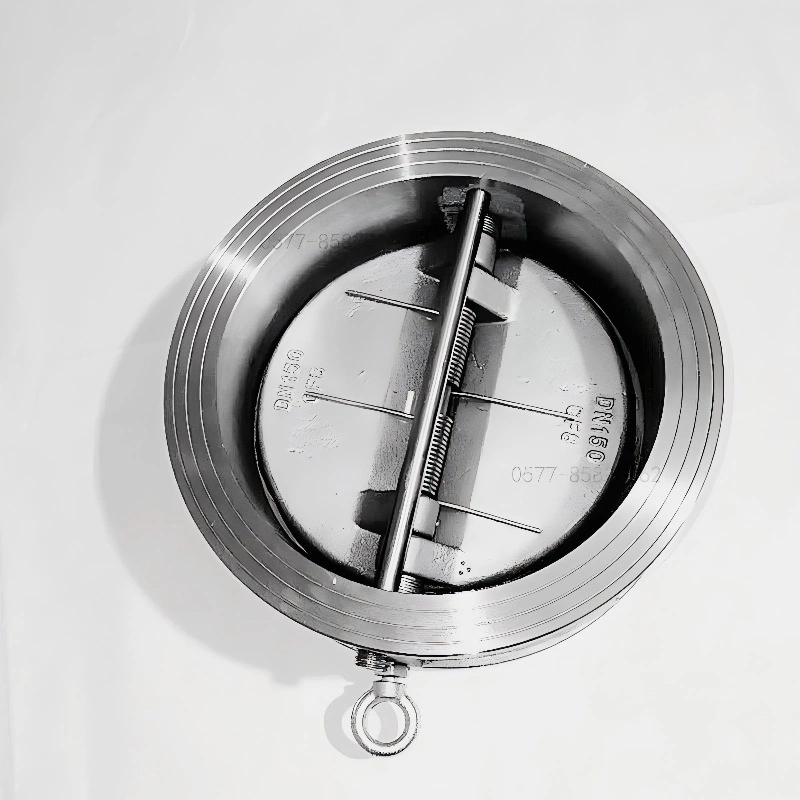
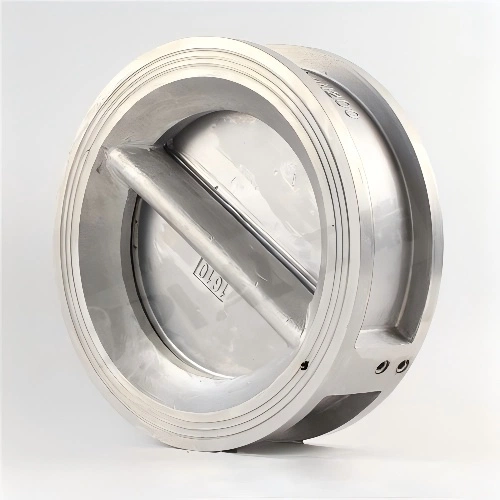
For backflow prevention on pump discharge lines, the standard choice is the wafer dual plate check valve — short stroke, low water hammer, and suited to high-pressure hot oil service.
International Standards Reference
| Standard Category | US / ANSI | European / EN | Japanese / JIS |
|---|---|---|---|
| Design | API 609 | EN 593 | JIS B2002 |
| Face-to-Face | API 609 / MSS SP-67 | EN 558-1 Series 20 | JIS B2002 |
| Flange | ASME B16.5 Class 150 | EN 1092-1 PN16 | JIS B2220 10K |
| Pressure Rating | ANSI Class 150 | PN16 | 10K |
| Testing | API 598 / ISO 5208 | EN 12266-1 | JIS B2003 |
| Seat / Elastomer | Viton (FKM) / EPDM / PTFE | Viton (FKM) / EPDM / PTFE | Viton (FKM) / EPDM / PTFE |
| Material Certificate | EN 10204 3.1 MTC | EN 10204 3.1 MTC | EN 10204 3.1 MTC |
Note: For food / CPO service, confirm the elastomer is food-grade when the valve touches edible product directly.
5. Worked Example: Hot Oil Line Sizing
A 60 t/h palm oil mill in Johor Bahru, Malaysia, is retrofitting its clarifier hot oil return line. Let’s size the isolation and check valves.
Step 1 — Design conditions
Fluid: crude palm oil (CPO) at 90°C. Flow rate: 180 m³/h. Specific gravity ≈ 0.90. Viscosity ≈ 50 cSt at 90°C. Pipe: DN150 schedule 40, ID ≈ 156 mm.
Step 2 — Calculate velocity
v = (180/3600) ÷ (π × 0.156² ÷ 4) = 0.05 ÷ 0.0191 ≈ 2.6 m/s
For hot oil service, 1.5–3.0 m/s is the recommended range — DN150 is correctly sized (no need to upsize).
Step 3 — Select isolation valve (wafer butterfly)
DN150 wafer butterfly valve, Cv at 90° open ≈ 400. ΔP = (Q/Cv)² × SG × 0.086 = (180/400)² × 0.90 × 0.086 ≈ 0.016 bar — negligible. Body: 316L, disc: 316L, seat: Viton (FKM) rated to 200°C. Actuator: pneumatic double-acting with manual override for automated clarification.
Step 4 — Select check valve (pump discharge)
DN150 wafer dual plate check valve, 316L body, 316L plates, Viton seat. Closure time ~0.08 s. Estimated ΔP at 2.6 m/s ≈ 0.05 bar — well within allowable pump head margin of 1 bar.
Step 5 — Final BOM
• DN150 wafer butterfly valve, 316L/Viton, PN16 — 4 pcs (clarifier isolation)
• DN150 wafer dual plate check valve, 316L/Viton, PN16 — 2 pcs (pump discharge)
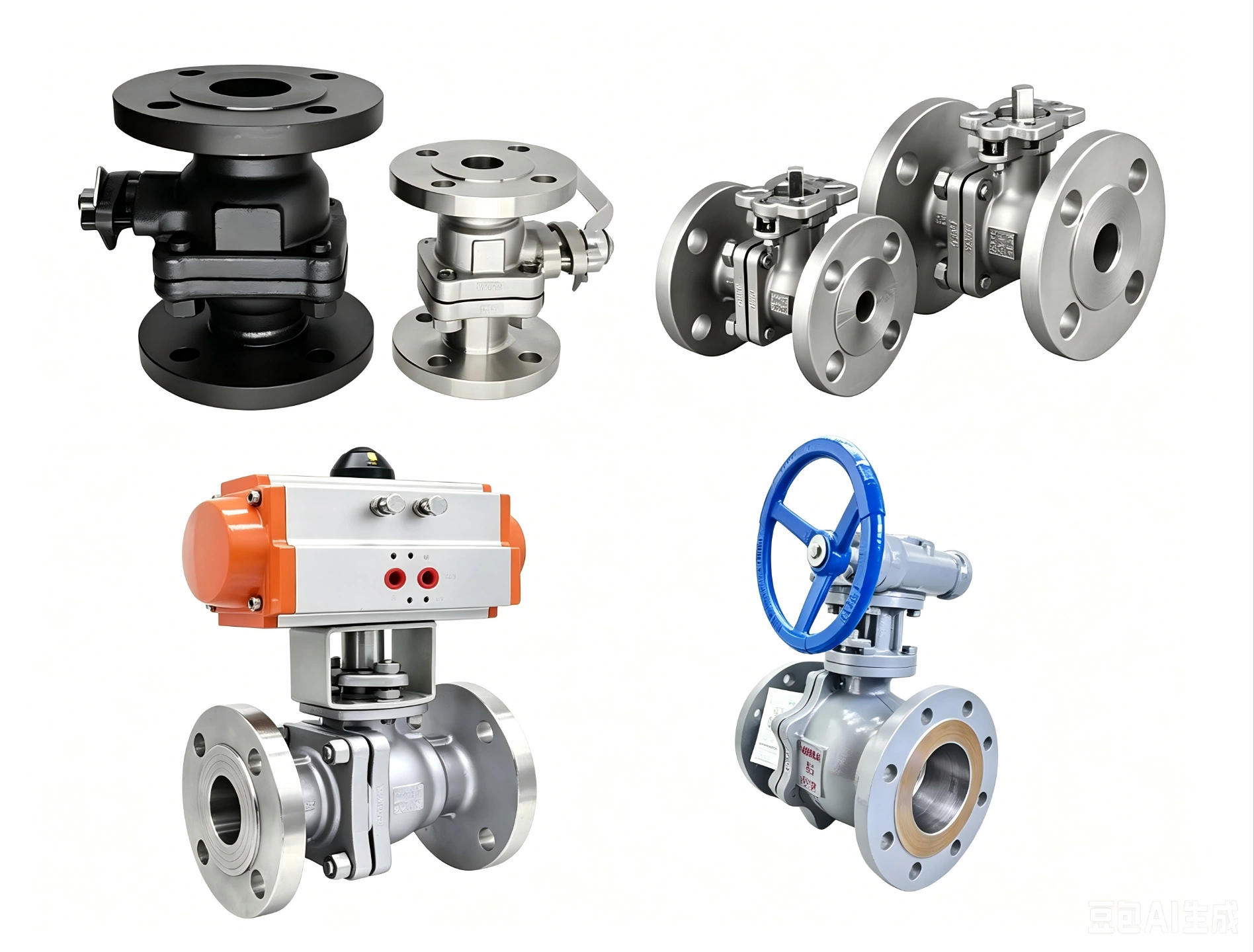
• DN80 flanged ball valve 316L/Viton — 6 pcs (sampling and steam tracing)
• All valves with EN 10204 3.1 MTC
💡 Why Palm Oil EPCs Choose Chuanglan
316L wafer butterfly, dual-plate check and flanged ball valves from DN50 to DN300 in stock
ISO 9001:2015 certified factory, 100% factory tested, EN 10204 3.1 MTC included
MOQ: 1 piece — sample valves for pilot line before bulk mill package
Need a Valves BOM for Your Palm Oil Mill?
Send us your P&ID or process data — our engineers will size the valves and recommend materials within 24 hours.
Get Free Sizing Report →6. Southeast Asia & Middle East Market Notes
If you’re sourcing palm oil mill valves for Malaysia, Indonesia, Thailand, Vietnam or Colombia, keep these in mind:
- Humidity and coastal air — even indoor areas see 80-95% RH. Specify 316L exterior, not just wetted parts. This matters especially in southern Vietnam (Dong Nai, Binh Duong) and peninsular Malaysia.
- Actuator corrosion — if fitting pneumatic actuators, choose epoxy-coated or 304 stainless steel bodies, not bare aluminium.
- Local standards — most mills accept BS EN 1092 / ANSI 150# flanges. Confirm before ordering. Vietnamese mills often mix JIS and ANSI flanges — ask for a flange drawing.
- Lead time matters — mills run 24/7. A short delivery from China beats a long lead time from European brands when a line fails. Ho Chi Minh City and Jakarta ports both receive weekly container services from Shanghai/Ningbo.
Middle East note: Although palm oil is not produced in the Gulf, many Saudi, UAE and Kuwaiti food conglomerates import CPO for refining and hydrogenation. These refineries in Jeddah, Dammam and Dubai specify the same 316L wafer butterfly and ball valve package — often with ANSI 150# flanges to match imported European equipment.
For palm oil mills, the winning combination is: 316L body, wafer butterfly valves on process lines, dual plate check valves on pump discharge, and ball valves for sampling and isolation. Sourcing directly from a Chinese stainless steel valve manufacturer cuts cost versus European brands, without compromising on material certification (3.1 MTC) or pressure testing. Chuanglan Valve supplies this exact package to palm oil mills and food refineries across Southeast Asia and the Middle East, with MOQ starts at 1 piece and 7–15 day delivery.
Serving EPC Contractors Across Southeast Asia & Middle East · ISO 9001:2015 Certified · 15+ Years Factory Experience
Common Mistakes to Avoid
- Specifying 304 stainless for coastal or chloride service. If your project is in Southeast Asia (coastal, cooling tower, deicing salts) or the Middle East (desalination, SWRO, humid Gulf climate), 304 will pit within 1–3 years. Specify CF8M (316) or duplex 2205.
- Ignoring pressure-temperature derating. PN16 / Class 150 ratings apply at room temperature only. At 200°C the allowable pressure drops by roughly 40–50%. Always check the manufacturer’s P-T chart before specifying for steam, hot oil, or thermal fluid.
- Buying on price without MTC verification. “Stainless steel” is not enough — ask for EN 10204 3.1 MTC tied to the heat number, and arrange PMI (XRF) witness at the factory if the price is 20% below market. 304 passed off as 316L is the single most common failure in this industry.
- Forgetting face-to-face and flange drilling. A “PN16” wafer valve from one manufacturer may not match the existing flange drilling or face-to-face of another. Always confirm dimensions against EN 558 / API 609 / ASME B16.10 before replacing an installed valve.
FAQ
What types of valves are used in a palm oil mill?
Wafer butterfly valves dominate process lines (clarification, pressing, cooling). Dual plate wafer check valves prevent backflow on pump discharge. Gate and globe valves handle steam. Ball valves are used for sampling, steam tracing and small isolation duties.
Is 304 or 316L stainless steel better for palm oil service?
Use 316L (CF8M) for any valve touching POME, hot oil, or coastal outdoor air. 304 (CF8) is acceptable for clean steam and dry utility lines but will pit in acidic effluent within 18-24 months.
Should I choose wafer or flanged butterfly valves for CPO lines?
Wafer style is the industry standard for palm oil — roughly 75% lighter and 60-70% cheaper, with full-bore flow. Use flanged butterfly valves only where piping is cast iron or where the valve must be removed frequently without pulling the pipe.
What seat material handles hot crude palm oil?
Viton (FKM) is the default — rated to 200°C and resistant to oils. Avoid EPDM (oil-swelling) and PTFE (high friction and seat creep at 90°C+).
Can ball valves handle crude palm oil?
Yes, but only for small-bore sampling, steam tracing and utility isolation. For large CPO lines, butterfly valves are preferred because ball valves create higher pressure drop at high viscosity and are harder to clean of sludge.
What is your MOQ and lead time for palm oil mill valves?
MOQ is 1 piece. Standard DN50–DN300 316L wafer butterfly, dual plate check and flanged ball valves ship in 7–15 days. Full mill packages (100-300 valves) take 15–30 days with 3.1 MTC and FAT report.
References & Standards
- API 609: Butterfly Valves — Double Flanged, Lug Wafer, and Wafer Type
- ASME B16.34: Valves — Flanged, Threaded, and Welding End
- EN 1092-1: Flanges and their joints — circular flanges for pipes, valves and fittings
- EN 10204 3.1: Metallic products — inspection documents (Material Test Certificate)
- ISO 5211: Industrial valves — part-turn valve actuator attachment
Related Products
Continue Reading
Get a Quote for Your Palm Oil Mill Valve Package
MOQ: 1 piece · ISO 9001:2015 certified · 3.1 MTC included · 100% factory pressure tested
Southeast Asia: Indonesia, Malaysia, Thailand, Vietnam, Singapore, Philippines, Myanmar
Middle East: Saudi Arabia, UAE, Qatar, Kuwait, Oman, Bahrain
Other Regions: Europe, North America, South America, Africa, Australia
Delivery: 5–10 days to Southeast Asia · 15–20 days to the Middle East · 25–35 days to Europe / the Americas
Payment: T/T 30% deposit + 70% before shipment · L/C at sight · Warranty: 12 months after shipment for material and manufacturing defects · Packing: export plywood case / fumigation-free pallet · Shipping: FOB Ningbo/Shanghai · Documents: EN 10204 3.1 MTC + packing list + commercial invoice · Third-party inspection welcome: SGS / Bureau Veritas / Intertek
Contact Our Engineers »Need a quote or datasheet? Tell us size, pressure class and material – reply within 24 hours.
Request a Quote