
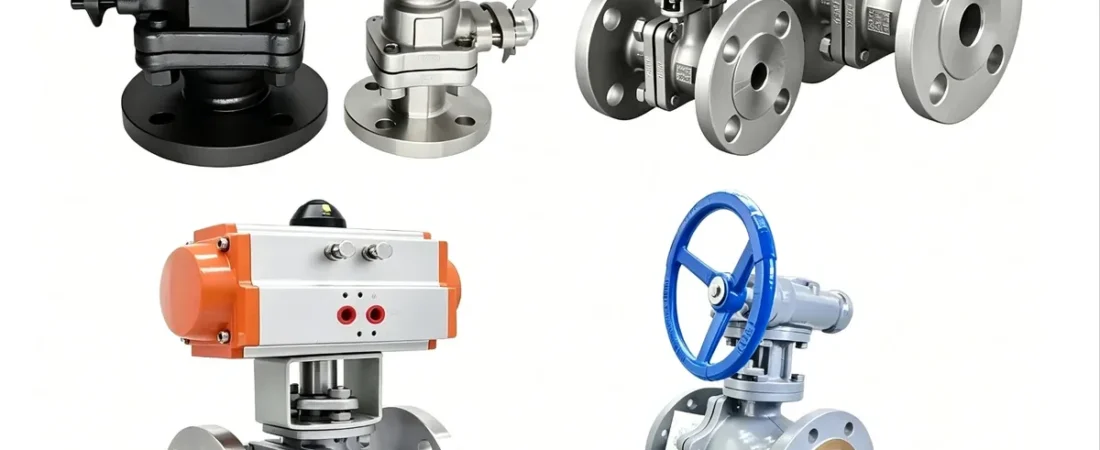
Wafer Check Valve Applications: Plumbing, HVAC, Food & Beverage & Liquid Cooling
Why 316L stainless steel wafer butterfly valves, dual plate check valves and ball valves dominate 60 t/h palm oil lines in Malaysia, Indonesia and Thailand — and how to avoid 12-month carbon steel corrosion.
* Standard lead time depends on order quantity and destination country. 5–10 days to Southeast Asia, 15–20 days to the Middle East.

Quick Answer
A wafer check valve is not one product with one specification. The face-to-face dimension stays the same (API 594 / EN 558 series 16), but the pressure class, body material, seat elastomer, surface finish and cracking pressure all change with the sector it serves. Building water is decided by backflow-protection rules and price; HVAC by pressure drop at 1.5–2.5 m/s; food and beverage by cleanability and wetted-surface finish; data-centre cooling by cleanliness and a cracking pressure below 0.05 bar; effluent and seawater by chloride resistance. Specify the application first, then the valve.
On a DN150 chilled-water line at 120 m³/h, a 304 dual-plate wafer check with a 0.05 bar spring gives 1.68 m/s velocity and about 0.23 bar pressure drop — the same DN150 body that would be wrong on a POME line and wrong on a food-contact line.
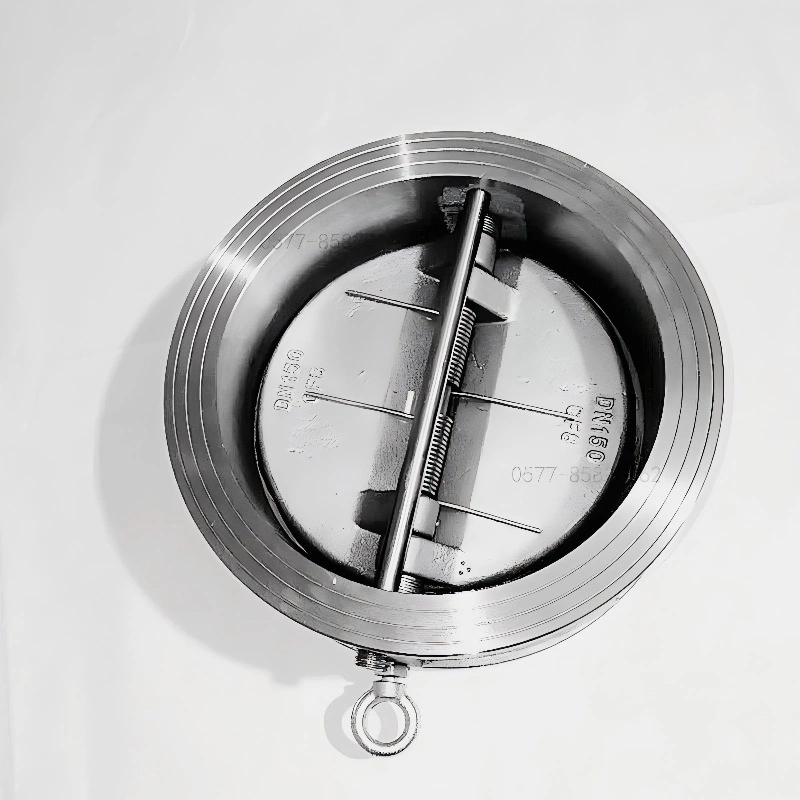
Key Takeaways
- One face-to-face, five datasheets: wafer check valves are dimensionally interchangeable, so the purchase decision is almost never the flange dimension — it is the pressure class, the grade, the seat and the spring.
- Building water: PN10/PN16, 304 body, EPDM seat, sized against EN 1074-3 and whatever local backflow rule the authority having jurisdiction applies.
- HVAC: the enemy is pressure drop and noise, not corrosion. Size for 1.5–2.5 m/s and keep ΔP under roughly 0.3 bar on the check alone.
- Food, beverage and pharma: 316L (CF8M) with a declared internal finish and elastomers listed for food contact. Cleanability decides the model, not Cv.
- Data-centre cooling: low cracking pressure (0.02–0.05 bar), clean internals, 316L wetted parts; a 0.3 bar spring wastes pump head permanently.
- Effluent, POME and seawater: 316L or duplex. 304 pits, and the failure looks like a leaking seat rather than a corroded body.
- Water hammer follows Δv, not closing speed. A low cracking pressure lets the disc start closing while reverse velocity is still small, which is the mechanism that actually limits surge.
On This Page
- Why the Application Sets the Specification
- 1. Building Plumbing & Potable Water
- 2. HVAC Chilled & Hot Water
- 3. Food, Beverage & Pharmaceutical
- 4. Data-Centre Liquid Cooling
- 5. Effluent, Seawater & Water Treatment
- 6. The Five Specifications Side by Side
- 7. Worked Example: DN150 Chilled-Water Line
- 8. Cracking Pressure, Velocity & Water Hammer
- 9. Southeast Asia & Middle East Notes
- 10. FAQ
1. Why the Application, Not the Size, Sets the Specification
Most RFQs for wafer check valves start with a pipe size: “DN150, stainless, PN16.” That is the correct starting point for the flange, and almost useless for the valve. The same DN150 body can be sold as a building-water check, an HVAC check, a hygienic check or a cooling-loop check, and only one of those four will survive its service.
Four variables separate the versions, and none of them shows up in a face-to-face drawing.
Pressure class and body material. A PN10 cast-iron-bodied check on a treated-water riser is normal. The same casting on a seawater line is a two-year valve. Material follows the chloride level, not the pressure rating — a PN16 304 valve in warm seawater fails faster than a PN10 316L valve in the same line.
Seat elastomer. EPDM is the default for water, and it is the wrong default for oil, for hot water above roughly 120°C, and for any stream with aromatic hydrocarbons. Nitrile (NBR) handles oil, FKM handles heat and oil, PTFE handles chemicals and steam but creeps under load at elevated temperature.
Surface finish and cleanability. A general-service disc with a machined seat face and a sand-cast body is perfectly acceptable in a plant-water header. In a filling line it is a cleaning problem: product holds in the crevices, and no amount of CIP flow removes it.
Cracking pressure. This is the number buyers most often leave out and most often regret. It sets how much pump head the valve consumes before it opens, and, as Section 8 shows, it also sets how much water hammer the valve can produce.
The practical rule: pick the sector, then pick the valve. Sizing a wafer check by pipe diameter alone is how a correct-looking DN150 ends up rattling on a low-flow chiller loop or pitting on an effluent main eighteen months after commissioning.
2. Building Plumbing & Potable Water
In building services the check valve is a compliance component before it is an engineering one. Its job is to stop backflow into the potable main, and the specification is set by the backflow rule the local authority applies rather than by the pump curve.
For a treated-water riser, a stainless wafer check in 304 with an EPDM seat, rated PN10 or PN16, is the ordinary choice. It is compact, it fits between two flanges with a short face-to-face, and it costs less than a flanged swing check of the same bore. On potable service the wetted materials matter more than the Cv: the elastomer should be listed for drinking water, and the body should not be a cast iron grade that will red-rust the first time the line sits idle.
Two design points that decide whether the valve works:
Do not size for the peak demand only. A building main sized for fire flow and domestic peak will run at a fraction of that velocity most of the day. A wafer check with a soft spring and a low cracking pressure behaves well at low flow; a stiff-spring or heavy-disc valve will chatter as the disc floats between open and closed. If the line will run below about 0.5 m/s for long periods, specify the lightest spring available, or move to a design that does not depend on velocity to hold the disc open.
Keep the valve off the pump discharge elbow. A wafer check bolted directly to a short-radius elbow sees a distorted, swirling velocity profile. Two diameters of straight pipe upstream is enough in most building services layouts and costs almost nothing at design stage.
Where the local rule calls for a testable backflow preventer — a reduced-pressure zone assembly or a double check with test ports — a plain wafer check is not a substitute, however good its seat is. That is a compliance question to settle with the authority before the valve is ordered, not after.
3. HVAC Chilled & Hot Water
HVAC is the sector where the check valve is judged on pressure drop and noise, and where a correct-looking selection most often goes wrong. A chilled-water system runs for decades, so a 0.2 bar loss on the check is a permanent 0.2 bar on the pump, every hour of every day.
The sizing band that matters is velocity. Chilled and hot water lines are normally designed for 1.5–2.5 m/s. Below about 1.2 m/s the disc of a spring-loaded dual plate can sit partly open and flutter; above about 3 m/s the pressure drop and the noise both climb quickly, and the valve starts to sound like a badly adjusted damper.
Dual plate is the standard selection for HVAC because the short face-to-face fits between flanges in a plant room with no room to spare, and because the two half-discs open at very low pressure. A swing check of the same bore needs a longer laying length and a higher velocity to hold the disc fully open, which is why it is usually reserved for larger plant-room headers and pump discharge lines where space exists.
Three HVAC-specific points:
Spring, or no spring? A spring closes the disc before gravity alone would, which limits reverse flow on shutdown and stops the disc from slamming. In a vertical riser the spring is not optional — without it the disc hangs open.
Glycol loops. A 30–40% glycol mix raises viscosity and lowers specific heat, so flow rates rise and pressure drop rises with them. Re-check the ΔP at the glycol operating temperature instead of reusing the water figure.
Noise complaints are usually velocity complaints. If a tenant reports a knocking or whistling check, measure the velocity before changing the valve. Upsizing rarely fixes it; the fix is usually a lower cracking pressure, a straighter approach, or both.
4. Food, Beverage & Pharmaceutical
In hygienic service the specification stops being about flow and starts being about what the valve looks like inside after a production shift. A general-service wafer check can be perfectly leak-tight and still fail an audit, because the audit asks a different question: can this be cleaned, and can that be demonstrated?
What changes for food, beverage and pharmaceutical duty:
Body and wetted parts in 316L (CF8M). The molybdenum content is what survives the chlorinated, acidic and caustic cleaning cycles a filling line runs every day. 304 (CF8) is common on utility water and unusual on product contact.
A declared internal finish. The wetted surfaces and the seat face should have a stated roughness value, and the geometry should avoid sharp internal corners and dead pockets where product can hold. Where the line is cleaned in place, the valve has to drain: a horizontal installation with a pocket below the seat is a design defect, not a maintenance issue.
Elastomers listed for food contact. The seat and any gasket should be a grade listed under 21 CFR 177.2600 for repeated food contact, and the supplier should be able to name the grade rather than describe it as “food grade.”
Drainability and orientation. A wafer check is a one-piece body with the disc between two flanges; it is not a hygienic valve by construction unless the internal geometry is designed for it. In hygienic duty, many plants use a hygienic-design check or a hygienic butterfly with a separate check function rather than a general wafer body, and that is a legitimate engineering answer, not an upsell.
For pharmaceutical duty, add the documentation layer: a material certificate to EN 10204 3.1, a stated elastomer grade, and a surface finish figure the validation team can accept. Those three documents are usually what decides the supplier, long before price is discussed.
5. Data-Centre Liquid Cooling
Cooling distribution units and in-row liquid cooling loops are the newest application for wafer check valves and the least forgiving. The fluid is often deionised or treated water with corrosion inhibitors, the loop is closed and stays closed for years, and the pump head budget is spent on cold plates rather than on valve losses.
What the loop actually requires:
Cracking pressure at the low end. A 0.02–0.05 bar spring is the usual band. A 0.3 bar spring is 3 m of head that the CDU pump pays for continuously — in a loop with a handful of metres of total head, that is not a rounding error.
Clean internals. Any machining swarf, casting sand or loose spring retainer in the body becomes a blockage downstream at a cold-plate microchannel, where it is expensive to remove. Specify a cleaned, plugged and bagged valve, and ask what the cleaning process is.
316L wetted parts. Deionised water is aggressive to ordinary stainless and to any copper alloy. 316L body and disc, with an EPDM or PTFE seat depending on the inhibitor package, is the normal selection.
Leak-tightness at low differential. A CDU check operates with a small pressure difference across it for most of its life. A metal-seated check that passes a hydrostatic test can still weep at 0.2 bar differential, so the seat test should be quoted at the differential the loop actually sees.
The failure mode to design out is not corrosion but contamination and sticking: a disc that hangs because the bore is slightly out of round, or a spring that binds after a few thousand cycles. On a sealed loop nobody can see either until the return temperature drifts.
6. Effluent, Seawater & Water Treatment
This is where material selection decides the service life, and where the cheapest compliant-looking valve is the most expensive one over ten years.
POME and acidic effluent. Palm oil mill effluent runs at a low pH with high organic load and suspended solids. 304 (CF8) in that stream pits at the seat face and under the flange gasket, and the symptom is a check that will not hold — which reads as a seat problem and is actually a body problem. 316L is the baseline; duplex grades are used where chloride and temperature combine.
Seawater and brackish water. Chloride stress corrosion cracking is the governing failure mode for 304 and even for 316L at elevated temperature. Below roughly 60°C, 316L is usually acceptable in flowing seawater; above that, or in low-flow or stagnant sections, duplex or a higher alloy is the honest answer. A wafer check sitting in a stagnant seawater leg for months is the worst case for any 300-series grade.
Solids handling. A dual plate with two half-discs and a central hinge is more tolerant of fibrous solids than a single disc that must swing clear, but neither design is a slurry valve. Where the line carries grit, the valve belongs on the clean side of the strainer, and the strainer sizing matters more than the check.
Maintenance reality. A wafer check cannot be repaired in line — the body is a single piece and the disc sits between the flanges. On an effluent main that means a planned shutdown and a spare valve on the shelf. Two spares cost less than one unscheduled stop, and this is the argument that usually settles the material debate in favour of 316L.
7. The Five Specifications Side by Side
The table below is the specification sheet in one view. Sizes are typical rather than exhaustive; the governing standard column is the one to quote in an RFQ.
| Sector | Typical DN | Pressure class | Body / disc | Seat | Governing reference | What decides the selection |
|---|---|---|---|---|---|---|
| Building plumbing & potable water | DN50–DN200 | PN10 / PN16 | 304 (316L on coastal or aggressive water) | EPDM listed for drinking water | EN 1074-3; local backflow rule | Backflow compliance and wetted-material approval |
| HVAC chilled & hot water | DN50–DN300 | PN16 | 304 / 316L | EPDM | EN 12266-1 (test); API 594 (face-to-face) | Pressure drop at 1.5–2.5 m/s, noise, laying length |
| Food, beverage & pharmaceutical | DN25–DN100 | PN10 / PN16 | 316L (CF8M) | EPDM or PTFE, grade listed under 21 CFR 177.2600 | Hygienic design practice (EHEDG); EN 12266-1 | Cleanability, internal finish, drainability |
| Data-centre liquid cooling (CDU) | DN25–DN100 | PN16 / PN25 | 316L | EPDM or PTFE, inhibitor-compatible | EN 12266-1 | Cracking pressure 0.02–0.05 bar, internal cleanliness |
| POME, effluent & water treatment | DN80–DN400 | PN10 / PN16 | 316L; duplex for high chloride | EPDM | EN 12266-1 | Chloride and solids resistance, spare-part policy |
| Seawater & marine | DN50–DN300 | PN10 / PN16 | 316L below ~60°C; duplex above | EPDM | EN 12266-1 | Chloride SCC, stagnation, biofouling |
Face-to-face dimensions are interchangeable across all six rows: API 594 / EN 558 series 16. The flange drilling is what changes with the market — see note below.
A note on flange standards. The same valve body can be drilled to EN 1092-1 PN16, ASME B16.5 Class 150 or JIS 10K. For projects in Indonesia, Malaysia, Vietnam and Thailand, JIS 10K and EN 1092-1 are equally common and are not interchangeable at the bolt circle. Always quote the drilling in the RFQ, not just the DN.
8. Worked Example: DN150 Chilled-Water Line
Step 1 — Design conditions
Application: office-tower secondary chilled-water loop. Flow rate: 120 m³/h. Supply / return: 7°C / 12°C. Working pressure: 10 bar. Pipe: DN150 steel, wall 4.5 mm, internal diameter ≈ 159 mm. Fluid: water with 25% propylene glycol.
Step 2 — Check the velocity
Internal area A = π × 0.0795² = 0.01986 m²
v = (120 / 3600) ÷ 0.01986 = 0.0333 ÷ 0.01986 = 1.68 m/s
Inside the 1.5–2.5 m/s design band, so DN150 is correctly sized and does not need upsizing for the check valve.
Step 3 — Select the model
DN150 dual-plate wafer check, PN16, 304 body and discs, EPDM seat, spring-loaded. Dual plate is chosen over swing because the plant room has no room for a longer laying length.
Step 4 — Pressure drop
Take the valve ’s published Kv as 250 m³/h at 1 bar (confirm against the actual test sheet, not a catalogue headline).
ΔP = (Q / Kv)² × 1 bar = (120 / 250)² = 0.23 bar (≈ 2.3 m of water column)
On a loop whose total pump head is around 30 m, 2.3 m is about 8% — acceptable, but it is the reason not to accept a catalogue valve with an unstated Kv.
Step 5 — Cracking pressure
Specify 0.05 bar, which is 0.5 m of head. At that setting the valve opens as soon as the pump starts and adds nothing measurable to the permanent loss.
If the same valve were ordered with a 0.30 bar spring, that is 3 m of head lost continuously — roughly ten times the penalty for the same flange and the same body.
Step 6 — What to put on the purchase order
6 pcs DN150 dual plate wafer check, PN16, EN 1092-1 drilling, 304 body / 304 disc, EPDM seat, cracking pressure 0.05 bar ±20%, shell test and seat test to EN 12266-1 rate A, EN 10204 3.1 material certificate, cleaned and plugged before packing.
The single number that most often goes missing from that order is the cracking pressure. It is not on the drawing, it is not implied by the pressure class, and a supplier who is not asked will ship whatever spring is in the bin.
9. Cracking Pressure, Velocity & Water Hammer
These three numbers interact, and the interaction is where most check-valve failures actually originate.
Cracking pressure is the differential at which the disc first lifts off the seat. It is a spring property, quoted in bar, and it is the one specification that a buyer can change for almost no money and with a large effect on both pump energy and surge.
Velocity sets whether the disc sits stable. Too low and the disc floats and chatters, wearing the seat and the hinge. Too high and the ΔP and the noise climb. The HVAC band of 1.5–2.5 m/s is a compromise that has held for decades because it satisfies both constraints at once.
Water hammer is the consequence of stopping a moving column of water. The Joukowsky relation gives the ideal pressure rise:
ΔP = ρ · a · Δv where ρ ≈ 1000 kg/m³ for water and a ≈ 1400 m/s in a steel pipe
For the DN150 line above, a full stop from 1.68 m/s gives ΔP = 1000 × 1400 × 1.68 = 2.35 × 10&sup6; Pa ≈ 23.5 bar. On a 10 bar system with a PN16 valve, that instantaneous rise exceeds the rating by more than double. The calculation is an ideal upper bound — wall friction, pipe elasticity and any air entrainment all reduce it — but it shows the scale of the problem.
If instead the disc begins to close while the reverse velocity is still 0.25 m/s, ΔP = 1000 × 1400 × 0.25 ≈ 3.5 bar. Ten bar plus 3.5 bar stays inside PN16, and the line survives.
This is the mechanism worth understanding correctly: surge pressure scales with the change in velocity Δv, not with how fast the valve looks. A valve that closes in a few milliseconds from full flow forces Δv to equal the full flow velocity, which is the worst case. A valve that starts to close while the flow is already nearly reversed only ever sees a small Δv. A low cracking pressure and a light spring therefore reduce surge because they let closure begin early — not because they close quickly.
Three practical consequences:
Do not over-spring a check to stop it rattling. A stiff spring raises cracking pressure, wastes pump head and, at the moment of closure, still sees the full velocity if the disc was held fully open.
Put the check near the pump, not at the far end of the header. The closer the valve is to the pump, the shorter the column that can reverse through it, and the shorter the column that has to be stopped.
For long lines or high velocity, consider a damped or slow-closing design. Above roughly 3 m/s, or on a line with a long static head, a controlled-closure check is the engineering answer and a standard dual plate is not. That is a selection change, not a spring change.
10. Southeast Asia & Middle East Market Notes
Both regions buy the same product, but they specify it differently, and the difference is worth knowing before a quotation is prepared.
Southeast Asia
Indonesia and Malaysia: palm oil, water treatment and food processing dominate. 316L is the working grade, POME lines are the corrosion test, and JIS 10K drilling appears beside EN 1092-1 on the same project.
Vietnam and Thailand: food and beverage plants plus HVAC for new build. Hygienic wetted-material declarations and a stated internal finish carry more weight than price in the shortlisting stage.
>Middle EastSaudi Arabia, UAE and Qatar: large HVAC and district cooling, plus data-centre liquid cooling in the newer developments. PN16 and PN25 are the common classes, ambient temperatures push the elastomer choice, and ASME B16.5 Class 150 drilling is the default on US-influenced projects.
On district cooling and CDU loops the cracking-pressure figure is usually the technical question asked first, because the pump head budget is already committed by the time the valves are bought.
Documentation is the common denominator. Both regions expect an EN 10204 3.1 material certificate with the heat number traceable to the body, and both increasingly ask for the seat test record at the differential the loop will actually see rather than only at the standard test pressure.
Mounting angle changes the real duty more than the data sheet suggests — see installation orientation and flow direction before you fix the line size.
11. FAQ
Send Us Your Line Data — Get a Sizing Check Back
Flow rate, pipe size, medium, temperature and working pressure are enough for us to check the velocity, the ΔP and the cracking pressure against your application.
Get Free Sizing Report → WhatsApp usCan the same wafer check valve be used for potable water and chilled water?
Usually not, although the bodies look identical. Potable water needs wetted materials and an elastomer listed for drinking water, and the selection has to satisfy the local backflow rule. Chilled water needs a low pressure drop and stable behaviour at 1.5–2.5 m/s, and no drinking-water approval is normally required. If one stock item must cover both, specify the potable-approved elastomer and the light spring, and accept the higher material cost.
What size and pressure class should I use on a DN150 chilled-water line?
DN150 is correct for flows near 90–160 m³/h, which correspond to roughly 1.3–2.4 m/s in schedule 40 pipe. At 120 m³/h the velocity is 1.68 m/s and a dual-plate DN150 with Kv around 250 gives about 0.23 bar pressure drop. PN16 covers the usual 10 bar working pressure and leaves margin for surge.
Why does my check valve rattle or slam at low flow?
Rattle at low flow is the disc floating between open and closed because the velocity is too low to hold it open against its spring. Slam at shutdown is the disc closing from a fully open position with the full column still moving. The first fix is a lighter spring and a straighter approach; the second is a lower cracking pressure so closure begins earlier, and, on long or high-velocity lines, a damped design.
Should I choose a spring-loaded dual plate or a swing check for HVAC?
Dual plate for plant rooms and packaged units, because the short face-to-face fits and the two half-discs open at low differential. Swing check for large headers and pump discharge lines where laying length is available and the lower pressure drop matters more than compactness. In a vertical riser, take the spring either way.
What cracking pressure should appear on the datasheet?
For HVAC and cooling loops, 0.02–0.05 bar is the usual band. For building water where the pump head is generous, 0.05–0.10 bar is common. Anything above about 0.15 bar should be justified, because every 0.1 bar is one metre of head the pump pays for continuously. Always quote the tolerance as well — ±20% is a reasonable ask.
Does a wafer check valve meet food-contact requirements?
It can meet the material requirements — 316L body and disc, elastomers listed under 21 CFR 177.2600, and a declared internal finish — but a general-purpose wafer body is not automatically a hygienic design, because the internal geometry and drainability are what an audit assesses. Ask for the material declarations and the finish figure, and confirm the installation drains.
Which stainless grade should I use for seawater or POME effluent?
316L as the baseline. 304 pits at the seat face and under gaskets in acidic effluent, and the failure presents as a leaking check rather than as visible corrosion. In seawater above roughly 60°C, or in stagnant legs, duplex or a higher alloy is the honest selection. Grade follows chloride and temperature, not the pressure class.
What should I quote in an RFQ for a wafer check valve?
DN and flange drilling (EN 1092-1 PN16, ASME B16.5 Class 150 or JIS 10K), pressure class, body and disc grade, seat elastomer and its food-contact listing if relevant, cracking pressure with tolerance, face-to-face standard (API 594 / EN 558 series 16), test standard and rate (EN 12266-1 rate A), and the material certificate requirement (EN 10204 3.1).
References & Standards
- API 594 — Check Valves: Flanged, Lug, Wafer and Butt-welding (face-to-face dimensions)
- API 598 — Valve Inspection and Testing
- EN 12266-1 — Industrial valves, testing: pressure tests, test procedures and acceptance criteria
- EN 558 — Industrial valves, face-to-face and centre-to-face dimensions (series 16, wafer type)
- EN 1074-3 — Valves for water supply, fitness for purpose requirements: check valves
- EN 1092-1 — Flanges and their joints: circular flanges for pipes, valves and fittings, PN designated
- ISO 5208 — Industrial valves, pressure testing of metallic valves
- EHEDG Guideline Document 8 — Hygienic design of equipment for open processing
- 21 CFR 177.2600 — Rubber articles intended for repeated use (food-contact elastomers)
- EN 10204 — Metallic products, types of inspection documents (3.1 certificate)
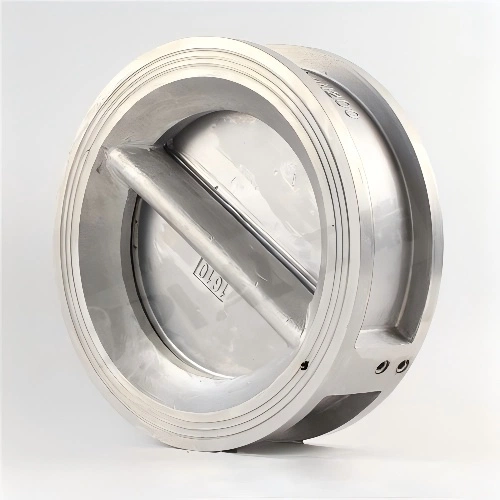
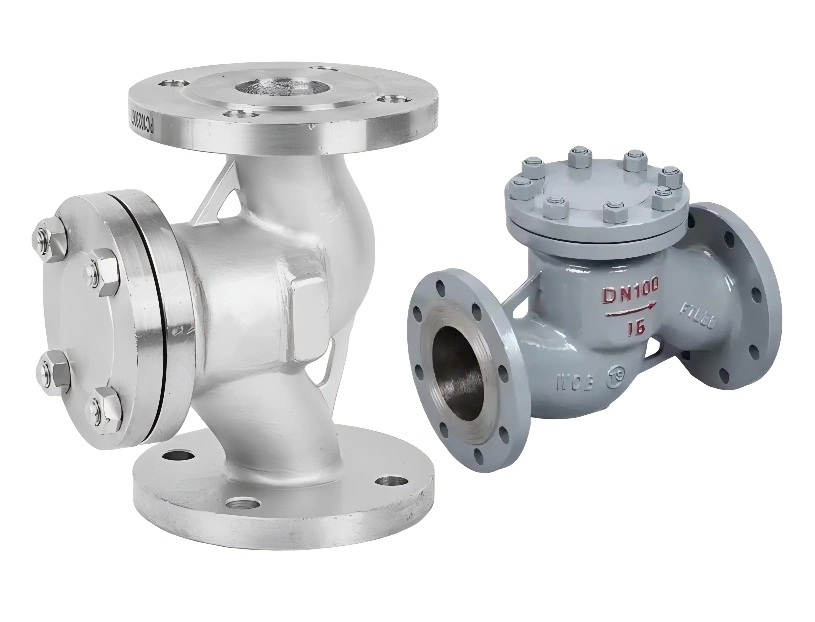
Related Products
Continue Reading
Request a Quotation — Reply Within 24 Hours
Send your line size, pressure rating, medium and quantity. Our engineers come back with price, drawing and lead time — no obligation.