
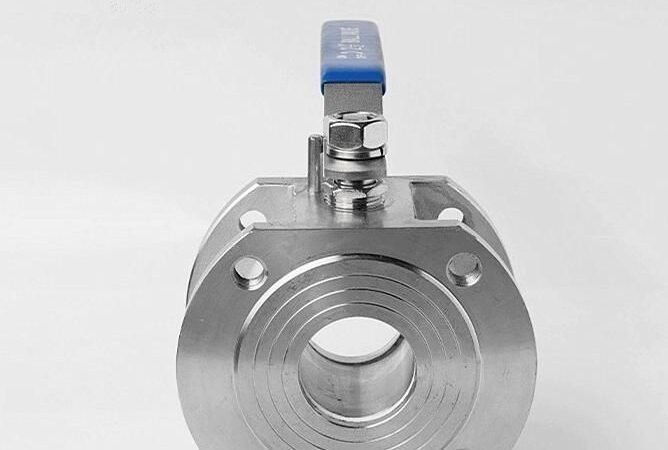
Pneumatic Valve Actuators: Intro for Industrial Buyers
The complete 2026 buyer’s guide to pneumatic valve actuators — double-acting vs spring-return (fail-open / fail-close / fail-last), air supply requirements (5–7 bar), NAMUR mounting, solenoid valves, limit switches, positioners, ATEX certification for hazardous areas, torque sizing, accessories, maintenance, and a worked example from a Jubail petrochemical flare gas ESD valve.
* Standard lead time depends on order size and destination. 5–10 days to Southeast Asia, 15–20 days to the Middle East.

Quick Answer
A pneumatic valve actuator uses 5–7 bar compressed air to automatically rotate a quarter-turn valve (ball / butterfly / plug / knife gate) 90° open or closed. Two configurations: double-acting (air moves it both ways — on air loss the valve holds its last position, “fail-last”) and spring-return (a compressed spring drives the valve to a safe position on air loss — “fail-close” or “fail-open”). The single most important rule: every ESD, flare gas, fuel gas, and safety instrumented valve must use spring-return fail-close — never double-acting. Double-acting actuators save upfront cost but leave the valve stuck mid-stroke on instrument air failure, exactly when you need it to shut.
Key Takeaways
- Air supply: 5–7 bar clean, dry, oil-free; FRL filter regulator on every actuator
- Fail position: ESD / flare / fuel gas = spring-return FC · cooling / fire water = FO · general process = double-acting (fail-last)
- Accessories: NAMUR solenoid + limit switch box standard; 4-20 mA positioner for throttling; ATEX / IECEx in Zone 1 / Zone 2
- Torque safety factor: 1.3× minimum; 1.5-2× for sticky / high-cycle / spring-return end-of-life
On This Page
Related reading: valve maintenance tips — inspection intervals, seat wear and the failures caused by installation.
What Is a Pneumatic Valve Actuator?
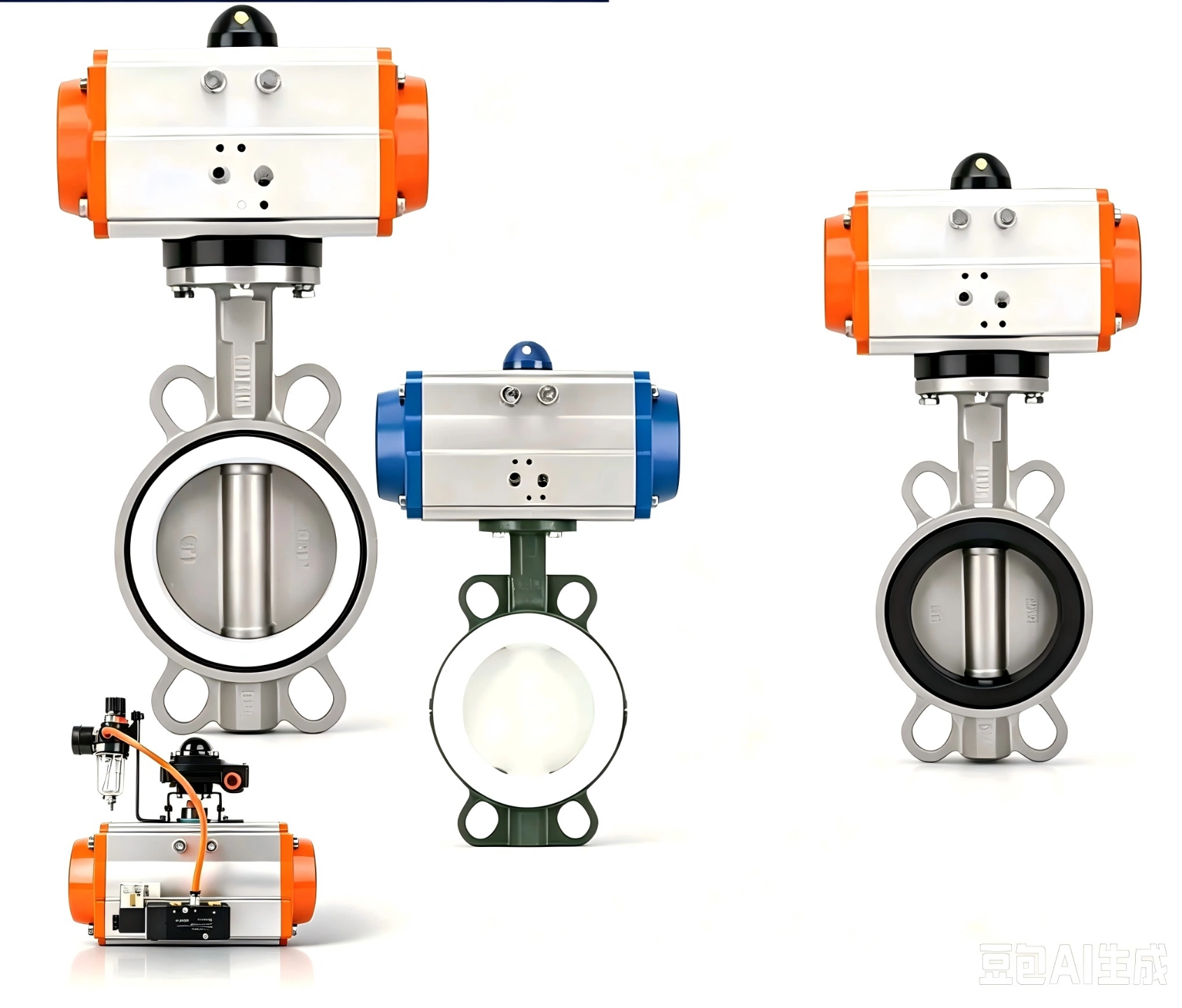
Pneumatic actuators convert compressed air energy into rotary or linear motion to automatically operate valves, making them ideal for remote control, process automation, and high-cycle applications where manual operation is impractical. A pneumatic actuator mounts on top of a valve (typically a ball valve, butterfly valve, or plug valve — quarter-turn valves) and uses compressed air (5–7 bar) to drive a rack-and-pinion or Scotch yoke mechanism that rotates the valve stem 90° open or closed.
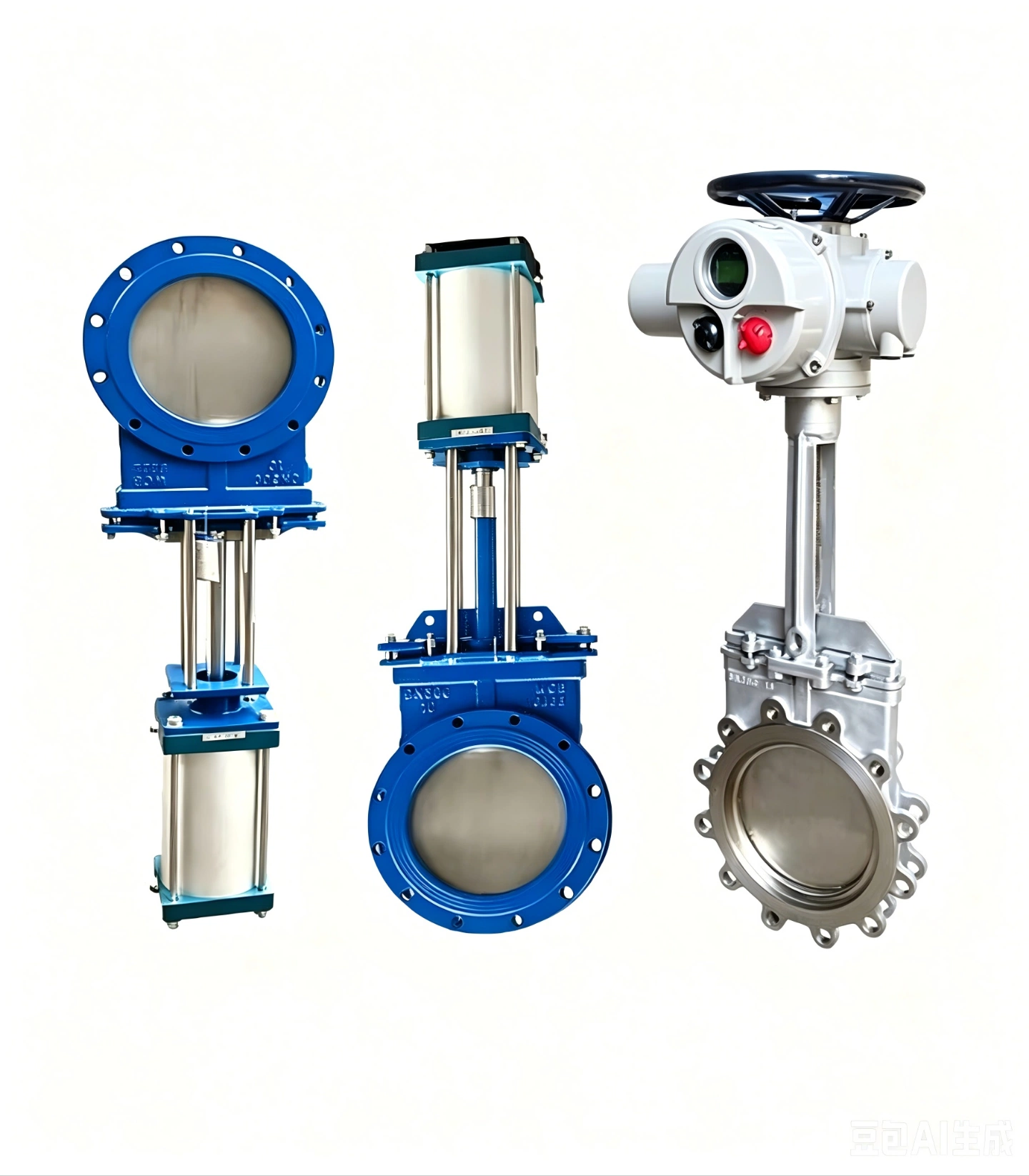
Pneumatic actuators are fast, dependable, and no electrical spark risk (no spark risk), making them the top choice for oil & gas, chemical, and hazardous area applications. They are available in double-acting (air to open and close) and single-acting (spring return, fail-safe) configurations. See our product lines: pneumatic wafer butterfly valves, pneumatic ball valves, pneumatic knife gate valves, and pneumatic sanitary ball valves.
Double-Acting vs Spring-Return
The most important decision when specifying a pneumatic actuator is whether it should be double-acting or spring-return (single-acting). This determines what happens when compressed air fails.
| Type | How It Works | On Air Failure | Typical Application |
|---|---|---|---|
| Double-acting | Air pressure pushes piston in both directions (open and close) | Valve stays in last position (fail-last) | General process control, HVAC, water treatment where air supply is dependable |
| Spring-return, fail-close (FC) | Air compresses spring to open; spring pushes closed on air loss | Valve closes automatically | ESD valves, fuel gas, hazardous fluids, boiler feedwater |
| Spring-return, fail-open (FO) | Air compresses spring to close; spring pushes open on air loss | Valve opens automatically | Cooling water, fire water, nitrogen purge (must stay open) |
| Double-acting + volume tank | Double-acting actuator + local air storage tank (5-10 L) to hold position for 30-60 s | Holds position briefly, then drifts | Large pipelines where slow fail action is preferred |
Critical rule: Always choose spring-return (fail-close) for safety instrumented systems (SIS / ESD / HIPPS) and fuel gas / hazardous fluid isolation valves. Double-acting actuators are acceptable only when the process can safely hold its position on air failure — never on flare gas, fuel gas, or ESD service.
Key Specifications
| Parameter | Specification |
|---|---|
| Air Supply | 5–7 bar (70–100 psi) clean, dry, oil-free compressed air |
| Action Type | Double Acting / Spring Return (Fail-Open or Fail-Close) |
| Torque Range | 5 Nm to 6,000 Nm (rack & pinion); Scotch yoke up to 40,000 Nm |
| Mounting Standard | NAMUR (VDI/VDE 3845) — universal mounting to ISO 5211 top flange |
| Actuator Body | Extruded aluminum anodized, or carbon steel epoxy-coated for offshore |
| Spring Configuration | External spring cartridge (replaceable without disassembling piston) |
| Accessories | Solenoid valve, limit switch box, positioner, air filter regulator, volume booster |
| ATEX Rating | ATEX II 2 G Ex d IIC T4 (Zone 1 oil & gas); or Ex ia intrinsic safety |
Accessories: Solenoid, Limit Switch, Positioner
| Accessory | Function | When Required |
|---|---|---|
| Solenoid valve (NAMUR) | Electrically controlled air valve that routes compressed air to open/close the actuator | Every automated valve (on/off control) |
| Limit switch box | Feedback signal to PLC showing valve is open or closed | Almost always required for safety and control |
| Positioner (4-20 mA) | Modulates the valve to any position 0–100% based on 4-20 mA control signal | Throttling / process control (temperature, pressure, flow) |
| Air filter regulator (FRL) | Filters moisture/oil from compressed air and sets pressure to 5–6 bar | Every pneumatic actuator installation |
| Volume booster | Increases air flow for fast valve stroke on large actuators | Valves > DN150 or fast ESD timing required |
| Quick exhaust valve | Speeds up spring-return closing by exhausting air directly | Fast safety shutdown (ESD < 5 seconds) |
| Manual override (handwheel) | Allows manual operation when air/electricity is lost | Critical safety valves, remote locations |
A bare pneumatic actuator is rarely used alone — it needs accessories to function in an automated control system:
Worked Example: Jubail Flare Gas ESD Failure
Step 1 — Problem
A petrochemical plant in Jubail Industrial City, Saudi Arabia (SABIC affiliate) operated a flare gas header that collected waste gas from 12 process units and routed it to a ground flare for safe combustion. The header had 8 × DN150 Class 300 flanged ball valves on each unit’s flare branch — these were Emergency Shutdown (ESD) valves that must close automatically on high-level alarm or process upset to prevent gas overpressure. During original engineering, the EPC contractor specified double-acting pneumatic actuators on all 8 valves instead of spring-return fail-close actuators, citing a 30% cost saving on the actuator package. The plant’s safety instrumented system (SIS) required each valve to close within 5 seconds of an ESD signal — the double-acting actuators could do this if compressed air was available.
Step 2 — What happened
After 3 years of operation, the plant’s main instrument air compressor tripped due to an electrical fault. Within 90 seconds, the instrument air pressure dropped from 6.5 bar to 0 bar across the entire plant. At the same moment, one of the 12 process units experienced a high-level alarm that triggered the ESD system — all 8 flare gas valves were commanded to close. The solenoid valves de-energized and attempted to exhaust air from the double-acting actuators, but with no supply pressure on the opposite side, the actuators could not push the valves closed. The 8 ball valves drifted to approximately 50% open and stuck there — neither fully open nor fully closed. Flare gas continued to flow to the flare at half-rate, but the process unit that needed isolation could not be isolated, and high-pressure gas vented through the 50%-open valves at high velocity, causing noise, vibration, and a visible gas release to atmosphere. Saudi ARAMCO’s environmental compliance team (the plant was under Aramco sponsorship) issued a notice of violation for unpermitted atmospheric gas release.
Step 3 — Root cause analysis
The fundamental error was specifying double-acting actuators on ESD / flare gas service. Double-acting actuators require air pressure on both sides of the piston to move — on air loss, they have no energy to move at all. Spring-return fail-close actuators store energy in a compressed spring; when air supply fails, the spring drives the valve closed mechanically, regardless of air pressure. The EPC “saved” the upfront actuator cost by using double-acting instead of spring-return, but the safety case was invalid because the valves could not fail safely on air loss.
Step 4 — Correct retrofit
All 8 × DN150 Class 300 ball valves were retrofitted with new spring-return fail-close pneumatic actuators (rack & pinion, aluminum body, ATEX Ex d IIC T4, NAMUR solenoid with manual override, limit switch box, positioner). The existing ball valves, flanges, and piping were reused — only the actuator and accessories were replaced. A local 10-liter air volume tank was added to each actuator to cushion the spring closure and prevent water hammer on the DN150 gas header.
Step 5 — Cost & outcome (relative index: 1.0× = one DN150 Class 300 spring-return actuator with ATEX accessories)
• 8 × spring-return fail-close actuators (1200 Nm): 8.0×
• 8 × ATEX solenoid + limit switch box + positioner: ~2.9×
• 8 × 10 L air volume tanks + tubing + fittings: ~1.2×
• Installation (2-day plant shutdown, 8 actuators swapped): ~10×
• Total retrofit cost: ~22× the price of one actuator package
• Aramco environmental violation fine (unpermitted gas release): ~140×+
• SIS re-validation and third-party safety audit: ~25×
• Process unit downtime during incident (12 hours): ~147×
• Reputation / future Aramco project bidding impact: not quantifiable
• Total incident cost: ~312×+ the actuator package the EPC “saved” on day one.
• Lesson: ESD / flare / fuel gas valves must use spring-return fail-close actuators — always. The upfront “cost saving” from double-acting actuators was trivial compared to the incident. In safety instrumented systems, the fail-safe position is non-negotiable: on air failure, the valve must move to the safe position mechanically, without any external energy.
How Chuanglan Specs Every Pneumatic Actuated Valve
Action type matched to safety case: double-acting for general process · spring-return FC for ESD / fuel gas · spring-return FO for cooling / fire water
Torque sized with 1.3× minimum safety factor (1.5-2× for sticky / high-cycle / end-of-spring-life)
NAMUR solenoid (24 VDC standard), IP67 / IP66 weatherproof, ATEX Ex d IIC T4 for Zone 1 / IECEx for Southeast Asia projects
Limit switch box (mechanical or proximity) + 4-20 mA HART positioner for throttling service
Manual override handwheel, FRL filter regulator, volume booster / quick exhaust for fast ESD
Full EN 10204 3.1 MTC, actuator torque curve test, FAT witness, SGS / BV / Intertek third-party inspection on request
Need Pneumatic Actuated Valves for Your Project?
Tell us your valve type (ball / butterfly / knife gate), size, pressure, media, and required fail position (fail-open / fail-close / fail-last). Our engineers will size the actuator torque, select the right accessories, and reply within 24 hours with ATEX-rated pricing.
Get Free Sizing Report → WhatsApp usTorque Sizing Basics
Sizing a pneumatic actuator is not just “pick the biggest one” — it must deliver enough torque to operate the valve across its full life, accounting for:
- Valve breakaway torque — the torque needed to start moving a stuck / unused valve (typically 1.5× running torque).
- Running / dynamic torque — torque required to keep the valve moving at design pressure.
- Seat torque — torque required to fully seal the valve in the closed position (ball valves with soft seats need extra closing torque).
- Safety factor — apply a minimum 30% safety factor (actuator rated torque ≥ 1.3× valve required torque). For sticky / dirty / high-cycle service, use 50–100% safety factor.
- Spring return derating — spring-return actuators deliver only ~60–70% of their rated torque at end-of-spring-life (springs weaken over years). Size for end-of-life torque, not new-spring torque.
Southeast Asia & Middle East Market Notes
For clients in Southeast Asia, pneumatic actuators are commonly specified for food & beverage (CIP systems on sanitary valves), pulp & paper, palm oil mills, and water treatment plants. Thai and Vietnamese food plants use pneumatic sanitary ball and butterfly valves with NAMUR solenoids and limit switches to automate CIP cleaning cycles. Indonesian chemical plants (Cikarang chemical park) use pneumatic actuators on acid and caustic dosing lines where electric actuators would be spark hazards. Southeast Asian EPCs typically specify double-acting actuators for general process (where air supply is dependable) and spring-return fail-close only on safety-critical valves — this is correct, unlike the Jubail case. For hazardous area (Zone 1) applications in Southeast Asia, ATEX-rated solenoids and limit switches are required; IECEx is increasingly accepted by Malaysian and Singaporean owners.
For clients in the Middle East, pneumatic actuators are the dominant automation choice in oil & gas, petrochemical, and power plants — Aramco, ADNOC, SABIC, KNPC, and QatarEnergy all require ATEX or IECEx certification for any actuator in a classified area. Middle East EPCs are extremely strict on fail-safe design: every ESD, HIPPS, flare gas, fuel gas, and boiler feedwater valve must use spring-return fail-close actuators with SIS documentation (IEC 61508 / SIL 2 or SIL 3). The Jubail case above is a cautionary tale — Aramco and ADNOC audits will catch double-acting actuators on ESD service and force replacement before plant startup. Middle East projects also require: (1) actuator body epoxy-coated for desert environment (UV, 50°C ambient), (2) NAMUR solenoids with IP67 / IP66 weatherproof rating, (3) positioners with HART communication for diagnostics, (4) full FAT documentation witnessed by third-party inspectors (SGS, BV, Intertek). Serving EPC Contractors Across Southeast Asia & Middle East · ISO 9001:2015 · Established in 2009. Chuanglan supplies pneumatic actuated ball valves, butterfly valves, knife gate valves, and sanitary valves with ATEX / IECEx accessories to EPC contractors across Saudi Arabia, UAE, Qatar, Kuwait, Oman, and Bahrain.
Common Mistakes to Avoid
- Specifying 304 stainless for coastal or chloride service. If your project is in Southeast Asia (coastal, cooling tower, deicing salts) or the Middle East (desalination, SWRO, humid Gulf climate), 304 will pit within 1–3 years. Specify CF8M (316) or duplex 2205.
- Ignoring pressure-temperature derating. PN16 / Class 150 ratings apply at room temperature only. At 200°C the allowable pressure drops by roughly 40–50%. Always check the manufacturer’s P-T chart before specifying for steam, hot oil, or thermal fluid.
- Buying on price without MTC verification. “Stainless steel” is not enough — ask for EN 10204 3.1 MTC tied to the heat number, and arrange PMI (XRF) witness at the factory if the price is 20% below market. 304 passed off as 316L is the single most common failure in this industry.
- Forgetting face-to-face and flange drilling. A “PN16” wafer valve from one manufacturer may not match the existing flange drilling or face-to-face of another. Always confirm dimensions against EN 558 / API 609 / ASME B16.10 before replacing an installed valve.
FAQ
What air pressure do pneumatic actuators need?
Standard pneumatic actuators operate on 5–7 bar (70–100 psi) clean, dry, oil-free compressed air. Most actuators are rated for 8 bar maximum supply pressure. If your plant air is only 4 bar, you must either oversize the actuator (larger piston for more torque) or install an air compressor booster — never run an undersized actuator on low pressure, as it will stall mid-stroke.
What is the difference between double-acting and spring-return?
Double-acting uses air pressure on both sides of the piston to open and close the valve — on air failure, the valve stays in its last position (fail-last). Spring-return uses air pressure to compress a spring in one direction; the spring pushes the valve back to the safe position on air failure (fail-open or fail-close). Choose spring-return for safety-critical valves; double-acting is acceptable for general process where air supply is dependable.
How fast does a pneumatic actuator open or close?
Typical rack-and-pinion pneumatic actuators stroke a DN100 ball valve in 1-5 seconds depending on size and air supply volume. Large actuators (DN300+) may take 10-30 seconds. For fast ESD shutdown (< 5 seconds), install a quick exhaust valve and volume booster on the spring-return side. For slow, controlled movement (to avoid water hammer on large water pipelines), install an air flow restrictor (speed control valve) on the exhaust port.
What is NAMUR mounting?
NAMUR (NE 024 / VDI/VDE 3845) is a universal mounting standard for pneumatic actuator accessories — solenoid valves, limit switch boxes, and positioners mount directly on the actuator’s NAMUR pad using standard ISO 5211 bolt holes. NAMUR mounting means any brand of NAMUR accessory fits any NAMUR actuator — you are not locked into one manufacturer’s proprietary accessories.
Do I need ATEX certification for my pneumatic actuator?
If the valve is installed in a hazardous area (Zone 1 or Zone 2 with flammable gas or dust), yes — the solenoid valve, limit switch box, and positioner must be ATEX / IECEx / UL listed for the gas group (typically IIC for hydrogen/acetone, IIB for propane/ethylene). If the valve is in a non-hazardous area (food plant, water treatment, HVAC), standard IP65 accessories are fine.
Can a pneumatic actuator modulate (throttle) flow?
Yes, if fitted with a 4-20 mA positioner. The positioner receives a control signal from the PLC (e.g., 4 mA = 0% open, 20 mA = 100% open) and adjusts air pressure to the actuator to hold any position. Without a positioner, pneumatic actuators are on/off only. Positioners are commonly used on steam temperature control, pressure reducing, and flow control applications.
What is the lead time for Chuanglan pneumatic actuated valves?
Standard pneumatic ball / butterfly valves (DN15–DN100, double-acting, standard solenoid + limit switch) ship in 7–15 days to Southeast Asia. Spring-return fail-close with ATEX accessories and positioners: 15–30 days. Large sizes (DN150–DN300) with Scotch yoke actuators: 25–35 days. Full EN 10204 3.1 MTC, ATEX certificate copies, FAT report, and third-party inspection (SGS / BV / Intertek) available. MOQ 1 piece.
References & Standards
- NAMUR NE 024 / VDI/VDE 3845 — Mounting interface for pneumatic actuators
- ISO 5211 — Mounting dimensions for part-turn valve actuators
- IEC 61508 / IEC 61511 — Functional safety of safety instrumented systems (SIS / SIL)
- ATEX 2014/34/EU — Equipment for explosive atmospheres (Zone 1 / Zone 2)
- VDI/VDE 3847 — Pneumatic actuator accessories (solenoid, positioner, limit switch)
Related Products
Continue Reading
Request a Quotation — Reply Within 24 Hours
Send your line size, pressure rating, medium and quantity. Our engineers come back with price, drawing and lead time — no obligation.
Request a Pneumatic Valves Quote
MOQ: 1 piece · ISO 9001:2015 · EN 10204 3.1 MTC included · shell and seat pressure tested
Southeast Asia: Indonesia, Malaysia, Thailand, Vietnam, Myanmar, Singapore, Philippines
Middle East: Saudi Arabia, UAE, Qatar, Kuwait, Oman, Bahrain
Other Regions: Europe, North America, South America, Africa, Australia
Delivery: 5–10 days to Southeast Asia · 15–20 days to the Middle East · 25–35 days to Europe / the Americas
Payment: T/T 30% deposit + 70% before shipment · L/C at sight · Warranty: 12 months after shipment for material and manufacturing defects · Packing: export plywood case / fumigation-free pallet · Shipping: FOB Ningbo/Shanghai · Documents: EN 10204 3.1 MTC + packing list + commercial invoice · Third-party inspection welcome: SGS / Bureau Veritas / Intertek
Get Free Quote »