
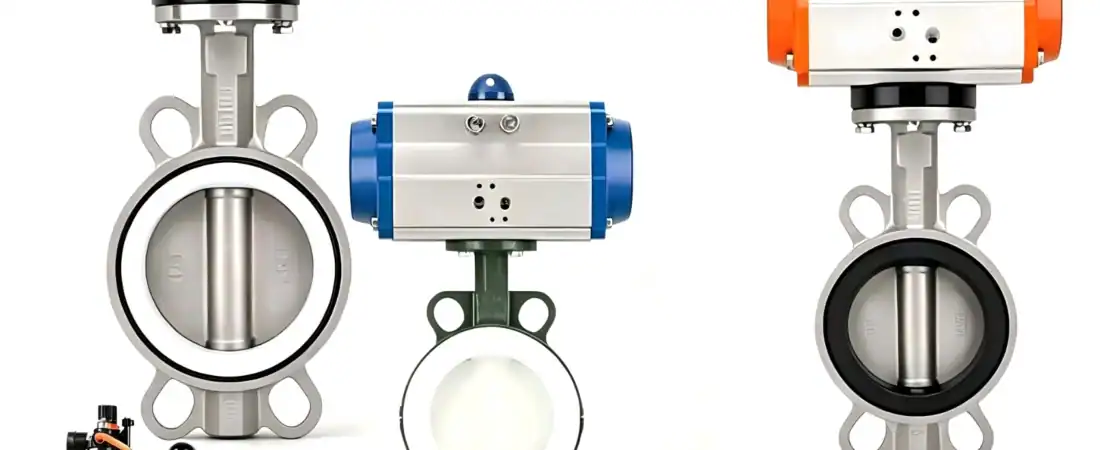
Pneumatic Actuator: How to Select for Your Valve
The complete 2026 guide to sizing and selecting pneumatic actuators — double acting vs spring return, rack & pinion vs scotch yoke, torque calculation, safety factors, solenoid / limit switch / positioner / FRL accessories, and a buying checklist for Southeast Asia and the Middle East EPC projects.
* Standard lead time depends on order quantity and destination country. 5–10 days to Southeast Asia, 15–20 days to the Middle East.

Quick Answer
For 80% of ball and butterfly valve automation jobs, a rack & pinion double-acting (DA) actuator sized at the minimum available plant air pressure (typically 5 bar, not the 7 bar nameplate) with a 50% safety factor is the correct default. Choose spring-return (SR) only when the valve must fail closed (FC) or fail open (FO) on air loss. Move to a scotch yoke only for DN200+ valves or when high breakout torque is needed. Always specify ISO 5211 mounting, Namur solenoid, limit switch box, and an FRL (filter-regulator-lubricator) — without these, the actuator will be undersized, dirty, or impossible to integrate with your PLC.
Key Takeaways
- DA vs SR: DA = no fail-safe (cheaper) · SR = spring-return fail-close / fail-open (safety-critical).
- Rack & pinion vs scotch yoke: Rack & pinion = 80% of jobs · Scotch yoke = large valves / high end torque.
- Size at MINIMUM air pressure (often 5 bar, not 7 bar nominal) with a 50% safety factor.
- Accessories (solenoid + limit switch box + FRL + positioner if modulating) are not optional.
On This Page
1. What Is a Pneumatic Actuator?
A pneumatic actuator turns a manual valve (ball valve, butterfly valve, plug valve) into an automated valve — it opens and closes the valve with compressed air, so you can control it remotely from a control room or PLC. Selecting the wrong actuator size or type leads to slow operation, valve failure, or even actuator damage. As a valve and actuator manufacturer with export experience since 2009, we’ll walk you through how to size and select the right one.
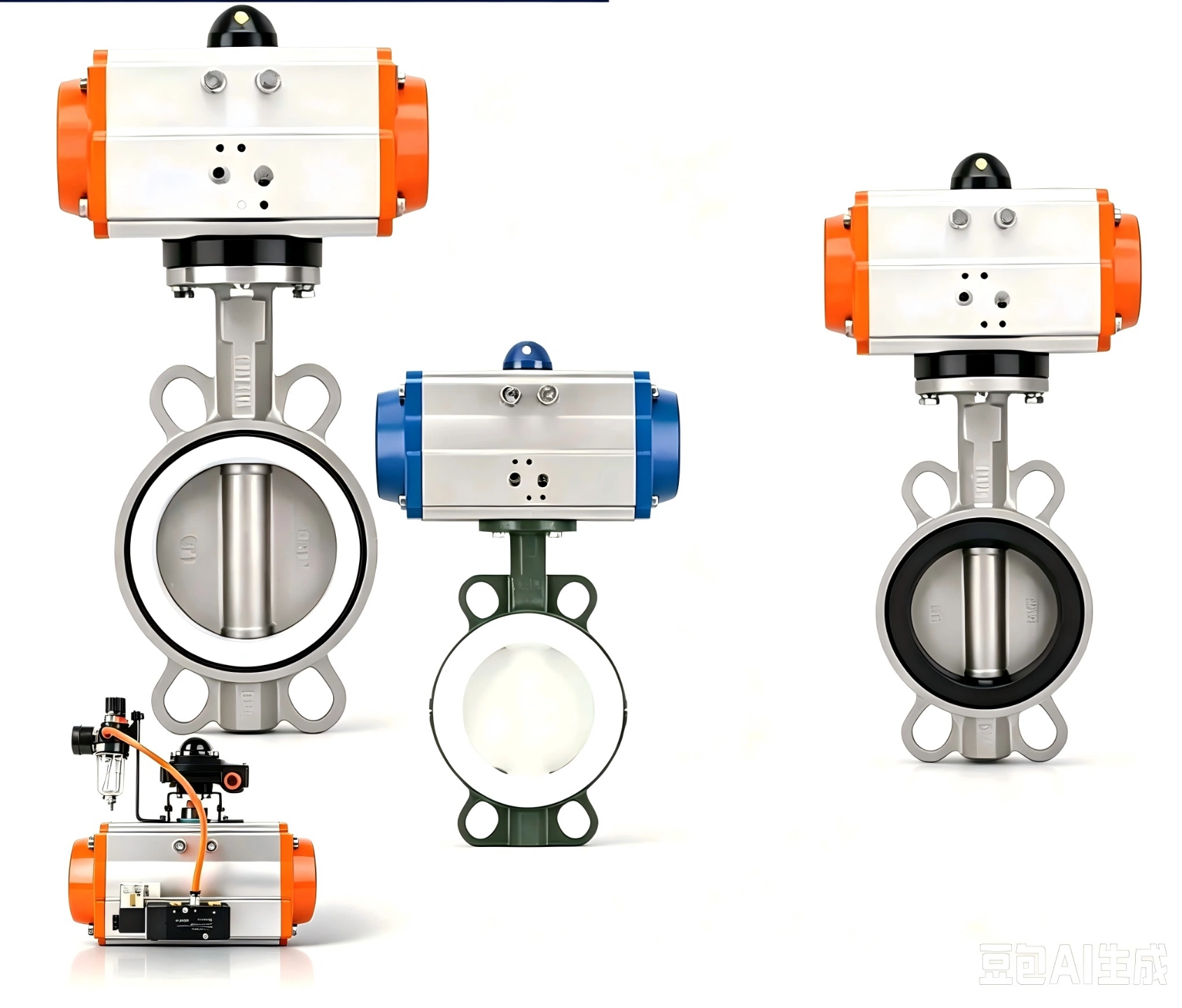
A pneumatic actuator converts compressed-air energy into 90° rotary motion to open or close a quarter-turn valve (ball, butterfly, plug). It replaces the manual handle or gear operator, so the valve can be automated.
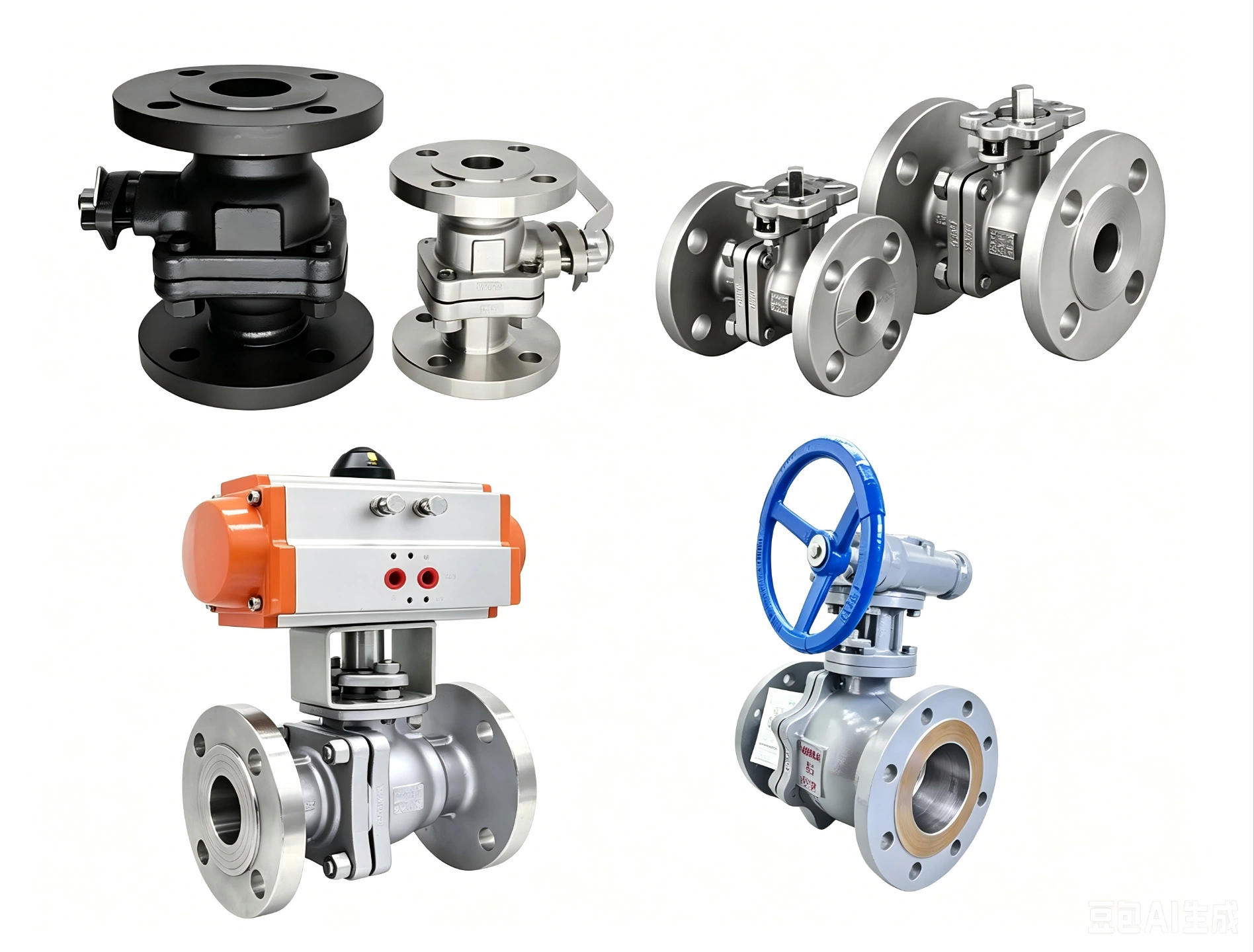
Pneumatic actuators are the most popular valve-automation choice because they’re dependable, fast, and no electrical spark risk (no electrical sparks — critical for oil & gas and chemical plants). See our full range of pneumatic actuated ball valves.
2. Double Acting vs Spring Return
| Type | How It Works | Fail Position | Best For |
|---|---|---|---|
| Double Acting (DA) | Air opens, air closes (both directions use air) | Stays where it is if air fails (no fail-safe) | General automation, no fail-safe needed, lower cost |
| Spring Return (SR) | Air opens, spring closes when air fails | Fails closed (FC) or fails open (FO) | Safety, ESD, oil & gas |
Which one do you need?
- If the valve can stay put when air fails: use double acting (cheaper)
- If the valve must close automatically on air loss (fuel, gas, dangerous chemicals): use spring-return fail-close
- If the valve must open automatically on air loss (cooling water, fire water, vent): use spring-return fail-open
3. Rack & Pinion vs Scotch Yoke
| Type | Design | Torque Output | Best For |
|---|---|---|---|
| Rack & Pinion | Two pistons with racks meshing with a central pinion | Constant torque through stroke | Small–medium valves, ball / butterfly, most common |
| Scotch Yoke | Piston pushes a yoke that rotates the shaft | High torque at ends, less in middle | Large valves, high torque, multi-turn |
Most common choice: Rack & pinion actuators (about 80% of all pneumatic actuators used). Compact, constant-torque — perfect for ball and butterfly valves. Use scotch yoke only for large valves or when you need high torque at the end of stroke.
4. Worked Example: Jakarta Chemical Plant Undersized Actuator
Step 1 — Problem
A specialty chemical plant in Cikarang, Jakarta had 15 × DN100 (4″) pneumatic ball valves on their sulfuric acid dosing line. After 6 months of operation, 3 actuators started failing to close fully — the disc stopped at about 80% and the acid line kept leaking. Maintenance had to manually override them every shift. Root cause investigation found the plant air supply had degraded from 7 bar to 4.5 bar due to a faulty compressor.
Step 2 — Root cause analysis
Original sizing: the DN100 ball valve with reinforced PTFE seat at 10 bar line pressure required 45 Nm breakout torque. The engineer selected a DA52 rack & pinion rated at 55 Nm at 7 bar air — only a 22% safety factor (should have been at least 50%). At 7 bar air, the actuator delivered 55 Nm (barely enough). At 4.5 bar air (degraded), it delivered only ~35 Nm — below the 45 Nm needed. The valve couldn’t close.
Step 3 — Correct retrofit
• Upsized all 15 actuators from DA52 to DA85 rack & pinion (delivers 95 Nm at 4.5 bar, ~150 Nm at 7 bar)
• Applied proper 50% safety factor: 45 Nm × 1.5 = 67.5 Nm minimum → DA85 (95 Nm at 4.5 bar)
• Installed new FRL (filter-regulator-lubricator) on each valve to maintain consistent minimum 5.5 bar air pressure
• Replaced 3 failed solenoid valves (burnt coil from low voltage)
• Added manual-override handwheels for emergency operation
• Paired with pneumatic wafer butterfly valves on the cooling-water line, fitted with spring-return fail-open
Step 4 — Result after 6 months
• Zero actuator failures to close — even at 4 bar air, DA85 delivers ~75 Nm (well above the 45 Nm required)
• Acid line stopped leaking — no more manual override needed
• Maintenance labor cut by roughly 20 hours per week
• The retrofit cost (15 new actuators + FRLs + solenoids) was a small fraction of the avoided acid-line product loss and equipment damage
• Lesson: always size the actuator at the MINIMUM available air pressure (not 7 bar nominal), with a 50% safety factor
Why EPC Contractors Specify Pneumatic Actuators with Chuanglan
Rack & pinion DA / SR from DN15 to DN300 · scotch yoke for DN200+ · ISO 5211 mounting standard
Namur solenoid (AVD / Norgren / Emerson), limit switch box, 4–20 mA positioner, FRL, manual override — full accessory package
ATEX / IECEx rated solenoids for Zone 1 / Zone 2 · ISO 9001:2015 · shell and seat pressure tested · EN 10204 3.1 MTC · MOQ 1 piece
Need Help Sizing Your Pneumatic Actuator?
Send us your valve type, size, required torque, and actual minimum plant air pressure — our engineers will size the right rack & pinion or scotch yoke actuator with the proper safety factor within 24 hours.
Get Free Sizing Report → WhatsApp us5. How to Size a Pneumatic Actuator
Sizing an actuator is about matching its torque output to the valve’s required torque. Here’s the process:
Step 1: Find the valve’s required torque. This is the torque needed to open / close the valve, given by the valve manufacturer. It depends on valve type, size, pressure, and seat material. For example: a DN50 stainless ball valve with PTFE seat needs about 10 Nm at 10 bar pressure.
Step 2: Apply a safety factor. Always size the actuator with at least a 30–50% safety factor. This accounts for friction as the seat wears, higher torque at high pressure, and sticky media. If your valve needs 10 Nm, choose an actuator that provides at least 15 Nm.
Step 3: Size at the MINIMUM available air pressure. Actuator torque depends on air pressure. Most actuators are rated at 7 bar (100 psi) supply. If your plant only delivers 5 bar (or even 4.5 bar after compressor wear), the output torque drops roughly linearly — you must upsample the actuator size so that at your WORST-CASE air pressure it still clears the safety factor.
Step 4: Check spring torque (for spring return). For SR actuators, the spring must close the valve by itself against line pressure. Spring torque is typically higher than air torque at the end of stroke — confirm the spring is strong enough.
| Ball Valve Size (PTFE Seat) | Required Torque (Nm) | Typical Rack & Pinion |
|---|---|---|
| DN15 – DN25 (1/2″ – 1″) | 2 – 5 Nm | Small (DA / SR 32) |
| DN40 – DN50 (1.5″ – 2″) | 8 – 15 Nm | Medium (DA / SR 52) |
| DN80 – DN100 (3″ – 4″) | 25 – 50 Nm | Large (DA / SR 85) |
| DN125 – DN150 (5″ – 6″) | 60 – 120 Nm | X-Large (DA / SR 125) |
| DN200+ (8″+) | 200 Nm+ | Scotch Yoke |
Note: These are rough reference ranges. Always use the exact torque value from your valve manufacturer for proper sizing.
6. Accessory Options
Pneumatic actuators rarely work alone — you usually need accessories to integrate them with your control system:
| Accessory | What It Does | When You Need It |
|---|---|---|
| Solenoid Valve | Electrical signal switches air to open / close the actuator | Always needed for automated control (PLC / DCS) |
| Limit Switch Box | Sends signal back showing valve open / closed position | Always needed (control room needs position feedback) |
| Positioner | Modulates valve position (0–100%) based on control signal | When you need to throttle flow, not just open / close |
| FRL (Filter-Regulator-Lubricator) | Filters dirt / water from air, sets stable pressure | Always needed (protects actuator from dirty air) |
| Manual Override | Handwheel to operate manually if air fails | When manual operation is needed in an emergency |
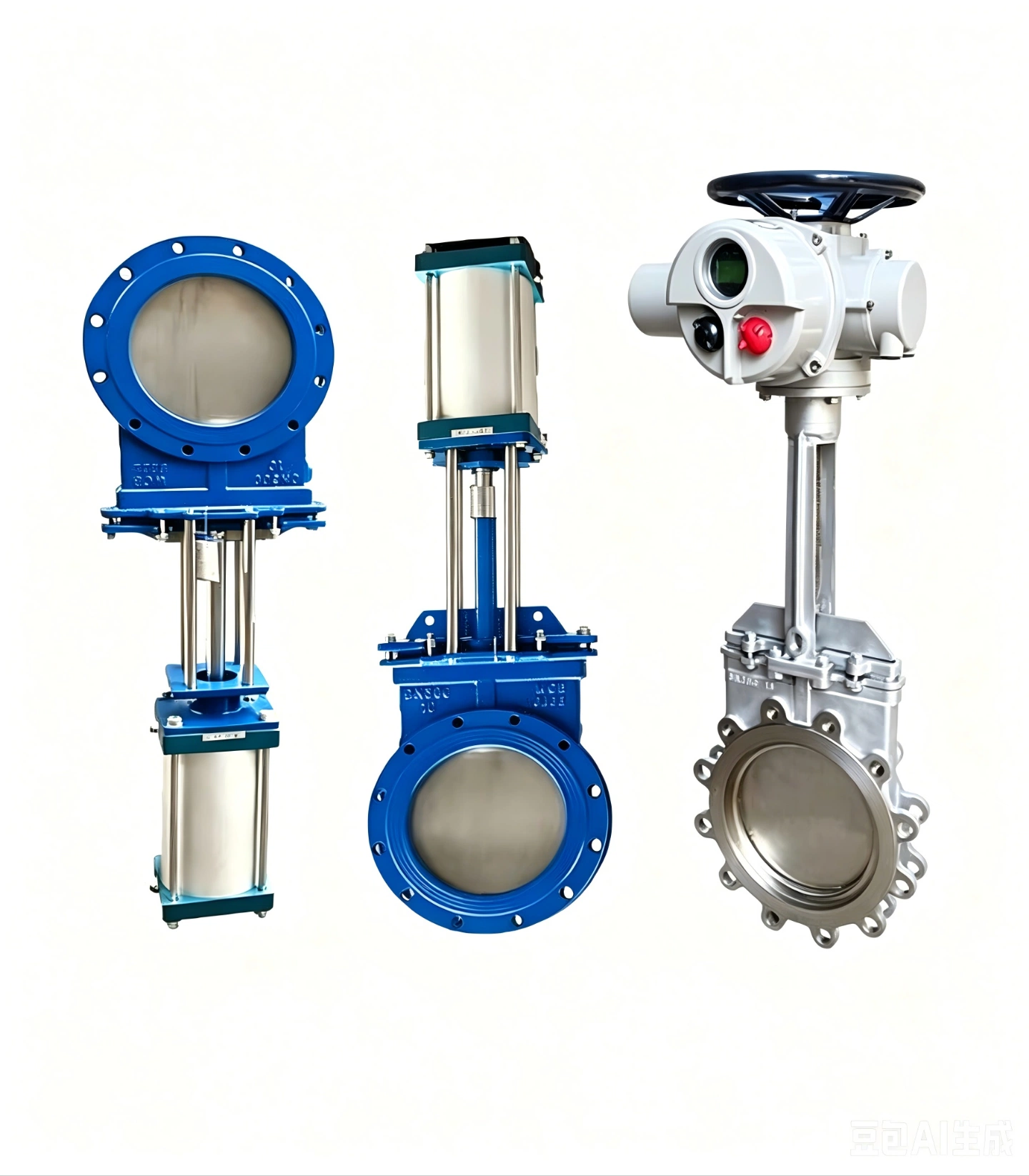
For hygienic applications, see our pneumatic sanitary ball valves and pneumatic sanitary butterfly valves. For slurry and abrasive media, see our pneumatic knife gate valves.
7. Common Applications
- Oil & gas — pipeline shutoff, emergency shutdown (ESD) valves
- Chemical processing — automated batch control, corrosive media
- Water & wastewater — treatment plants, automated valve stations
- Food & beverage — hygienic automated valves, CIP / SIP systems
- Power generation — cooling water, steam, condensate systems
- HVAC & building automation — large building heating / cooling systems
- Pharmaceutical & biotech — sterile process valves
8. Southeast Asia & Middle East Market Notes
For clients in Southeast Asia (Thailand, Vietnam, Indonesia, Malaysia, Philippines), rack & pinion pneumatic actuators dominate food & beverage, brewery, chemical, and water treatment plants. Most EPC contractors (Thai breweries, Vietnamese chemical plants, Indonesian pharma) specify ISO 5211 mounting with double-acting actuators for general automation and spring return for safety-critical ESD. Jakarta and Bangkok chemical plants frequently encounter the undersized-actuator problem — always ask for the MINIMUM plant air pressure (often 5 bar, not 7 bar nominal) when sizing.
For clients in the Middle East (Saudi Arabia, UAE, Qatar, Kuwait, Oman, Bahrain), oil & gas, petrochemical, and SWRO desalination projects (Saudi Aramco, ADNOC, SABIC, SEC) universally specify spring-return pneumatic actuators for ESD and emergency shutdown valves — fail-safe is mandatory in hazardous areas. Scotch yoke actuators are preferred for large valve sizes (DN200+) in seawater brine service. ATEX / IECEx rated solenoid valves and limit switch boxes are required for Zone 1 / Zone 2 hazardous areas.
Chuanglan Valve supplies pneumatic actuated ball valves, pneumatic wafer butterfly valves, pneumatic knife gate valves, pneumatic sanitary ball valves, and pneumatic sanitary butterfly valves — all with ISO 5211 mounting, DA / SR options, and full accessory packages. Serving EPC Contractors Across Southeast Asia & Middle East · ISO 9001:2015 · Established in 2009 · MOQ 1 piece.
Common Mistakes to Avoid
- Specifying 304 stainless for coastal or chloride service. If your project is in Southeast Asia (coastal, cooling tower, deicing salts) or the Middle East (desalination, SWRO, humid Gulf climate), 304 will pit within 1–3 years. Specify CF8M (316) or duplex 2205.
- Ignoring pressure-temperature derating. PN16 / Class 150 ratings apply at room temperature only. At 200°C the allowable pressure drops by roughly 40–50%. Always check the manufacturer’s P-T chart before specifying for steam, hot oil, or thermal fluid.
- Buying on price without MTC verification. “Stainless steel” is not enough — ask for EN 10204 3.1 MTC tied to the heat number, and arrange PMI (XRF) witness at the factory if the price is 20% below market. 304 passed off as 316L is the single most common failure in this industry.
- Forgetting face-to-face and flange drilling. A “PN16” wafer valve from one manufacturer may not match the existing flange drilling or face-to-face of another. Always confirm dimensions against EN 558 / API 609 / ASME B16.10 before replacing an installed valve.
FAQ
What size air compressor do I need for pneumatic actuators?
A typical rack & pinion actuator consumes 5–20 liters of air per cycle (depending on size). If you have 10 actuators cycling once per minute, you need roughly 1–3 m³/min of compressed air at 7 bar. Size your compressor for peak demand (all valves cycling simultaneously) plus 30% margin.
What is the difference between fail-close (FC) and fail-open (FO)?
Fail-close means the spring closes the valve when air pressure is lost — used for fuel, gas, and dangerous chemicals (you want the supply shut off). Fail-open means the spring opens the valve when air fails — used for cooling water, fire water, and vent lines (you want flow restored). Most ESD valves are fail-close; cooling water valves are fail-open.
Can I use a pneumatic actuator for throttling (modulating)?
Yes, with a pneumatic positioner (4–20 mA input). The positioner adjusts air pressure to the actuator based on the control signal, holding the valve at any position between 0–100%. Accuracy is typically ±2–5%. For higher accuracy (±0.5%), use an electric actuator instead.
How fast does a pneumatic actuator operate?
Rack & pinion actuators cycle in 0.5–3 seconds (90° rotation), depending on size and air pressure. Larger actuators (DA125+) take 3–8 seconds. Adding a volume booster speeds up slow actuators. For fast ESD valves (under 0.5 seconds), use a scotch yoke with a large air supply.
What is ISO 5211 mounting and why does it matter?
ISO 5211 is the international standard for the mounting flange and shaft interface between actuators and valves. It ensures interchangeability — any ISO 5211 actuator fits any ISO 5211 valve. Always specify ISO 5211 mounting when ordering; non-standard mounting means you’re locked into one manufacturer.
What is the temperature range for pneumatic actuators?
Standard aluminum rack & pinion actuators operate from −20 °C to +80 °C. For extreme cold (−40 °C) or high temperature (+150 °C), specify low-temperature or high-temperature seals and O-rings. The actuator body is aluminum; only the seals need to change for extreme temperatures.
What is the lead time from Chuanglan?
Standard DA / SR rack & pinion actuators (DA32 to DA125) are in stock and ship in 7–15 days. Scotch yoke, ATEX rated, high-temp / low-temp seals, and custom accessories take 15–30 days. Full EN 10204 3.1 MTC, Namur solenoid, limit switch box, positioner, and FRL are included in package pricing.
References & Standards
- ISO 5211: Industrial valves — part-turn valve actuator attachments
- VDI / VDE 3845: Namur standard for solenoid valve mounting on pneumatic actuators
- IECEx / ATEX 2014/34/EU: Equipment for explosive atmospheres
- ANSI / ISA-51.1: Process instrumentation terminology (4–20 mA signal)
- MSS SP-110: Ball Valves for general industrial service
Related Products
Continue Reading
Request a Quotation — Reply Within 24 Hours
Send your line size, pressure rating, medium and quantity. Our engineers come back with price, drawing and lead time — no obligation.
Get a Quote for Your Pneumatic Actuator Project
MOQ: 1 piece · ISO 9001:2015 · 3.1 MTC included · shell and seat pressure tested
Southeast Asia: Indonesia, Malaysia, Thailand, Vietnam, Singapore, Philippines
Middle East: Saudi Arabia, UAE, Qatar, Kuwait, Oman, Bahrain
Other Regions: Europe, North America, South America, Africa, Australia
Delivery: 5–10 days to Southeast Asia · 15–20 days to the Middle East · 25–35 days to Europe / the Americas
Payment: T/T 30% deposit + 70% before shipment · L/C at sight · Warranty: 12 months after shipment for material and manufacturing defects · Packing: export plywood case / fumigation-free pallet · Shipping: FOB Ningbo/Shanghai · Documents: EN 10204 3.1 MTC + packing list + commercial invoice · Third-party inspection welcome: SGS / Bureau Veritas / Intertek
Get Free Quote »