
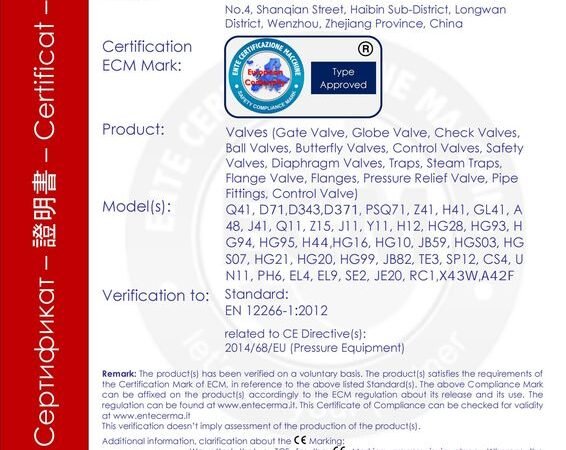
Y-Strainers: Essential Protection for Pumps and Control Valves
The complete 2026 guide to Y-strainers — what they are, how they work, when you need one before a pump, meter, or control valve; how to choose size, mesh (10-50 mesh), and body material (cast iron / carbon steel / CF8M stainless); installation orientation (horizontal vs vertical flow); cleaning & maintenance schedule; differential pressure monitoring; and a worked example from a Yangon water treatment plant.
* Standard lead time depends on order size and destination. 5–10 days to Southeast Asia, 15–20 days to the Middle East.
Quick Answer
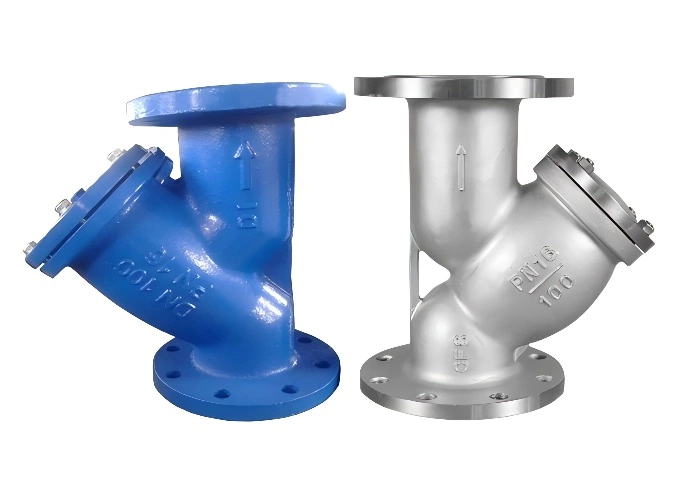
A Y-strainer is a compact, low-cost pipe fitting that captures solids (sand, pipe scale, welding spatter, rust, fiber) before they reach expensive downstream equipment — pumps, control valves, flow meters, heat exchangers, steam traps. It gets its Y-shape name from the angled branch that holds a cylindrical wire-mesh screen (typically 10-50 mesh, 304 or 316 stainless). Install a Y-strainer BEFORE every pump suction, control valve, and flow meter. The single most common spec error is skipping Y-strainers on the pump suction line to save upfront cost — a single cheap strainer prevents impeller erosion, seal failure, and system-wide downtime costing 50-100× the strainer price.
Key Takeaways
- Install before: pump suction · control valves · flow meters · heat exchangers · steam traps · PRVs
- Mesh rule of thumb: 20 mesh (840 μm) for water · 30 mesh for steam/oil · 40-50 mesh for precision meters
- Body material: cast iron for water · WCB for steam/oil · CF8M (316) for corrosive / seawater / food
- Orientation: liquid = branch down · steam = branch horizontal · vertical up-flow = branch sideways
On This Page
What Is a Y-Strainer and How Does It Work?
Y-strainers are simple but critical components installed in piping systems to remove unwanted solids from fluid flow, protecting expensive pumps, meters, and control valves from damage. They are easy to install and maintain, making them a standard in almost every industrial piping system.
A Y-strainer gets its name from its shape — it looks like the letter “Y” when installed in a horizontal pipeline. Flow enters through the straight run, passes through a cylindrical wire-mesh screen (which sits inside the angled branch), and exits clean. Solids larger than the mesh openings are captured in the screen and fall into the bottom of the angled branch (the “dirt pocket”), where they can be removed either by cleaning the screen or via a blow-down/drain valve at the bottom. See our Y-strainer product line for the actual catalog.
When Do You Need a Y-Strainer?
Install a Y-strainer BEFORE any equipment that can be damaged by solids in the flow. The most common protected equipment:
| Protected Equipment | Why It Needs a Strainer | Typical Mesh |
|---|---|---|
| Centrifugal pumps (suction side) | Sand, pipe scale, welding spatter erodes impeller and wears mechanical seal | 20-30 mesh |
| Control valves / regulating valves | Particles wedge between plug and seat, causing permanent leakage | 20-40 mesh |
| Flow meters (turbine, vortex, magnetic) | Debris damages turbine blades or coats the liner, causing inaccurate measurement | 20-50 mesh |
| Heat exchangers / boiler tubes | Particles foul tube sheets and reduce heat transfer efficiency | 20-30 mesh |
| Steam traps | Pipe scale and weld slag prevent the trap from closing — steam loss | 30-50 mesh |
| Pressure regulators / PRVs | Debris prevents the regulator from seating, causing downstream overpressure | 20-40 mesh |
See also our detailed guides: Y-strainer sizing & mesh size guide, steam strainer orientation, general Y-strainer orientation, and how to clean a Y-strainer.
Key Specifications
| Parameter | Specification |
|---|---|
| Size Range | 1″–12″ (DN25–DN300); larger sizes on request |
| Pressure Rating | PN16–PN40 / Class150–Class300 |
| End Connections | Flanged (EN 1092 / ANSI B16.5), threaded NPT/BSPP, socket weld |
| Mesh Options | 10–50 mesh stainless steel screen (304 or 316) |
| Body Material | Cast iron (water), WCB (oil/gas), CF8 / CF8M stainless (corrosive / food) |
| Screen Material | 304 stainless standard; 316 stainless for corrosive service |
| Blow-down | 1/2″ NPT drain plug at bottom of branch (optional ball valve) |
How to Choose a Y-Strainer
| Media / Service | Body Material | Mesh | Notes |
|---|---|---|---|
| Cold / hot water (HVAC, water treatment) | Cast iron or CF8M | 20 mesh | Cast iron cheapest; CF8M for potable water |
| Steam | WCB | 30-50 mesh | See steam strainer orientation — branch horizontal |
| Oil / diesel / crude | WCB | 20 mesh | Use magnetic trap for ferrous particles |
| Corrosive chemicals (acid, bleach) | CF8M (316) | 30 mesh 316 screen | Never cast iron or WCB for acidic service |
| Food / beverage (milk, beer, juice) | CF8M with FDA gasket | 40-50 mesh | Polished interior; tri-clamp variant for sanitary |
| Seawater / SWRO | CF8M or 2205 duplex | 20 mesh 316 screen | Never cast iron — corrodes in seawater within months |
Select the strainer size to match your piping, choose the screen mesh based on the size of particles you need to catch (10-50 mesh for most industrial use), and confirm the body material matches your media:
Worked Example: Yangon Water Plant Pump Failure
Step 1 — Problem
The Yangon City Development Committee (YCDC) operates a 300,000 m³/day water treatment plant on the outskirts of Yangon, Myanmar, treating raw water from the Innyar River and pumping clearwater into the municipal distribution network. The plant has 6 × DN200 PN16 vertical turbine clearwater pumps, each delivering 2,500 m³/h at 6 bar discharge pressure. During original construction (completed 2019), the EPC contractor decided to skip Y-strainers on the pump suction line to save cost — the raw water passed through clarification, filtration, and chlorination before pumping, so the EPC assumed it was “clean enough.” After 12 months of operation, the first pump began showing reduced flow and noisy operation. Maintenance pulled the pump and found the impeller heavily eroded by fine sand (passing through the rapid sand filters after backwash) and rust scale flaking off the carbon steel suction piping. Within 24 months, 3 of the 6 pumps had required impeller replacement and mechanical seal overhaul — the plant was running at 65% capacity and could not meet Yangon’s morning peak demand.
Step 2 — Root cause analysis
Two compounding issues: (1) No Y-strainer on the pump suction — fine sand (100-300 μm) that periodically slipped through the rapid sand filters during high-turbidity events (monsoon season in Yangon) hit the bronze impeller at 6 m/s suction velocity, causing abrasive erosion; (2) the carbon steel suction piping had internal rust scale that flaked off in 5–20 mm chips during pressure transients — these chips jammed between the impeller wear ring and the casing, scoring both. The EPC’s assumption that “filtered water is clean water” was wrong — filtration is not absolute, and piping scale is always present in new carbon steel piping for the first 3-5 years of service.
Step 3 — Correct retrofit
All 6 × DN200 PN16 pump suction lines were retrofitted with flanged CF8M 316 stainless Y-strainers (316 body, 316 screen, 20 mesh, flanged PN16) — chosen over cast iron because Yangon’s treated water is slightly chlorinated (0.5 ppm residual chlorine) and cast iron would rust within 2-3 years. Each strainer was installed on a horizontal section of suction pipe directly before the pump elbow, with the strainer branch angled downward for easy cleaning. A differential pressure gauge was installed across each strainer to alert operators when the screen needed cleaning (typically at 0.5 bar pressure drop).
Step 4 — Cost & outcome
On a relative cost index (one DN200 PN16 CF8M flanged Y-strainer with 20 mesh screen = 1.0× baseline):
• 6 × DN200 CF8M flanged Y-strainers: 6.0×
• 6 × differential pressure gauges: ~0.2×
• Installation (4-day suction line modification shutdown): ~3.0×
• Total retrofit cost: ~9.2× the price of six strainers alone
• 3 pump impeller replacements (bronze impeller + mechanical seal + labor): ~7.5×
• 24 months of reduced plant capacity (65% vs design 100%, unmet morning peak demand): ~150×+ in lost water sales and emergency trucked-water supply
• Public complaints / administrative penalty for low water pressure: ~17×
• Total incident cost: ~175× the strainers the EPC skipped on day one.
• Lesson: A single DN200 Y-strainer on a pump suction prevents pump overhauls and system-wide problems. The EPC “saved” 6.0× by skipping six strainers on day one — and spent ~175× fixing the consequences over 24 months. Every pump suction line, every control valve, and every flow meter should have a Y-strainer upstream. See our Y-strainer sizing guide for exact sizing calculations.
How Chuanglan Specs Every Y-Strainer Quote
Cast iron / WCB / CF8 / CF8M / 2205 duplex body — matched to your media, not defaulted
10–50 mesh 304 or 316 screen — mesh selected to the equipment being protected
Flanged (EN 1092 / ANSI B16.5), threaded NPT/BSPP, socket-weld ends
Blow-down plug or ball valve at branch bottom; optional differential pressure tap
MTC EN 10204 3.1 heat-number-tied certificate; optional SGS / BV / Intertek third-party inspection
MOQ 1 piece for stock items, 7–15 day standard delivery, OEM / ODM from large volume
Need a Y-Strainer for Your Pump or Valve?
Tell us your pipe size, pressure, media (water/steam/oil/chemical), and mesh requirement. Our engineers will recommend the correct Y-strainer body material, mesh size, and end connection — and reply within 24 hours.
Get Free Sizing Report → WhatsApp usInstallation Orientation: Horizontal vs Vertical
Correct installation orientation is critical — a Y-strainer installed upside-down will not collect debris and offers no protection. General rules:
- Horizontal pipeline, liquid flow: Install the strainer branch angled downward (typically 45° from horizontal). This lets debris fall into the branch under gravity for easy cleaning. See Y-strainer orientation guide.
- Horizontal pipeline, steam flow: Install the branch horizontally (not downward). This prevents condensate from collecting in the branch and causing water hammer. See steam strainer orientation guide.
- Vertical pipeline, upward flow: Install the branch horizontally sideways. This is the only acceptable orientation for vertical flow — branch downward on upward vertical flow blocks flow.
- Vertical pipeline, downward flow: Install branch downward; debris falls into branch by gravity.
Cleaning & Maintenance Schedule
Y-strainers require periodic cleaning — a clogged screen causes pressure drop, reduced flow, and eventually pump cavitation. General maintenance schedule:
| Service | Cleaning Frequency | Cleaning Method |
|---|---|---|
| Clean water (HVAC closed loop) | Every 6-12 months | Remove screen, rinse with water |
| Raw water / water treatment | Every 1-3 months | Remove screen, pressure-wash |
| Steam | Every 3-6 months | Blow-down valve (no disassembly needed) |
| Oil / crude | Every 3-6 months | Remove screen, solvent-clean |
| Chemical / corrosive | Every month (inspect) | Remove screen, acid-wash if fouled |
| Food / beverage | Every CIP cycle (daily/weekly) | CIP clean; remove screen for weekly inspection |
See our detailed guide on how to clean a Y-strainer for step-by-step disassembly, screen inspection, and reassembly instructions.
Southeast Asia & Middle East Market Notes
For clients in Southeast Asia, Y-strainers are among the most commonly sourced valve accessories — every water treatment plant, HVAC system, palm oil mill, pulp & paper mill, and food & beverage plant uses them. The Yangon case above is typical of Southeast Asian water treatment: raw water from rivers (Chao Phraya, Mekong, Red River, Innyar, Ciliwung) has high turbidity during monsoon season, and without strainers, pump impellers erode within 12-24 months. Thai, Vietnamese, and Indonesian water treatment contractors typically specify CF8M 316 stainless strainers (not cast iron) because residual chlorine in treated water corrodes cast iron within 3-5 years. Palm oil mills in Sumatra, Malaysia, and Thailand use Y-strainers on boiler feedwater and cooling water — fiber from palm fruit frequently clogs screens, requiring monthly cleaning.
For clients in the Middle East, Y-strainers are critical in two applications: (1) SWRO desalination plants — every high-pressure pump feed, interstage pump, and brine discharge line requires 2205 duplex Y-strainers to protect expensive pumps from seawater sand and biofouling; (2) district cooling systems (Tabreed UAE, QCool Qatar, Saudi Tabreed) — chilled water systems use cast iron or CF8M strainers on every chiller pump, AHU coil, and cooling tower make-up line. Middle East HVAC contractors typically specify 20 mesh CF8M strainers because dust and sand during desert wind events can enter cooling tower basins and quickly foul equipment. Steam service (hospital sterilizers, food processing, power plants) requires steam-specific orientation — see steam strainer orientation guide. For Gulf seawater service, 316 body is acceptable for intermittent cooling water but 2205 duplex is required for continuous seawater at 40°C — 316 pitting in Gulf seawater within 2-3 years. Serving EPC Contractors Across Southeast Asia & Middle East · ISO 9001:2015 · Established in 2009.
Common Mistakes to Avoid
- Specifying 304 stainless for coastal or chloride service. If your project is in Southeast Asia (coastal, cooling tower, deicing salts) or the Middle East (desalination, SWRO, humid Gulf climate), 304 will pit within 1–3 years. Specify CF8M (316) or duplex 2205.
- Ignoring pressure-temperature derating. PN16 / Class 150 ratings apply at room temperature only. At 200°C the allowable pressure drops by roughly 40–50%. Always check the manufacturer’s P-T chart before specifying for steam, hot oil, or thermal fluid.
- Buying on price without MTC verification. “Stainless steel” is not enough — ask for EN 10204 3.1 MTC tied to the heat number, and arrange PMI (XRF) witness at the factory if the price is 20% below market. 304 passed off as 316L is the single most common failure in this industry.
- Forgetting face-to-face and flange drilling. A “PN16” wafer valve from one manufacturer may not match the existing flange drilling or face-to-face of another. Always confirm dimensions against EN 558 / API 609 / ASME B16.10 before replacing an installed valve.
FAQ
What is the difference between a Y-strainer and a basket strainer?
Y-strainers are compact, low-cost, and suitable for 90% of industrial applications (liquids, steam, gas). Basket strainers (also called “pot strainers”) have a larger basket that holds more debris — they’re used when solids loading is high (e.g., raw sewage, large particle concentrations) or when frequent cleaning is impractical. Basket strainers are 2-3× larger and more expensive than Y-strainers for the same pipe size. If your flow is relatively clean (filtered water, steam, treated oil), a Y-strainer is the right choice.
What mesh size should I choose?
General rule: 20 mesh (840 μm) for most industrial water service; 30 mesh (590 μm) for steam and oil; 40-50 mesh (300-400 μm) for precision equipment (flow meters, small control valves); 10 mesh (2 mm) for dirty raw water where you only need to catch large debris. Too fine a mesh clogs rapidly; too coarse a mesh doesn’t protect the equipment.
How much pressure drop does a Y-strainer cause?
A clean Y-strainer causes approximately 0.05-0.15 bar pressure drop at design flow. As the screen clogs, pressure drop increases — at 0.5 bar differential pressure, the screen needs cleaning. Always install a differential pressure gauge across the strainer so operators know when to clean it, rather than waiting for reduced flow or pump cavitation.
Can I install a Y-strainer vertically?
Yes, but only with the correct orientation. For upward vertical flow, install the branch horizontally sideways (never downward — this blocks flow). For downward vertical flow, the branch can be angled downward. Installing a Y-strainer with the branch pointing upward is wrong — debris won’t collect in the branch.
How often should I replace the screen?
The stainless steel screen itself rarely needs replacement — it should last 10+ years. Replace it only if: (1) it develops holes or tears from abrasive particles; (2) corrosion eats through the wire (use 316 screen for corrosive service instead of 304); (3) the gasket/seal around the screen flange hardens and leaks (replace the gasket during cleaning, not the screen).
Can a Y-strainer be used for gas or steam service?
Yes. For gas (natural gas, compressed air), use 30-40 mesh with drain plug at the bottom to remove condensate. For steam, use 30-50 mesh and install the branch horizontally (not downward) to prevent condensate accumulation and water hammer.
What is the lead time for Chuanglan Y-strainers?
DN25–DN100 PN16 CF8M flanged Y-strainers with 20 mesh 316 screen are in stock and ship in 5–10 days to Southeast Asia. DN150–DN300 standard sizes: 7–15 days. 2205 duplex body, PN40/Class 300 rated, and custom mesh sizes: 15–30 days. Full EN 10204 3.1 MTC, PN16/PN40 pressure test report, and third-party inspection (SGS / BV / Intertek) available on request. MOQ 1 piece.
References & Standards
- MSS SP-85 — Globe and lift check valves (for strainer face-to-face cross-reference)
- ASME B16.5 — Flanged end dimensions
- ASTM A351 — CF8 / CF8M castings for strainer body
- ASTM A240 — 304 / 316 stainless steel screen mesh
- API 6D / ASME B16.34 — Pressure rating cross-reference
Related Products
Continue Reading
Request a Quotation — Reply Within 24 Hours
Send your line size, pressure rating, medium and quantity. Our engineers come back with price, drawing and lead time — no obligation.