
What Is the 3-A Sanitary Standard? A Buyer’s Engineering Guide (2026)
An engineer-friendly explanation of the 3-A Sanitary Standard for valves and process equipment: what it is, what it actually covers (surface finish, radii, drainability, disassembly), how it differs from FDA 21 CFR 177, EHEDG and ASME BPE, how to read a 3-A symbol, and how dairy and beverage auditors in Southeast Asia and the Middle East use it in supplier files.
* Lead time: 7–15 days for in-stock items, 15–30 days for custom builds after technical review.

Quick Answer
The 3-A Sanitary Standard is a set of voluntary, consensus-based hygienic design rules for equipment used in dairy, food and beverage processing — including valves, pumps, tanks and fittings. It is not a law and not a single certificate: it is a library of standards (numbered 3-A 00- through 80-series) that define minimum surface finish (typically Ra ≤ 0.8 µm on product-contact surfaces), minimum internal radii, no exposed threads in the product zone, full drainability, and tool-free disassembly for cleaning. A piece of equipment “meets 3-A” when its design conforms to the applicable numbered standard; manufacturers who pass a third-party verification may display the 3-A symbol on that model. For a buyer, the practical move is to name the exact 3-A standard number on the PO and require the surface-finish report and gasket material letter — not to accept a generic “3-A” marketing sticker.
Key Takeaways
- What it is: voluntary hygienic design standards written by 3-A Sanitary Standards Inc., maintained with industry and regulatory representatives.
- Core rules: Ra ≤ 0.8 µm product-contact finish, smooth welds, minimum corner radii, no product-zone threads, self-draining, easy disassembly.
- Not the same as: FDA 21 CFR 177 (a material rule), EHEDG (a European cleanability program), ASME BPE (a bioprocessing equipment standard).
- Verification: ask for the numbered standard, the 3-A symbol authorization for that model, the Ra report and the gasket batch letter.
On This Page
1. What the 3-A Sanitary Standard Is
The 3-A program began in the United States in the 1920s, when dairy processors, equipment makers and public-health officials agreed on common design rules to make milk-handling equipment easier to clean and inspect. Today the standards are published by 3-A Sanitary Standards Inc., a non-profit organization whose committees include equipment manufacturers, food processors, and representatives from regulatory and public-health bodies. Participation is voluntary — no US federal law forces a food plant to buy 3-A equipment — but the standards have become the de facto hygienic design reference for dairy and, increasingly, for beverage, prepared-food and personal-care production.
It helps to separate three things people often collapse into one phrase:
- 3-A Sanitary Standards (the design rules): numbered documents covering specific equipment categories — for example, standards for valves, pumps, fittings, tanks and tubing. Each states the exact design and material requirements for that category.
- 3-A Accepted Practices (the system-level guidance): documents describing how equipment should be installed and used in a process system, such as clean-in-place arrangements.
- The 3-A Symbol (the verification mark): a registered mark a manufacturer may display on a specific model after its design is evaluated against the applicable standard and its quality program is audited. The symbol is model-specific, not a blanket company license.
That distinction matters when you read a supplier website: “3-A” by itself is not a claim you can pay against. A useful claim names the numbered standard and the model it applies to.
2. What 3-A Actually Covers
Although the individual standards run to hundreds of pages, the engineering intent is consistent: every surface that touches product must be smooth, inspectable, reachable and drainable, and the equipment must come apart without specialized tools for manual cleaning. The recurring requirements are summarized below.
| Design Element | Typical 3-A Requirement | Why It Matters |
|---|---|---|
| Product-contact surface | Ra ≤ 0.8 µm (32 µin) when measured by an accepted method | Rough surfaces trap residue and harbor biofilm |
| Internal corners | Minimum radius (commonly ≥ 3 mm / 1/8 in), no sharp internal angles | Cleaning fluid and spray can reach the full radius |
| Welds | Ground smooth and blended, no pits, folds or crevices | Weld defects are the most common biofilm starting point |
| Threads in product zone | Avoided; where unavoidable, sealed and isolated from product | Thread grooves cannot be cleaned in place |
| Drainability | Body and cavity designed to drain fully when installed correctly | Standing product spoils between runs |
| Disassembly | Quick, tool-free removal of seals and contact parts for inspection | Manual cleaning and gasket replacement stay practical |
| Gaskets / seals | Compression-type, no exposed adhesive, compatible with CIP chemicals | Seals must not create crevices or leach material |
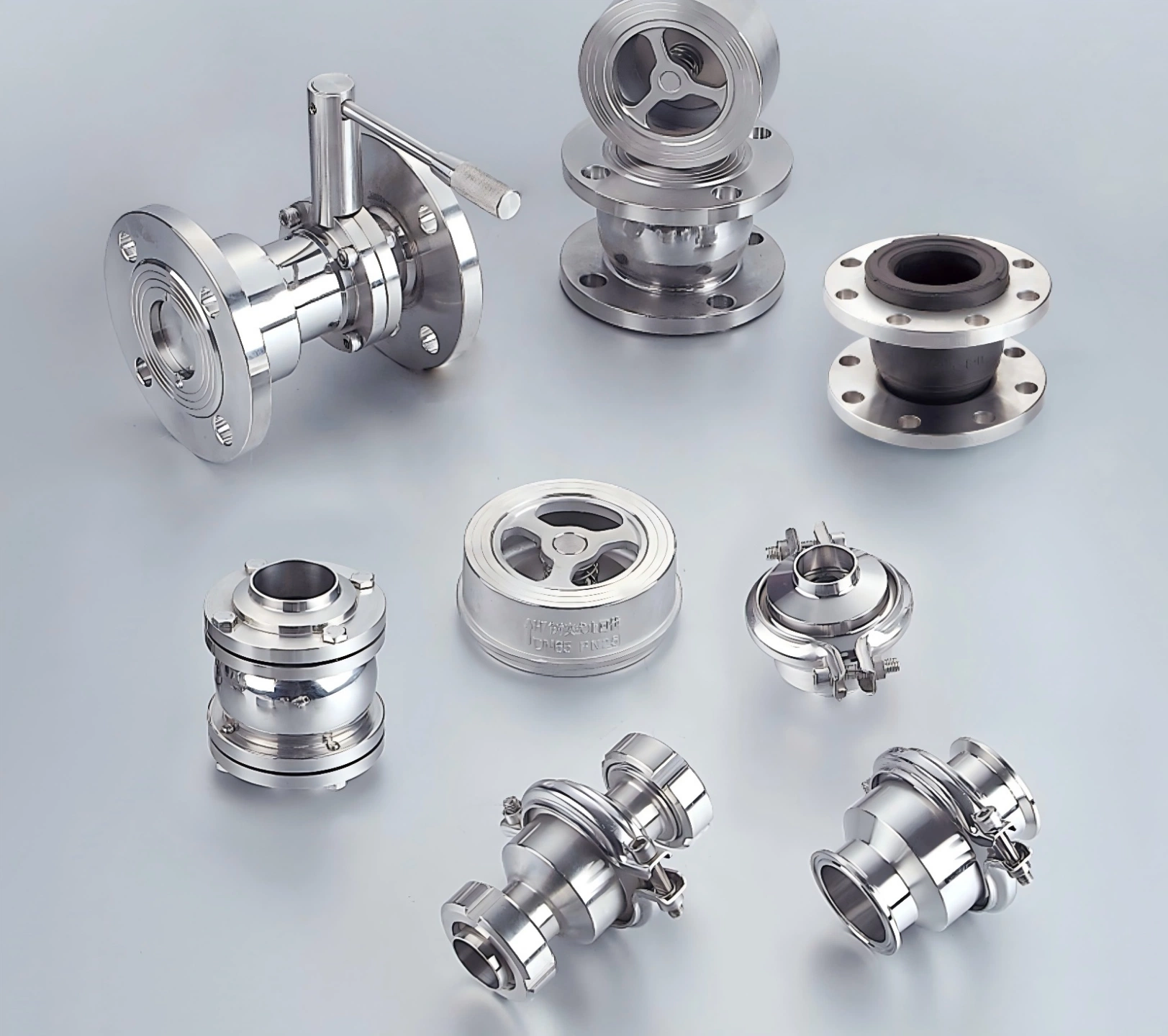
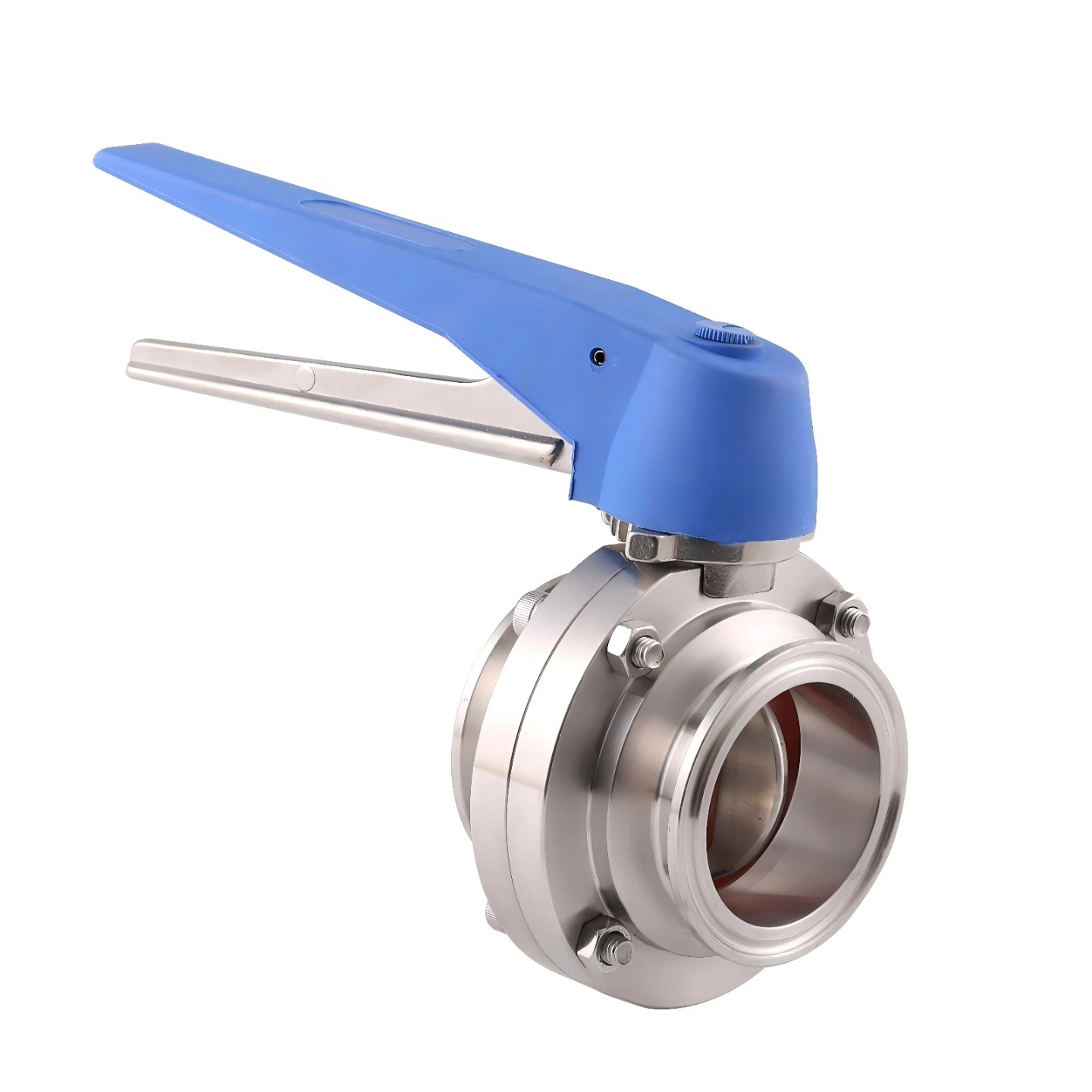
Note on materials: the standards assume corrosion-resistant austenitic stainless (commonly 304/304L or 316/316L) and compliant elastomers, but they do not replace material rules. Whether a specific gasket compound is acceptable for food contact is answered by the FDA 21 CFR material letter, not by the 3-A document alone. That is why a hygienic valve package is always assembled from three parts: the sanitary ball valve or sanitary butterfly valve body with its certified finish, the sanitary check valve or diversion valve that keeps flow safe, and the sanitary fittings and unions that preserve the same finish and radii through the whole run.
3. 3-A vs FDA vs EHEDG vs ASME BPE
Buyers routinely mix these four programs because they appear together in audit files. They answer different questions — one is a design rule, one is a material rule, one is a European cleanability program and one is a bioprocessing equipment standard.
| Program | Origin | What It Defines | Typical Use |
|---|---|---|---|
| 3-A Sanitary Standard | US | Hygienic equipment design: finish, radii, drainability, disassembly | Dairy, food & beverage equipment files worldwide |
| FDA 21 CFR 177 | US regulation | Acceptable polymer / elastomer compositions for indirect food contact | Gasket and seal material letters |
| EHEDG | Europe | Hygienic design guidance plus cleanability test methods and certification | EU food and packaging engineering specs |
| ASME BPE | US standard | Bioprocessing equipment: materials, joining, finish, inspection | Pharma and biotech skids |
| EU 1935/2004 | EU regulation | Framework rule for materials intended to contact food | EU-market food-contact declarations |
| GB 4806.9 | China standard | Food-contact metal materials and articles | China-bound equipment and spares |
| ISO 14159 | ISO | Hygiene requirements for the design of machinery | Packaging and processing machinery design |
In practice they are complementary. A hygienic valve on a modern dairy line may be designed to a 3-A equipment standard, carry an FDA 21 CFR 177 letter for its EPDM gasket, and ship with an Ra surface-finish report. A pharma customer may instead reference ASME BPE, and a European packaging plant may ask for EHEDG-tested components. Naming the right program in the spec prevents suppliers from substituting one document for another.
4. How to Verify a Real 3-A Claim
Because the standards are voluntary and the symbol is licensed, a printed “3-A” line on a quotation proves nothing by itself. The following checks take minutes and separate conforming equipment from cosmetic labeling.
- 1. Name the numbered standard. Require the supplier to state which 3-A standard the valve model conforms to, rather than a generic “3-A sanitary” description.
- 2. Match the symbol to the model. Where the 3-A symbol is shown, confirm the authorization references the exact model and size, not a different product in the catalog.
- 3. Require the Ra report. Ask for the surface-finish measurement report on the product-contact parts, with the method and instrument stated.
- 4. Collect the gasket letter. Obtain the material compliance letter for the seal batch showing the FDA 21 CFR reference and compound.
- 5. Inspect on arrival. Check internal welds, corner radii and gasket seats, and confirm the body drains when mounted in the specified orientation.
Conformance vs third-party verification: a manufacturer can design equipment to a 3-A standard and honestly state that it conforms; the additional step of independent third-party evaluation is what supports use of the registered symbol. Both can be legitimate, but the documentation should say which one applies rather than leaving the word “certified” ambiguous.
Step 1 — Problem
A 20,000 L/day UHT milk plant near Bandung, Indonesia, expanded its pasteurizer skid with 16 × DN40 and DN65 tri-clamp ball valves from a low-cost trader. The quote carried the words “3A standard” but no standard number. During the annual BPOM and customer (a national supermarket chain) audit, swab tests on eight valve bodies returned ATP readings above the plant’s alert limit, and the auditor could not match any valve to a 3-A symbol authorization or an Ra report. The expansion line was held for four weeks while the audit finding stayed open.
Step 2 — Root cause analysis
Disassembly and measurement showed three issues: (1) product-contact finish measured Ra 1.2–1.6 µm rather than the required Ra ≤ 0.8 µm; (2) the internal corner at the gasket seat was a sharp machined step with an effective radius below 1 mm, which the CIP spray could not reach; (3) the gasket letter referenced a generic EPDM compound without the FDA 21 CFR citation. The “3A” wording was a marketing label only — no numbered standard, no model-level symbol authorization.
Step 3 — Correct retrofit
The 16 valves were replaced with 316L tri-clamp ball valves, electropolished to Ra ≤ 0.8 µm, with radiused gasket seats, full drainability and a documented gasket batch letter naming the FDA 21 CFR reference. The supplier provided the applicable 3-A standard number and the model-level documentation before delivery. Ten valves were later fitted with pneumatic actuators for automated CIP diversion.
Step 4 — Outcome and numbers
• The line re-audited in one pass: ATP swabs fell back inside the plant’s acceptable range
• The four-week hold was the dominant cost — far above the per-valve price difference
• The purchase specification was rewritten to require the standard number, Ra report, gasket letter and model-level documentation, with no generic “3-A” wording accepted
• Lesson: the document package is the product. A valve without the numbered standard and finish report cannot be defended in front of an auditor, regardless of the sticker.
Why EPC Contractors Specify Chuanglan for Hygienic Valves
316L (CF3M) body · internal electropolished Ra ≤ 0.8 µm (external Ra ≤ 1.6 µm) · tri-clamp / weld / male ends · DN15–DN200
FDA 21 CFR 177 EPDM / silicone / FKM gaskets with batch material letter · halal declaration available for Indonesia and Malaysia
Document set per model: applicable 3-A standard number, Ra surface-finish report, gasket batch letter, EN 10204 3.1 MTC
Building a Hygienic Line and Need the Document Package?
Send us your equipment list, media, CIP chemicals and end-market audit requirements. Our engineers will confirm the applicable 3-A standard number, Ra finish and gasket documentation for each valve model within 24 hours.
Get Free Sizing Report → WhatsApp us5. Worked Example: Bandung Dairy Audit Failure
6. Southeast Asia & Middle East Market Notes
Southeast Asia (Indonesia, Malaysia, Thailand, Vietnam, Philippines, Singapore): local food-safety regulators — BPOM in Indonesia, the Thai FDA, the Vietnam Ministry of Health, and the Philippines FDA — do not generally write 3-A into law, but multinational dairy and beverage brands and modern supermarket chains treat hygienic design documentation as a baseline supplier requirement. New plants in industrial corridors around Cikarang, Rayong, Hanoi and Laguna increasingly mirror the audit checklists used by global brand owners, so a model-level 3-A document package speeds up approval. For halal production in Indonesia and Malaysia, the separate requirement is material composition: gaskets and seals must be free of animal-derived components, supported by the supplier’s declaration — 3-A documents do not answer halal questions.
Middle East (Saudi Arabia, UAE, Qatar, Oman, Kuwait, Bahrain): large dairy and juice producers supplying regional and export markets commonly run US-style supplier audits and accept 3-A documentation as evidence of hygienic design, alongside their own food-safety requirements. High ambient temperatures and long production runs make drainability and gasket selection especially important, and regional halal requirements again point to the material declaration rather than the design standard. On both regions, the most efficient tender response is a single hygienic-equipment file per model: numbered standard, Ra report, gasket letter and material certificate.
7. Common Buying Mistakes
Mistake 1: Treating “3-A” as a single certificate. It is a library of numbered standards plus a model-level symbol program. Always ask which standard number applies to the valve being quoted.
Mistake 2: Accepting a company-wide claim instead of a model-level document. The symbol authorization is tied to specific models and sizes. A valid document for one product does not cover another.
Mistake 3: Confusing design standards with material compliance. A hygienic body design does not prove the gasket is acceptable for food contact; that requires the FDA 21 CFR material letter.
Mistake 4: Skipping the Ra report. Surface finish is the single most repeated 3-A requirement and the easiest to verify on arrival — waiving it leaves the core claim untested.
Mistake 5: Ignoring installation orientation. A drainable valve only drains in the specified mounting orientation. Installation that traps liquid defeats the design even when the equipment itself conforms.
How we handle it: every hygienic order ships as a document set rather than a box of valves — the numbered standard the model was built to, an Ra report on the product-contact surfaces, the gasket batch letter, and EN 10204 3.1 MTC. If your spec references a sanitary pipe fittings package as well, the finish and radii of the fittings are held to the same values as the valves so no weak point is introduced between components.
FAQ
Is the 3-A Sanitary Standard legally required?
No. In the United States it is a voluntary, privately published set of standards, and most other jurisdictions reference it through buyer and brand-owner audits rather than law. In practice, dairy and beverage customers often require it contractually, which makes it effectively mandatory for supplying those projects even though it is not a statute.
What does a “3-A certificate” actually mean?
The phrase is used loosely and should be clarified. Strictly, a specific equipment model can be designed to conform to a numbered 3-A standard, and a manufacturer that completes third-party evaluation can display the registered 3-A symbol on that model. Ask for the standard number, the model-level authorization and the finish report rather than relying on the word “certified” alone.
What surface finish does 3-A require?
Product-contact surfaces are commonly required to reach Ra ≤ 0.8 µm (about 32 µin), measured by an accepted method, with welds ground smooth and blended. The exact wording should be checked against the numbered standard for the equipment category, and supported by a finish report on delivery.
Does 3-A approval cover my gaskets for food contact?
No. 3-A governs equipment design; food-contact acceptance of an elastomer is a separate material question answered by a compliance letter referencing the applicable FDA 21 CFR section and the specific compound. A complete valve file includes both the design documentation and the gasket material letter.
3-A, EHEDG or ASME BPE — which should I specify?
Use 3-A for general dairy, food and beverage equipment following US hygienic design practice; EHEDG where a European project specifically asks for its cleanability guidance and tests; and ASME BPE for biopharmaceutical and bioprocessing skids. They are not interchangeable, and large projects sometimes reference more than one.
How do I check a supplier’s 3-A documentation?
Request four items: the numbered standard the model conforms to, the model-level symbol authorization where claimed, the Ra surface-finish report, and the gasket material letter. Then verify finish, radii and drainability on the delivered goods. Generic “3-A” wording without these documents is not verifiable.
Is 3-A relevant outside the United States?
Yes, as a de facto hygienic design reference. Multinational brand owners, supermarket chains and auditors across Southeast Asia and the Middle East commonly accept 3-A documentation as evidence of hygienic design, even though local regulators may not name it in law. It is usually paired with local material and halal declarations.
References & Standards
- 3-A Sanitary Standards Inc. — standards, accepted practices and symbol program
- FDA 21 CFR Part 177 — indirect food additives: polymers
- EHEDG — European hygienic engineering and design guidance
- ASME BPE — bioprocessing equipment standard
- ISO 468 / ISO 25178 family — surface roughness measurement references
Related Products

Continue Reading
Request a Quotation — Reply Within 24 Hours
Send your line size, pressure rating, medium and quantity. Our engineers come back with price, drawing and lead time — no obligation.