
Understanding CE & ISO Certifications for Industrial Valves
The 2026 buyer’s guide to valve certifications — CE PED / ATEX / CPR, ISO 9001:2015 / 14001 / 45001, API 6D / 608 / 609 / 602, 3-A Sanitary / FDA 21 CFR 177 / EHEDG, and EN 10204 3.1 MTC. What each one actually means, which ones your project really requires, and how to spot a fake certificate from a Chinese, Indian, or Turkish supplier before you wire the deposit.
* Standard lead time depends on order size and destination. 5–10 days to Southeast Asia, 15–20 days to the Middle East.

Quick Answer
CE, ISO, API, 3-A are four completely different kinds of document — don’t mix them up. CE PED / ATEX is a legal market-access stamp for the EU, required before you can legally sell a pressure valve there. ISO 9001:2015 is a factory quality-management certificate — it says the factory has procedures, not that every valve is tested to a product standard. API 6D / 608 / 609 is the oil & gas product-industry standard — it says the valve itself meets a dimensional, pressure and hydrocarbon-service specification. 3-A / FDA / EHEDG is for food & beverage contact. The single most expensive mistake we see is EPC engineers paying for ISO 9001:2015 thinking it means the valve itself carries that stamp — it is not. For every valve RFQ, ask separately for: (1) the product standard (API / EN / ASME), (2) the factory QMS (ISO 9001:2015), (3) the batch MTC EN 10204 3.1, and (4) market-access stamps (CE PED / ATEX / 3-A).
Key Takeaways
- CE PED 2014/68/EU is mandatory for pressure equipment sold in the EEA — without a Notified Body number and Declaration of Conformity, the CE sticker is meaningless.
- ISO 9001:2015 is a factory QMS certificate, not a product certificate — verify it via UKAS / CNAS / DAkkS online lookup, not just a PDF photo.
- API 6D / 608 / 609 is the oil & gas product standard — verify the manufacturer’s license number on api.org.
- EN 10204 3.1 MTC is the batch-level mill certificate for the actual material your valve body was cast from — always require it on every RFQ.
On This Page
- 1. CE Marking: The European Entry Ticket
- 2. ISO 9001:2015: Quality Management, Not Product Certification
- 3. API Certification: The Oil & Gas Industry Standard
- 4. 3-A, FDA & EHEDG: Hygienic Certifications
- 5. How to Spot a Fake Certificate
- Which Certifications Do You Actually Need?
- Southeast Asia & Middle East Market Notes
- FAQ
Valve certifications look like a wall of letters and numbers on a datasheet — CE, ISO 9001:2015, API 608, 3-A, EHEDG, EN 10204 3.1 MTC. But do you actually know what each one means, and which ones your project really requires? As a valve manufacturer that exports to dozens of countries across Southeast Asia, the Middle East and Europe, we break down every common valve certification in plain English so you know exactly what to ask for — and what to reject.
1. CE Marking: The European Entry Ticket
CE marking is mandatory for most products sold in the European Economic Area (EEA). For industrial valves, CE means the valve meets EU safety, health, and environmental-protection requirements.
| CE Type | Applies To | When You Need It |
|---|---|---|
| PED 2014/68/EU | Pressure equipment (valves, flanges, fittings) | Selling to EU countries, pressure > PN10 |
| ATEX 2014/34/EU | Explosive atmospheres | Oil & gas, chemical plants with flammable gases |
| CPR (Construction Products Regulation) | Fire-protection systems | Hydrocarbon-service valves for building systems |
Important: A real CE mark on a valve must be accompanied by a CE Declaration of Conformity and a Notified Body number (if it’s PED Category B or higher). Ask for the documents — if the supplier can’t show them, the CE mark is just a sticker.
2. ISO 9001:2015: Quality Management, Not Product Certification
ISO 9001:2015 is one of the most common certifications, but many buyers misunderstand what it means. It’s a factory quality-management-system certificate — it says the factory has proper procedures, traceability, and quality control. It does NOT mean every valve is individually tested to a specific product standard.
| Certification | What It Certifies | Look For On Certificate |
|---|---|---|
| ISO 9001:2015 | Factory quality-management system | Accredited body (UKAS, CNAS, DAkkS, etc.), current date |
| ISO 14001 | Environmental management system | Green-company requirement for large corporate procurement |
| ISO 45001 | Occupational health & safety | Large corporate procurement requirement |
For production-manifold isolation valves that need full certification packages, see our flanged ball valves and flanged gate valves — every batch ships with ISO 9001:2015 QMS evidence plus EN 10204 3.1 MTC.
3. API Certification: The Oil & Gas Industry Standard
API (American Petroleum Institute) certification is the de facto product standard for oil & gas valves. If you’re sourcing for refineries, pipelines, or offshore platforms, your client will require API-rated valves.
| API Standard | Valve Type | Typical Use |
|---|---|---|
| API 6D | Pipeline valves (ball, gate, check) | Long-distance pipelines, transmission stations |
| API 608 | Metal ball valves | Refinery, process industry |
| API 609 | Butterfly valves | General industrial, oil & gas |
| API 602 | Compact gate valves | Process instrumentation, small sizes |
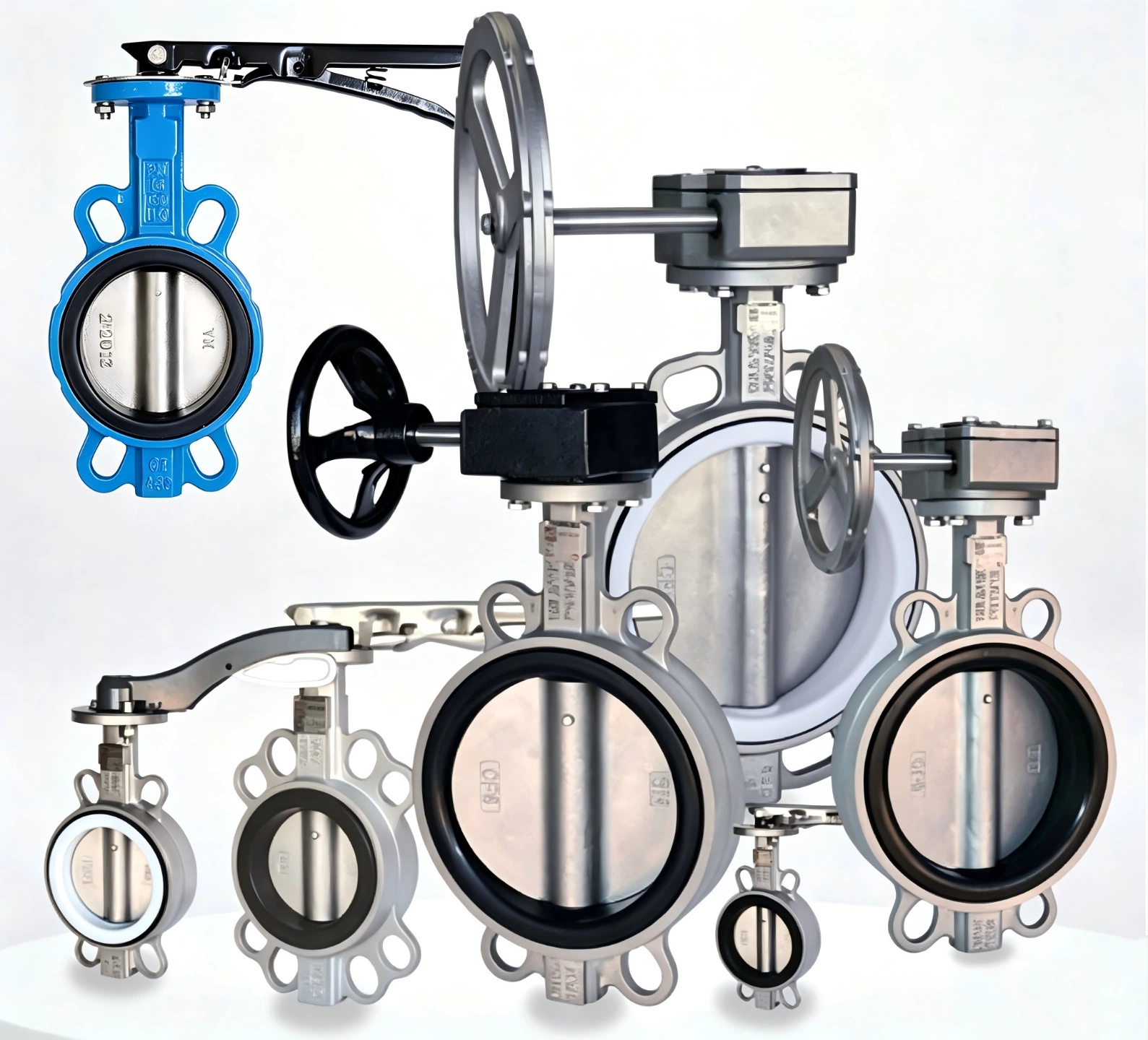
How to verify: Go to the API website (api.org), enter the manufacturer’s license number. If it doesn’t show up, the certificate is fake. For cooling-water and utility service on offshore platforms, see our wafer butterfly valves — available with API 609 documentation on request.
4. 3-A, FDA & EHEDG: Hygienic Certifications
If you’re buying valves for food, beverage, pharmaceutical, or cosmetic production, you need hygienic-grade certifications:
| Certification | Industry | What It Means |
|---|---|---|
| 3-A Sanitary | Food & beverage, dairy | Easy to clean, no dead legs, FDA-compatible materials |
| FDA 21 CFR 177 | Food-contact materials | Seals and gaskets are safe for food contact |
| EHEDG | European hygienic standard | Higher standard than 3-A, common in EU pharma |
For CIP and product-line isolation in food & beverage plants, see our sanitary butterfly valves and sanitary ball valves — designed for 3-A style cleanability with FDA 21 CFR 177 style EPDM / PTFE seals.
5. How to Spot a Fake Certificate (Worked Example)
Step 1 — Problem
A Southeast Asian EPC client once sent us a “CE PED” certificate from a competing Chinese supplier. The PDF looked professional — logo, red stamp, signature. But when we cross-checked the Notified Body number, it belonged to a Bulgarian NB that had never issued a certificate to that factory. The supplier had Photoshopped a public NB template. The EPC had already paid a 30% deposit. The goods were held at Customs in Rotterdam for 6 weeks, and the project had to source emergency valves locally at 3× the price.
Step 2 — Root cause
The buyer only asked for “a CE certificate” — they never asked for the original PDF from the accredited body, never checked the NB number online, and never cross-checked the ISO 9001:2015 certificate against the accreditation-body lookup. The supplier exploited a common gap: buyers trust a PDF screenshot more than they trust an online lookup.
Step 3 — Correct verification workflow (4 steps)
• Step 1: Ask for the original certificate PDF, not a photo. Real certificates have a QR code, watermark, and unique certificate number.
• Step 2: Check the accreditation body. Look for UKAS (UK), CNAS (China), A2LA (USA), DAkkS (Germany), NAS (Netherlands). If the accreditation body sounds made up, it’s fake.
• Step 3: Verify online. Most accreditation bodies have an online certificate lookup. Enter the number — if it doesn’t show up, don’t trust it.
• Step 4: Ask for MTC (Material Test Certificate) EN 10204 3.1. This is different from a product certification — it’s the mill-test certificate for the actual batch of material your valve is cast from. Always ask for this.
Step 4 — Outcome
Since that incident, the EPC client added all four verification steps to their standard supplier-onboarding checklist. Two other Chinese suppliers failed the online lookup on their ISO 9001:2015 certificates within the next 6 months. The 4-step workflow costs 30 minutes per supplier and saves six-figure Customs holds.
How Chuanglan Documents Every Valve Shipment
ISO 9001:2015 factory QMS — audited by CNAS-accredited body, verifiable online
EN 10204 3.1 MTC on every batch — heat number tied to cast body, with PMI / hardness / pressure-test results
API 6D / API 608 / API 609 documentation packages on request, with third-party inspection (SGS / BV / Intertek / Lloyd’s) before shipment
CE PED + ATEX documentation for EU-bound orders; 3-A style hygienic data sheets for food & beverage clients
Not Sure If Your Supplier’s Certificates Are Real?
Send us the certificates — we’ll review them for free and tell you what’s missing. Our engineers reply within 24 hours with a gap list (missing NB number, expired QMS, wrong product standard, missing EN 10204 3.1 MTC).
Get Free Sizing Report → WhatsApp usWhich Certifications Do You Actually Need?
| Your Market / Industry | Must-Have Certifications |
|---|---|
| General industrial (water treatment, HVAC) | ISO 9001:2015, CE PED (if EU), EN 10204 3.1 MTC |
| Oil & gas, refineries | API 6D / 608, CE ATEX, ISO 9001:2015, hydrocarbon-service test report |
| Food & beverage, dairy | 3-A style, FDA 21 CFR 177 seals, ISO 9001:2015 |
| Pharmaceutical, biotech | EHEDG style, FDA, cGMP compliance, ISO 9001:2015 |
Don’t pay for certifications you don’t need. Here’s a quick guide:
Southeast Asia & Middle East Market Notes
For clients in Southeast Asia (Indonesia, Malaysia, Thailand, Vietnam, Philippines), the certification game is evolving fast. Indonesian oil & gas procurement (Pertamina, SKK Migas) now requires SNI (Standar Nasional Indonesia) equivalence on top of API standards for domestic supply. Malaysian Petronas and Thai PTT require vendor pre-qualification packages that include ISO 9001:2015, ISO 14001 and OHSAS / ISO 45001 as a baseline — without all three, the valve vendor can’t even submit a bid. Vietnamese Dung Quat and Nghi Son refineries follow EU-style CE PED equivalence because their EPCs are Korean (Samsung, Daelim) and Japanese (JGC), which automatically require CE or PED-equivalent documentation. Singapore’s offshore and marine sector (Keppel, Sembcorp) additionally requires Marine Society class certificates (DNV, LR, BV) for any valve going on a vessel or rig.
For clients in the Middle East (Saudi Arabia, UAE, Qatar, Kuwait, Oman), the certification stack is even heavier. Saudi Aramco requires SAES-L-110 / SAES-L-350 vendor approval plus API 6D / API 608 / hydrocarbon-service test reports on every valve. ADNOC (UAE) runs its own ICV (In-Country Value) program that requires ISO 9001:2015, ISO 14001, ISO 45001, plus third-party inspection (SGS / BV / Intertek / Lloyd’s) witnessed at the factory before shipment. QatarEnergy’s North Field LNG expansion requires cryogenic extended-bonnet valves with -196°C impact test certificates and full API 6D / 6AA documentation. KOC (Kuwait) and KNPC additionally require ISO 15156 certification on every wetted part for sour service. The common thread across the region: CE PED alone is not enough for the Middle East oil & gas — you need API + ISO 15156 + hydrocarbon-service + EN 10204 3.1 MTC + third-party inspection, as a complete documentation package, not one sticker at a time.
Chuanglan Valve ships to Southeast Asia and the Middle East with complete documentation packages — ISO 9001:2015 QMS, EN 10204 3.1 MTC per batch, API 6D / 608 / 609 / 607 hydrocarbon-service reports on request, ISO 15156 for sour service, and third-party inspection (SGS / BV / Intertek / Lloyd’s) witnessed before shipment. Serving EPC Contractors Across Southeast Asia & Middle East · ISO 9001:2015 · Established in 2009 · MOQ 1 piece, 7–15 day standard delivery.
Common Mistakes to Avoid
- Specifying 304 stainless for coastal or chloride service. If your project is in Southeast Asia (coastal, cooling tower, deicing salts) or the Middle East (desalination, SWRO, humid Gulf climate), 304 will pit within 1–3 years. Specify CF8M (316) or duplex 2205.
- Ignoring pressure-temperature derating. PN16 / Class 150 ratings apply at room temperature only. At 200°C the allowable pressure drops by roughly 40–50%. Always check the manufacturer’s P-T chart before specifying for steam, hot oil, or thermal fluid.
- Buying on price without MTC verification. “Stainless steel” is not enough — ask for EN 10204 3.1 MTC tied to the heat number, and arrange PMI (XRF) witness at the factory if the price is 20% below market. 304 passed off as 316L is the single most common failure in this industry.
- Forgetting face-to-face and flange drilling. A “PN16” wafer valve from one manufacturer may not match the existing flange drilling or face-to-face of another. Always confirm dimensions against EN 558 / API 609 / ASME B16.10 before replacing an installed valve.
FAQ
What is the difference between ISO 9001:2015 and API 6D?
ISO 9001:2015 is a factory quality-management certificate — it says the factory has procedures, traceability, and QC. API 6D is a product standard — it says the valve itself meets dimensional, pressure, hydrocarbon-service, and end-connection specifications. You need both: ISO 9001:2015 proves the factory is well-run, API 6D proves the valve meets the pipeline spec. ISO 9001:2015 alone does NOT mean the valves are API listed.
Is a CE marking enough to sell valves in the EU?
For pressure valves above PN10 sold in the EEA, you need CE PED 2014/68/EU — with a Declaration of Conformity and, for higher-pressure categories, a Notified Body number. A valve that only has a “CE” sticker stamped by the factory itself is illegal in the EU and can be seized by Customs. Always ask for the PED DoC and the NB number, and verify the NB on the European Commission’s NANDO database.
How do I check if an ISO 9001:2015 certificate is real?
Three steps: (1) look at the accreditation body logo on the certificate — it must be a member of IAF (UKAS, CNAS, DAkkS, A2LA, JAS-ANZ, etc.); (2) go to the accreditation body’s online certificate lookup; (3) enter the certificate number and the factory name. If the number doesn’t appear, or the factory name doesn’t match, the certificate is fake. A PDF screenshot on WeChat or email is not enough.
What is EN 10204 3.1 MTC and why is it required on every batch?
EN 10204 3.1 is the “Material Test Certificate” issued by the mill that produced the cast or forged steel for your valve body. It lists the heat number, chemical composition (C, Mn, Si, Cr, Ni, Mo), mechanical properties (tensile, yield, elongation), and heat treatment. A 3.1 MTC is signed by the manufacturer’s authorized inspection representative and links the heat number to the actual valve body. Without it, you cannot trace whether your DN300 valve body was cast from the heat the supplier claims.
What is ISO 15156 and when do I need it?
ISO 15156 is the standard for materials in H₂S-containing sour oil & gas service. It limits hardness (typically ≤ 22 HRC on wetted parts) and restricts material chemistries to prevent sulfide-stress cracking. If your gas contains more than 0.05 mol% H₂S, every wetted part must be ISO 15156 rated — not just the body. Ask for ISO 15156 mill-test reports plus hardness-test certificates on every stem, ball, trim, spring and gasket.
Do food and beverage valves need 3-A certification, or is FDA enough?
FDA 21 CFR 177 only covers seal and gasket materials (elastomer, PTFE) in contact with food. 3-A Sanitary covers the full valve design — crevice-free internal surfaces, no dead legs, CIP cleanability, and material compatibility. For dairy, brewery, and pharma, you need 3-A style design plus FDA 21 CFR 177 style seals. For EU food plants, EHEDG is the equivalent higher standard.
Can Chuanglan provide third-party inspection (SGS / BV / Intertek) before shipment?
Yes. We regularly arrange SGS, Bureau Veritas, Intertek, or Lloyd’s witnessed inspection at our Wenzhou factory before shipment — including PMI (Positive Material Identification), hydrostatic shell / seat testing, fugitive-emissions testing, and dimensional checks. The inspection report is issued by the inspection body directly to the client. MOQ 1 piece, 7–15 day standard delivery, ISO 15156 / API / CE / 3-A style documentation packages on request.
References & Standards
- PED 2014/68/EU — Pressure Equipment Directive
- ATEX 2014/34/EU — Equipment for Explosive Atmospheres
- ISO 9001:2015 — Quality Management Systems
- API 6D / API 608 / API 609 — Pipeline, Metal Ball, Butterfly Valves
- EN 10204 — Metallic products — Types of inspection documents (3.1 / 3.2)
- ISO 15156 — Sour-service materials
Related Products
Continue Reading
Request a Quotation — Reply Within 24 Hours
Send your line size, pressure rating, medium and quantity. Our engineers come back with price, drawing and lead time — no obligation.
Get a Certification Review on Your Next Valve RFQ
MOQ: 1 piece · ISO 9001:2015 · 3.1 MTC included · shell and seat pressure tested
Southeast Asia: Indonesia, Malaysia, Thailand, Vietnam, Myanmar, Singapore, Philippines
Middle East: Saudi Arabia, UAE, Qatar, Kuwait, Oman, Bahrain
Other Regions: Europe, North America, South America, Africa, Australia
Delivery: 5–10 days to Southeast Asia · 15–20 days to the Middle East · 25–35 days to Europe / the Americas
Payment: T/T 30% deposit + 70% before shipment · L/C at sight · Warranty: 12 months after shipment for material and manufacturing defects · Packing: export plywood case / fumigation-free pallet · Shipping: FOB Ningbo/Shanghai · Documents: EN 10204 3.1 MTC + packing list + commercial invoice · Third-party inspection welcome: SGS / Bureau Veritas / Intertek
Get Free Quote »