
What is a Wafer Butterfly Valve? Complete 2026 Guide
The 2026 engineer’s guide to wafer butterfly valves — how they work, body materials (ductile iron / WCB / CF8M / 2205), seat options (EPDM / NBR / Viton / PTFE), pressure and temperature ratings, wafer vs lug vs flanged comparison, typical size range DN50–DN600, and the Surabaya water-plant worked example where 36 wafer valves had to be replaced with lug-style because the contractor needed one-side maintenance on a live fire-water ring.
* Standard lead time depends on order size and destination. 5–10 days to Southeast Asia, 15–20 days to the Middle East.

Quick Answer
A wafer butterfly valve is a quarter-turn valve that clamps directly between two pipeline flanges — it has no own flanges, just a thin body with bolt holes that line up with the pipeline flange bolts. A circular disc (the “butterfly”) rotates 90° around a stem to open, close, or throttle flow. Wafer style is the lightest, cheapest, and most compact butterfly valve format, but it only works when both sides of the line can be depressurized for maintenance — if you need one-side maintenance (replace the valve without draining the other side of the line), you need a lug-style butterfly valve instead. Typical wafer spec: DN50–DN600 (2″–24″), PN10–PN16 / Class 150, bodies in ductile iron / WCB / CF8M stainless / 2205 duplex, seats in EPDM / NBR / Viton / PTFE, designed to EN 593 / API 609 / ISO 5752. Most common applications: water treatment, HVAC chilled/hot water, cooling towers, and general industrial shutoff — NOT for sour oil & gas service without ISO 15156-qualified body material.
Key Takeaways
- Wafer body = thin disc clamped between two pipe flanges, no own flanges — 30–50% lighter than lug or flanged.
- Operation = 90° quarter-turn (handle / gear / pneumatic / electric actuator), full flow in 5 seconds.
- Typical spec = DN50–DN600, PN10/PN16 / Class 150, EPDM or NBR seat, ductile-iron or CF8M body.
- Maintenance rule = wafer needs both sides depressurized; if you need one-side replacement, use lug style.
On This Page
What Is a Wafer Butterfly Valve?
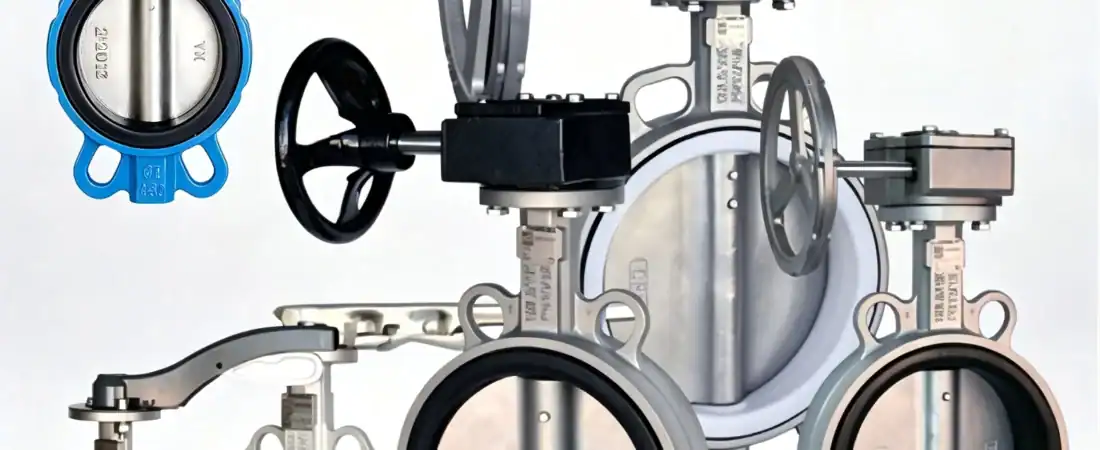
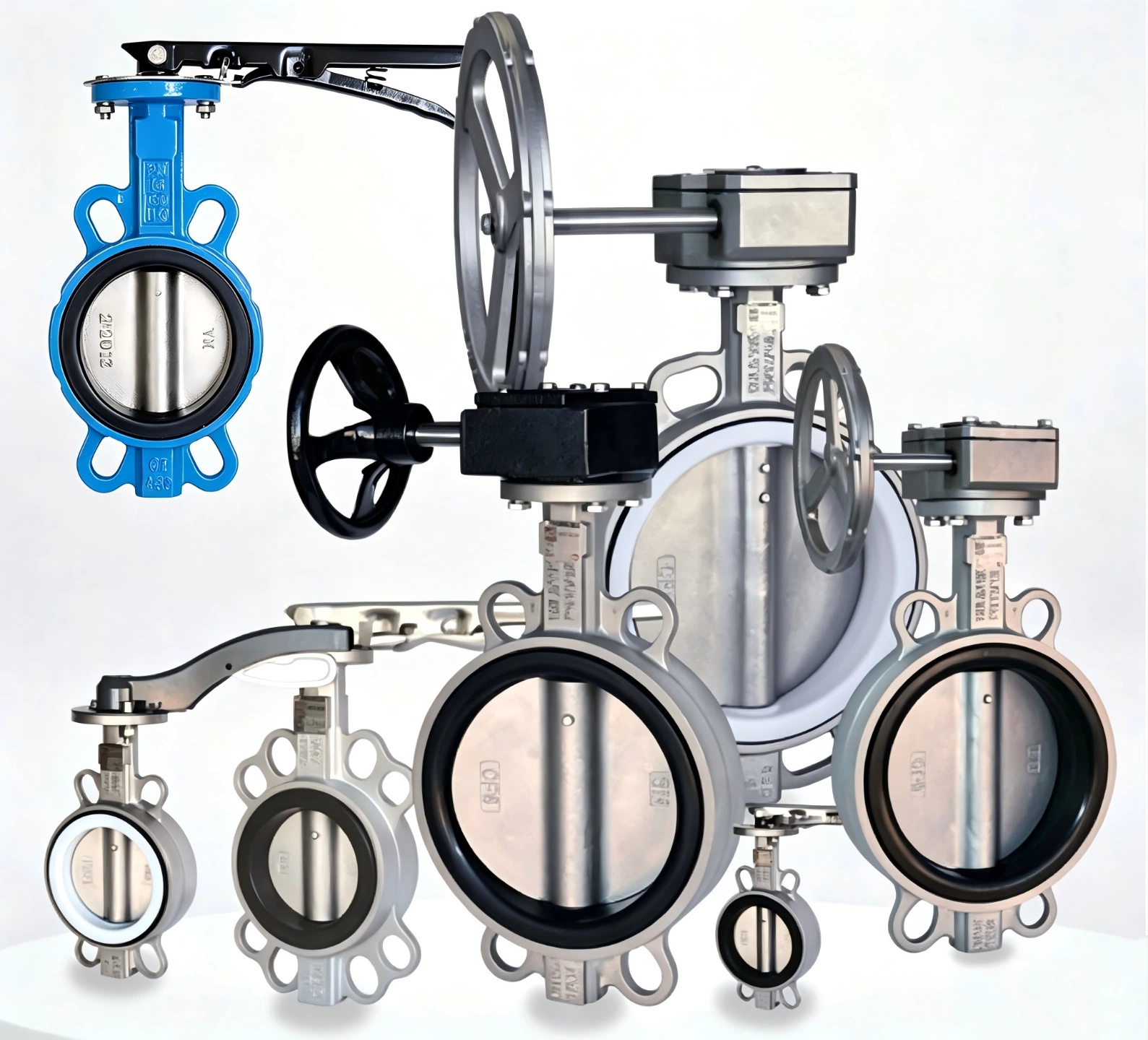
A wafer butterfly valve is one of the most commonly used quarter-turn valves in industrial piping systems. It uses a circular disc that rotates 90° to start, stop, or regulate flow. The “wafer” name comes from the body shape — it’s a thin, wafer-like casting that clamps directly between two pipeline flanges, with no own flanges of its own. The through-bolts from the pipeline flanges pass straight through the wafer body’s bolt holes, sandwiching the valve in place.

This compact wafer design makes it ideal for installations where space is limited — the face-to-face length of a wafer valve is roughly 1/3 of a flanged ball valve of the same size, and 1/2 of a gate valve. For large-diameter cooling water (DN300–DN600), the weight and space saving is dramatic.
Key Advantages
Wafer butterfly valves are lightweight, cost-effective, and easy to install between flanges. They offer fast operation (90° quarter-turn), dependable shutoff, and work across a wide range of pressures and temperatures. They’re a top choice for water treatment, HVAC, chemical processing, and general industrial applications. Compared to a flanged ball valve of the same size:
- Weight: 1/3 to 1/2 of a flanged ball valve — much easier to lift on a scaffold
- Cost: roughly 1/3 to 1/2 of a flanged ball valve at the same pressure class
- Face-to-face length: ~1/3 of a flanged ball valve — saves pipe run space
- Operation: 90° quarter-turn — same as a ball valve, but disc is much lighter than a ball, so lower torque and smaller actuator
See wafer vs flanged butterfly valve and butterfly vs ball valve for the full comparison.
Typical Specifications
| Parameter | Specification |
|---|---|
| Size Range | DN50–DN600 (2″–24″) |
| Pressure Rating | PN10 / PN16 / Class 150 |
| Design Standard | EN 593 / API 609 / ISO 5752 |
| Face-to-Face Length | ISO 5752 Series 20 (wafer type) |
| Flange Standard | EN 1092-1 PN10/PN16 / ASME B16.5 Class 150 / JIS B2220 10K |
| Body Material | Ductile iron (GGG40) / WCB carbon steel / CF8 (304) / CF8M (316) / CF3M (316L) / 2205 duplex |
| Disc Material | CF8M (316) standard; 2205 duplex for seawater; nickel-plated ductile iron option |
| Stem Material | SS316 / 17-4PH stainless |
| Seat Material | EPDM (water) / NBR (oil) / Viton FKM (hot oil / chemical) / PTFE (chemical / high temp) |
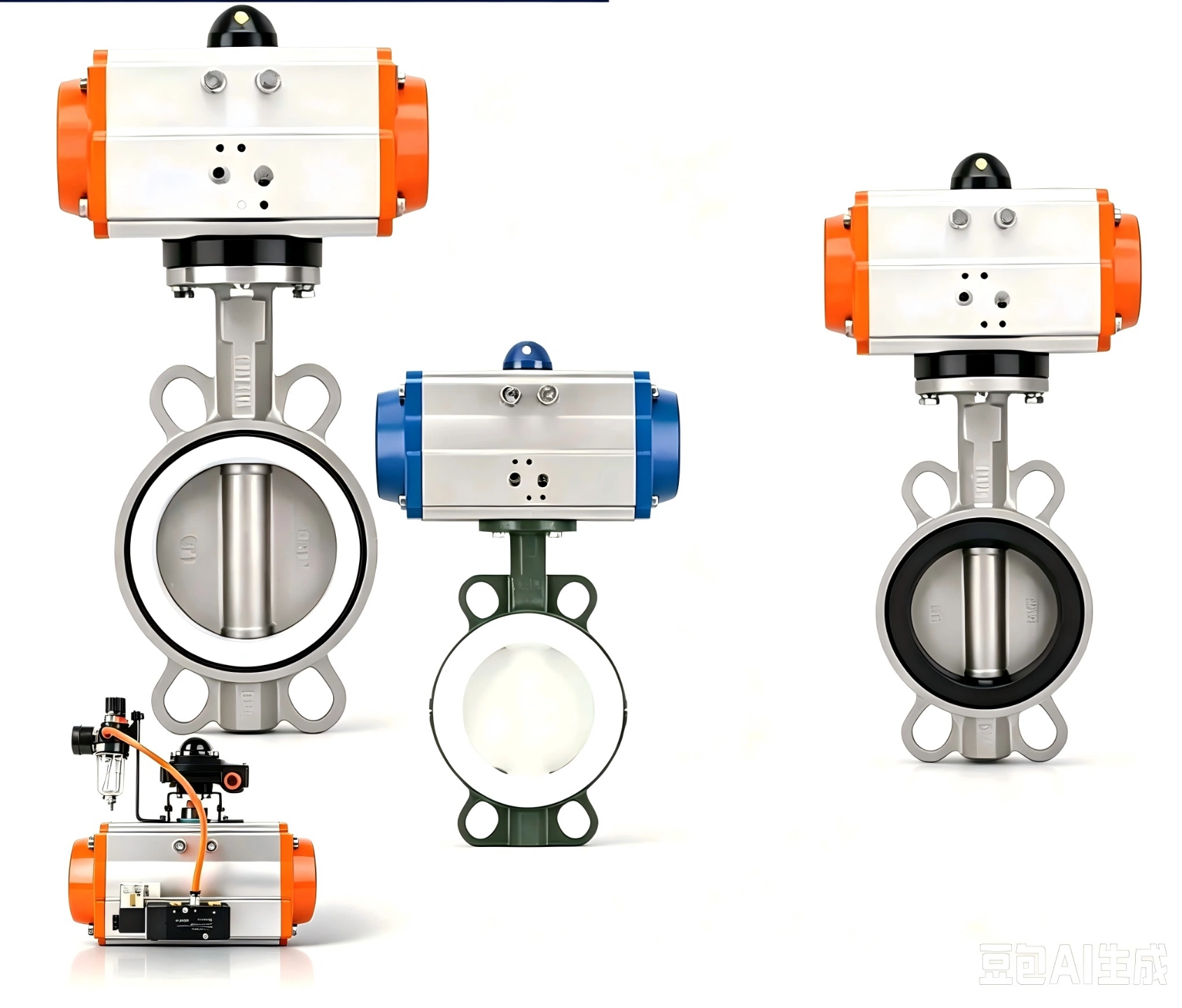
| Operation | Handle / gear operator / pneumatic actuator / electric actuator |
A standard wafer butterfly valve from Chuanglan Valve ships with the following specification range:
Body & Seat Materials
Choosing the right body and seat material is the single most important specification decision for a wafer butterfly valve. Get this wrong and the valve fails in months, not years.
| Body Material | Best For | Avoid If |
|---|---|---|
| Ductile Iron (GGG40) | Cooling water, HVAC, water treatment, fire-water | Coastal / seawater / acidic process |
| WCB Carbon Steel | Oil & gas, steam, high-temp process | Outdoor / coastal without coating |
| CF8 (304) | General corrosive service, food & beverage, pharma | Seawater / coastal / chloride service |
| CF8M (316) | Coastal, chemical, food & pharma, brackish water | Direct seawater / high-chloride |
| CF3M (316L) | Welded piping, hygienic lines, low-carbon post-weld corrosion | Direct seawater / high-chloride |
| 2205 Duplex | Direct seawater, high chloride, desalination, cooling towers with open seawater loop | Extreme acid / sour H2S service |
Seat material is equally critical: EPDM for cold water and HVAC (best water service, temp range -30 to +120°C); NBR for oil and compressed air; Viton (FKM) for hot oil and chemical service up to +200°C; PTFE for aggressive chemical and high-temperature service. See 304 vs 316L and WCB vs CF8 vs CF8M for the full material guide.
Wafer vs Lug vs Flanged Butterfly Valve
Butterfly valves come in three body styles — wafer, lug, and flanged. They look similar but are mechanically different, and choosing the wrong one causes expensive on-site rework.
| Body Style | How It Mounts | One-Side Maintenance? | Relative Cost |
|---|---|---|---|
| Wafer | Clamped between two pipe flanges, through-bolts pass through | No — both sides must depressurize | 1.0× (cheapest) |
| Lug | Threaded inserts on body, bolts go into each lug from each side | Yes — can isolate one side of the line | 1.2 – 1.4× |
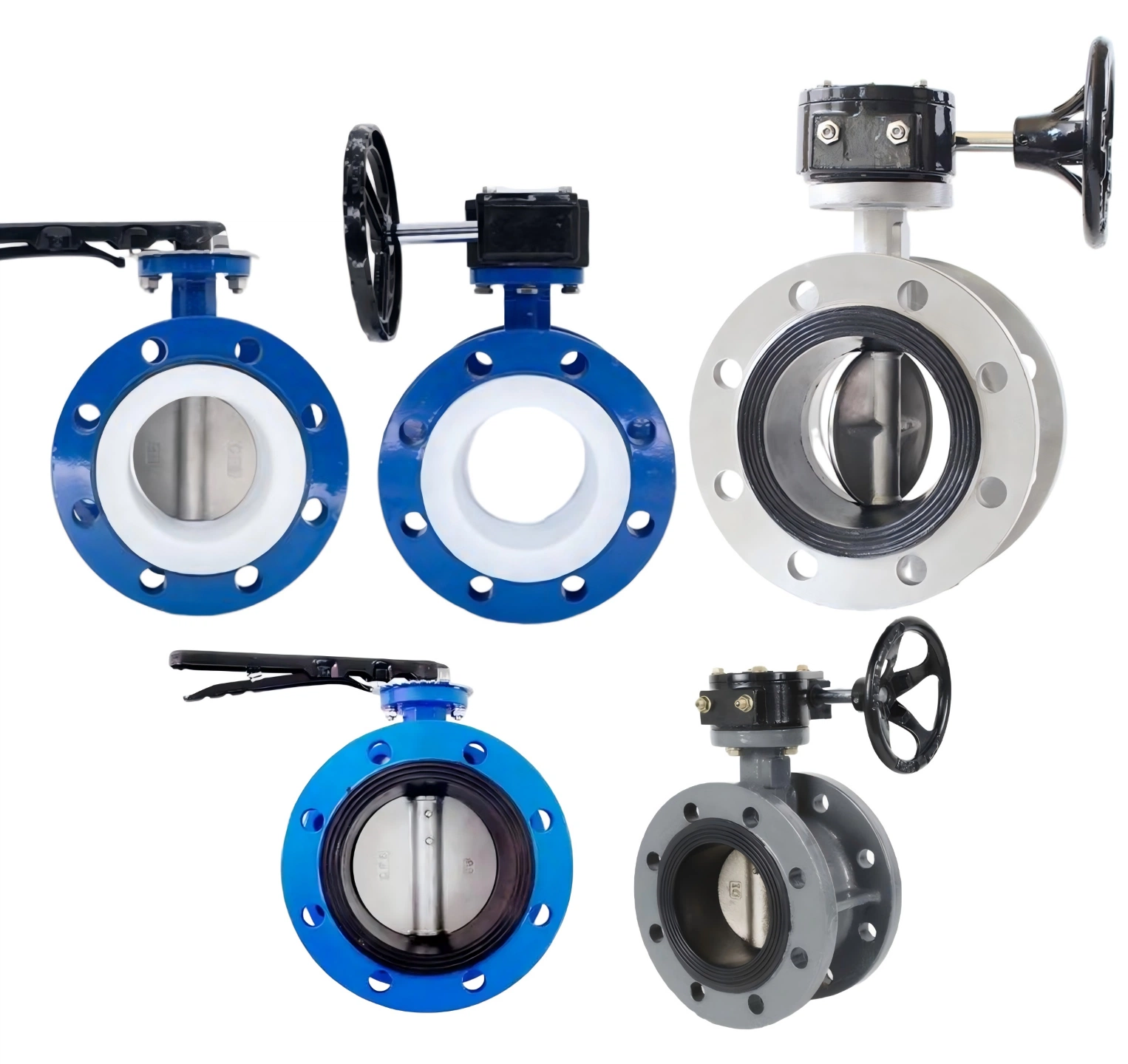
| Flanged | Own flanges bolted directly to pipe flanges | Yes — and longest face-to-face, heaviest | 1.8 – 2.5× |
The key rule: if you ever need to remove the valve while one side of the line stays pressurized, use lug — not wafer. This matters on fire-water rings, pump isolation, bypass lines, and any “critical” line where draining the whole loop for maintenance is unacceptable. See wafer vs lug butterfly valve for the full decision guide.
Worked Example: Surabaya Water Plant Wafer-to-Lug Retrofitting
Step 1 — Problem
A Surabaya (Indonesia) municipal water plant upgrade tender specified 36× DN300 (12″) wafer butterfly valves for the raw-water intake ring main, on the basis that “wafer is cheaper and works fine.” The contractor bought ductile-iron wafer valves with EPDM seats, PN16, gear-operated. The valves were installed in Q3 2025, the plant was commissioned, and everything ran fine for 8 months. In Q2 2026, the plant operations team discovered that 4 of the 36 valves had developed seat leakage during routine isolation testing. The ops team wanted to remove just one leaking valve, replace the seat, and put it back — without draining the entire 8-km raw-water ring main. They disconnected the downstream flange bolts on that valve, expecting the upstream side to stay pressurized. The wafer body — which has no own flanges — slipped out of the line because there was nothing holding it in place against the upstream pressure. The raw-water ring main blew out, flooding the pump room, and the plant had to shut down for 14 hours.
Step 2 — Root cause analysis
The contractor had specified wafer style because it was cheaper, but the plant operations requirement was one-side maintenance on a live raw-water ring. Wafer butterfly valves physically cannot hold against pressure on only one side — they are sandwiched between two flanges, and if you remove bolts on one side, the valve has no anchor. The spec sheet never addressed one-side maintenance, and the valve supplier did not flag the requirement. This is a classic wafer-vs-lug specification failure.
Step 3 — Correct retrofit
The plant engineer retrofitted all 36 valves to lug-style butterfly valves with threaded inserts on the body, allowing each valve to be isolated from one side while the other side of the line stays pressurized. Chuanglan Valve supplied 36× DN300 lug-style CF8M butterfly valves, PN16, with EPDM seats and gear operators — air-shipped to Surabaya within 10 days. The retrofit took 3 days of planned shutdown (vs the 14-hour unplanned shutdown that triggered it), and the plant has run dry for 6 months since. The unit cost was ~30% higher than the original wafer version, but the alternative (another unplanned raw-water blowout) was 100× that.
Step 4 — Outcome
• The plant added a permanent line to every future valve spec: “Valve style: lug, for one-side maintenance on a live ring main. Wafer style only acceptable where both sides of the line can be depressurized during maintenance.”
• The contractor’s design team now reviews every valve spec for maintenance philosophy before tender award.
• Lesson: wafer is 30% cheaper than lug, but only if the maintenance philosophy allows both-side depressurization. If your ops team expects to isolate one side of a live ring main, pay the 30% premium for lug — it’s the cheapest insurance you’ll buy.
How Chuanglan Specs Every Wafer Butterfly Valve Quote
Size DN50–DN600 standard; custom DN700+ on request for water treatment and cooling towers
Body material: ductile iron / WCB / CF8 / CF8M / CF3M / 2205 duplex — with EN 10204 3.1 MTC tied to body heat number
Seat: EPDM (water) / NBR (oil) / Viton FKM (hot) / PTFE (chemical) — temperature range specified on datasheet
Operation: handle / gear / pneumatic / electric — with ISO 5211 mounting pad for standard actuator interchangeability
Optional third-party inspection (SGS / BV / Intertek / Lloyd’s) witnessing shell and seat hydrostatic tests
Need a Wafer or Lug Butterfly Valve Quote for Your Next Project?
Send us your size, pressure, body material, seat material, and maintenance philosophy — our engineers will recommend the right style (wafer vs lug) and reply within 24 hours.
Get Free Sizing Report → WhatsApp usCommon Applications
Wafer butterfly valves are the default choice for:
- Water treatment plants — raw water intake, filter backwash, clear water distribution (PN10/PN16, ductile iron or CF8M body, EPDM seat)
- HVAC chilled/hot water — AHUs, cooling towers, primary/secondary loops (EPDM seat, ductile iron body, handle or gear operator)
- Cooling towers (closed-loop fresh water) — isolation and bypass valves on cooling-tower headers (CF8M body for coastal plants)
- Fire-water systems — fire-water ring main isolation (but use lug style for one-side maintenance per NFPA requirements)
- General industrial shutoff — chemical, pulp & paper, food & beverage (with appropriate body and seat material)
Wafer butterfly valves are not suitable for: sour H₂S oil & gas service (requires ISO 15156-qualified body material, typically 316 / duplex / Inconel); cryogenic service below -40°C (requires extended-bonnet design); and throttling control over 30% of flow range (butterfly valves are shutoff-style, not control-valve-style — for precise throttling, use a globe valve).
Southeast Asia & Middle East Market Notes
For clients in Southeast Asia, wafer butterfly valves dominate water treatment and HVAC projects: Jakarta, Surabaya, Bangkok, Ho Chi Minh, Manila municipal water plants, and shopping-mall / factory chilled-water systems all use DN100–DN600 wafer butterfly valves as the default isolation valve. The most common specification error in Southeast Asia is ductile-iron body on coastal projects — Surabaya, Jakarta coastal, and Phuket have salt-laden air that rusts ductile iron in 2-3 years. Always use CF8M (316) body for coastal water plants, and 2205 duplex for direct seawater cooling. The Surabaya worked example above is a real project — we now review every water-plant valve spec for maintenance philosophy before quoting.
For clients in the Middle East, wafer butterfly valves dominate district cooling (Tabreed in UAE, QCool in Qatar, Marafiq in Saudi Arabia) and cooling-tower systems. Because the Middle East uses open seawater cooling loops on almost every large district-cooling plant, 2205 duplex body is the standard for the seawater side, with CF8M for the closed fresh-water side. Saudi Aramco SAES-L-350 and ADNOC ICV additionally require API 609 certification and EN 10204 3.1 MTC for any valve on a hydrocarbon service, but for cooling water and fire-water, EN 593 + CE PED is typically sufficient. Always specify lug style for fire-water ring maintenance per NFPA, not wafer.
Chuanglan Valve ships wafer butterfly valves and flanged butterfly valves in ductile iron / CF8M / CF3M / 2205 duplex, with EPDM / NBR / Viton / PTFE seats, handle / gear / pneumatic / electric operation, full EN 10204 3.1 MTC, and optional third-party inspection. Serving EPC Contractors Across Southeast Asia & Middle East · ISO 9001:2015 · Established in 2009 · MOQ 1 piece, 7–15 day standard delivery.
Common Mistakes to Avoid
- Specifying 304 stainless for coastal or chloride service. If your project is in Southeast Asia (coastal, cooling tower, deicing salts) or the Middle East (desalination, SWRO, humid Gulf climate), 304 will pit within 1–3 years. Specify CF8M (316) or duplex 2205.
- Ignoring pressure-temperature derating. PN16 / Class 150 ratings apply at room temperature only. At 200°C the allowable pressure drops by roughly 40–50%. Always check the manufacturer’s P-T chart before specifying for steam, hot oil, or thermal fluid.
- Buying on price without MTC verification. “Stainless steel” is not enough — ask for EN 10204 3.1 MTC tied to the heat number, and arrange PMI (XRF) witness at the factory if the price is 20% below market. 304 passed off as 316L is the single most common failure in this industry.
- Forgetting face-to-face and flange drilling. A “PN16” wafer valve from one manufacturer may not match the existing flange drilling or face-to-face of another. Always confirm dimensions against EN 558 / API 609 / ASME B16.10 before replacing an installed valve.
FAQ
What is the difference between wafer and lug butterfly valves?
Wafer body is a thin disc clamped between two pipe flanges; through-bolts pass straight through. Lug body has threaded inserts on the body, so bolts go into each lug from each side. The key difference: wafer requires both sides of the line to be depressurized for maintenance; lug allows one-side maintenance (isolate and replace the valve while the other side of the line stays pressurized). Lug costs ~30% more.
What size range do wafer butterfly valves come in?
Standard range is DN50–DN600 (2″–24″). Chuanglan Valve also supplies DN700, DN800, DN1000, and larger for water-treatment and cooling-tower projects on request.
What pressure rating is typical for a wafer butterfly valve?
PN10 and PN16 for European / metric markets (10 bar / 16 bar at room temperature), and Class 150 for US / ANSI markets (285 PSI at 38°C for WCB body). For higher pressure (PN25 / PN40 / Class 300+), use a flanged ball valve or gate valve instead — wafer style is not typically rated above PN16 / Class 150.
Can I use a wafer butterfly valve for steam service?
Not with standard EPDM / NBR seats — they derate hard above 120°C. For steam service, use a gate valve or globe valve with graphite packing and metal seat. For hot water (up to 120°C), EPDM-seated wafer butterfly is fine. For hot oil or chemical up to 200°C, use Viton FKM seat.
What body material should I use for coastal water plants?
CF8M (316 stainless) minimum. Ductile iron rusts on coastal projects in 2-3 years due to salt-laden air. For direct seawater or open cooling-tower loops with brackish water, use 2205 duplex body. See 304 vs 316L for the full material guide.
Can a wafer butterfly valve be used for flow control / throttling?
Wafer butterfly valves are primarily shutoff-style valves. They can throttle flow in a pinch (typically 30–80% open range), but for precise control over a wide flow range, use a dedicated control valve (globe valve with actuator, or a dedicated control butterfly valve with characterized disc). Standard wafer butterfly valves are not designed for continuous throttling.
What is the lead time for wafer butterfly valves from Chuanglan?
Standard stock items (DN50–DN200, ductile iron or CF8M, PN16, EPDM seat, handle or gear) ship in 5–10 days to Southeast Asia and 15–20 days to the Middle East. Custom configurations (2205 duplex, pneumatic / electric actuator, API 609 listed) take 25–35 days depending on quantity. MOQ 1 piece for stock items.
References & Standards
- API 609 — Butterfly valves: double flanged, lug, and wafer type
- EN 593 — Industrial valves — Metallic butterfly valves
- ISO 5752 — Face-to-face and end-to-end dimensions for metallic valves
- ASME B16.5 / EN 1092-1 — Flange standards
- ASTM A351 — CF8 / CF8M / CF3M castings
Related Products
Continue Reading
Request a Quotation — Reply Within 24 Hours
Send your line size, pressure rating, medium and quantity. Our engineers come back with price, drawing and lead time — no obligation.