
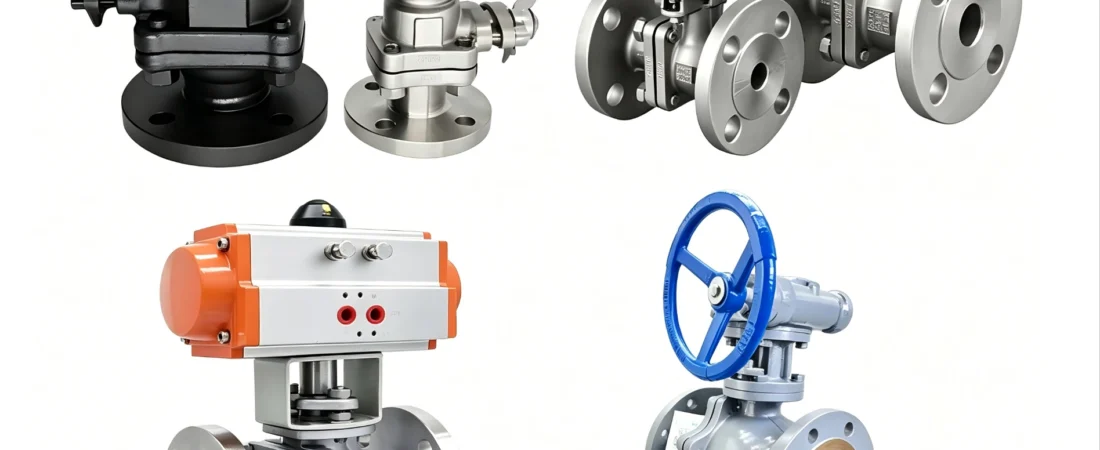
How to Read Valve Markings: WOG, WSP, PN, Class Explained
The 2026 engineer’s guide to decoding the cast markings on any valve body — WOG (water/oil/gas cold pressure), WSP (working steam pressure), PN (European bar-rating), Class (ASME pressure-temperature class), plus body material codes (WCB / CF8 / CF8M / CF3M) and industry standards (API 6D / 608 / 609 / EN 593). Includes a Bangkok HVAC hot-water loop worked example where a “150 WOG” ball valve failed on a 120°C heating loop because the buyer only read the cold-rating number.
* Standard lead time depends on order size and destination. 5–10 days to Southeast Asia, 15–20 days to the Middle East.

Quick Answer
Valve body markings encode four things at once: (1) cold pressure rating — WOG (PSI at ~21°C) or PN (bar at ~20°C); (2) hot / steam pressure rating — WSP (PSI at saturated steam temp); (3) ASME pressure-temperature class — Class 150 / 300 / 600 (which is NOT a fixed PSI number, it’s a curve that derates with temperature); and (4) body material and industry standard — WCB / CF8 / CF8M / CF3M / 2205, plus API 6D / 608 / 609 or EN 593. The single most common field failure is reading only the “150” on the body and ignoring whether it says 150 WOG, 150 WSP, or Class 150 — those three numbers are completely different ratings on the same valve. Rule of thumb: WOG is cold water/oil/gas only. WSP is steam / hot-water derated pressure. PN is European bar. Class is the ASME pressure-temperature curve — always look up the actual PSI at your operating temperature in the vendor’s pressure-temperature chart, never assume the class number equals the operating pressure.
Key Takeaways
- WOG = Water / Oil / Gas cold pressure in PSI at ~21°C — not rated for steam or hot water.
- WSP = Working Steam Pressure in PSI at saturated steam temperature — always much lower than WOG for the same valve.
- PN10 / PN16 / PN40 = European nominal pressure in bar — 16 bar ≈ 232 PSI at room temp.
- Class 150 / 300 / 600 = ASME pressure-temperature class — NOT a fixed PSI; it derates at high temperature.
On This Page
Valve markings look like a confusing code at first — WOG, WSP, PN16, Class 150, CF8M, API 608… But once you understand what each marking means, you’ll know exactly what a valve is rated for and whether it fits your application. As a valve manufacturer with experience since 2009, we break down every common valve marking in plain English.
1. WOG: Water, Oil, Gas (Cold Pressure)
WOG stands for Water, Oil, Gas — it tells you the maximum pressure the valve can handle at room temperature (typically ~21°C / 70°F). The number after WOG is the pressure in PSI. WOG is the most common marking on small threaded brass / carbon-steel ball valves, gate valves and check valves used in HVAC, compressed-air and general water service.
| Valve Marking | Meaning | Common Applications |
|---|---|---|
| 150 WOG | 150 PSI cold pressure (~10 bar) | Low-pressure water, HVAC, compressed air |
| 1000 WOG | 1000 PSI cold pressure (~69 bar) | General industrial, hydraulic, process |
| 2000 WOG | 2000 PSI cold pressure (~138 bar) | High-pressure process, injection water |
| 3000 WOG | 3000 PSI cold pressure (~207 bar) | Oil & gas wellhead, high-pressure systems |
Important: WOG is only for room temperature. If you’re using hot water (above ~60°C) or steam, you must look at the WSP rating instead — WOG derates hard as temperature rises.
2. WSP: Working Steam Pressure
WSP stands for Working Steam Pressure — it tells you the maximum pressure the valve can handle with saturated steam or high-temperature hot water. This is always much lower than the WOG rating, because steam weakens the valve body material (carbon-steel castings soften above 250°C, and PTFE seats start to creep above 200°C).
| Valve Marking | Steam Pressure Rating | Temperature Range |
|---|---|---|
| 150 WSP | 150 PSI saturated steam | Up to ~+185°C / 365°F |
| 200 WSP | 200 PSI saturated steam | Up to ~+215°C / 420°F |
| 300 WSP | 300 PSI saturated steam | Up to ~+245°C / 473°F |
Rule of thumb: For every ~50°C increase in temperature, the pressure rating of a carbon-steel valve drops by roughly 20–30%. A valve marked “1000 WOG / 200 WSP” will hold 1000 PSI cold but only 200 PSI with steam. For steam service, always specify a valve with an extended bonnet and graphite / metal seat, not a standard PTFE-seated ball valve. For steam isolation, see our flanged globe valves and rising-stem flanged gate valves — designed for steam throttling and isolation, with graphite packing and metal-seated options.
3. PN: European Pressure Rating
| PN Rating | Equivalent PSI (~20°C) | Common Use |
|---|---|---|
| PN10 | 145 PSI (10 bar) | Water treatment, HVAC, large cooling water |
| PN16 | 232 PSI (16 bar) | General industry — the most common PN rating |
| PN25 | 362 PSI (25 bar) | Process industry, chemical, steam |
| PN40 | 580 PSI (40 bar) | High-pressure process, oil & gas, boiler feed |
PN stands for Pression Nominale (Nominal Pressure) — it’s the European (DIN / EN) standard for pressure ratings, measured in bar. PN is the nominal pressure the valve can hold at ~20°C; it also derates at higher temperature per EN 1092-1 and EN 12516.
4. Class: ASME Pressure-Temperature Class
Class (also called “Lb” or “Rating”) is the American (ANSI / ASME) standard for pressure ratings. Unlike PN, Class is NOT a direct bar / PSI number — it’s a pressure-temperature class curve defined in ASME B16.34. A Class 150 valve holds 285 PSI at 38°C, but only 170 PSI at 400°C, and only 100 PSI at 600°C for WCB body material.
| Class Rating | Approx. PN Equivalent | PSIG at ~38°C (100°F) |
|---|---|---|
| Class 150 | PN20 (≈ PN16 in practice) | 285 PSI (WCB) |
| Class 300 | PN50 (≈ PN40 in practice) | 740 PSI (WCB) |
| Class 600 | PN100 | 1480 PSI (WCB) |
| Class 1500 | PN250 | 3705 PSI (WCB) |
Quick reference: For most general industrial use, Class 150 ≈ PN16 and Class 300 ≈ PN40 at room temperature. But at high temperature the two systems diverge — always check the pressure-temperature chart for your specific body material. See our ball valve pressure rating guide for the full Class-vs-PN cross-reference table, and ANSI vs DIN vs JIS valve standards for the flange-drilling difference.
5. Other Common Valve Markings
| Marking | Meaning | What It Tells You |
|---|---|---|
| WCB | Carbon-steel body (ASTM A216 WCB) | General purpose, oil & gas, water, steam |
| CF8 / CF8M | Cast 304 / cast 316 stainless | Corrosion resistant, food / pharma / coastal |
| CF3M | Cast 316L (low carbon) | Welded stainless piping, hygienic service |
| API 6D | Pipeline valve standard | Long-distance transmission pipelines |
| API 608 | Metal ball valve standard | Refinery / process ball valves |
| API 609 | Butterfly valve standard | General industrial / oil & gas |
| EN 593 | European industrial butterfly valve | HVAC / water treatment / general industry |
| CE | European Conformity (PED) | Meets EU safety / pressure-equipment directive |
Besides pressure ratings, you’ll also see these markings cast or stamped on valve bodies:
Worked Example: Bangkok Hot-Water Loop Failure
Step 1 — Problem
A Bangkok hotel renovation project installed a new central heating hot-water loop at 120°C / 6 bar (174 PSI) supply. The mechanical contractor, working from a low-cost supplier catalog, specified “DN50 (2″) brass ball valve, 1000 WOG” — because the catalog headline said “1000 WOG rated” and the loop was only 174 PSI. The contractor assumed 1000 WOG means the valve holds 1000 PSI at any temperature. The valves were installed in January. By March — two months into the hot season, with the loop running 24/7 — two of the twelve DN50 valves weeping at the stem seal, and one failed catastrophically at 2 a.m., spraying hot water across the hotel’s main ballroom during a wedding event. The hotel lost that weekend’s event revenue and had to dry out the ballroom.
Step 2 — Root cause analysis
The contractor read only the “1000 WOG” cold-pressure number. WOG is the room-temperature rating — 1000 PSI at ~21°C. At 120°C, the same brass valve derates to roughly 250–300 PSI on a PTFE seat — but the loop was running at 174 PSI, which should have been fine… except: (1) the valve was a brass C37700 body with a PTFE seat, and PTFE creep above 110°C causes stem-seal weep even below the cold pressure rating; (2) the contractor never checked the WSP rating on the valve, which for this model was only 150 WSP at saturated-steam temperature; (3) the loop had water hammer from the circulation pump start-stop, which spikes 2× the steady-state pressure. The combination of PTFE creep + water-hammer spikes pushed the valve past its derated hot rating.
Step 3 — Correct specification
The correct valve for a 120°C / 6 bar hot-water loop is a flanged (or threaded) ball valve with: (1) a carbon-steel or stainless-steel body (not brass), (2) an RTFE or reinforced PEEK seat (not plain PTFE), (3) graphite-reinforced stem packing (not PTFE rope), and (4) a pressure rating confirmed at the actual operating temperature — e.g., “Class 150 CF8M ball valve, RTFE seat, rated 290 PSI at 120°C per ASME B16.34.” Chuanglan replaced all 12 valves within 10 days with flanged ball valves in CF8M (316 stainless) with RTFE seats and graphoil packing, air-shipped to Bangkok, and the loop has run dry for 18 months since.
Step 4 — Outcome
• The replacement valve unit cost was roughly 4× the original brass ball valve — but the alternative (another wedding-event failure, another hotel lawsuit) was 200× that.
• The contractor added a permanent line to every future hot-water RFQ: “Valve body material: CF8M, seat: RTFE, packing: grafoil, pressure rating verified at 130°C per ASME B16.34, not WOG cold rating.”
• Lesson: a valve marked “1000 WOG” is a cold-pressure rating, not a hot-pressure rating. Always ask the supplier for the pressure-temperature derating chart for your specific body material and seat.
How Chuanglan Names & Ratings Every Valve
Body material cast on the valve: WCB / CF8 / CF8M / CF3M / 2205 — tied to the heat number on the EN 10204 3.1 MTC
Pressure class cast on the valve: Class 150 / 300 / 600 OR PN16 / PN40 / PN100 — with the full ASME B16.34 or EN 12516 pressure-temperature chart in the datasheet
Seat and packing specified in the datasheet: PTFE / RTFE / PEEK / metal — never leave the customer guessing whether it’s suitable for hot water or steam
Optional third-party inspection (SGS / BV / Intertek / Lloyd’s) witnessing shell and seat hydrostatic tests at room temperature AND elevated temperature on request
Not Sure If Your Valve Marking Fits Your Operating Temperature?
Send us the valve body photo and your operating temperature + pressure — our engineers will tell you whether the valve is correctly rated for your service and reply within 24 hours with a derating calculation.
Get Free Sizing Report → WhatsApp usHow to Read a Valve Nameplate
A typical valve nameplate (or cast body) will have all the information you need to identify the valve:
Example: 2″ CF8M Ball Valve, PN16, RF Flanged, API 608, CE, Heat No. 230715
This means: 2 inch size, 316 stainless steel body (CF8M), 16 bar pressure rating, raised-face flanged ends per EN 1092-1, meets API 608 metal ball-valve standard, CE PED marked, and heat number 230715 ties back to the EN 10204 3.1 MTC. If any of these fields is missing on your datasheet, ask the supplier — a real valve shipment always has all seven fields.
Southeast Asia & Middle East Market Notes
For clients in Southeast Asia, the practical mix is: HVAC and district-cooling contractors (Bangkok, Jakarta, Manila, Ho Chi Minh) overwhelmingly buy PN16 / EN 1092-1 rated valves, because Chinese and European HVAC package drawings use PN. Oil & gas EPCs in the region (Pertamina, Petronas, PTT, SKK Migas projects) always require ASME Class 150 / 300 / 600 with API 6D / 608 / 609 documentation, because the Korean and Japanese EPCs default to ANSI. The most common site-confusion in Southeast Asia is when a hotel or factory mechanical contractor buys “1000 WOG” brass ball valves for a chilled-water loop that later gets upgraded to hot water — the cold-pressure number looks big, but the hot rating is too low. Always ask: “what’s the WSP / hot-water derating at my operating temperature?” not just “what’s the WOG rating?”
For clients in the Middle East, the pressure-class requirements are much stricter. Saudi Aramco SAES-L-110 / SAES-L-350, ADNOC ICV, KOC / KNPC, and QatarEnergy North Field LNG all require ASME B16.34 pressure-temperature class documentation — not just a stamped “Class 150” on the body. The owner’s engineering team will reject any valve shipment that does not include a documented pressure-temperature chart showing the actual PSI at the design operating temperature (typically 100°C for cooling water, 200°C for process, 400°C for steam). Hot-water and steam service in UAE / Saudi district cooling (Tabreed, QCool, Marafiq) additionally require 200 WSP / 300 WSP rated valves with graphite packing, never plain PTFE-seated brass valves. Direct seawater service requires 2205 duplex body — see our seawater butterfly valve guide for that material selection.
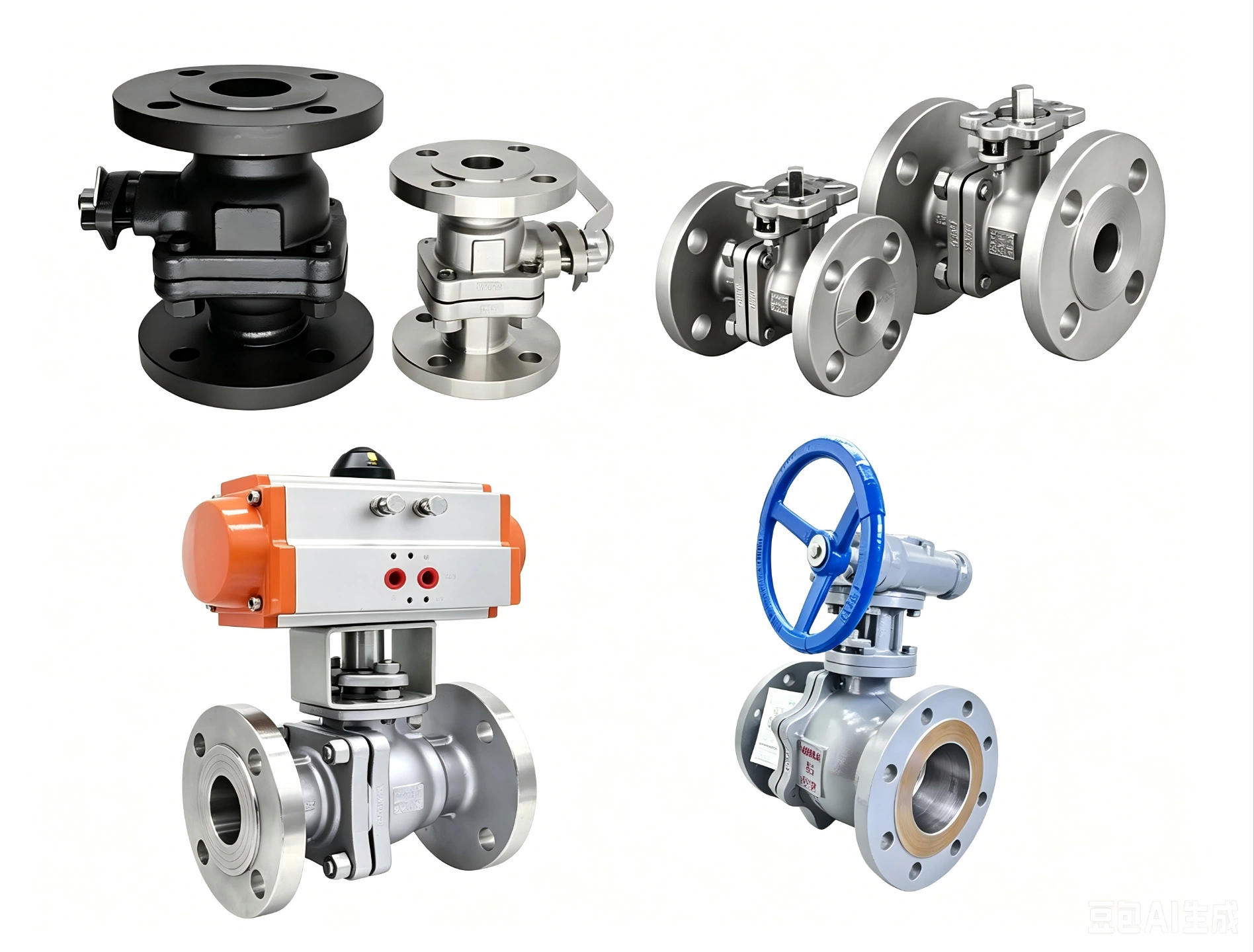
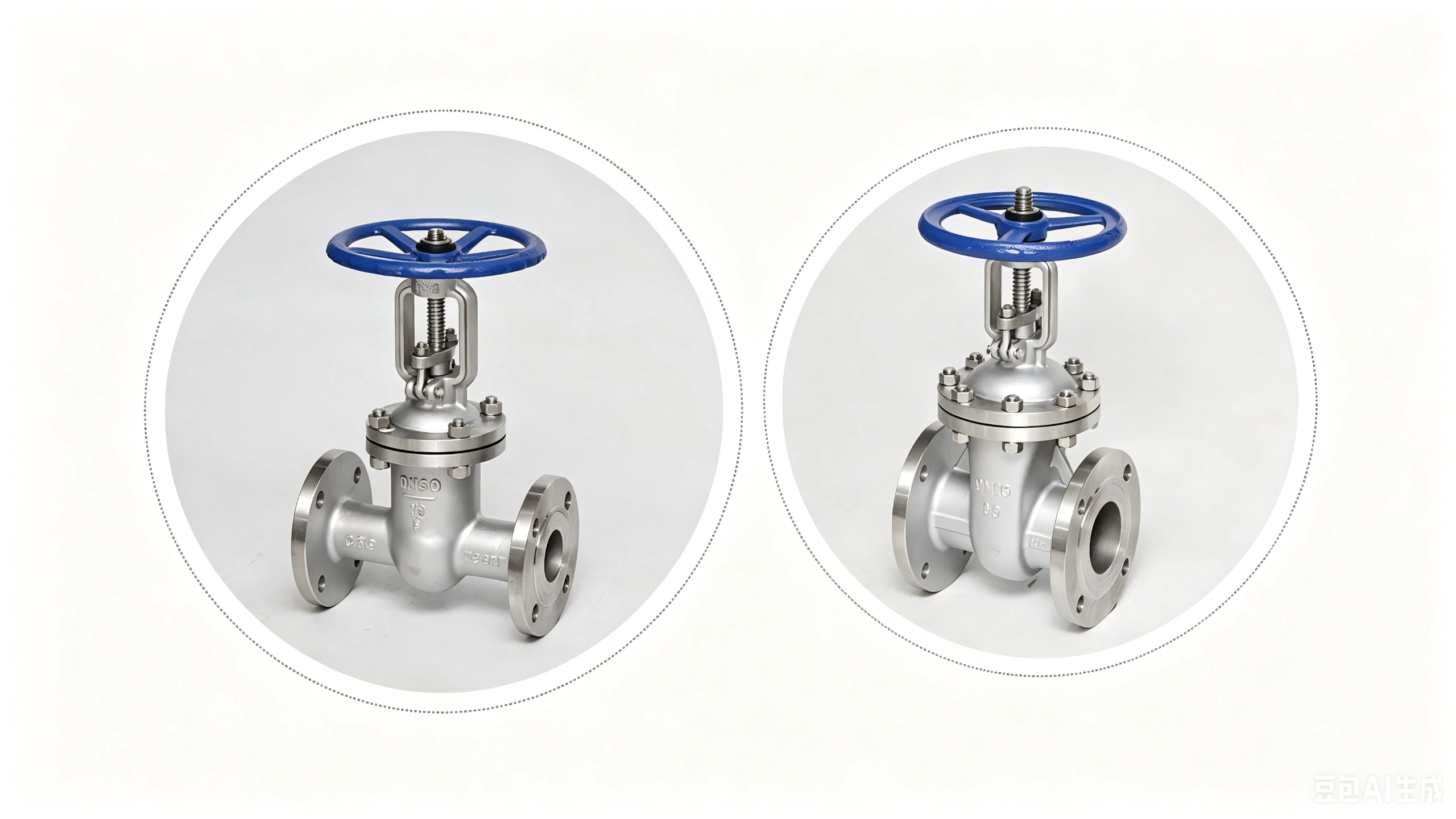
Chuanglan Valve ships flanged valves with full pressure-temperature documentation — flanged ball valves, rising-stem gate valves, globe valves, wafer butterfly valves, flanged butterfly valves, swing check valves, and wafer dual-plate check valves — in Class 150 / 300 / 600 / 900 and PN10 / PN16 / PN40 / PN100, with CF8M / CF3M / WCB / 2205 body options, RTFE / PEEK / metal-seated options, full EN 10204 3.1 MTC, and third-party witness inspection (SGS / BV / Intertek / Lloyd’s). Serving EPC Contractors Across Southeast Asia & Middle East · ISO 9001:2015 · Established in 2009 · MOQ 1 piece, 7–15 day standard delivery.
Common Mistakes to Avoid
- Specifying 304 stainless for coastal or chloride service. If your project is in Southeast Asia (coastal, cooling tower, deicing salts) or the Middle East (desalination, SWRO, humid Gulf climate), 304 will pit within 1–3 years. Specify CF8M (316) or duplex 2205.
- Ignoring pressure-temperature derating. PN16 / Class 150 ratings apply at room temperature only. At 200°C the allowable pressure drops by roughly 40–50%. Always check the manufacturer’s P-T chart before specifying for steam, hot oil, or thermal fluid.
- Buying on price without MTC verification. “Stainless steel” is not enough — ask for EN 10204 3.1 MTC tied to the heat number, and arrange PMI (XRF) witness at the factory if the price is 20% below market. 304 passed off as 316L is the single most common failure in this industry.
- Forgetting face-to-face and flange drilling. A “PN16” wafer valve from one manufacturer may not match the existing flange drilling or face-to-face of another. Always confirm dimensions against EN 558 / API 609 / ASME B16.10 before replacing an installed valve.
FAQ
Is “150 WOG” the same as “Class 150”?
No. 150 WOG is a cold-water/oil/gas pressure rating (150 PSI at ~21°C). Class 150 is an ASME pressure-temperature class — it holds 285 PSI at 38°C, 170 PSI at 400°C, and 100 PSI at 600°C for WCB body. The “150” number is a coincidence of naming; the two ratings describe completely different things. A Class 150 valve is far more conservatively rated at high temperature than a 150 WOG valve.
Can I use a “1000 WOG” valve on a 120°C hot-water loop at 6 bar?
Usually not. 1000 WOG is the room-temperature rating. At 120°C with a PTFE seat, the same valve typically derates to roughly 250–300 PSI, and plain PTFE seats creep above 110°C causing stem-seal weep. For 120°C / 6 bar hot water, specify a Class 150 / PN16 valve with RTFE or PEEK seat and graphite packing — not a WOG-rated brass ball valve.
What is the difference between PN16 and Class 150?
They are close at room temperature (PN16 = 16 bar = 232 PSI; Class 150 = 285 PSI at 38°C for WCB). But PN16 is a European nominal-pressure rating that derates per EN 12516; Class 150 is an ASME pressure-temperature class that derates per ASME B16.34. At high temperature (above 200°C), the two diverge. They also use different flange drilling — see ANSI vs DIN vs JIS.
What does “CF8M” mean on a valve body?
CF8M is the cast-grade equivalent of 316 stainless steel (18% Cr, 10% Ni, 2-2.5% Mo, carbon ≤ 0.08%). “CF3M” is the low-carbon cast equivalent of 316L. “CF8” is 304 cast stainless. “WCB” is cast carbon steel (ASTM A216 WCB). See 304 vs 316L and WCB vs CF8 vs CF8M for the full material-selection guide.
What is the difference between API 6D, API 608 and API 609?
API 6D covers pipeline ball / gate / check valves for long-distance transmission. API 608 covers metal ball valves for refinery and process service. API 609 covers butterfly valves for general industrial and oil & gas. If your project specifies “API 608 ball valve”, a generic “ball valve” does not automatically meet that standard — require the API 608 documentation package, not just a stamped number.
Why does my valve weep at the stem even though pressure is below the rating?
Most likely the seat material (usually PTFE) is creeping at elevated temperature, or the packing is plain PTFE rope rather than graphite-reinforced. Weep below the cold pressure rating is almost always a temperature-derating issue, not a body-pressure issue. Switch to RTFE / PEEK seats and grafoil packing for hot-water or steam service.
Can Chuanglan supply a full pressure-temperature chart with every valve?
Yes. Every valve quotation includes a documented pressure-temperature derating chart for the specified body material (WCB / CF8 / CF8M / CF3M / 2205), seat material (PTFE / RTFE / PEEK / metal), and standard (ASME B16.34 / EN 12516). We can also arrange third-party hydrostatic testing at elevated temperature (SGS / BV / Intertek / Lloyd’s) on request. MOQ 1 piece, 7–15 day standard delivery.
References & Standards
- ASME B16.34 — Valves — Pressure-Rating
- ASME B16.5 — Pipe Flanges and Flanged Fittings
- EN 12516 — Industrial valves — Shell design strength
- API 6D / API 608 / API 609 — Pipeline, Ball, Butterfly Valves
- EN 593 — Industrial valves — Metallic butterfly valves
Related Products
Continue Reading
Request a Quotation — Reply Within 24 Hours
Send your line size, pressure rating, medium and quantity. Our engineers come back with price, drawing and lead time — no obligation.