
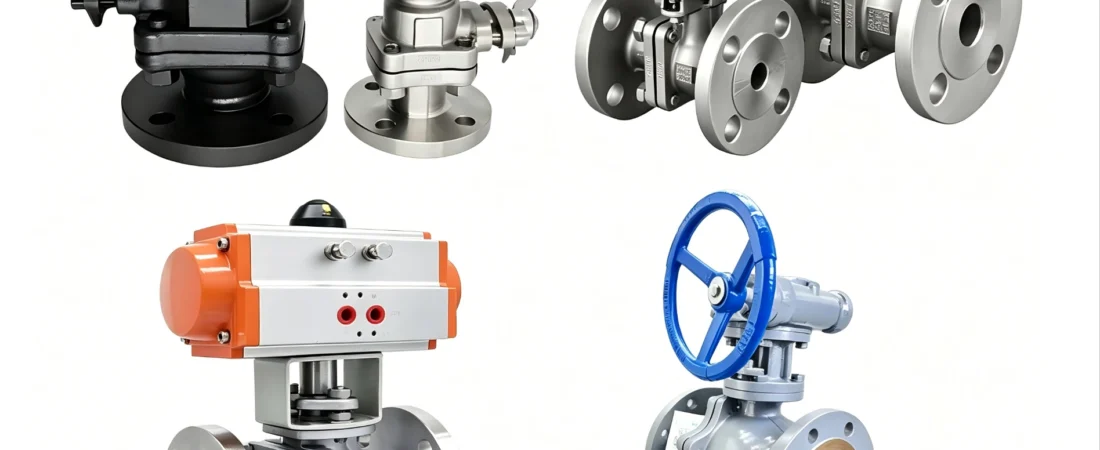
Valve Body Materials: WCB vs CF8 vs CF8M Comparison
The complete 2026 guide to the three most common valve body cast materials — WCB (cast carbon steel), CF8 (cast 304 stainless), and CF8M (cast 316 stainless). What the ASTM designations mean, chemical composition, mechanical and temperature performance, relative cost comparison, which material to choose for water, oil, gas, seawater, bleach, chemicals or cryogenic service, common buying mistakes to avoid, and Southeast Asia / the Middle East project notes.
* Standard lead time depends on order quantity and destination country. 5–10 days to Southeast Asia, 15–20 days to the Middle East.

Quick Answer
WCB = cast carbon steel — cheapest body material, good for clean water / oil / gas at -29°C to +425°C, but it rusts outdoors and must be coated. CF8 = cast 304 stainless — adds 18% Cr + 8% Ni, good general corrosion resistance, goes down to cryogenic (-196°C), but still no molybdenum so it pits in chloride (seawater, bleach, coastal humidity). CF8M = cast 316 stainless — adds 2–3% Mo on top of CF8, the standard choice for seawater, bleach / NaOCl, coastal outdoor service, acid / alkali dosing, food / pharma, and chloride-containing media. Rough cost order: WCB is the base, CF8 is about 60% higher, CF8M is about 90% higher. If the medium contains any chloride (seawater, cooling-tower water with chlorine, bleach, coastal outdoor) the answer is always CF8M — never CF8, never WCB.
Key Takeaways
- WCB (carbon steel) = clean oil / gas / water, indoor, coated outdoor only · cheapest body · brittle below -29°C.
- CF8 (cast 304) = general outdoor, water, food, mild chemicals, cryogenic · no Mo → pits in chloride.
- CF8M (cast 316) = 2–3% Mo · seawater, bleach, coastal outdoor, acid / alkali dosing · always require Mo ≥ 2.0% on EN 10204 3.1 MTC.
- Above ~1,000 ppm chloride / Gulf seawater at 40°C → step up to 2205 duplex or super-duplex 2507, not 316.
On This Page
Related reading: our stainless steel valve price guide breaks down how body grade, size and order quantity move the final cost.
1. What Do These Designations Mean?
These are ASTM standard designations for cast valve body materials. The letter / number code tells you the exact alloy composition:
| Designation | Common Name | Material Type | Equivalent Forged |
|---|---|---|---|
| WCB | Carbon Steel Casting | Carbon steel (cast) | A105 (forged) |
| CF8 | 304 Stainless Steel (cast) | 18/8 stainless (cast) | F304 (forged) |
| CF8M | 316 Stainless Steel (cast) | 18/10 with Mo (cast) | F316 (forged) |
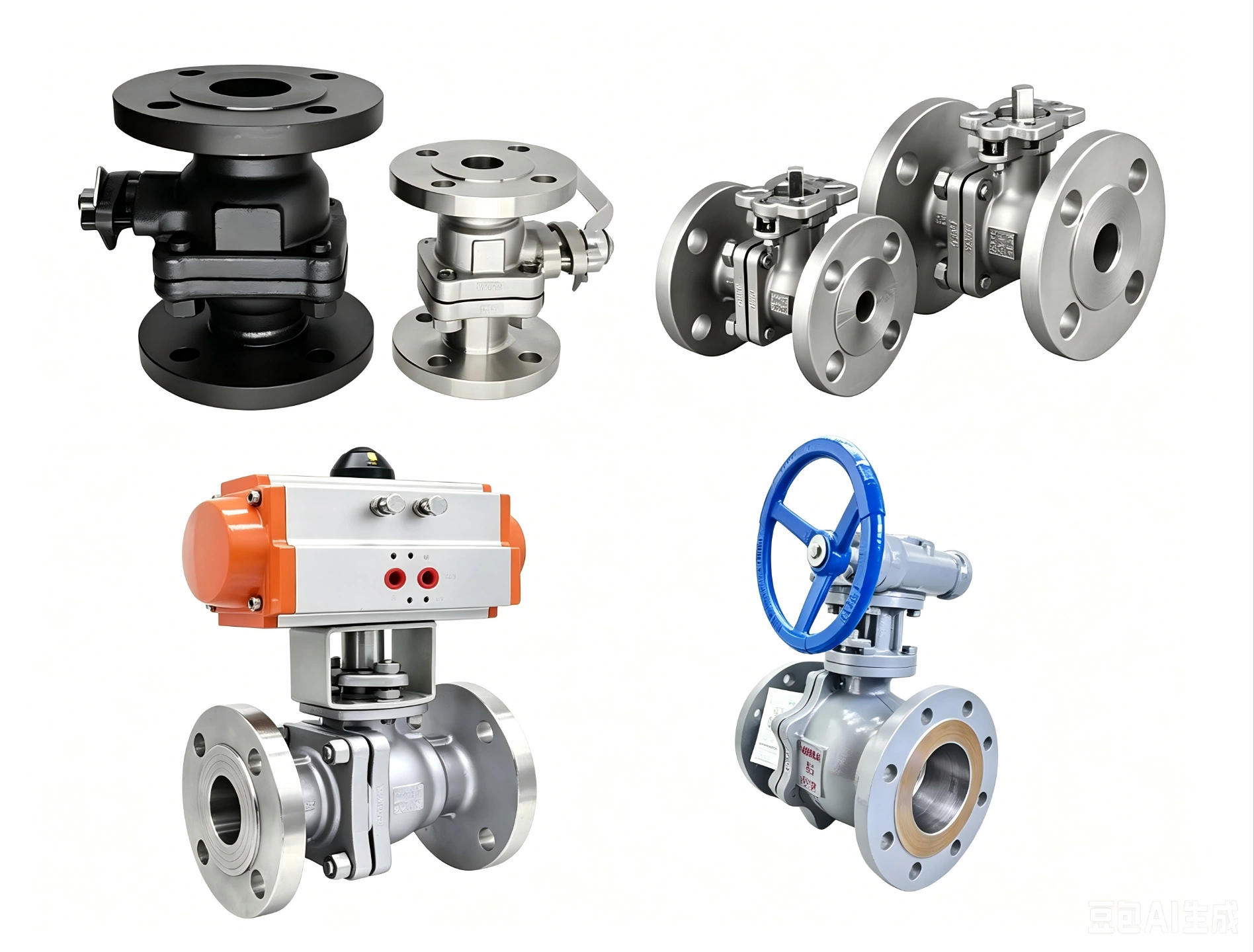
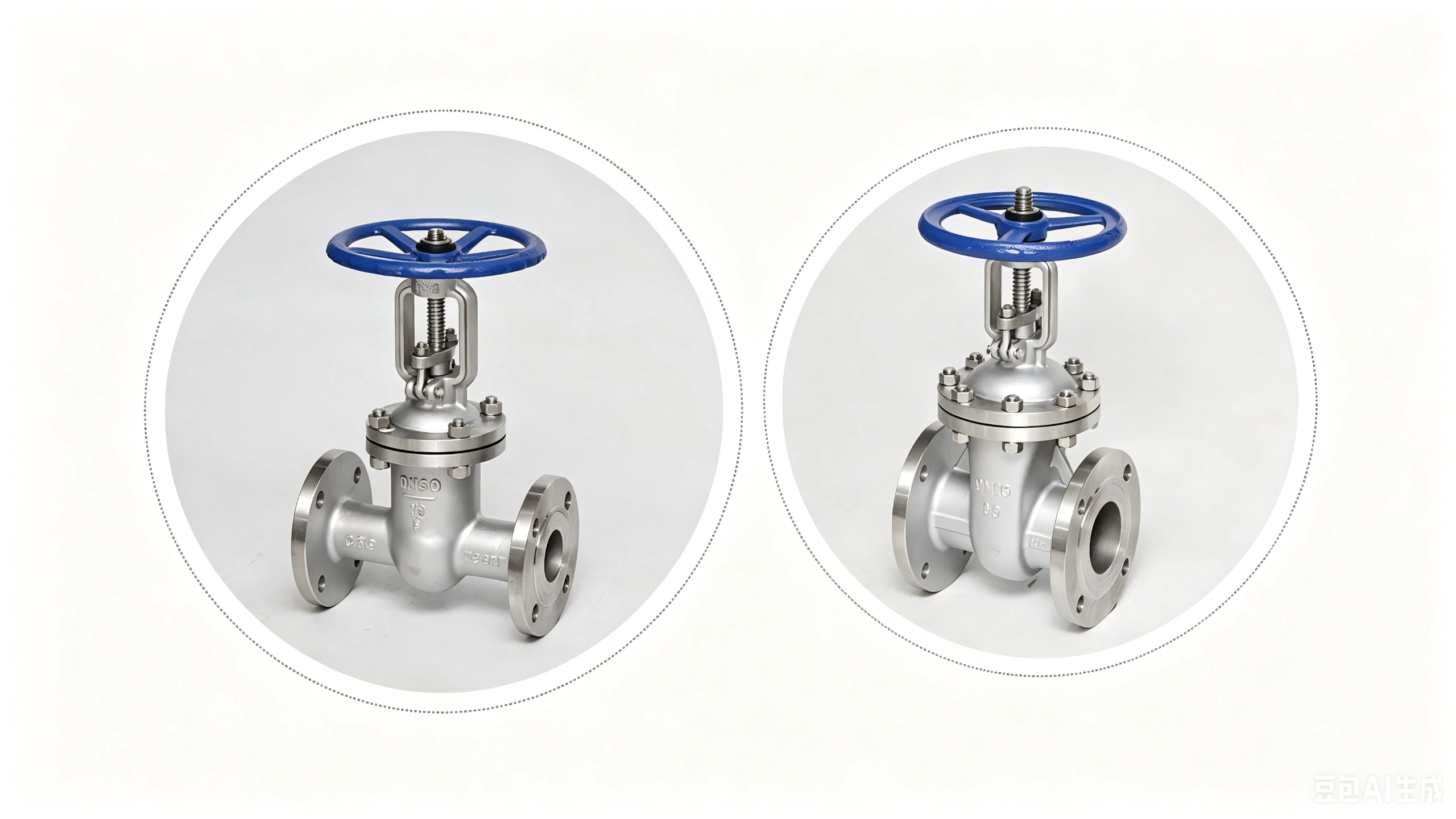
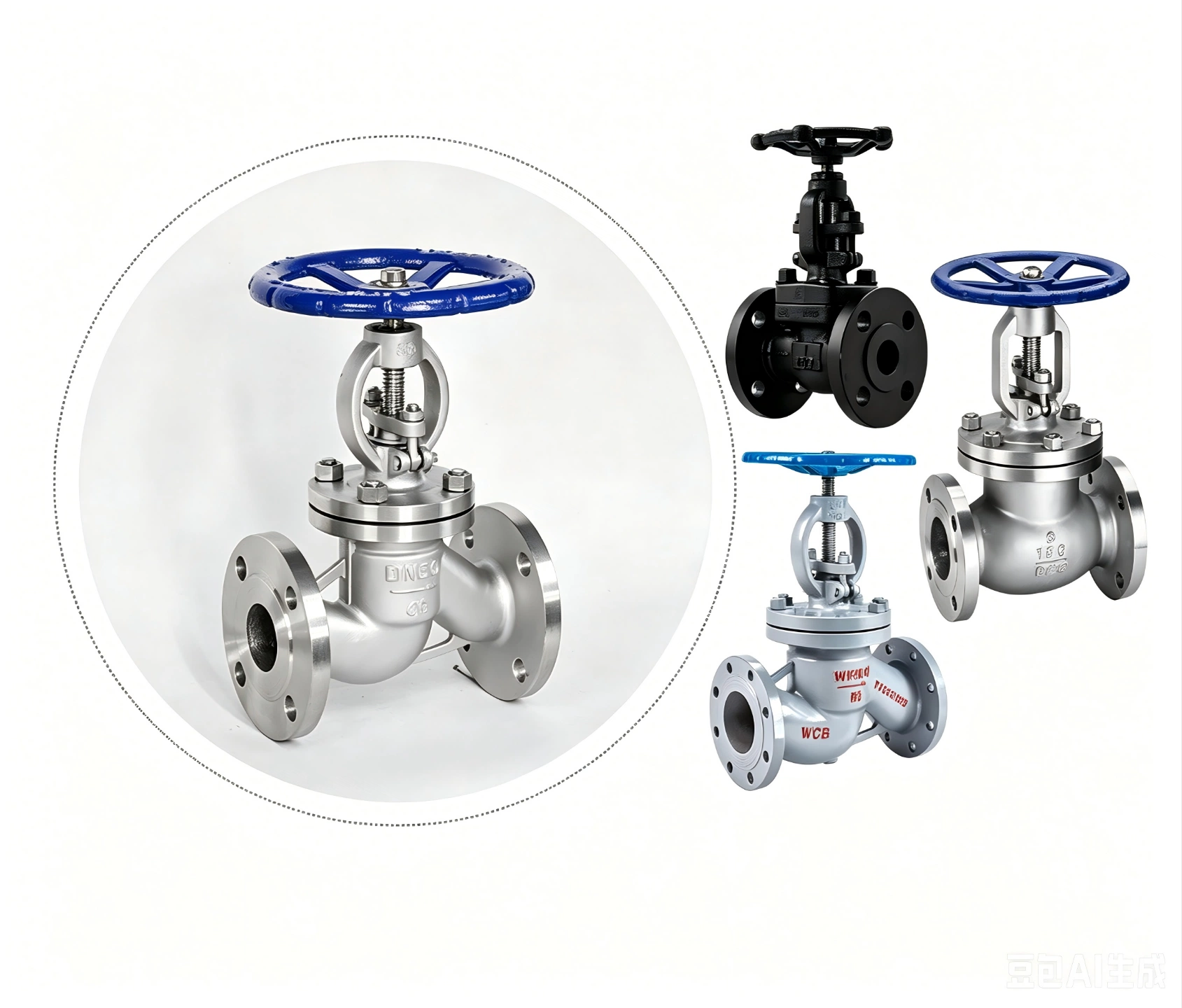
Quick decode: The “C” means corrosion-resistant alloy (stainless). The “F” means cast. The number tells you the alloy type: 8 = 18/8 (304), 8M = 18/10 with molybdenum (316). See our flanged ball valves, flanged gate valves, and flanged globe valves available in all three body materials.
2. Chemical Composition Comparison
Here’s the exact chemical composition of each material (weight %):
| Element | WCB | CF8 | CF8M |
|---|---|---|---|
| Carbon (C) | ≤ 0.30% | ≤ 0.08% | ≤ 0.08% |
| Chromium (Cr) | — | 18.0 – 21.0% | 18.0 – 21.0% |
| Nickel (Ni) | — | 8.0 – 11.0% | 9.0 – 12.0% |
| Molybdenum (Mo) | — | — | 2.0 – 3.0% |
| Manganese (Mn) | ≤ 1.00% | ≤ 1.50% | ≤ 1.50% |
The key difference: WCB is plain carbon steel (no chromium, no nickel). CF8 adds chromium and nickel (stainless). CF8M adds molybdenum on top of that — which is exactly what makes it resistant to chloride pitting and acid corrosion. The same molybdenum rule applies to our stainless steel flanges and stainless seamless pipe: always check for Mo content when chloride is present.
3. Mechanical & Temperature Performance
| Property | WCB (Carbon Steel) | CF8 (304 SS) | CF8M (316 SS) |
|---|---|---|---|
| Min. Temperature | -29°C (-20°F) | -196°C (-320°F) cryogenic | -196°C (-320°F) cryogenic |
| Max. Temperature | +425°C (+800°F) | +425°C (+800°F) | +425°C (+800°F) |
| Tensile Strength (min) | 485 MPa | 485 MPa | 485 MPa |
| Corrosion Resistance | Poor (rusts easily) | Good (general corrosion) | Excellent (chloride / acid) |
| Weight (similar size) | 100% reference | ~100% (similar) | ~100% (similar) |
Key takeaway: All three have similar strength and a similar upper temperature limit. The real differences are in corrosion resistance and low-temperature service. WCB can’t go below -29°C (it gets brittle), but CF8 / CF8M can go down to cryogenic temperatures.
4. Relative Cost Comparison
The body material drives a large part of the final valve cost. For the same size, trim, and pressure class, expect roughly:
| Body Material | Relative Cost (same valve, same spec) | Vs WCB |
|---|---|---|
| WCB (Carbon Steel) | Base | 100% reference |
| CF8 (304 SS) | Moderate | ~ +60% over WCB |
| CF8M (316 SS) | Higher | ~ +90% over WCB |
As a rule of thumb, expect to pay about 60% more for CF8 over WCB, and about 90% more for CF8M over WCB. On larger valves (DN100+), the gap widens even more because the raw material weight dominates. Molybdenum itself is roughly 3–5× the cost of nickel per kg, and CF8M castings also have a higher foundry scrap rate — that is why CF8M sits above CF8.
5. Worked Example: Yangon Textile Dyeing Chloride Failure
Step 1 — Problem
A textile dyeing factory in Yangon, Myanmar, operated 8 × DN50 PN16 flanged ball valves on the chemical dosing line serving 6 jet dyeing machines. The dosing line handled sodium hypochlorite (NaOCl 5%, for bleaching), acetic acid (10%, for pH adjustment), and reactive dye baths. The procurement team, wanting to save cost, specified only “stainless steel” valves without naming the grade — the supplier delivered CF8 (cast 304) ball valves with PTFE seats. After 8 months of operation, three valves developed pinhole leaks on the body; one valve burst open during a dosing cycle, spraying 5% NaOCl onto a worker’s forearm and onto the dyeing floor. Production was halted for 12 hours for cleanup, safety investigation, and replacement.
Step 2 — Root cause analysis
CF8 (cast 304) contains no molybdenum. When exposed to sodium hypochlorite (5% NaOCl ≈ 3,000 ppm available chlorine and ~3,000 ppm chloride ion), 304 stainless suffers rapid pitting corrosion — chloride ions break down the passive chromium oxide layer, and pitting propagates internally until the body pinholes through. 304 is fine for general water, mild acids, and food, but it is not acceptable for bleach, chlorine, seawater, or any chloride-containing medium. CF8M (cast 316) contains 2–3% Mo specifically to resist chloride pitting — that is the correct material for NaOCl dosing.
Step 3 — Correct retrofit
All 8 × DN50 PN16 ball valves were replaced with CF8M (cast 316) flanged ball valves, full port, PTFE seats, anti-static stem. Same face-to-face and flange drilling — no pipe modification. The old 304 valves were scrapped rather than reused elsewhere on the plant.
Step 4 — Outcome
• The retrofit was a bolt-in swap on the existing flanges — no re-pipe required
• Pinhole leaks stopped immediately; no repeat pitting observed through two subsequent bleach campaigns
• The per-valve upgrade was a small fraction of one single-incident cost (worker medical treatment on top of a 12-hour dyeing-line shutdown and a contaminated dye batch scrapped)
• Lesson: “stainless steel” is not enough. For bleach, chlorine, seawater, coastal outdoor service, or any chloride-containing medium, you must specify CF8M (316), not CF8 (304). Always write the exact grade on the PO and require an EN 10204 3.1 MTC showing Mo ≥ 2.0%. A small per-valve PMI check on delivery is far cheaper than one burst dosing valve.
Why EPC Contractors Specify Chuanglan for Body Material
WCB · CF8 (304) · CF8M (316) · LCB / LCC for low-temp · 2205 duplex · super-duplex 2507 for seawater / brine
Full EN 10204 3.1 MTC per EN 10204 showing actual chemical composition (Cr / Ni / Mo) · PMI on request · ISO 15156 trim for sour service
Flanged ball · gate · globe · wafer butterfly · check · strainer in every body grade — one PO, one quality system, one MTC package
Not Sure Which Body Material You Need?
Tell us your medium (water / oil / gas / chemical / seawater / bleach), temperature, and whether the valve is indoor or outdoor — our engineers will recommend the most cost-effective body material (WCB / CF8 / CF8M / 2205 duplex) with full EN 10204 3.1 MTC documentation within 24 hours.
Get Free Sizing Report → WhatsApp us6. Which Material Should You Choose?
Choose WCB (Carbon Steel) if:
- Your medium is clean water, oil, or non-corrosive gas
- Temperature is between -29°C and +425°C
- Indoor installation, dry environment
- Oil & gas, refinery, power plant (with appropriate external coating)
- Note: WCB must be painted / epoxy-coated to prevent rust.
Choose CF8 (304 Stainless) if:
- You need general corrosion resistance (outdoor, humid)
- Your medium is mild chemicals, food, or water treatment
- Temperature goes below -29°C (down to -196°C cryogenic)
- You don’t want to paint or maintain the valve body
- General industry, water, food & beverage (non-acidic, non-chloride)
Choose CF8M (316 Stainless) if:
- Your medium is acidic, salty, or contains chlorides
- Seawater, coastal locations, bleach / chlorine service
- Pharmaceutical, ultra-pure water, sanitary applications (see sanitary ball valves)
- Outdoor in high-humidity or coastal environments
- You want maximum corrosion resistance and a long service life
7. Common Mistakes to Avoid
Mistake 1: Using WCB outdoors without coating. WCB is carbon steel — it rusts within months if exposed to rain or humidity. Always paint WCB valves, or use CF8 / CF8M for outdoor service.
Mistake 2: Using CF8 (304) for seawater or chlorides. 304 stainless still rusts and pits in saltwater and chloride environments. You need CF8M (316) for seawater or any application with chlorine / bleach. The Yangon case above is a typical example.
Mistake 3: Assuming “stainless steel” means CF8M. Some suppliers sell CF8 (304) valves as “stainless steel” when you asked for 316. Always specify the exact grade (CF8 or CF8M) and require an EN 10204 3.1 MTC that shows the actual chemical composition — specifically that CF8M has Mo ≥ 2.0%.
8. Southeast Asia & Middle East Market Notes
For clients in Southeast Asia (Thailand, Vietnam, Indonesia, Malaysia, Philippines, Myanmar), the tropical climate (30°C+, 80%+ RH year-round) means WCB valves rust externally within 2–3 years even indoors if humidity is high. Most water treatment, food, beverage, and general-industry projects specify CF8 (304) for outdoor service and CF8M (316) for any chemical, coastal, or chloride service. Thai and Malaysian palm-oil mills use WCB (coated) for oil lines but CF8M for caustic / acid CIP lines. Indonesian chemical plants (Cikarang, Karawang) universally specify CF8M for acid / alkali dosing — 304 fails within 1–2 years. Vietnamese and Myanmar textile dyeing mills (like the Yangon case above) commonly make the 304-for-chloride mistake because they specify “stainless” without naming the grade. For food and pharma, always use sanitary CF8M tri-clamp valves with 3A style design — never WCB or even CF8 for hygienic service.
For clients in the Middle East (Saudi Arabia, UAE, Qatar, Kuwait, Oman, Bahrain), the extreme 50°C summer, Gulf humidity, and dust mean WCB is only acceptable for indoor oil / gas service (Aramco, ADNOC, SABIC) with ISO 15156 sour-service trim and external coating. the Middle East SWRO desalination plants (Jubail, Yanbu, Ras Al Khair, Taweelah, Sohar) do not use 316 on seawater lines long-term — they specify 2205 duplex or super-duplex 2507, because Gulf seawater at 40°C has ~4.5% salinity. CF8M (316) is acceptable for chloride concentrations up to ~1,000 ppm at ambient temperature; above that, go duplex. Power plants (SEC, DEWA, ADWEA) use WCB for steam (with graphite packing and alloy trim) and CF8M for cooling water with chlorine injection. Always require EN 10204 3.1 MTC per EN 10204 showing the actual chemical composition — Mo is the only differentiator between CF8 and CF8M, and it’s invisible to the eye.
Chuanglan Valve supplies valves in all three body materials — flanged ball valves, gate valves, globe valves, wafer butterfly valves, stainless steel flanges, and stainless seamless pipe — with full EN 10204 3.1 MTC chemical and mechanical certificates, PMI (Positive Material Identification) on request, and third-party inspection (SGS / BV / Intertek). Serving EPC Contractors Across Southeast Asia & Middle East · ISO 9001:2015 · Established in 2009 · MOQ 1 piece.
FAQ
What is the difference between CF8 and CF8M?
CF8 is cast 304 stainless (18% Cr, 8% Ni, no molybdenum). CF8M is cast 316 stainless (18% Cr, 10% Ni, 2–3% Mo). The added molybdenum in CF8M is what gives it resistance to chloride pitting and acid corrosion. For general water and mild chemicals, CF8 is fine. For seawater, bleach, coastal outdoor service, or acidic / alkaline dosing, CF8M is required.
Can I use a WCB valve outdoors in Southeast Asia?
WCB (carbon steel) rusts quickly in tropical humidity (30°C+, 80% RH). It can be used outdoors only if externally epoxy-painted or coated — and the coating must be inspected and touched up every 2–3 years. For outdoor applications, we recommend CF8 (304) or CF8M (316) stainless, which require no painting and have a long service life.
Why is CF8M more expensive than CF8?
Molybdenum is an expensive alloying element (roughly 3–5× the cost of nickel per kg). Adding 2–3% Mo to the cast stainless melt increases raw-material cost noticeably, and CF8M castings are slightly more difficult to cast (higher scrap rate). End price is typically 20–30% higher than CF8 for the same valve size and trim.
What is the lowest temperature WCB can handle?
Standard WCB is rated down to -29°C (-20°F). Below that, carbon steel becomes brittle (ductile-to-brittle transition). For cryogenic service (liquid nitrogen, LNG, down to -196°C), use CF8 or CF8M stainless body with a stainless trim and TFM / PCTFE seats. For intermediate low-temperature service (-46°C to -101°C), use LCB or LCC carbon-steel grades instead of standard WCB.
How do I verify I’m getting CF8M and not CF8?
Three steps: (1) specify “CF8M with Mo ≥ 2.0%” on the PO, not just “stainless”; (2) require EN 10204 3.1 MTC per EN 10204 showing actual chemical composition (Mo must be listed 2.0–3.0%); (3) on arrival, perform PMI (Positive Material Identification) with an XRF gun — a small per-valve inspection cost that instantly tells you the alloy grade. Many suppliers pass off CF8 as CF8M because the difference is invisible to the eye.
What body material for seawater service?
For short-term or intermittent seawater service (<5 years), CF8M (316) is acceptable. For continuous seawater exposure (>5 years), use 2205 duplex or super-duplex 2507 — 316 still pits slowly in 3.5% chloride at ambient temperature, and Gulf seawater at 40°C is much worse. Never use WCB or CF8 (304) for seawater — both fail within 1–2 years.
What is the lead time from Chuanglan for different body materials?
WCB and CF8 standard sizes (DN15–DN200, PN16 / Class 150, flanged ball / gate / globe) are in stock and ship in 7–15 days. CF8M versions take 7–15 days (Mo alloy casting has a longer lead time). Large sizes (DN250+), 2205 duplex, super-duplex, ISO 15156 sour service, and cryogenic trim take 25–35 days. Full EN 10204 3.1 MTC and PMI reports are included on request.
References & Standards
- ASTM A216 / A216M: Standard Specification for Carbon Steel Castings Suitable for Fusion Welding and High-Temperature Service (WCB)
- ASTM A351 / A351M: Standard Specification for Castings, Austenitic, for Pressure-Containing Parts (CF8, CF8M)
- ASTM A105 / A105M: Carbon steel forgings for piping applications (forged counterpart of WCB)
- EN 10204: Metallic products — types of inspection documents (3.1 material test certificate)
- ASME B16.34: Valves — flanged, threaded, and welding ends
- ISO 15156: Petroleum and natural gas industries — materials for use in H₂S-containing environments in oil and gas production
Related Products
Continue Reading

Request a Quotation — Reply Within 24 Hours
Send your line size, pressure rating, medium and quantity. Our engineers come back with price, drawing and lead time — no obligation.