
Valve Standards: ANSI vs DIN vs JIS — Which One Do You Need?
The 2026 buyer’s guide to the three global valve and flange standard systems — ANSI / ASME (US / the Middle East / Southeast Asia), DIN / EN (Europe / metric), and JIS (Japan / Korea / Taiwan). Flange bolt-circle dimensions, pressure-rating cross-reference (Class 150 ↔ PN16 ↔ 10K), face-to-face lengths, and the single most common site-installation mistake: ordering PN16 DIN flanges on an ANSI Class 150 piping system. Worked example: Binh Duong water treatment plant flange mismatch.
* Standard lead time depends on order size and destination. 5–10 days to Southeast Asia, 15–20 days to the Middle East.

Quick Answer
Three global valve standards share the stage: ANSI / ASME (Class-rating, inch-based, dominant in the USA, Canada, the Middle East and most Gulf / Southeast Asian oil & gas EPC projects), DIN / EN (PN-rating, metric, dominant in Europe, UK, Australia, China domestic, and most HVAC / water-treatment packages from Chinese EPCs), and JIS (10K / 20K / 40K, dominant in Japan, South Korea and Taiwan — plus any replacement of Japanese-made equipment). The golden rule: Class 150 ≈ PN16 ≈ JIS 10K in PRESSURE, but their FLANGE BOLT CIRCLES are different — you cannot bolt a DIN PN16 valve directly onto an ANSI Class 150 piping flange without a spade adapter. Always specify the flange standard (ASME B16.5 / EN 1092-1 / JIS B2220) and face-to-face length (EN 558 / ASME B16.10 / JIS B2002) on your RFQ, never just “2 inch ball valve PN16”.
Key Takeaways
- ANSI / ASME B16.5: Class 150 / 300 / 600, inch sizes, dominant in USA / the Middle East / Gulf oil & gas.
- DIN / EN 1092-1: PN10 / PN16 / PN40 / PN100, metric mm, dominant in EU / China / HVAC / water.
- JIS B2220: 5K / 10K / 20K / 40K, dominant in Japan / Korea / Taiwan and Japanese-equipment replacement.
- Pressure ≠ dimensions: Class 150 ≈ PN16 ≈ 10K in pressure, but flange bolt circles differ — never assume they bolt together.
On This Page
Valve standards look like a wall of letters and numbers on every datasheet — ANSI, ASME, DIN, EN, JIS, PN16, Class 150, 10K. When you’re sourcing valves internationally, ordering the wrong one means the flange won’t match your piping — or worse, it arrives on site and you can’t install it. As a valve manufacturer that exports to dozens of countries, we break down the three main valve-standard systems in plain English so you know exactly what to order.
Related reading: valve markings: WOG, WSP, PN and Class — decoding what is cast or stamped on the body.
1. The Three Main Valve Standard Systems
There are three major valve and flange standards used worldwide, each dominating a different region:
| Standard | Origin | Main Markets | Flange Standard |
|---|---|---|---|
| ANSI / ASME | United States | USA, Canada, the Middle East, Southeast Asia oil & gas | ASME B16.5 / B16.47 |
| DIN / EN | Germany / Europe | EU, UK, Australia, China (domestic), HVAC & water | EN 1092-1 / DIN 2527 |
| JIS | Japan | Japan, South Korea, Taiwan | JIS B2220 / B2239 |
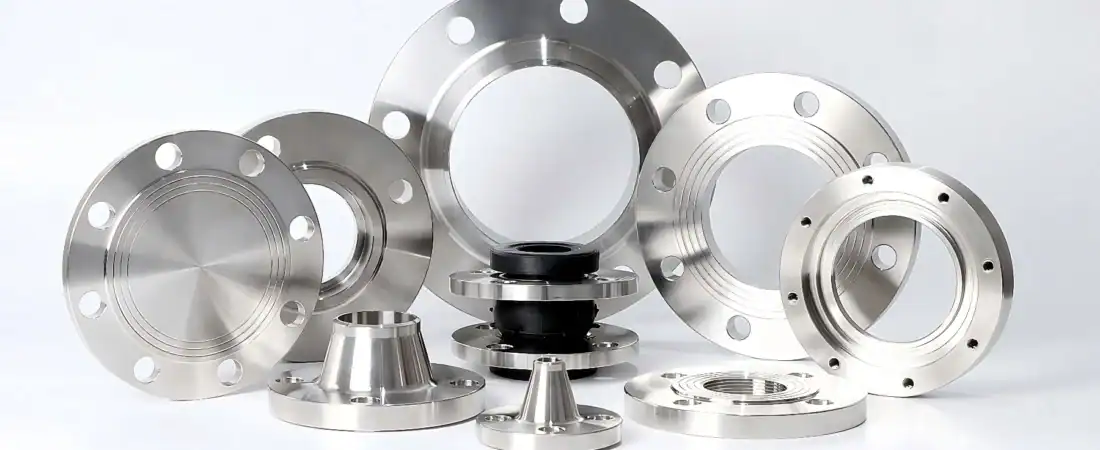
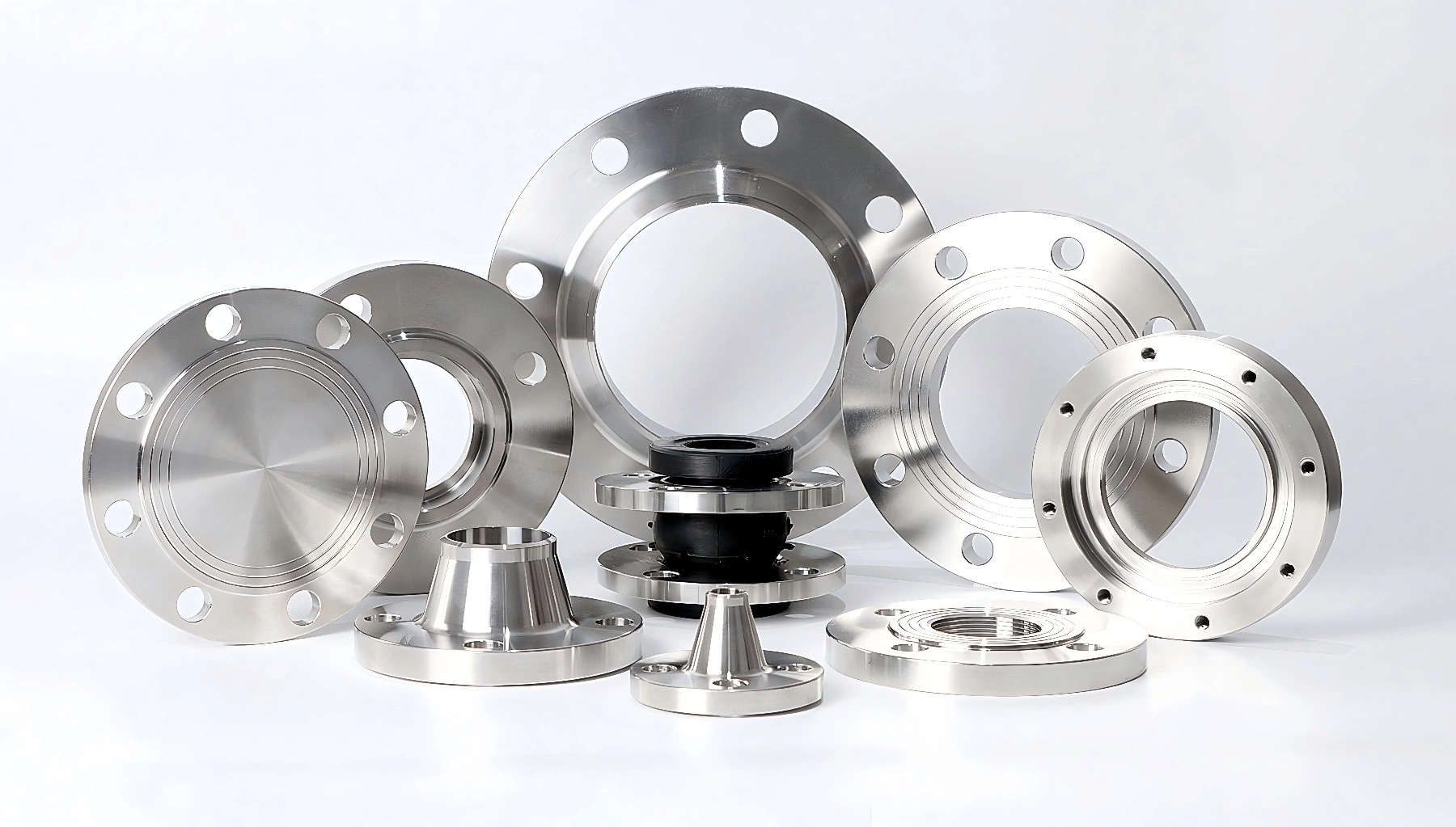
For the actual mating hardware, see our stainless steel flanges — available in ASME B16.5, EN 1092-1 and JIS B2220 drilling patterns, with matching gaskets and bolts.
2. Flange Bolt-Circle Dimensions
The most important difference is the flange dimensions — bolt-circle diameter, number of bolts, and flange thickness. If your valve flange doesn’t match your piping flange, you can’t connect them directly.
| Size | ANSI Class 150 (B16.5) | DIN PN16 (EN 1092-1) | JIS 10K (B2220) |
|---|---|---|---|
| DN50 / 2″ | Bolt circle: 120 mm, 4 bolts | Bolt circle: 125 mm, 4 bolts | Bolt circle: 120 mm, 4 bolts |
| DN100 / 4″ | Bolt circle: 190 mm, 8 bolts | Bolt circle: 180 mm, 8 bolts | Bolt circle: 190 mm, 8 bolts |
| DN150 / 6″ | Bolt circle: 241 mm, 8 bolts | Bolt circle: 240 mm, 8 bolts | Bolt circle: 240 mm, 8 bolts |
Notice how close the dimensions are — but not identical. That’s why you can’t just mix and match. A DN50 (2″) ANSI flange bolt circle is 120 mm, but DIN PN16 is 125 mm. The bolts won’t line up. JIS 10K happens to share the ANSI bolt circle at DN50 / DN100 / DN150 (this is a historical accident of metric-to-inch conversion), but the flange thickness, face finish and pressure-temperature rating are still different — do not assume full interchangeability beyond the bolt circle.
3. Pressure-Rating Cross-Reference
Each standard uses a different pressure-rating system. Here’s how they roughly compare at room temperature (~38°C):
| ANSI Class | DIN / EN PN | JIS | Equivalent PSI |
|---|---|---|---|
| Class 150 | PN16 | 10K | ~230 PSI |
| Class 300 | PN40 | 20K | ~580 PSI |
| Class 600 | PN100 | 40K | ~1450 PSI |
Important note: These are approximate room-temperature equivalents. At higher temperatures (above 200°C for carbon steel, above 300°C for alloy), the pressure ratings diverge significantly — always check the pressure-temperature chart for your specific application. For example, Class 300 at 400°C drops to roughly PN25-equivalent, not PN40.
4. Which Standard Should You Choose?
Use ANSI / ASME if:
• Your project is in the USA, Canada, or the Middle East (Saudi Arabia, UAE, Qatar, Kuwait)
• You’re replacing equipment that already uses ANSI flanges
• Your client or EPC contractor specifies ANSI in the tender (typical for oil & gas, LNG, desalination)
Use DIN / EN if:
• Your project is in Europe, the UK, Australia, or Southeast Asia HVAC / water packages
• You’re buying from China (most Chinese factories default to DIN / EN / PN16)
• Your system uses metric piping (mm sizes instead of inches)
Use JIS if:
• Your project is in Japan, South Korea, or Taiwan
• You’re replacing Japanese-made equipment (Kubota, Hitachi, Mitsubishi, Toshiba)
• The end user specifically requires JIS certification
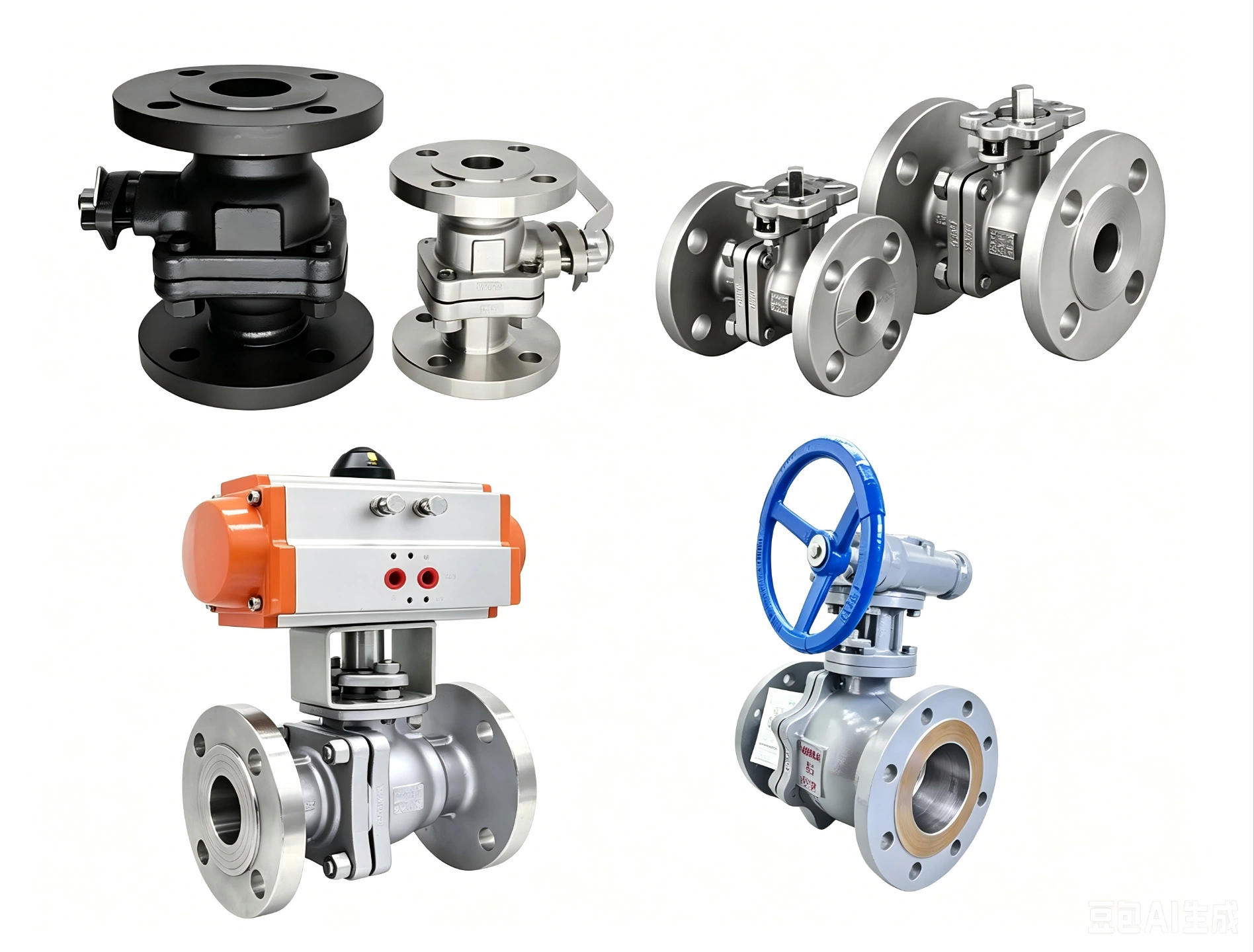
For production-manifold and pipeline isolation, see our flanged ball valves and flanged gate valves — available in ASME B16.5 Class 150 / 300 / 600, EN 1092-1 PN10 / PN16 / PN40, and JIS B2220 10K / 20K drilling patterns on request.
Worked Example: Binh Duong Water Treatment Flange Mismatch
Step 1 — Problem
A municipal water-treatment plant in Binh Duong, Vietnam, was built by a Chinese EPC. The process piping was prefabricated in Shanghai to ASME B16.5 Class 150 RF flanges (inch-based bolt circles), because the original design basis cited an old American EPA water-treatment reference. The mechanical package of 48 × DN200 (8″) and 24 × DN300 (12%) wafer butterfly valves was sourced from a different Chinese factory — but because the RFQ only said “PN16 butterfly valve, DN200”, that factory defaulted to EN 1092-1 / DIN PN16 drilling (metric bolt circle). The valves arrived on site, the crew tried to bolt the first DN300 valve onto the Class 150 piping — the 12 bolt holes were offset by 5 mm. None of the 72 valves could be installed.
Step 2 — Root cause analysis
Two compounding errors: (1) the EPC’s RFQ never specified the flange standard — “PN16” is a pressure rating, not a drilling pattern; (2) the valve factory defaulted to EN 1092-1 because that’s the most common PN16 drilling pattern in China. The piping was Class 150, the valves were PN16-drilled — both are roughly “16 bar” in pressure, but the bolt circles are different. A 5 mm offset on a DN300 flange means you cannot drill out and tap the holes on site without weakening the flange.
Step 3 — Correct retrofit
The site team had two options: (a) fabricate 72 custom spade flange adapters (one side ANSI Class 150, one side EN 1092-1 PN16), each 30 mm thick, machined from 316L plate — this adds length, weight, and an extra leak path on every valve; or (b) re-order the 72 valves with the correct ASME B16.5 Class 150 drilling pattern. Option (b) was chosen: the valve factory swapped the disc liners and seats into new ANSI-drilled valve bodies, air-freighted the replacement valves to Ho Chi Minh City within 12 days, and the original PN16-drilled bodies were returned to China for rework on the next EU order.
Step 4 — Outcome
• The replacement valves arrived 12 days after the mismatch was identified — the plant start-up slipped roughly 2 weeks.
• The cost of the air-freight + expedited manufacturing + installation delay was substantial — far more than the cost of the valves themselves.
• The EPC added a line to every future valve RFQ: “Flange standard: ASME B16.5 Class 150 RF, face-to-face per EN 558-1 Series 1, bolt holes per piping fabrication drawing attachment XYZ.”
• Lesson: “PN16” is not enough. Always specify the flange standard (ASME B16.5 / EN 1092-1 / JIS B2220), the face type (RF / RTJ / FF), and the face-to-face length standard (ASME B16.10 / EN 558 / JIS B2002) on the RFQ. A one-line specification prevents a two-week delay.
Why EPC Contractors Specify Chuanglan Flanged Valves
Flanged ball valves and gate valves available in ASME B16.5 Class 150 / 300 / 600, EN 1092-1 PN10 / PN16 / PN40 / PN100, and JIS B2220 10K / 20K drilling patterns
Stainless steel flanges in matching drilling — RF, RTJ, FF, WN, SO, threaded, lap-joint — with EN 10204 3.1 MTC per heat
Face-to-face per ASME B16.10, EN 558-1 Series 1 / Series 2, or JIS B2002 — specify on PO, no default assumption
Not Sure Which Flange Standard Your Project Needs?
Send us your country, the equipment brand you’re replacing (or the EPC’s design basis), and a photo of your existing flange — our engineers will tell you the correct ASME / EN / JIS drilling pattern and reply within 24 hours with a matching quotation and full EN 10204 3.1 MTC.
Get Free Sizing Report → WhatsApp usCommon Mistakes to Avoid
Mistake 1: Assuming “Class 150 = PN16” means they’re identical. They’re close in pressure, but the flange dimensions are different. You still can’t bolt them directly together without a spade flange adapter.
Mistake 2: Not specifying the standard on your RFQ. Just saying “2 inch flanged ball valve, PN16” isn’t enough. You need to say “DN50 flanged ball valve, PN16, EN 1092-1 B1, face-to-face EN 558-1 Series 1” — otherwise the manufacturer might send you ANSI-drilled (or, more commonly for Chinese factories, default EN-drilled) by assumption.
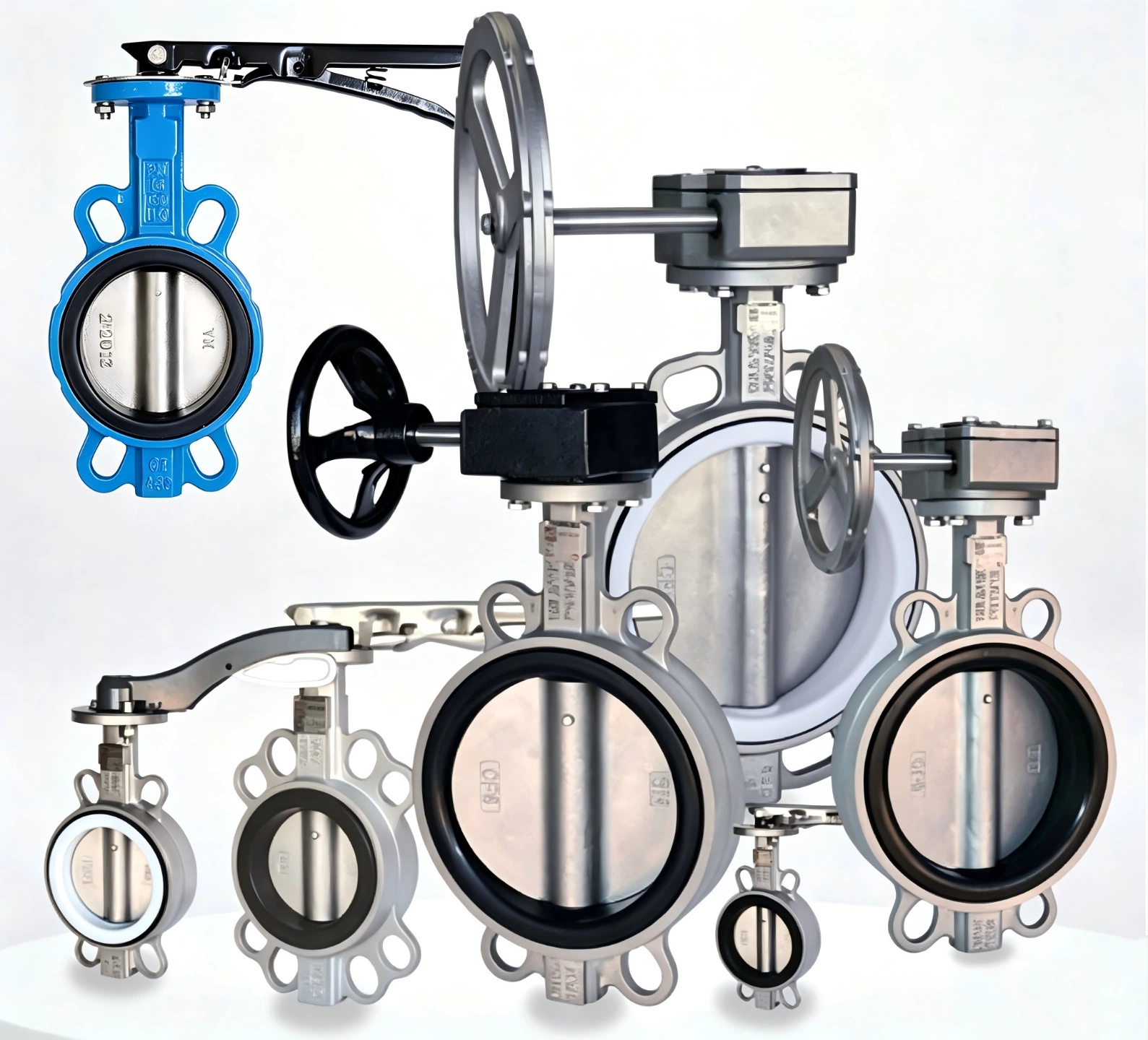
Mistake 3: Forgetting about face-to-face dimensions. Even within the same standard, different valve types have different face-to-face lengths. If you’re replacing an existing valve, always specify the face-to-face dimension, not just the size and flange — a wafer butterfly valve is about 60 mm long, a flanged ball valve is about 203 mm long for DN100, and neither will fit into the other’s spool.
Southeast Asia & Middle East Market Notes
For clients in Southeast Asia, the standard mix is fragmented. Indonesian, Malaysian and Thai oil & gas / petrochemical projects (Pertamina, Petronas, PTT, SCG) overwhelmingly follow ASME B16.5 / ASME B16.34 because their EPCs are Korean (Samsung, Daewoo, Hyundai), Japanese (JGC, Chiyoda, Mitsubishi), or European (Technip, Saipem) — all of whom default to ANSI / ASME for upstream and downstream service. By contrast, water-treatment, HVAC, building services and municipal projects in the region (Provincial Waterworks Thailand, Saigon Water, Maynilad Manila, Aetra Jakarta) typically follow EN 1092-1 / DIN PN16 because the EPC is Chinese or the design basis is German / French. Vietnamese industrial parks (Binh Duong, Dong Nai, Amata) are the classic “mixed-standard” site — the process piping might be ANSI, the HVAC package EN, and the Japanese-made compressor package JIS. Always confirm the flange standard on each spool, not just by industry.
For clients in the Middle East, the choice is much simpler: ASME / ANSI is the default. Saudi Aramco SAES-L-110 / SAES-L-350, ADNOC specifications, KOC / KNPC engineering standards, QatarEnergy North Field LNG, and BAPCO Bahrain all require ASME B16.5 / B16.47 flanges, ASME B16.10 face-to-face, and API 6D / 608 / 600 product standards. The rare exception is European-designed district-cooling and HVAC packages (Tabreed UAE, QCool Qatar) which sometimes follow EN 1092-1 for cooling water, but process and hydrocarbon service is always ANSI. Japanese LNG equipment (Mitsubishi, Kawasaki) on Ras Laffan and Qatargas sites may carry JIS drilling on the manufacturer’s own package — but any tie-in to owner piping is converted to ASME via a spool adapter.
Chuanglan Valve supplies flanged valves and flanges in all three standard systems — flanged ball valves, gate valves, globe valves, wafer butterfly valves, flanged butterfly valves, swing check valves, wafer dual-plate check valves, and stainless steel flanges — with ASME B16.5 / EN 1092-1 / JIS B2220 drilling options, ASME B16.10 / EN 558 / JIS B2002 face-to-face, full EN 10204 3.1 MTC, and third-party inspection (SGS / BV / Intertek / Lloyd’s) on request. Serving EPC Contractors Across Southeast Asia & Middle East · ISO 9001:2015 · Established in 2009 · MOQ 1 piece, 7–15 day standard delivery.
FAQ
Is PN16 the same as Class 150?
They are approximately equivalent in pressure at room temperature — both hold roughly 16 bar / 230 PSI at ambient. But they are NOT interchangeable flanges: PN16 follows EN 1092-1 (metric bolt circle), Class 150 follows ASME B16.5 (inch bolt circle). They cannot be bolted together without a spade flange adapter. Also, at elevated temperatures the two ratings diverge — Class 150 at 400°C drops to roughly PN10-equivalent, not PN16.
Can I mix an ANSI Class 150 valve with a PN16 piping flange?
Not directly. The bolt-circle diameters, number of bolts, flange thickness, and raised-face height are different. You would need a custom spade / lap-joint adapter flange — one side drilled to ASME B16.5 Class 150, the other to EN 1092-1 PN16 — plus a new gasket. This adds length, weight, and one extra leak path per joint. It’s always cheaper to re-order the valve in the correct drilling than to adapt on site.
What is the difference between ASME B16.5 and ASME B16.47?
ASME B16.5 covers NPS 1/2″ through NPS 24″ (DN15–DN600) flanges. ASME B16.47 covers large-diameter flanges NPS 26″ through NPS 60″ (DN650–DN1500) — typically used on pipeline block valves, compressor station piping, and large cooling-water headers. If your valve is DN600 (24″) or larger, ask whether the flange is B16.5 Series A or B16.47 Series B.
What does “face-to-face” length mean and why does it matter?
Face-to-face (F2F) is the dimension between the two flange faces of a flanged valve. For a given size and pressure, different valve types have different F2F lengths — a flanged ball valve is roughly 203 mm long at DN100, a flanged gate valve is roughly 254 mm, and a wafer butterfly valve is only 52 mm. If you’re replacing a valve in an existing piping spool, the new valve MUST match the original F2F dimension, otherwise the spool won’t fit. F2F is standardized by ASME B16.10 (ANSI), EN 558-1 (DIN / EN), or JIS B2002 (JIS).
Is JIS 10K the same as Class 150 / PN16?
Pressure-wise, yes — all three hold roughly 10 bar / 150 PSI / 16 bar at room temperature. JIS 10K bolt circles happen to match ANSI Class 150 at many common sizes (DN50, DN100, DN150, DN200), but the flange thickness, face finish, pressure-temperature derating curve and material specs differ. Treat JIS 10K as its own system, not a drop-in equivalent.
Which standard do Chinese valve factories default to?
Most Chinese valve factories default to EN 1092-1 / DIN PN16 drilling for metric sizes and ASME B16.5 Class 150 for inch sizes — because that’s what Chinese water-treatment, HVAC and domestic oil & gas projects buy most often. If your RFQ does not explicitly say “ASME B16.5 Class 150” or “JIS B2220 10K”, you may get the default. Always specify the standard on the RFQ — one line, 10 seconds, prevents a two-week site delay.
Can Chuanglan supply flanged valves in all three standards?
Yes. We manufacture flanged ball valves, gate valves, globe valves, check valves and butterfly valves in ASME B16.5 Class 150 / 300 / 600 / 900, EN 1092-1 PN10 / PN16 / PN40 / PN100, and JIS B2220 10K / 20K / 40K drilling patterns, with matching stainless-steel flanges, gaskets and bolts. MOQ 1 piece, 7–15 day standard delivery, full EN 10204 3.1 MTC, third-party inspection (SGS / BV / Intertek / Lloyd’s) before shipment.
References & Standards
- ASME B16.5 — Pipe Flanges and Flanged Fittings NPS 1/2″ through NPS 24″
- ASME B16.47 — Large Diameter Steel Flanges NPS 26″ through NPS 60″
- EN 1092-1 — Steel flanges for piping, PN-designated
- EN 558-1 — Valve face-to-face and end-to-end dimensions (Series 1 / Series 2)
- JIS B2220 — Steel pipe flanges
- ASME B16.34 / ASME B16.10 — Valve pressure rating and face-to-face dimensions
Related Products
Continue Reading
Request a Quotation — Reply Within 24 Hours
Send your line size, pressure rating, medium and quantity. Our engineers come back with price, drawing and lead time — no obligation.
Get a Flanged Valve Quotation in ASME / EN / JIS
MOQ: 1 piece · ISO 9001:2015 · 3.1 MTC included · shell and seat pressure tested
Southeast Asia: Indonesia, Malaysia, Thailand, Vietnam, Myanmar, Singapore, Philippines
Middle East: Saudi Arabia, UAE, Qatar, Kuwait, Oman, Bahrain
Other Regions: Europe, North America, South America, Africa, Australia
Delivery: 5–10 days to Southeast Asia · 15–20 days to the Middle East · 25–35 days to Europe / the Americas
Payment: T/T 30% deposit + 70% before shipment · L/C at sight · Warranty: 12 months after shipment for material and manufacturing defects · Packing: export plywood case / fumigation-free pallet · Shipping: FOB Ningbo/Shanghai · Documents: EN 10204 3.1 MTC + packing list + commercial invoice · Third-party inspection welcome: SGS / Bureau Veritas / Intertek
Get Free Quote »